
Alderamin on the Sky Plot and Review
Alderamin on the Sky ends so fast you'll get whiplash. One minute you're watching a lazy genius outsmart an entire empire with nothing but math and spite, the next you're staring at credits that promise a continuation that never came. It's a 13-episode military fantasy produced by Madhouse, and it's probably the most frustrating good anime you'll ever watch. The story follows Ikta Solork, a guy who wanted to be a librarian but ended up becoming the greatest military mind of his generation because he kept solving problems that career soldiers were too stubborn to fix.
The setup sounds generic on paper. The Katjvarna Empire is at war with the Republic of Kioka. Ikta gets shipwrecked with his childhood friend Yatorishino Igsem, a princess named Chamille, and a few other officer candidates. They survive enemy territory through Ikta's quick thinking, get promoted to Imperial Knights, and spend the rest of the series climbing ranks while fighting a war Ikta never wanted any part of. But the devil is in the details here. This isn't a power fantasy where the protagonist wins because he tries harder or has magic abilities. Ikta wins because he understands logistics, wind patterns, and how stupid bureaucracies fail their own soldiers.
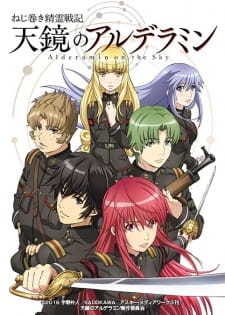
The Lazy Genius Who Hates His Own Talent
Ikta Solork isn't your typical shonen hero. He's a womanizer, yeah, and he's lazy to the point where he'll spend three days figuring out how to save ten minutes of work. But that laziness is his whole philosophy. He believes human progress comes from the desire to relax. If you can kill an enemy army with half the effort by cutting their supply lines instead of charging at them with swords, that's the correct way to fight. He calls it the "relaxed war" and it drives the old guard insane because it looks like cowardice even when it works.
His backstory explains why he thinks this way. His father was Bada Sankrei, a legendary warrior, but Ikta spent more time with Anarai Khan, a scientist who defected to the enemy Kioka Republic later. Ikta learned science and rationality in a world that runs on honor, religion, and charging at people with bayonets. He treats the war like a math problem while everyone else treats it like a poetry contest. This creates friction in every episode because he has to convince corrupt superiors to ignore tradition and just listen to the guy who actually read the supply reports.
The Empire Is Rotten From The Inside
The Katjvarna Empire isn't portrayed as the good guys. They're corrupt, classist, and rotting from within while fighting an external war. Ikta constantly runs into officers who care more about looking brave than keeping their soldiers alive. There's one scene where a local commander intentionally provokes a rebellion just so he can get combat medals for crushing it. Ikta has to navigate this garbage while also fighting the actual enemy, which makes the show feel more like a political thriller than a straight war story sometimes.
The technology level is weird too. They've got air rifles that seem to run on compressed air and magic sprites instead of gunpowder. The sprites are elemental spirits that people bond with, and they're used for everything from starting fires to powering the guns. Ikta treats them like tools while the religious establishment treats them like sacred mysteries. This clash between science and faith runs through the whole series, with Ikta constantly explaining basic physics to people who think the wind blows because a god wills it.
How The Battles Actually Work
Most war anime focus on the hero charging into the fray and cutting down enemies. Alderamin on the Sky focuses on supply lines, altitude sickness, and how marching an army through a swamp will kill more of your men than the enemy will. The battles play out like chess matches where Ikta predicts his opponent's moves three turns ahead. In one early arc, he defends a fort not by building walls but by understanding wind currents and smoke patterns. In another, he realizes his side is going to lose a major battle because the supply wagons are three days late, so he refuses to engage even when ordered to.
The series spends time showing you the enemy's perspective too. You see the Kioka Republic's commanders planning their moves, and sometimes they're just as smart as Ikta but limited by their own bureaucracy. There's no cartoon villain twirling a mustache here. Both sides have competent people and idiots, and the war drags on because neither side can get their act together completely. It feels honest in a way that most military anime don't, probably because the original light novel author actually bothered to think about how pre-industrial warfare actually functioned.
Yatori And The Knife She Carries
Yatorishino Igsem is Ikta's foil and the closest thing he has to a partner. She's from a noble family bred for combat, loyal to the Empire to a fault, and she solves problems by stabbing them. Her dynamic with Ikta is the engine that drives the show. They eat meals sitting back to back so they can watch each other's blind spots, a ritual they started as kids. She understands his strategies better than anyone but she's also trapped by her duty to a corrupt system that Ikta keeps trying to circumvent.
Their relationship gets complicated because Yatori believes in honor and the chain of command while Ikta believes in results and keeping his friends alive. Every time Ikta breaks a rule to save lives, Yatori has to decide whether to report him or help him cover it up. The anime hints that this tension will eventually force them to choose sides for real, but it ends before that happens. You see the setup for a massive conflict between them in the final episodes, with Yatori being ordered to do things that violate her personal ethics while Ikta goes further off the reservation to stop the Empire's stupidity.

The Supporting Cast That Almost Works
The other main characters get less development but serve specific functions. Torway Remeon is a sharpshooter from a rival noble family to Yatori's, and he spends the series overcoming his inferiority complex about his brothers while helping Ikta develop the first sniper unit. Matthew Tetdrich is a lower noble constantly trying to prove himself, and he grows from a complaining liability into a solid officer. Haroma Bekker is the team's medic, tall and shy, mostly there to be flirted with by Ikta and provide medical support.
The problem is the show only has 13 episodes, so some of these characters get reduced to single traits. Matthew gets some good moments in the middle episodes where he learns to command, but Haroma mostly just stands there looking worried. Torway gets a solid arc about marksmanship versus traditional warfare, but it gets rushed. If this had been 24 episodes like it deserved, these characters would've had room to breathe. Instead, they feel like they're waiting for a second season that never arrived.
Why It Stops Mid-Sentence
And here is the wound that never heals. Alderamin on the Sky ends on a cliffhanger. Ikta uncovers a conspiracy involving the highest levels of the Empire, makes an enemy of a general who wanted to use him as a puppet, and sets himself up for a promotion that will put him in direct conflict with the establishment. Yatori receives orders that put her at odds with Ikta's new path. The final scene sets up what should be the start of the real story, the political thriller where the buddy cop dynamic breaks down into genuine conflict. Then it just stops.
The light novel series continued for several more volumes, and apparently volume 7 caused some controversy in Japan regarding character directions that some fans hated. The anime only adapted roughly the first three or four novels out of fourteen total. Madhouse clearly planned for more seasons, the pacing of the last episode screams "see you next year," but the sales weren't there or the production committee lost faith. Whatever the reason, you're left with an incomplete story that teases greatness and delivers frustration.
The Animation And Sound
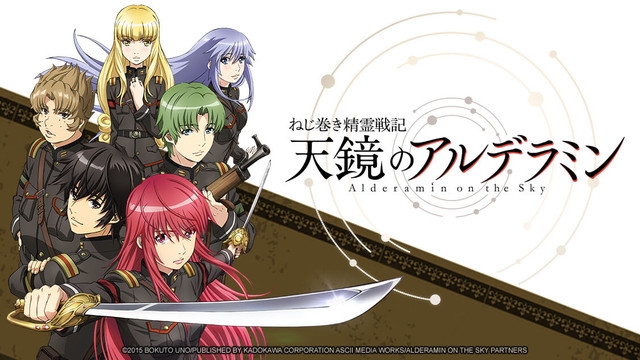
Visually, the show is a mixed bag. Madhouse usually delivers solid work, and the character designs are distinctive. The female characters have realistic proportions for military uniforms instead of the usual anime nonsense where armor somehow emphasizes chest size. But the CGI for the airships and some of the wide shots of armies looks rough, especially in the early episodes. It improves as the series goes on, and the actual tactical diagrams and battle maps are clear and easy to follow, which matters more than flashy animation for this type of story.
The sound design deserves mention. The air rifles have distinct mechanical sounds that sell the weird technology. The voice acting captures Ikta's smug laziness and Yatori's disciplined restraint perfectly. The music knows when to shut up and let the tactical explanations breathe, then ramps up during the actual combat without going overboard into orchestral cheese. It's competent work that serves the story rather than distracting from it.
Is The Pain Worth It
Here's the thing. Despite the fact that Alderamin on the Sky will leave you hanging so hard you'll probably Google "Alderamin on the Sky season 2" and get depressed by the results, you should still watch it. It's 13 episodes. You can knock it out in a weekend. The tactical warfare is smarter than almost anything else in the medium, the main character is refreshingly cynical without being edgy, and the setting feels lived-in and ugly in a way that most fantasy anime avoid. It respects your intelligence by showing you how logistics win wars, not screaming teenagers.
If you're the type who can't stand incomplete stories, I get it. Maybe wait until you're in a mood where you can appreciate the journey even if the destination is a brick wall. But if you like military history, strategy games, or just want to see a protagonist win through intelligence rather than friendship power, this is a gem buried under the frustration. Just go in knowing that you're signing up for a meal that gets taken away before dessert.
The anime handles themes of imperialism and the waste of war with more grace than shows twice its length. It asks why smart people keep fighting for stupid systems, and it doesn't give easy answers. Ikta doesn't fix the Empire by the end. He just survives it, barely, and earns the right to fight another day that we'll never see. That might be the most honest thing about the whole production. Sometimes stories end before they're done, just like real wars end without real victories, and real geniuses die in beds instead of getting parades. Alderamin on the Sky captures that messy truth and makes you wish you could see the rest anyway.
Frequently Asked Questions
Does Alderamin on the Sky have an ending?
No, the anime ends on a major cliffhanger after 13 episodes that cover roughly the first four light novel volumes. The light novel series continued to fourteen volumes and had controversial developments later, but Madhouse never produced a second season. You'll need to read the novels to see how the story actually ends.
Who is the main character in Alderamin on the Sky?
Ikta Solork is a tactical genius who hates war and wanted to be a librarian. He wins battles using logistics, science, and understanding of supply lines rather than traditional military honor or brute force. He's lazy by philosophy, believing the best war is the one fought with minimum effort, which constantly puts him at odds with the corrupt Katjvarna Empire's command structure.
What is the technology level in Alderamin on the Sky?
It's set in a fictional world with early 19th-century technology mixed with magic. The Katjvarna Empire uses air rifles powered by compressed air and elemental spirits called sprites, but they don't appear to have gunpowder. The tech level resembles the American Civil War era in terms of tactics and uniforms.
Do Ikta and Yatori get together?
Their relationship is complicated. They're childhood friends who trust each other completely, symbolized by their back-to-back eating ritual. Yatori understands Ikta's strategies better than anyone, but she's bound by duty to the Empire while Ikta operates outside the rules. The anime sets up future conflict between them that never pays off due to the lack of a second season.
Is Alderamin on the Sky worth watching?
If you can handle incomplete stories, yes. The tactical warfare is realistic and smart, the protagonist is refreshingly cynical, and the 13 episodes cover a complete arc of Ikta's early career even if the overall story continues. It's worth watching for the military strategy alone, but don't expect closure.
What makes the military tactics in Alderamin realistic?
The series is known for its realistic approach to military logistics, supply lines, and pre-industrial warfare tactics. Ikta wins by cutting enemy supplies, using terrain and wind patterns, and avoiding unnecessary combat. It treats war as a logistical problem rather than a heroic adventure, which is rare in anime.