
Ao Ashi Is The Most Realistic Soccer Anime Made
Ao Ashi anime review discussions usually start with someone comparing it to Blue Lock and that's already the wrong foot to start on. This isn't about locking yourself in a blue room to develop a demon ego or whatever that other show thinks soccer is about. Ao Ashi cares about the boring stuff. It cares about whether you checked your shoulder before receiving the ball. It cares about your hip orientation when you receive a pass under pressure. It cares about the fact that kids from rural towns like Ehime usually can't afford to play for Tokyo youth teams because train rides cost money and time that poor families don't have.
The series follows Ashito Aoi, a talented but rough middle schooler who thinks he's the main character in a shonen sports story. He dribbles past everyone in his small town tournaments. He scores goals. He gets angry when teammates mess up. Then he gets himself red carded in a crucial game because he can't control his temper and suddenly his team is out of the tournament. This isn't a power fantasy. This is a kid learning that talent without discipline is worthless.
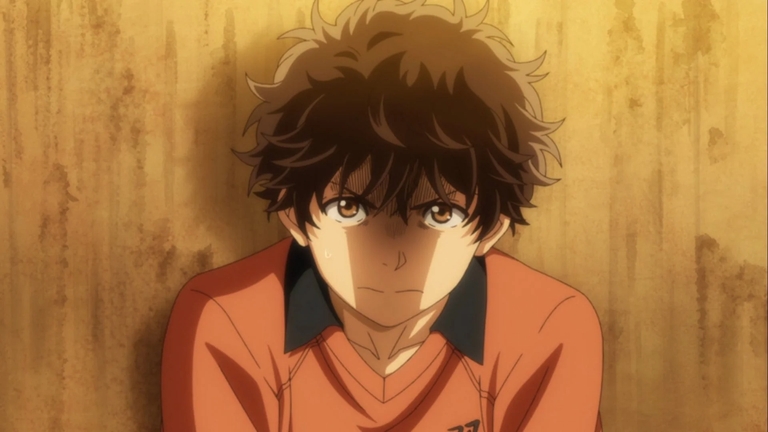
Coach Fukuda shows up and sees something weird in Ashito. Not superhuman speed or a magic shot. He sees that Ashito remembers where every player was positioned ten seconds ago. He has this bird's eye view thing where he can map the field in his head. That's it. That's his special power. Being able to visualize space good. And the show treats this like the huge deal it actually is in real football.
Why The Soccer Feels Real
Most sports anime fake it. They show you a guy running fast with speed lines and expect you to believe he's good. Ao Ashi football tactics are brutally realistic compared to that nonsense. The show spends entire episodes explaining zonal marking. It shows you why diagonal runs matter. It has characters discussing the offside trap like they're solving math problems.
Ashito joins Esperion FC, a fictional youth team based on real Japanese academy structures. These kids aren't just playing for school glory. They're fighting for professional contracts that could lift their families out of poverty. The stakes are financial survival, not just trophy bragging rights. When Ashito moves to Tokyo, his mom has to work extra shifts and his brother has to delay his own dreams to support him. That's the reality of sports development that other shows ignore.
The matches play out like real tactical battles. You see coaches adjusting formations. You see players getting confused by instructions. You see Ashito struggling to learn basic first touch techniques because he never had proper coaching back home. It's messy and slow and frustrating. Sometimes the ball just goes out of bounds and nothing happens for thirty seconds. That's soccer.
The Position Change That Broke Everyone
Halfway through the season, Fukuda drops a bomb on Ashito. He tells him he's not a striker anymore. He's moving to fullback. Left back specifically. Defensive position. No more glory goals. No more being the hero who scores. Ashito loses his mind. He trained his whole life to score. Now he has to learn how to defend against wingers who are faster than him.
This arc hits different because it mirrors real football development. Most kids grow up wanting to be strikers or number tens. The creative players. The stars. But professional football needs defenders who can think. Ashito's spatial awareness that made him a decent forward makes him potentially special as a fullback who can see the whole field. The show doesn't rush this. He spends episodes being terrible at defense. He gets beat by simple moves. He forgets to track his runner. He cries about it.
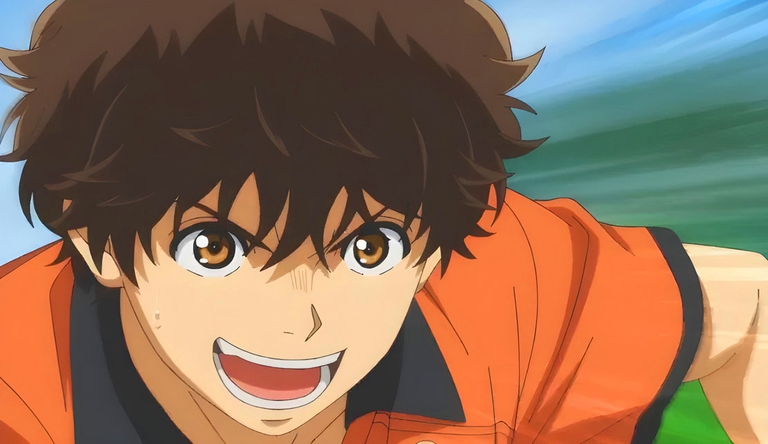
The psychological toll of this shift gets explored better than most anime handle any topic. Ashito has to rebuild his identity from the ground up. He was the guy who scored goals. Now he's the guy who stops goals. That's a different kind of pride. It's less flashy. The show makes you feel that frustration when he makes a perfect defensive play and nobody cheers because defense isn't sexy.
Coach Fukuda Is Kind Of A Manipulator
Some fans hate Fukuda and I get why. The guy scouts Ashito from the countryside, convinces him to join this elite Tokyo academy, then immediately starts messing with his head. He doesn't explain things clearly. He gives hints instead of instructions. He moves Ashito to defense without warning and watches him suffer. One reviewer called him out for being more manipulator than mentor.
But here's the thing. That's how some elite coaches actually work. They want players to figure things out themselves because that's how you develop football IQ. If Fukuda just tells Ashito exactly where to stand every second, Ashito never learns to read the game himself. The show doesn't shy away from how cruel this method looks though. Ashito has panic attacks. He questions whether he's good enough. He feels alone in a city that costs too much money to live in.
The anime shows the dark side of youth academies where you're competing against guys who have been in the system since they were six. Ashito is seventeen and learning basics that other kids learned at ten. The gap is visible and painful. Fukuda's methods are harsh but the show argues they're necessary for Ashito's specific personality. He's too headstrong to listen to direct orders anyway. He needs to discover the truth himself or he won't believe it.
The Supporting Cast Gets Their Own Arcs
Unlike many sports anime where side characters exist just to cheer for the main guy, Esperion's roster has internal lives. Togashi is this aggressive defender who clashes with Ashito constantly. He has his own backstory about failing at other clubs. Asari is the skillful winger who teaches Ashito about technique but also struggles with his own consistency. Kuroda exists as this weird genius who seems lazy but actually calculates everything.
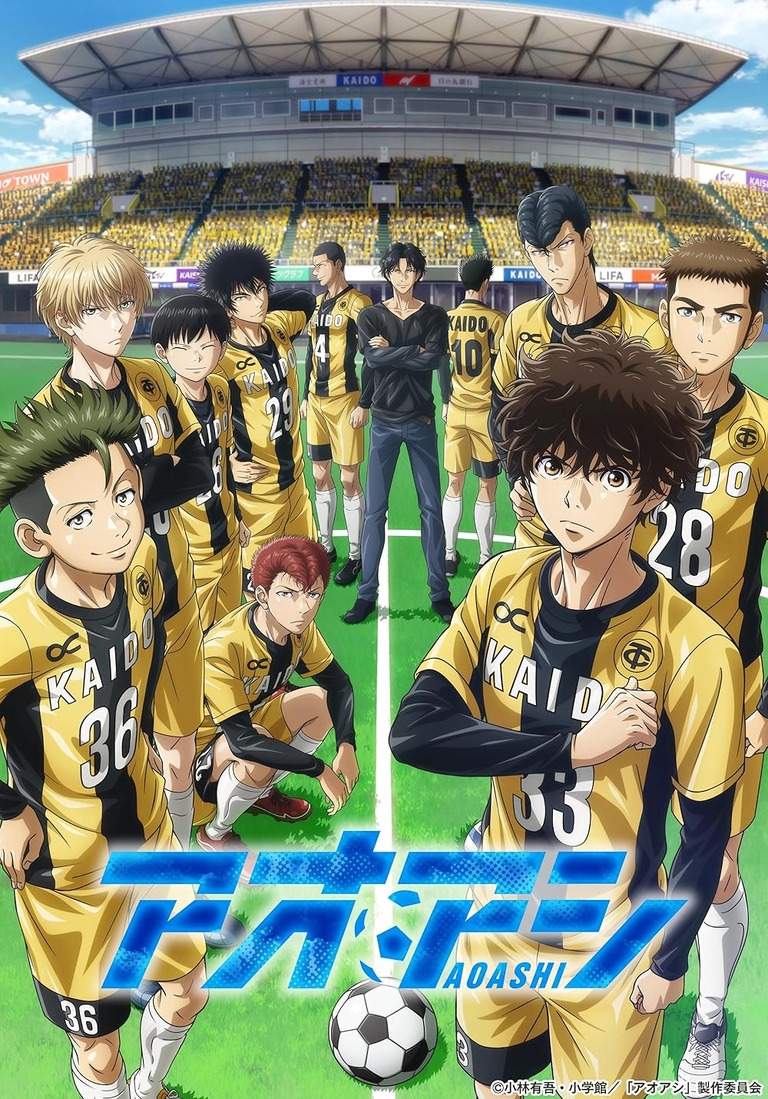
The team chemistry isn't instantly positive. These guys are rivals for limited professional spots. They don't like each other at first. There's toxic testosterone everywhere. Guys get into fistfights during practice. They refuse to pass to each other. The coaches let it happen because professional football is cutthroat and learning to work with people you hate is part of the job. Death's Door Prods noted this when they called it one of the best sports series in years.
Even the B team guys have their own dreams. Some are rich kids who don't need soccer to survive. Some are poor like Ashito and see this as their only ticket out. The class dynamics create real tension. When Ashito screws up, he isn't just letting down the team. He's potentially costing someone their livelihood. That's heavy for a sports anime.
The Animation Is Good When It Matters
Production I.G handles this and you can tell. They did Haikyuu and they know sports. The character acting is solid. Faces show emotion properly. When Ashito is frustrated you see it in his eyes and his slumped shoulders not just through dialogue.
But yeah, sometimes the match animation gets choppy. They use CGI for crowd shots and sometimes for players in wide shots. It's not perfect. Some episodes have that annoying thing where they pan across a still image instead of animating the kick. Reddit users have pointed out that the tactical explanations are so good you forgive the visual shortcuts.
The bird's eye view sequences look cool though. When Ashito activates his spatial awareness, the camera pulls up and shows the whole field with diagrams overlaying it. It's a bit heavy handed with the visual effects sometimes but it gets the point across. You understand what he's seeing in his head.
The soundtrack works. The opening by Alexandros slaps. It's got that desperate energy that fits Ashito's situation. The background music during matches ramps up without overpowering the sound of the ball being kicked, which is a small detail but important.
The Romance Subplot Is Weird Though
Can we talk about Hana? She's Fukuda's step-sister and she starts crushing on Ashito because he reminds her of her brother. That's already strange territory. Then the show drags this out with the dense protagonist trope where Ashito doesn't realize she likes him even when it's obvious.
It feels tacked on. Like the manga needed to check a box about having a love interest. Hana herself is a decent character. She wants to be a sports dietician. She knows nutrition and helps the team with meal plans. She has her own goals outside of Ashito. But the romantic angle creates these awkward scenes that slow down the soccer. The final episode has this forehead kiss moment that feels unearned because the relationship development was spotty.
Some fans like it because it's realistic that athletes have romantic distractions. Others think it breaks the flow. I'm in the second camp. The show is at its best when it's just guys trying to figure out zonal marking. We don't need love triangles.
The Pacing Issues Everyone Mentions
First thirteen episodes are slow. That's just fact. Ashito barely plays in real matches. He runs fitness tests. He learns to control the ball. He gets yelled at by coaches. If you're expecting instant tournament arcs, you'll drop this show before episode five.
But that's how real youth development works. You don't join a pro academy and immediately start in the derby match. You sit on the bench. You train with the reserves. You prove you belong. Episode thirteen is the turning point where things accelerate. Suddenly Ashito is playing in important games and the tactics start clicking.
The slow burn pays off because you feel the weight of every small improvement. When Ashito finally makes a good defensive play in a real match, it hits harder because you watched him fail at it for six episodes straight. The show earns its moments through repetition and frustration.
Why It Stands Out From Other Sports Anime
Captain Tsubasa had magic shots where the ball bends physics. Blue Lock has ego monsters with internal monologues that look like horror movies. Days had that weird art style where everyone looked like noodles. Ao Ashi just has soccer. Plain, difficult, tactical soccer.
It treats the audience like adults who can handle information density. When they explain the offside trap, they don't dumb it down. They expect you to pay attention or look it up. The seinen demographic shows in how it handles failure. Ashito doesn't get power ups through friendship. He gets better through painful repetition and accepting that he's not the main character in the way he thought he was.
The show also doesn't guarantee success. You feel like Ashito could actually fail. He could wash out of the academy and go home to Ehime with nothing. That tension keeps you watching more than any superpowered special move could.
We still don't have confirmation of season two which is criminal given how the manga sells. The anime boosted sales significantly. But production committees are weird about financing sequels even for hits. If you're reading this after season two got announced, good. If not, go read the manga starting from chapter one because the adaptation is faithful but you need more.
Ao Ashi anime review scores don't capture how different this show feels from its competition. It isn't trying to hype you up with unrealistic action. It's trying to show you why soccer is called the beautiful game through the actual tactics and psychology that make it work. It's slow, frustrating, occasionally ugly, and completely worth your time if you care about the sport even a little bit.