
Astra Lost in Space Anime Plot and Themes Explained by Someone Who Actually Paid Attention
Astra Lost in Space starts with a setup so stupid it almost makes you turn it off. Nine high school kids land on a planet for camping, a glowing ball sucks them into space, and they happen to find a fully functional abandoned spaceship floating nearby. It sounds like lazy writing. It sounds like the writers couldn't be bothered to think of a real survival scenario. But that's the point. Nothing about this trip is an accident, and the Astra Lost in Space anime plot and themes revolve entirely around the fact that someone orchestrated this whole disaster from the start.
The year is 2063 and space travel is basically commercial airlines. These kids from Caird High School think they're going on a five-day Planet Camp to McPa, which is supposed to be this boring rocky world. Instead they get yeeted 5,012 light-years into deep space with limited oxygen and no communication. They name the ship they find the Astra, which means star in some old language, and they realize they have to hop from planet to planet to get home because the ship doesn't have enough fuel or food for a straight shot. Each world they hit has its own ecosystem, its own dangers, and its own resources they need to scrape together to survive. But the real danger isn't the alien environments. It's the knowledge that one of them is working against the group, and worse, that their own parents want them dead.
The Survival Facade Hides a Clone Conspiracy
Here's where the show stops being Lost in Space and starts being Orphan Black with a budget. These kids aren't just random students. They're clones. Every single one of them was created by their parents to serve as spare body parts or consciousness vessels for when the originals got old or sick. The Genome Control Act passed recently in their timeline made comprehensive genetic testing mandatory, which meant these parents were about to get caught with their illegal clone kids. So instead of facing prison time, they decided to murder their children and make it look like a tragic space accident.
The glowing sphere that transported them wasn't a random space anomaly. It was a deliberate teleportation device set up to strand them where nobody would find them. The ship they found, the Astra, wasn't abandoned by chance. It was part of the plan, or at least the parents thought it would be their coffin. The whole journey home is actually a death sentence that the kids are fighting against without knowing it. When they finally figure this out, usually around the point where they discover guns were outlawed in 1963 (which is weird future trivia that becomes important later), the show shifts from survival adventure to political thriller.
The cloning reveal hits different for each character. Quitterie Raffaeli discovers she's a clone of Zack's mom or some weird family connection that makes her question if her feelings are even real. Funicia, her adopted little sister, is also a clone but of a different parent. Luca Esposito finds out his intersex identity was deliberately engineered by his politician father to make him some kind of perfect androgynous successor, which is messed up on multiple levels. Aries Spring learns she looks exactly like some princess from the Vixia Kingdom named Seira, which seems like a coincidence until it isn't. Each backstory episode hits like a truck because you realize these parents didn't just abandon their kids, they manufactured them like products and then tried to dispose of them when they became inconvenient.
Charce Lacroix and the Traitor Problem
Early in the trip, Zack Walker finds the ship's communication device smashed to pieces. Someone on board sabotaged their only way to call for help. The show spends several episodes making you suspect Ulgar Zweig because he's quiet and angry and carries himself like a school shooter, or maybe Yun-Hua because she's so withdrawn she could be hiding anything. But the real traitor is Charce Lacroix, the pretty boy botanist who cooks for everyone and acts like the group's big brother. He's actually the prince of Vixia and Aries is a clone of Princess Seira, who was his childhood friend before she died. His original mission was to kidnap Aries and kill everyone else, then return to his kingdom with the spare princess.
Charce's betrayal stings because he's the one who keeps morale up. He's the one identifying edible plants and making jokes while everyone else is panicking. Finding out he was willing to space all of them to fulfill some royal duty makes you want to throw your monitor. But the show doesn't just make him a villain and be done with it. He changes sides because the found family these kids built on the Astra becomes more real than the political obligations he was born into. He realizes that his kingdom is built on lies anyway, since history has been rewritten to hide the fact that Earth is actually a frozen wasteland and humanity evacuated centuries ago.
The Frozen Earth Twist Nobody Saw Coming
Midway through the journey, the crew discovers they're not from the planet they think they're from. The Earth they know, the one with green forests and cities, isn't Earth at all. It's a terraformed world called Astra. The real Earth, which they find frozen and dead, was hit by a meteorite 200 years ago that caused a climate catastrophe. Humanity survived by evacuating through wormholes to other planets, but the government decided to erase this history. They created a false narrative where Earth was never destroyed and space travel was always easy, when actually it was desperate survival.
This is where the show gets really weird with its politics. The authoritarian government maintains power by controlling the historical record. They don't want people knowing about the meteorite or the evacuation because it might cause panic or political instability. So they bury the truth and anyone who finds out, like Paulina Levinskaya, the woman they find in cryosleep from the original evacuation fleet, gets treated like a dangerous relic. The Astra Lost in Space themes about identity extend beyond just the clone stuff into questions about cultural memory and whether a society built on lies deserves to survive.
Paulina wakes up thinking it's been months since the disaster, but it's been 200 years. Everyone she knew is dust. The kids have to explain to her that history got rewritten while she slept. This scene hits harder than it should because you realize the parents trying to kill their kids are just smaller versions of the same institutional dishonesty. The government covers up planetary genocide, the parents cover up illegal cloning, and everyone lies to maintain their comfort.
Found Family Versus Biological Horror
The strongest thematic thread running through the series is that these kids become a real family while their biological families try to murder them. Kanata Hoshijima acts like a goofy athlete who doesn't know what he's doing, but he keeps everyone alive through sheer force of will. He dives into danger to save Aries when her suit malfunctions in episode one, establishing that he'd rather die than leave a crew member behind. This contrasts hard with the parents who specifically designed their children to die on schedule.
Aries seems like the typical anime ditz with her heterochromia and her malapropisms, but her photographic memory saves the crew multiple times. She remembers star charts, coordinates, and conversations that crack the conspiracy open. Her relationship with Kanata develops slowly, without the usual anime romance melodrama, because they're too busy trying not to starve to death on mushroom planets. By the time they get back to civilization and expose the cloning scandal, they're engaged, which feels earned rather than forced.
Yun-Hua starts so shy she literally hides in her room and cuts her own hair to avoid attention, thanks to her abusive singer mother who treated her like a prop. On the ship, she eventually sings to communicate with alien life forms and realizes her voice has power beyond her mother's control. Ulgar stops wanting to assassinate Luca's father (who he blames for his brother's death) and becomes a journalist instead. Quitterie stops being a tsundere mess and accepts Funicia as her real sister, not just an adopted accessory.
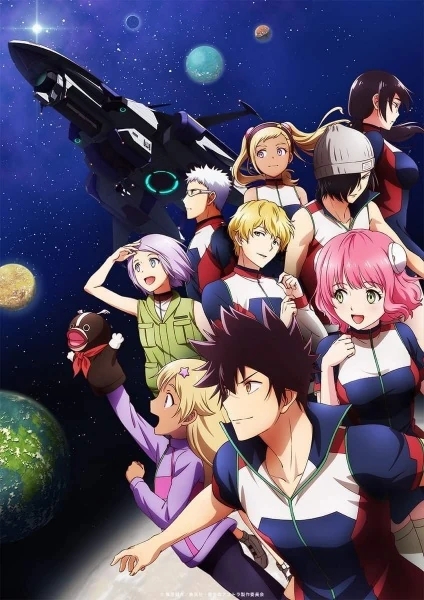
Every character arc follows the same pattern. Strip away the lies of their upbringing, face real danger together, and become something better than what your DNA intended. The show argues pretty aggressively that nature means nothing compared to the family you choose.
The Planets Themselves Tell a Story
The world-building in the planetary stops gets weirdly specific in ways that matter. Vilavurs has these trampoline trees and parachute flowers that seem like video game nonsense until the crew uses them to escape a collapsing ecosystem. Shummoor is nothing but mushrooms, some of which are deadly, forcing Quitterie to actually use her medical training under pressure. Arispade is an ocean world where they finally get to relax for five minutes before an earthquake triggers a tsunami. Icriss is tidally locked, meaning one side is always day and the other always night, creating this harsh divide that mirrors the dual nature of the characters themselves (clones versus originals, lies versus truth).
The planet names are anagrams of Earth locations, which is the kind of detail you don't notice until someone points it out. McPa is actually the frozen Earth they started from, not the camp planet they thought they were visiting. The writers put thought into making each stop feel distinct rather than just "desert planet" or "ice planet" like lazy sci-fi sometimes does.
Why the Parents Thought They Could Get Away With It
The scariest part of the conspiracy isn't that it exists, but how logical it is from the parents' perspective. In this society, cloning technology exists but got banned. Rich people used it to make backup bodies for themselves. When the law changed, these parents faced losing everything and going to prison. Killing their "children" (who they never viewed as real people, just property) seemed like the cleanest solution. They programmed the teleportation spheres, sabotaged the communications, and sent the kids to a location where they'd either die in space or land on hostile worlds.
The show doesn't excuse this behavior, but it shows how wealth and privilege make people view others as disposable. Marco Esposito treats Luca like a failed art project rather than a son. Quitterie's mother sees her as a spare parts drawer. These aren't cartoon villains twirling mustaches. They're bureaucrats and politicians making cost-benefit analyses about human lives. When the kids finally confront them on trial, broadcast to the whole world, it's satisfying because the parents can't hide behind their status anymore.
Pacing Problems and Adaptation Choices
The anime crams five manga volumes into twelve episodes, with two of those being double-length. It moves fast. Sometimes too fast. Character development that should take episodes gets resolved in single scenes. The second half especially feels like it's sprinting to the finish line, revealing the clone plot, the Charce betrayal, the frozen Earth, and the government conspiracy all within a few episodes. If you blink, you miss crucial details about the Genome Control Act or the wormhole technology.
The manga apparently had more time for Luca's bisexuality and the romantic subplots, plus extra context for why the parents specifically chose those nine kids. The anime keeps the skeleton of the story but loses some of the meat. The CGI for the Astra ship looks cheap compared to the hand-drawn character animation, which is a shame because you spend a lot of time looking at that ship. The soundtrack is forgettable except for the opening theme, which slaps.
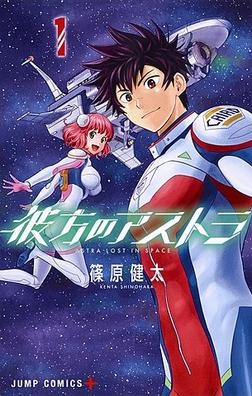
Despite the rush, the emotional beats land. When Kanata risks his life to save Charce even after learning about the betrayal, it doesn't feel unearned. When the crew stands together in court to testify against their parents, you feel the weight of their shared trauma. The adaptation makes smart choices about what to keep, focusing on the conspiracy and survival elements while trimming some of the slower character moments.
The Ending and Seven Years Later
The final episodes see the kids exposing everything. The cloning scandal, the historical cover-up about Earth's destruction, the attempted murders. Society has to grapple with the fact that their history is fake and their elites were harvesting children for spare parts. Charce becomes king of Vixia and reforms the kingdom. Yun-Hua becomes a famous singer on her own terms. Ulgar writes investigative journalism. Funi goes to high school like a normal kid. Kanata, Zack, and Charce head out on a new space exploration mission while Aries stays home with her new family.
The epilogue jumps seven years into the future. Kanata proposes to Aries with a ring he made from materials gathered on their journey, which is corny but fitting. The surviving crew members remain close, having formed bonds stronger than blood. The final image of them heading back out into space suggests that despite everything they learned about human nature and corruption, they still believe in exploration and hope.
Astra Lost in Space anime plot and themes work best when viewed as a critique of generational theft. The parents stole their children's futures to extend their own lives, just as the government stole historical truth to maintain political stability. The kids win by refusing to play the game, by choosing transparency and solidarity over the secrets that defined their upbringing. It's a surprisingly angry show for something that looks like a cheerful space adventure, and that's why it sticks with you.