
Best Underdog Sports Anime That Get It Right
Most best underdog sports anime series recommendations you find online recycle the same five shows everyone's already watched. I'm tired of seeing lists that ignore the gritty stuff, the anime where the loser doesn't get magical powers but just gets punched in the face until they learn to punch back. That's the real meat of sports anime. Not the superhuman basketball moves or the psychic volleyball powers, but the kid who can't jump high figuring out how to block the giant anyway. The cyclist who only rode to Akihabahra realizing he can climb mountains. The quarterback who was literally running away from bullies turning that fear into speed.
You want shows where the underdog status isn't just a starting point before they become invincible. You want the constant grind, the fear that they could lose any match because they probably should lose based on talent alone. I've watched enough of these to know which ones are faking it with flash and which ones understand that being the underdog means you're probably going to get hurt.
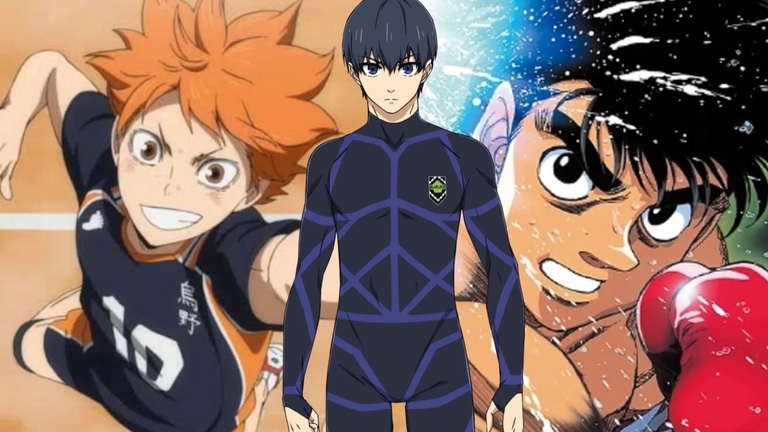
Hajime no Ippo Still Hits Harder Than Anything Else
If you want the purest form of underdog storytelling in anime, you watch Hajime no Ippo and you don't skip the training arcs. Ippo Makunouchi starts as this timid kid getting beaten up by bullies after school, and he doesn't suddenly become a monster because he has natural talent. He becomes a monster because he carries fishing boats and hits the sandbag until his hands bleed. The show doesn't let him win with heart alone. He loses fights. He gets countered. He faces guys with better physiques, better technique, and more experience, and he has to figure out how to survive through literal body modification via training.
What makes it work is that Ippo never really loses that nervous energy. He's still the shy guy outside the ring. Inside, he's learning the Dempsey Roll and taking on world rankers, but he's always one bad punch away from losing because his style is inherently risky. The manga goes on forever and gets weird later, but those first seasons animated by Madhouse are perfect. You watch him go from can't-make-eye-contact to legitimate Japanese champion, and every step feels like it costs something. No other boxing anime comes close, not even Megalo Box which tries to be gritty but sometimes leans too hard on the cyberpunk aesthetic instead of the boxing fundamentals.
Haikyuu!! Proves Height Ain't Everything
Yeah, everyone talks about Haikyuu!!, but they usually focus on the friendships or the ships or whatever. What matters is that Shoyo Hinata is 5'4" trying to play volleyball against guys who are 6'4" and can literally look over the net. He can't block normally. He can't hit over the blockers normally. He has to learn to jump higher than should be humanly possible, to time his approach so perfectly that he hits the ball in the 0.1 seconds before the wall of hands gets there. Karasuno itself is an underdog, this fallen powerhouse that hasn't been to nationals in years, full of weirdos and rejects from other clubs.
The show gets that being the underdog isn't just about being bad and then getting good. It's about being technically deficient and having to build systems around that deficiency. Hinata and Kageyama develop the freak quick set not because it's cool looking but because it's the only way Hinata can score against real blockers. When they lose, they lose hard. The match against Aoba Johsai early on destroys them because they're not ready. The match against Shiratorizawa takes five sets of absolute exhaustion. You see them gasping for air. You see the taller teams looking down on them literally and figuratively. It's satisfying because they don't win with secret techniques. They win because they practiced receiving until their forearms were purple.
Yowamushi Pedal and the Otaku Cyclist
Sakamichi Onoda is this anime-loving nerd who rides a mommy bike to Akihabara to buy stuff and sings the anime songs while he climbs. He doesn't even know he's strong. The cycling club scouts him because he's climbing these steep hills on a heavy bike without realizing that's impossible for normal people. What follows is this weird hybrid of sports anime and otaku culture where the underdog isn't just physically weak but socially isolated.
The beauty is that Onoda's weakness becomes his strength in specific situations. His high cadence pedaling style that looks weird to everyone else turns out to be perfect for certain grades. His willingness to suffer comes from years of being alone and finding comfort in anime, so he can handle the pain of cycling because he's used to discomfort. The show spans multiple seasons and gets into inter-high competitions where he's racing against guys with professional equipment and coaches while he's still figuring out how to use clipless pedals. It captures that feeling of joining a sports club as a complete outsider and realizing your weird hobby prepared you in ways you didn't expect. Plus the sprints are animated with this intensity that makes cycling look like a war.
Kuroko's Basketball Is Chaos But It Works
Look, I know people complain that Kuroko's Basketball has superhuman moves that defy physics. The Generation of Miracles are basically basketball demigods. But the underdog element comes from Seirin High being a total nobody school, and Kuroko being physically the weakest player on the court. He's short, he can't shoot, he's not fast. His one skill is misdirection, being invisible basically, which is the ultimate underdog power because it only works if everyone else is ignoring you.
The show works because Seirin loses games. They get demolished by Aomine in the first serious match. They struggle against Midorima's full-court shots. Every victory feels stolen because they're using teamwork and trickery against raw overwhelming talent. Kagami is the physical powerhouse but he's inconsistent and emotional, so he can't carry alone. They have to combine this weird phantom style with actual fundamentals to beat teams that have been playing together since elementary school. It's loud and flashy but the core underdog story of the unknown school taking down the kings holds up because they get their teeth kicked in along the way.
Ace of Diamond's Brutal Pitcher Wars
Diamond no Ace or Ace of Diamond whatever you want to call it understands that being the protagonist doesn't make you the best. Eijun Sawamura gets scouted by Seidou, this baseball powerhouse, and immediately realizes he's the worst pitcher there. He's got a weird form, no control, and he's competing against Furuya who throws 100 mph and looks like a prodigy. The show spends multiple seasons with Sawamura not being the ace. He wears a different number. He sits in the bullpen. He has to prove himself in practice games while the other guy starts the important matches.
This is the rare sports anime where the underdog status lasts for a hundred episodes. Sawamura develops the changeup not as a finishing move but as a survival mechanism because he can't overpower anyone. He has to learn location, psychology, and stamina because his arm isn't special. When he finally gets the ace number, it feels earned because you watched him fail repeatedly. You watched him give up runs in crucial moments. You watched the coach bench him for being unreliable. That's what being an underdog actually looks like. You're not the chosen one. You're the guy who has to pitch until his shoulder screams because the team has no other options.
Eyeshield 21 and the Art of Running Scared
Sena Kobayakawa spent his whole life running from bullies. That's it. That's the skill. Yoichi Hiruma sees this terrified kid booking it away from trouble and realizes that's the perfect running back for American football. The entire premise of Eyeshield 21 is built on cowardice becoming courage through application. Sena is small, weak, and scared of contact, but he can run a 4.2 forty-yard dash because he's been running for his life since kindergarten.
The Deimon Devil Bats are a garbage team. Their equipment is old, their members are delinquents or weirdos, and they have to claw their way up from nothing. Every opponent is bigger, more funded, and more experienced. The Poseidon team is full of giants. The White Knights are disciplined monsters. Sena has to learn to run at people instead of away from them, which is a genuine psychological battle that takes seasons to resolve. The football tactics are surprisingly accurate for an anime, and the fear never fully leaves Sena's eyes even when he's breaking ankles with the Devil Bat Ghost. That's realistic. You don't stop being scared. You just run anyway.
Giant Killing Shows The Other Side
Most sports anime focus on the players. Giant Killing focuses on the manager trying to whip a team of washed-up veterans and nobody prospects into something coherent. Tatsumi Takeshi takes over East Tokyo United, a failing football club, and has to use psychology and weird tactics to beat teams with ten times the budget. The players aren't geniuses. Some are aging stars who can't run like they used to. Others are young guys who never got a shot.
What makes this unique is the multilingual aspect. I saw some data that said they use actual voice actors speaking Dutch, French, and Portuguese for the international players, which adds this layer of realism you don't get elsewhere. The underdog wins here come from tactical superiority, not powerups. Tatsumi figures out how to exploit specific weaknesses in dominant teams, and the victories feel like heist movies instead of shonen battles. If you're tired of high school sports and want to see adult professionals struggling to pay rent while chasing glory, this is it.
Run with the Wind Will Break Your Heart
Kakeru Kurahara is a former star runner who punched out his coach and quit. Haiji Kiyose is an obsessive senior who recruits him into a dorm full of random guys who have never run competitively. The goal is the Hakone Ekiden, this insane university relay marathon that only the best schools in Japan even attempt. Most of the team are smokers, gamers, or just normal dudes who don't exercise. One guy runs because he wants a girlfriend. Another does it because he has nothing better to do.
The underdog story here is about ten guys who have no business running 20 kilometer legs trying to finish without dying. Apparently this covers the Hakone Ekiden specifically, and the anime doesn't shy away from how much pain distance running causes. They don't magically become elite. They just become good enough to not embarrass themselves, and sometimes that's enough. The character drama is heavy, dealing with abuse and anxiety and the fear of adulthood, but the running itself is grounded in painful reality.
Salaryman's Club and Corporate Badminton
Mikoto Shiratori was a badminton prodigy as a kid. Then he choked in one tournament and lost everything. Years later he's working at Sunlight Beverage in the sales department and gets dragged back into the company badminton team. This isn't school sports anymore. These are adults playing after work, dealing with office politics while trying to win matches. Shiratori has to overcome his trauma and his new status as a regular salaryman who drinks too much and doesn't train enough.
The underdog angle is double here. He's a fallen star trying to reclaim glory, but he's also part of a corporate team that's underfunded and treated as a joke by the bigger companies. The matches are fast and technical, showing badminton as this brutal speed sport instead of the backyard game people think it is. According to Game Rant, this one gets overlooked because people think corporate sports sounds boring, but the tension of playing for your job security hits different than playing for a trophy.
Megalo Box and the Junkyard Dog
This is Ashita no Joe for the cyberpunk age. Junk Dog fights in fixed underground matches wearing illegal gear. He has no name, no record, and no hope until he decides to enter Megalonia, the official tournament for cybernetic boxing. He's fighting guys with military-grade exoskeletons while he's using duct-taped junk. Every match could kill him because the Gear enhances punches to lethal levels.
The animation has this gritty 90s aesthetic that makes every hit look like it hurts. Joe isn't particularly talented even without the Gear. He just refuses to stay down. There's this desperation to his fighting style because he knows he doesn't belong in the ring with champions. The sci-fi setting allows for extreme underdog moments where he's outclassed by technology, not just skill, which makes his wins feel impossible. Collider mentioned this as an original anime that shouldn't have worked but became a hit specifically because the underdog story was so raw.
The Dark Horses Everyone Skips
You want weird underdog stories? Watch Ping Pong the Animation. Peco is this arrogant kid who gets destroyed when he meets real competition, and Smile is this emotionless robot who only plays defensively. It's about talent versus passion and how sometimes the underdog doesn't win the big tournament because that's not how life works. The art style is ugly on purpose and the matches feel like psychological warfare.
Then there's Uma Musume. I know. Horse girls. It sounds like a joke. But it's based on real Japanese racehorses turned into anime characters, and it treats horse racing with complete seriousness. The underdog stories here are based on real historical horses who weren't favored to win. Reddit users point out that the attention to detail is insane, down to the commentary matching real race recordings. Watching a horse girl who keeps losing finally break through at the Derby hits just as hard as any volleyball match.
Don't sleep on Major either. Gorou Honda grows up in baseball, but his father dies on the field during a game. He has to carry that trauma through little league, high school, and eventually the pros. Every step he's the underdog because he's smaller than the other players and carrying this massive psychological weight. It's a long haul of a series but it earns every victory through sheer persistence.
Why These Work And Others Don't
The worst sports anime give the protagonist a secret power that makes them special. The best ones, the real best underdog sports anime series recommendations, give them disadvantages that don't go away. Hinata never grows to six feet. Ippo never stops being nervous. Sawamura never throws 100 mph. They win anyway because they find ways to use their specific limitations as weapons.
That's what separates the genre. When a show understands that sports are about compensating for what you lack, not highlighting what you have, you get something real. You get the feeling of being the smallest kid at tryouts who makes the team because they worked while everyone else slept. That's the feeling these anime capture. They don't promise you'll become the best. They promise that if you find your specific weird skill and grind it hard enough, you might become good enough to matter. And honestly? That's better than being the chosen one.
Frequently Asked Questions
What makes a sports anime underdog story feel authentic versus forced?
Look for protagonists who have clear physical or technical disadvantages that don't get magically fixed. Real underdog stories show characters winning through specific strategy, teamwork, or endurance rather than sudden powerups or hidden genius abilities. If the main character starts weak but becomes invincible by episode three, that's not an underdog story, that's just delayed power fantasy.
Which underdog sports anime have the most realistic progression?
Hajime no Ippo is the gold standard for boxing, following a bullied kid who becomes a champion through brutal training rather than natural talent. For team sports, Haikyuu!! handles height disadvantages realistically, while Ace of Diamond shows a pitcher who isn't immediately the best on his team. Yowamushi Pedal is great for individual endurance sports, turning an otaku into a competitive cyclist through sheer stubbornness.
Are there good underdog sports anime about adults rather than high schoolers?
Giant Killing focuses on adult professional football from a manager's perspective, showing tactical underdog victories rather than physical ones. Salaryman's Club deals with corporate badminton and fallen prodigies trying to balance sports with office jobs. These hit different because the characters worry about rent and job security, not just trophies.
What are some underrated underdog sports anime outside the mainstream?
Uma Musume adapts real Japanese racehorses into anime characters and treats the sport with complete seriousness. Ping Pong the Animation explores the psychological toll of competition through ugly-cry animation and realistic talent gaps. Megalo Box puts a junkyard fighter against cybernetically enhanced boxers in a sci-fi setting that emphasizes class disparity.
Do underdog sports anime protagonists always win in the end?
Usually no, and that's why the good ones stand out. Ippo loses major fights. Karasuno loses tournaments. Sawamura gets benched. The best underdog anime understand that losing is part of the grind. If the protagonist wins every match, they're not an underdog, they're just a protagonist with plot armor.