
Campfire Cooking in Another World Anime Review

Campfire cooking in another world anime review requests usually get eye rolls from me because most isekai shows are copy-paste power trips with angry teens screaming at demons. This one’s different though. It’s about a 27-year-old salaryman named Tsuyoshi Mukouda who gets summoned to a fantasy kingdom alongside three actual heroes, except his special power is literally just “Online Supermarket.” No fireballs. No sword skills. Just the ability to order groceries from Japan delivered instantly to his hands. He peaces out of the castle immediately because he’s not stupid enough to fight a demon king for a king who looks sketchy as hell, and then he starts cooking his way across the continent with a giant wolf who really likes miso soup.
That’s the whole show. That’s it. And somehow it works better than 90% of the genre.
I’ve watched enough isekai to know when something’s actually relaxing versus when it’s pretending to be chill while hiding power-fantasy nonsense. This thing commits fully to being a slice-of-life food anime with fantasy window dressing. The stakes are so low they’re basically underground. The main character’s biggest worry is whether he has enough soy sauce to make stir-fry for his gluttonous familiar. If you’re looking for epic battles and world-saving drama, go watch something else. If you want to watch a guy explain why orc meat tastes better with proper seasoning while a legendary beast licks the plate clean, you’re home.
What This Show Actually Is
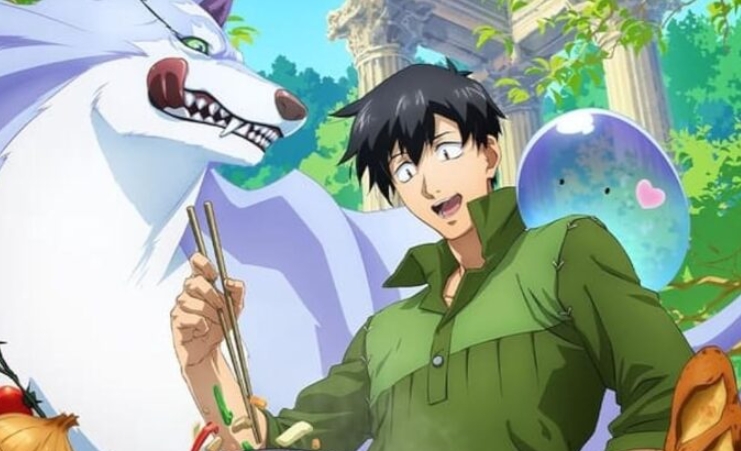
People keep calling this an isekai but that label’s almost misleading. Yeah, Mukouda gets transported to another world. Yeah, there’s magic and monsters. But the show treats all that stuff like background noise. The real focus is the cooking, the eating, and the weird family dynamic that forms between a paranoid salaryman, a talking wolf who could level cities, and later a slime who learns to shoot acid lasers.
The premise hooks you immediately because Mukouda isn’t some clueless teenager. He’s an adult with common sense. When he realizes the king summoned four people but only three look like typical heroes, he figures out fast that he’s the leftover and the kingdom probably plans to use him as cannon fodder or a political tool. So he lies about his skill being useless, takes the hush money, and bounces. That level of self-preservation is refreshing in a genre where protagonists usually charge headfirst into danger because “it’s the right thing to do.” Mukouda just wants to grill in peace.
His skill turns out to be broken in the most specific way possible. He can buy anything from modern Japan, Pepsi included, and it appears in his hands instantly. The show takes this ridiculous concept and treats it seriously. Modern food gives stat buffs to fantasy world natives. A simple rice ball can heal better than potions. The aromas attract monsters, which leads him to Fel, the Fenrir who demands to be fed or he’ll eat Mukouda instead.
The Cast That Carries Everything
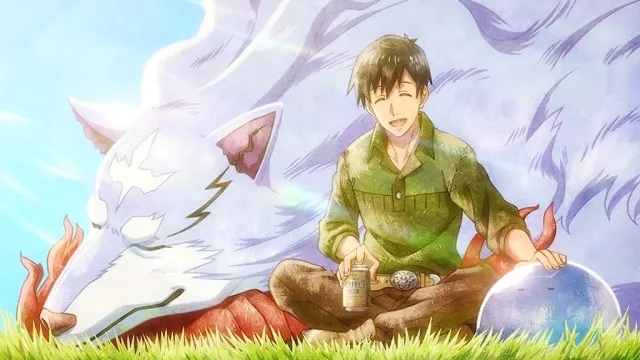
Fel is the reason this show pops off. He’s supposed to be this ancient legendary beast that gods fear, and he spends 90% of his screen time demanding snacks and complaining about portion sizes. The voice acting for him nails that mix of threatening bass and whiny hunger. He hunts dragons and demons for Mukouda to cook, then throws a fit if the meal isn’t seasoned properly. Their back-and-forth never gets old because Fel genuinely respects Mukouda’s cooking skills while also viewing him as a personal chef he’s contractually bound to protect.
Then there’s Sui. The slime starts as a joke character who eats Mukouda’s plastic trash from Japan, but evolves into a party member who can melt enemies with acid and craft high-tier potions. Sui calls Mukouda “Master” in the most adorable way possible and says “pew pew” before attacking. The contrast between this cute blob and its lethal combat abilities is hilarious. Some viewers online pointed out that Sui balances the party dynamic perfectly since Fel handles the heavy hitting while Sui handles support and cleanup.
The goddesses show up later and they’re basically Mukouda’s worst nightmare. They grant him insane blessings and immunities, but only because he bribes them with Japanese sweets and desserts. The wind goddess Ninril is particularly funny because she’s supposed to be this majestic deity but she acts like a sugar-addicted college student pulling all-nighters. These interactions add variety without breaking the chill vibe.
Why The Cooking Animation Hits Different
MAPPA went hard on the food scenes. I’m talking close-ups of sizzling meat, steam rising perfectly, chopsticks breaking apart tender flesh, and sauce dripping in slow motion. It’s not quite Food Wars level where people have clothes-exploding hallucinations, but it’s close enough to make you hungry. Every episode features at least one detailed cooking sequence where Mukouda explains his ingredients and techniques.
The gimmick works because he’s using fantasy monster meat with modern Japanese seasonings. You get scenes where he’s explaining why rockbird tastes like chicken but needs different prep, or how to tenderize orc meat properly. It’s food porn mixed with fantasy worldbuilding. I’ve seen people on forums admit they pause the show to go make snacks because the visuals are too effective. One reviewer mentioned craving Pepsi specifically after watching Mukouda pull ice-cold cans from his skill storage.
The animation quality for the rest of the show is solid but not mind-blowing. Character designs are clean, Fel looks properly massive and intimidating when he’s not begging for food, and the backgrounds have that standard fantasy aesthetic with forests and medieval towns. The real budget clearly went into making that grilled meat look perfect.
The Comfort Food Vibe Explained
This anime is pure comfort television. The conflicts resolve quickly. Bandits show up and Fel eats them in five seconds. Mukouda never faces real danger because he’s got a walking nuke following him around. The merchant guild scenes are about him selling materials and buying new cookware. It’s repetitive, yeah, but it’s the good kind of repetitive. It’s the anime equivalent of a warm blanket.
The show follows a strict formula that some people find boring but others find meditative. Fel hunts something overpowered. Mukouda cooks it. They eat. Maybe they meet a new character who’s shocked by the food. Rinse and repeat. There’s no harem nonsense, no fan service, no edgy torture scenes. Just a guy and his pets eating well and making money.
Some Reddit threads called it the ultimate “turn your brain off” anime, but that’s not quite fair. You don’t have to turn your brain off because the show never insults your intelligence. Mukouda acts like a real person would. He checks prices before buying things. He maintains his camping gear. He’s paranoid about keeping his skill secret from nobles who might exploit him. The logic stays consistent even when the premise is absurd.
The Problems Nobody Wants To Admit
Okay, it’s not perfect. The pacing drags hard in the middle episodes. Some of the guild paperwork scenes feel like filler. The side characters besides the main trio are pretty forgettable. The animation cuts corners during action sequences, which is obvious because MAPPA clearly prioritized the cooking over the fighting. If you’re here for epic fantasy battles, you’ll be disappointed because Fel usually ends conflicts in one hit.
The power scaling is also broken beyond repair, but that’s sort of the point. Fel is so overpowered that there’s zero tension in fight scenes. Some viewers complained that this removes any stakes, and they’re not wrong. The show tries to compensate by having Mukouda worry about political schemes or economic troubles instead of combat, but if you’re not invested in cooking minutiae, you’ll check out around episode 6.
Also, the “online supermarket” skill creates weird plot holes if you think about it too hard. Why doesn’t Mukouda just buy guns or modern technology to revolutionize the world? The show handwaves this by saying he wants to keep a low profile, but come on. He could absolutely break the economy with his access to modern goods, but he mostly uses it to buy mayo and instant dashi.
Production Notes And Where It Fits
Studio MAPPA handled this adaptation, which surprised me because they’re usually doing high-octane stuff like Attack on Titan or Jujutsu Kaisen. Seeing them do a chill cooking show is like watching a heavyweight boxer knit a sweater. The director Kiyoshi Matsuda keeps the tone light and the episodes move fast despite the slow content. The English dub is surprisingly good too, with Fel’s voice actor capturing that smug hunger perfectly.
The show sits in a weird spot genre-wise. It’s technically isekai, but it’s more like a slice-of-life with fantasy elements. Fans of Restaurant to Another World or Ascendance of a Bookworm will feel right at home. If you liked Dungeon Meshi but wanted less dungeon crawling and more cooking, this scratches that itch. The light novel source material goes further into the story, but the anime covers the first major arc adequately.
Season 2 got announced for 2025, so the formula clearly worked for enough people. The first season ends with the party heading to a new continent, teasing new ingredients and new divine encounters. It’s the kind of sequel setup that feels earned rather than desperate.
Final Thoughts On This Campfire Cooking In Another World Anime Review
Look, this show isn’t changing the world. It’s not a masterpiece of animation or storytelling. What it is, though, is consistent. It knows exactly what it wants to be and never apologizes for being a low-stakes food fantasy. In a genre oversaturated with edgy revenge stories and harem power trips, watching a guy make curry for his wolf while avoiding politics feels like a breath of fresh air.
The campfire cooking in another world anime review consensus seems to be that it’s the perfect background show or the perfect “I had a bad day and need to chill” show. It’s got heart, it’s got humor, and it’ll definitely make you hungry. Just don’t watch it on an empty stomach unless you’ve got delivery on speed dial.
Fel and Sui carry the comedy, Mukouda keeps things grounded, and the food animation does exactly what it needs to do. If you’ve got Crunchyroll and three hours to kill, give it a shot. Worst case scenario, you’ll end up ordering Japanese takeout. Best case, you’ve found your new comfort watch for rough weeks. The gods in this show might be greedy sugar addicts, but they’ve got good taste, and so does this anime.
Frequently Asked Questions
What is Mukouda's special skill in Campfire Cooking in Another World?
It's called Online Supermarket, and it lets him buy modern Japanese groceries and goods with fantasy currency, delivered instantly to his hands. Sounds useless for fighting demons but turns out to be broken for cooking and bribery.
Who is Fel and why does he follow Mukouda?
Fel is a legendary Fenrir, basically a god-tier magical wolf who could destroy armies but mostly just wants Mukouda to cook him proper Japanese meals. He acts as the muscle of the party while being a gluttonous drama queen about food.
Will there be a Season 2 of Campfire Cooking in Another World?
Yes, Season 2 was announced and is scheduled for 2025. The first season ends with a clear setup for their next adventure on a new continent.
Does this anime have harem elements or fan service?
Absolutely not. There is zero romance and no harem. Mukouda spends his time cooking for his familiars and avoiding nobles. The closest thing to romance is the wind goddess demanding more cookies.
What other anime is it similar to?
It shares DNA with Restaurant to Another World and Ascendance of a Bookworm, focusing on slow life and practical skills rather than combat. If you wanted Dungeon Meshi with more cooking and less dungeon crawling, this fits.