
Death March to the Parallel World Rhapsody Anime Review
Death march to the parallel world rhapsody anime review threads always start with the same confusion. People watch the first episode expecting a power progression fantasy and instead get a cooking show starring a guy who won the game before the tutorial finished. Satou starts as a programmer crunching overtime on a death march project, falls asleep at his desk, and wakes up inside the game he was debugging. Then he casts one spell. Just one. Meteor Shower. Suddenly he's level 310 with infinite money and stats that break the UI. That's the end of any tension the show might have had.
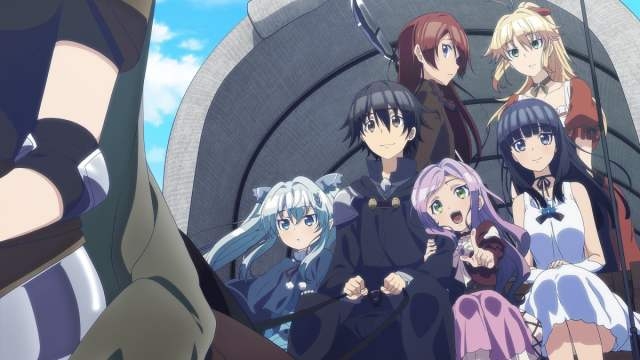
You'd think this setup would lead to him exploring godhood or fixing the broken world. Nope. He decides he's on vacation. The guy treats his own kidnapping into another dimension like a paid sabbatical. He buys a carriage. He collects slave girls like they're souvenir keychains. He eats a lot of meals that get drawn in better detail than the fight scenes. This isn't an adventure. It's a slideshow of a very safe road trip where nothing bad can happen because the protagonist is functionally invincible.
The title refers to that Japanese business practice of crushing overtime before a product launch, something any software dev will recognize with PTSD. The irony is thick because the anime itself feels like it was made during a death march. Rushed. Tired. Going through the motions. But that tired quality weirdly fits the mood. The show isn't trying to be Re:Zero or Konosuba. It just wants to chill. That choice makes it both refreshing and crushingly dull depending on what you wanted.
Death March to the Parallel World Rhapsody Anime Review and the Level 310 Problem
Here's the thing that breaks the show for most viewers. Satou doesn't work for his power. He doesn't grind slimes for ten episodes or find a cursed sword that has a downside. He casts Meteor Shower by accident while trying to look at his menu and wipes out an army of lizards. Boom. Max level. The game interface shows 310 and he gains titles like "God Slayer" and "Dragon Slayer" immediately. From that moment on, every fight is meaningless.
You see him walk into a dungeon later and the skeleton king or whatever gets one-shot. The end. Arc over. Back to cooking. This creates a specific viewing experience where you're never worried. Some isekai use overpowered protagonists for comedy like One Punch Man. Others use it to explore the loneliness of strength. Death March uses it to avoid writing conflicts. Why bother with stakes when you can show another stew recipe?
The source material apparently has more going on with the gods and some memory manipulation plot. The anime teases this. There's a weird dream sequence with a godlike figure. Satou's memories might be fake or altered. But the show doesn't care enough to explore it. It mentions these elements like checking a box then returns to Satou buying pork at the market. The power isn't a tool for storytelling here. It's a wall that keeps the plot out. He has so much money he buys a mansion without blinking. He learns skills instantly by watching someone else do them once. There's no growth curve because he starts at the ceiling.
The Road Trip Structure Nobody Asked For
Most isekai follow a pattern. Hero wakes up, learns the rules, finds a quest, saves the village, builds a harem, fights the demon lord. Death March looks at that pattern and throws it in the trash. Satou actively avoids quests. He sees a notice board with help requests and ignores it. He meets a princess who needs saving and treats it like a distraction from his nap schedule. The show becomes a travelogue with no destination.
The pacing is weird and jagged. Arcs that should take three episodes get resolved in one. The undead king shows up, does a spooky speech, and dies before the commercial break. Then it's back to sightseeing. This isn't necessarily bad. Some reviews call it a "road trip isekai" and that's accurate. The problem is the destination doesn't matter. Satou isn't trying to get anywhere. He isn't trying to go home. He has a vague "maybe I'll check out that mountain" attitude that makes the whole thing feel weightless.
The world building suffers because of this approach. We see one city. Then another city that looks the same. The politics are mentioned but Satou is too rich and powerful to care about them. He can solve any problem with a wave of his hand so the show stops presenting problems. You get episodes where they just eat food and take baths. That's it. No monsters. No villains. Just tourism and cooking. It's like someone took the camping episodes from other anime and made a whole series out of them.
Why the Harem Dynamics Feel Uncomfortable
Let's talk about the slave thing because you can't avoid it. Satou visits a slave market in episode three or four and buys three beastkin girls. Pochi and Tama look like they're ten years old. They act like toddlers. They say "niku" constantly because they love meat. Then there's Liza who looks older but still young, and Arisa who is aggressively sexual despite looking like a child. The show explains that some of them are actually really old. Mia is a 130 year old elf who looks twelve. Arisa is a reincarnated Japanese person in a kid's body with memories of her past life.
But the optics are terrible. You've got a twenty nine year old programmer buying children in a market and putting them in his party. He calls them his slaves but treats them nice so we're supposed to think he's a good guy. The camera still does the usual anime thing of putting them in compromising positions though. Arisa, voiced by Aoi Yuuki, tries to seduce Satou constantly with lines that are way too adult for her body. The show winks at you like "isn't this naughty" but Satou refuses because he's a gentleman. That doesn't erase the setup. It makes it worse.
The age gap issues are noted in several reviews. One pointed out that the voice actors do distinct speech patterns for each girl which is nice voice acting work, Pochi and Tama have their meat gimmick, Mia speaks in a muffled monotone, Nana the homunculus speaks without emotion, but you can't get past the fact that the harem is full of minors or people who look like minors. Even if they're "actually" centuries old, the show presents them as kids. It creates this creepy undercurrent that ruins the relaxing vibe for some viewers. Zena Marientell, voiced by Rie Takahashi, is one of the few who looks age appropriate but she barely gets screen time compared to the loli squad.
Silver Link Cut Corners
The animation studio Silver Link usually does solid work. Look at Bofuri or Tanaka-kun. Here they dropped the ball on basics. Characters don't look at each other when talking. Their eyes focus on empty space slightly to the left or right of the person they're conversing with. It's a fundamental error that happens constantly and breaks immersion. The color palette is also washed out and dark with a desaturated look. The show has a happy relaxed tone but looks like it has a gray filter over everything which creates a weird mismatch.
Action scenes lack sound effects. You'll see a sword swing and hear nothing. Then a spell goes off and it's loud. It's inconsistent and distracting. Apparently this might be intentional to keep the quiet mood but it just looks like they forgot to mix the audio properly. The one thing they animate well is food. Every stew and bread loaf and meat skewer looks incredible. You can tell where the budget went. The meals look better than the fight choreography which says everything about the show's priorities.
Wasted Potential and Missing Stakes
There was a good show buried here somewhere. The setup with the death march crunch time connecting to the isekai is clever commentary on Japanese work culture. The idea that Satou might have had his memories altered by gods has weight. The demon lord exists in the background. Corrupt politicians show up briefly. But Satou is too powerful and too apathetic to engage with any of it.
He could fix the world's problems. He chooses to make curry instead. That's funny for an episode but it stretches across twelve episodes. You keep waiting for him to care about something. Anything. He doesn't. He buys a house. He adopts more girls. He ignores the main quest. The show ends without resolving the central mystery of how he got there or why. The gods are mentioned then forgotten. The "death march" title never pays off thematically. It's just a reference to his job before he left.
Some people love this approach. They call it stress free. You can put it on in the background and never worry about the characters. Nobody dies. Nobody loses. It's pure comfort food anime that demands zero brain power. But for anyone who likes stories where things happen or characters grow, it's maddening. The potential for a deconstruction or at least a solid mystery sits right there and the show shrugs and serves another bowl of soup.
Why It Works as Background Noise
I can't completely trash this show because it fills a specific niche. If you had a bad day and want anime where nothing bad happens to anyone, this delivers. Satou is so powerful that no one can hurt him or his adopted family. The world is pretty. The food looks delicious. The girls are cute if you ignore the slave acquisition context. It's like a warm blanket that plays at half speed.
Comparisons to Konosuba or Re:Zero miss the point. Those shows deconstruct isekai or put characters through hell. Death March just exists. It's not parody. It's not dark. It's a travel guide with a harem attached. For twelve episodes you watch a guy win at life without trying. Some find that aspirational. Others find it insulting to the viewer's intelligence. Both are valid.
The light novel apparently expands on the lore and gives actual explanations for the god stuff and the world mechanics. The anime adapts the beginning but stops before anything pays off. It's like reading the first chapter of a book and stopping. You get introductions but no conclusions. Whether that's a deal breaker depends on how much you need closure.
The Verdict
Death march to the parallel world rhapsody anime review scores usually land in the middle for good reason. It's not offensive. It's not great. It's a show about a guy who won the lottery and decided to take a nap. The overpowered protagonist removes all conflict. The harem has uncomfortable age gaps and slave acquisition tropes that haven't aged well. The animation has weird errors with eyes and colors. Yet it fills a void.
If you want an isekai where nothing bad happens and you can watch someone tour a fantasy world while eating good looking food, this works. It's a background noise anime. Put it on while doing laundry or grinding in an MMO. Don't expect Re:Zero. Don't expect Konosuba. Expect a very safe, very boring vacation that you watch someone else take. It's serviceable. It's watchable. It's also completely forgettable the second it ends.
Frequently Asked Questions
Is Death March to the Parallel World Rhapsody a good anime?
It's average at best. The show avoids major flaws but also avoids anything interesting. It works as stress-free background viewing where nothing bad happens, but the lack of stakes makes it boring for viewers who want conflict or character growth.
Why is the protagonist so overpowered?
Satou becomes overpowered instantly by accidentally casting Meteor Shower in the first episode, jumping to level 310 immediately. This removes all tension since he can solve any problem effortlessly.
Does the anime have problematic content?
It has serious issues with the harem members looking like children (ages 10-14) despite some being chronologically older. The protagonist buys them as slaves early in the series, which creates uncomfortable optics even if he treats them well.
Is there any action in Death March?
Not really. It focuses on sightseeing, cooking, and relaxing rather than combat. There are very few fight scenes and the ones that exist end instantly because Satou is too powerful.
What does the title Death March mean?
A "death march" refers to the Japanese business practice of extreme overtime crunch periods before a product launch. The protagonist is a programmer working such a schedule before he gets transported.