
Girls und Panzer Anime Series Review
Girls und Panzer shouldn't work. I'm writing this Girls und Panzer anime series review because someone needs to explain why this show about cute girls driving WWII tanks is worth your time even though it sounds like a complete disaster on paper. You've got moe character designs mixed with Panzers and Shermans, a combination that reeks of a desperate gimmick. Most people write it off immediately. They're wrong and missing out on one of the most solid sports anime to come out of the 2010s.
The premise is stupid in the best way. High schools exist on massive aircraft carriers sailing around Japan. Teenage girls shoot each other with live tank rounds that somehow don't kill anyone because of magic carbon coating on the interiors. Characters stick their heads out of hatches during active combat while shells explode nearby. Any realistic military fan will tell you this is complete nonsense. But here's the thing that matters. Actas Studios took this ridiculous setup and treated it with so much sincerity that the absurdity stops bothering you by episode two. You just roll with it.
The Premise Is Dumb But The Execution Is Solid
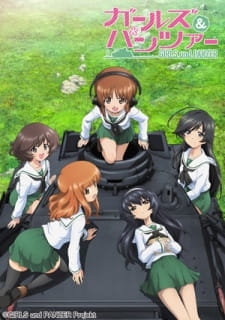
Girls und Panzer takes place in an alternate timeline where tankery, or Sensha-do, became a traditional martial art for women back in the 1920s. Instead of learning flower arrangement or tea ceremony, these girls learn to operate restored World War II tanks in competitive matches. The show follows Ooarai Girls Academy, a school facing closure unless their newly formed tank team can win the national championship. It's your standard underdog sports setup but with 30-ton death machines.
The logistics make absolutely no sense if you think about them for more than five seconds. Schools are massive ships. The tanks use special ammunition that explodes but doesn't penetrate armor. Young girls repair complex engines without getting grease on their perfect uniforms. The show knows it's ridiculous and doesn't waste time explaining every detail. It just throws you into the action and expects you to keep up. The alternate history aspect gets explained in drips and drabs. We know tankery became a women's sport in the 1920s. We know schools moved onto these massive carrier ships for reasons never fully explained. The show wisely doesn't spend three episodes on lore dumps. It shows you a girl driving a tank and expects you to accept that's normal here. This approach works better than trying to justify everything with pseudoscience.
The carbon coating explanation for why shells don't kill anyone is hand-wavy at best. Apparently it protects the crew from penetration while still allowing the impact to knock them around. Characters get bruises and concussions but never die. It's a necessary conceit to keep the show sports-focused rather than tragic. Accepting this rule allows you to enjoy the tactical chess match without worrying about teenage mortality rates.
What saves the concept is the commitment to treating Sensha-do as a real sport. The series uses military advisors to get the tank tactics right. You'll see proper hull-down positioning, flanking maneuvers, and angling armor to deflect shots. The tanks have weight. When a Panzer IV accelerates, you feel the inertia. When it fires, the suspension compresses realistically. This attention to detail makes the battles feel grounded despite the silly context. The tactics used throughout the series demonstrate genuine understanding of armored warfare adapted for competition.
The show also avoids the trap of making this about war. These aren't soldiers. They're athletes. The tanks are sporting equipment, not weapons of conquest. This distinction matters because it keeps the tone light while still allowing for serious competition. You can have characters worrying about tournament brackets and rival schools instead of death and destruction, though some characters do carry past trauma that gets explored lightly.
Meet Miho And The Anglerfish Team
Miho Nishizumi is the protagonist and she's running from her past. She transfers to Ooarai specifically because they don't have a tank program. She's the daughter of a famous tankery family where following the rules matters more than saving your friends. During a previous championship match, she abandoned her tank to rescue drowning teammates, causing her school to lose. Her family considers this weakness. She considers it human.
Miho's character arc follows the classic reluctant hero path. She starts wanting nothing to do with tanks. The student council, led by Anzu, basically forces her into joining by making it clear the school needs her. She takes command because she's the only one with experience, not because she wants power. This changes over the series as she bonds with her crew. By the finals, she's calling shots with confidence and inspiring other teams to coordinate. Her relationship with her sister Maho adds family drama without getting too heavy. Maho represents the traditional Nishizumi style: victory at any cost, follow the textbook, emotions are weaknesses. Miho develops her own style based on adaptability and protecting her friends. Their eventual confrontation isn't about hatred. It's about proving there's more than one way to be a commander. This pays off in the finale when Maho respects Miho's choices even in defeat.
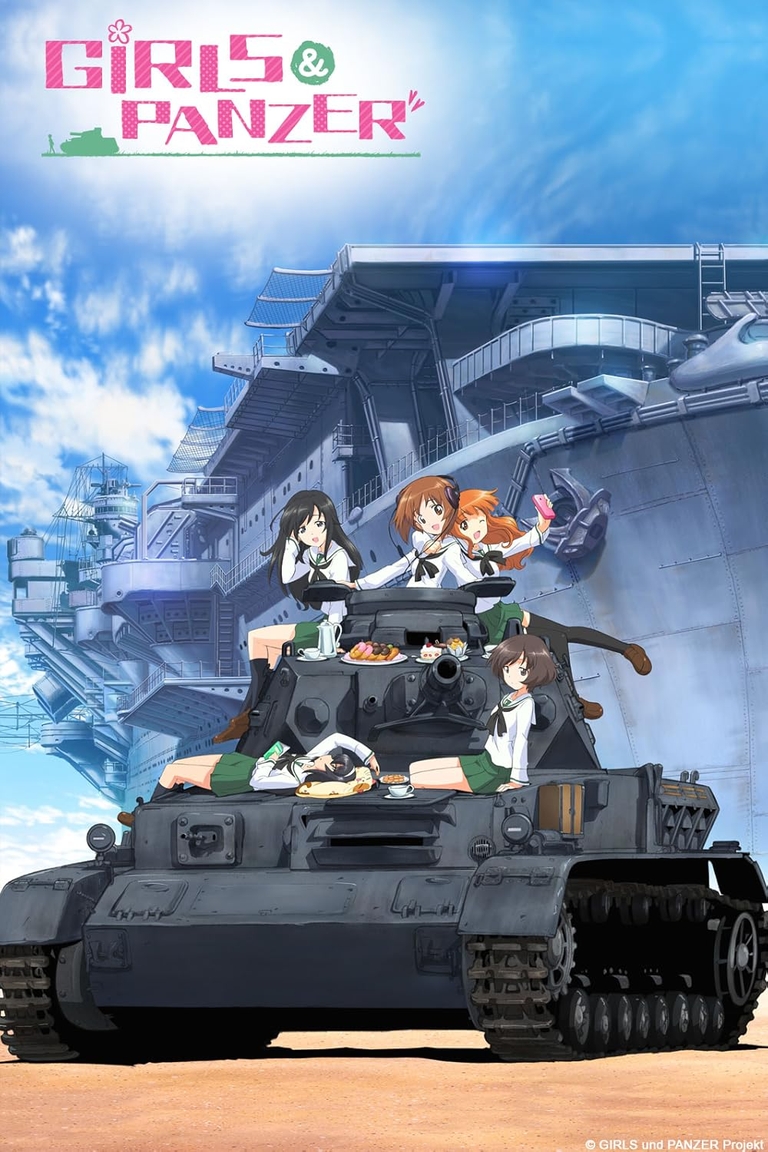
Her crew makes up the Anglerfish Team. Saori Takebe handles radio operations and never shuts up about boys and dating. Hana Isuzu is the gunner who comes from a flower arrangement family but prefers the recoil of a 75mm cannon. Yukari Akiyama is the loader and resident military otaku who sneaks onto rival school grounds to gather intel. Mako Reizei drives despite being constantly half-asleep and grumpy.
Their chemistry carries the show during the downtime between matches. Saori's chatter fills the silence. Yukari's enthusiasm for tank history provides educational tidbits. Mako's dry complaints about waking up early provide comic relief. Miho grows from a reluctant participant into a confident commander who trusts her team. It's standard character growth but it works because the show doesn't try to do too much with it.
The supporting cast is massive and that's a problem. Ooarai has over thirty named characters across different tank crews. You've got the student council in their Panzer 38(t), the former volleyball team in a Type 89, the auto club in a Tiger(P), and history buffs in a StuG III. Most of these characters get one personality trait and a few lines per episode. If you're looking for deep development for everyone, you won't find it. The show focuses on Miho's core group and treats everyone else as colorful background filler. The volleyball team girls are just "the sporty ones." The history club girls are "the ones who dress like soldiers." They don't grow or change. They just fill space in the tanks.
Tank Warfare As A Real Sport
This is where the show shines. Girls und Panzer functions as a pure sports anime wrapped in military hardware. You get the tournament structure, the underdog team with old equipment, the rival schools with distinct themes and unlimited budgets. St. Gloriana represents British tradition with their tea-drinking habits and Churchill tanks. Saunders University High School brings American excess with endless Sherman tanks and radio interception tactics. Pravda High School offers Soviet discipline with Katyusha rockets and heavy KV-2s. Anzio High School has Italian enthusiasm with questionable tank quality.
The St. Gloriana match in early episodes establishes the template. Ooarai faces a team with better equipment and training. They lose the practice match but gain respect. This sets up the tournament stakes properly. The Saunders match introduces electronic warfare and communication interception tactics. The Pravda match is the highlight for many viewers, featuring a snowy battle that mirrors historical Eastern Front conditions. Ooarai gets trapped in a valley and must break a siege using guts and engineering tricks. Episode 9 features a reconnaissance mission that plays like a stealth game with Yukari and Miho sneaking through enemy lines.
Each rival school captain has a distinct personality that matches their national stereotype. Darjeeling speaks in tea metaphors and remains calm under fire. Kay of Saunders is loud, friendly, and represents American abundance with her endless supply of Sherman tanks. Katyusha is tiny, aggressive, and demands respect despite her size, much like the Soviet Union she represents. Nonna acts as her second-in-command and voice of reason. Anchovy of Anzio screams about honor while driving tanks that break down. These caricatures could be offensive but they're played with such warmth that they become endearing rather than insulting.
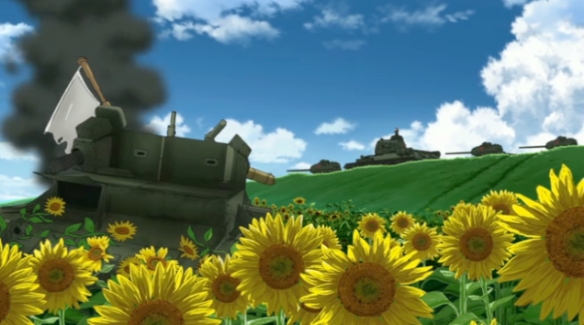
Each match follows the beats you'd expect from a sports series. The team faces impossible odds, pulls out last-minute tactical wins, and learns lessons about trusting each other. But because they're driving actual war machines, the stakes feel heavier than a basketball game. When a shell hits, the tank rocks. When armor gets penetrated, the crew blacks out from shock. It maintains tension without getting grimdark.
The tactics are surprisingly accurate. The show consulted with military experts to get details right. You'll see tanks using smoke screens, coordinating fire and movement, exploiting terrain for cover, and targeting weak points on enemy armor. The finals against Kuromorimine show genuine combined arms tactics with different tank types supporting each other. The 3DCG integration for these battles deserves specific praise. In 2012, most anime using CGI for vehicles produced jarring results with mismatched lighting and frame rates. Girls und Panzer avoided this by carefully compositing the tanks with the 2D backgrounds. The shadows match. The camera movements follow the action naturally. When tanks get hit, the CGI models show damage textures that blend with hand-drawn impact lines.
What makes it fun is the creativity. Ooarai starts with a mismatched collection of obsolete tanks. They win through improvisation rather than brute force. They use logs to cross rivers. They drift tanks around corners like they're in Initial D. They drop anchors to swing their hulls around for shots. It's stupid and awesome at the same time. The attention to tank variants is obsessive. When Saunders shows up, they bring multiple versions of the Sherman tank including the Firefly variant with its distinct long gun. Pravda fields T-34s in both 76mm and 85mm configurations. Kuromorimine brings a King Tiger, Panther, and even a Maus super-heavy tank that weighs over 180 tons. For tank nerds, spotting these variants is half the fun.
The Animation And Sound Design
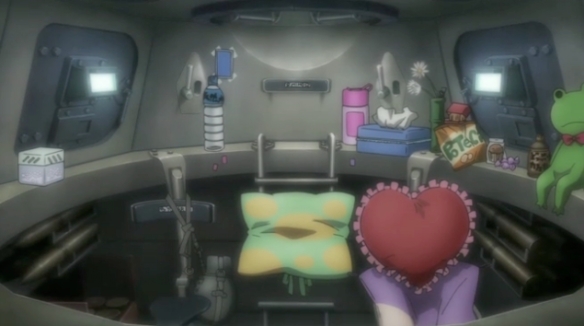
Actas used CGI for the tanks and it looks better than it has any right to. The integration between 2D characters and 3D vehicles is smooth. The tanks have weight and momentum. When they turn, the tracks kick up dust. When they fire, the muzzle flash illuminates the landscape. Early episodes show some budget constraints with static backgrounds, but by the tournament arc the animation quality jumps significantly.
The character designs are standard moe fare. Big eyes, small mouths, bright hair colors, and perfect skin. It creates a weird visual clash with the gritty military hardware that somehow works. The contrast between a cute girl sticking her head out of a tank hatch while bullets fly overhead shouldn't work visually but it does.
The soundtrack steals from real military history. You'll hear Panzerlied when German tanks appear. The Battle Hymn of the Republic plays during American school scenes. Katyusha accompanies the Russian team's entrance. These aren't subtle references. They're direct lifts that add authenticity to the national stereotypes each school represents. The voice cast includes several big names. Mai Fuchigami voices Miho with a soft hesitation that gradually hardens into command voice. Ai Kayano's Saori talks fast and emotive, filling radio channels with cheerful chatter. The standout might be Ikumi Hayama as Yukari, delivering military trivia with genuine enthusiasm that makes you believe she loves these machines.
The background music during battles uses orchestral arrangements that swell with the action. It's not subtle but it's effective. The quiet moments between matches use softer piano pieces that don't stick in the memory but set the mood appropriately. Sound effects matter in a show about tanks. The clanking of treads, the squeal of turrets rotating, the thunder of cannons firing - all recorded with care. The voice acting keeps things light. Even the rival school leaders get distinct voices that match their personalities, from Darjeeling's British calm to Katyusha's Napoleon complex shouting.
Why The Battles Actually Matter
Most sports anime live or die by whether you care about the outcome of the game. Girls und Panzer solves this by making Ooarai the perpetual underdog with everything on the line. If they lose, the school closes. The students lose their home. This isn't just about a trophy. It's about their literal future.
Miho's leadership style drives the emotional core. She refuses to sacrifice her teammates for victory. She prioritizes their safety over winning at all costs. This puts her in conflict with her older sister Maho, who leads the champion Kuromorimine team with cold efficiency. Their rivalry isn't about hate. It's about different philosophies of command. Miho proves you can win while caring about people.
The show also explores how these girls relate to their machines. Yukari names her tank and treats it like a pet. The auto club treats their Tiger(P) like a difficult car they're trying to fix. This anthropomorphization of military hardware sounds weird but it gives the vehicles character without being too obvious about it.
The OVAs And The Movie
The main series is twelve episodes and that isn't enough. The TV run skips over several matches including the battle against Anzio. The Anzio OVA fixes this with a forty-minute episode showing the full fight against Anchovy's Italian-themed team. It includes more silly history references and tank drifting antics that couldn't fit in the main broadcast.
Then there's Girls und Panzer Der Film. This movie continues directly after the series with a massive thirty-versus-thirty tank battle against a college team. It goes completely off the rails with tanks fighting on roller coaster tracks, inside amusement parks, and using every ridiculous tactic the writers could imagine. It's fan service for tank nerds and it knows it. The animation budget is higher, the stakes are bigger, and the physics make even less sense than the show. The climax involves toppling a Ferris wheel onto enemy tanks.
There's also Das Finale, an ongoing film series that started in 2017 and keeps releasing new episodes sporadically. These continue the tournament with new rival schools and upgraded tanks. If you finish the main series and want more, there's plenty of content to consume. The franchise has maintained popularity for over a decade through these films and video games. World of Tanks did a collaboration event. The real town of Oarai in Japan receives tourism from fans visiting the locations that inspired the school ship. The show created a lasting footprint that exceeds its modest origins as a weird genre mashup.
Problems You Can't Ignore
The show isn't perfect. The cast is too big for twelve episodes. With over thirty named characters, most remain cardboard cutouts with one defining trait. They don't grow or change. They just fill space in the tanks.
The pacing struggles between matches. Episodes without tank combat focus on slice-of-life activities like shopping for swimsuits or camping trips. These drag if you're watching for the military action. The show tries to develop character relationships during these downtime moments but the sheer size of the cast makes it hard to care about everyone. The science of the tank carriers makes no sense. How do they float? How do they move? Where does the food come from? The show doesn't care and neither should you, but it can break immersion if you think about logistics.
Some battles feel repetitive. Ooarai is always outnumbered and outgunned. They always win through some last-minute trick or terrain exploitation. After a few matches, you can predict the rhythm. They spot the enemy, get ambushed, lose some tanks, then pull a miracle shot to win. It works for the sports formula but lacks variety in execution.
The CGI, while good for the time, shows its age in some scenes. Early episodes have particularly stiff tank movements and flat environmental textures. The budget clearly went to the big set pieces, leaving some dialogue scenes looking cheap. One major issue is the skipped content. The TV series rushes through what should be major matches. The Anzio battle happens off-screen between episodes, which is criminal given how fun the Anzio characters are. You have to watch the OVA to see it, which splits the narrative experience. The show tries to cram too much tournament into too few episodes.
The fan service elements are mild compared to some shows but still present. The "tank wash" scenes where girls clean their vehicles in swimsuits feel tacked on. The Anglerfish dance in the ending credits is goofy but harmless. These moments don't ruin the show but they date it to the early 2010s anime era where such content was expected.
Why This Girls und Panzer Anime Series Review Says Watch It
If you wrote this show off as another stupid moe bait show with military aesthetics, you made a mistake. Girls und Panzer takes a premise that sounds like a parody and plays it straight enough to work. It respects the military hardware while making it accessible. It builds tension in matches without killing anyone. It balances cute character moments with serious tactical discussion.
Is it deep? Not really. The character arcs are simple. The themes are basic. It's about friendship and trying your best. But it's executed with enough skill and genuine love for tanks that it doesn't need to be Shakespeare. It just needs to entertain you for twelve episodes plus movies.
Comparing this to other sports anime like Haikyuu or Kuroko's Basketball reveals both strengths and weaknesses. Those shows develop their large casts better over longer episode counts. Girls und Panzer sacrifices character depth for mechanical detail and match variety. If you want to know how volleyball works, watch Haikyuu. If you want to see a Panzer IV outmaneuver a Tiger tank, watch this.
Watch at least four episodes before judging. The first episode is slow setup. Episode two gets the tanks moving. By episode four you'll know if the sports tournament structure clicks for you. If it does, you've got a fun ride ahead with plenty of historical references and explosive action. If it doesn't, at least you tried something weird.
This Girls und Panzer anime series review comes down to one point. The show knows exactly what it is and doesn't apologize for it. That confidence makes all the difference between a cheap gimmick and solid entertainment.
Frequently Asked Questions
Is this show just about war?
No, it's not really about war. The series treats tank combat as a competitive sport called Sensha-do. While they use real WWII tanks and ammunition, the show focuses on tournament brackets, team rivalries, and athletic competition rather than military conflict or combat trauma.
How many episodes should I watch before deciding if I like it?
Give it until episode four. The first episode is mostly setup and slice-of-life introduction. Episode two introduces the tanks properly. By episode four you'll see the first real match and know if the sports tournament structure works for you.
How much content is there total?
The main series is twelve episodes with a few short OVAs. There's also a forty-minute Anzio OVA that covers a skipped battle, plus the movie 'Der Film' which continues the story. An ongoing film series called Das Finale releases new episodes periodically.
Are the tanks historically accurate?
It's surprisingly accurate. The show consulted military advisors and tank historians. The vehicle models, sounds, and tactical maneuvers like hull-down positioning and flanking are realistic. The CGI tanks have proper weight and suspension physics.
Do I need to know about tanks to enjoy this?
You don't need any. The show explains the basics of tank operation during the early episodes. Any historical references are treated as fun Easter eggs rather than required knowledge. Yukari's explanations in the show teach you what you need to know.