
Given Anime Series Review Why It Breaks the BL Mold
Most people see Boys Love in the tags and assume they know exactly what Given is selling. They don't. This given anime series review needs to start with a hard truth: if you're watching for the usual possessive top meets submissive bottom routine, you're going to miss the point entirely. Given is about a dead boy and the guitar he left behind, about how grief sounds when you finally put words to it, about four guys who play music together because screaming into the void isn't socially acceptable.
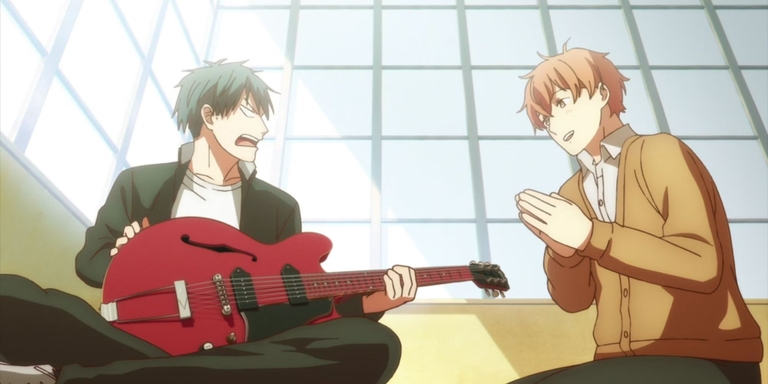
Ritsuka Uenoyama finds Mafuyu Sato sleeping on a staircase clutching a busted Gibson ES-330, and that's where it starts. Not with a meet-cute, but with broken strings and a silence that lasts too long. Mafuyu doesn't talk much because he's carrying the weight of Yuki Yoshida, his childhood best friend who died by suicide before the first episode even starts. The anime doesn't hand you this information in a neat flashback package either. It lets you sit with Mafuyu's quietness, lets you wonder why he stares at that red guitar like it might bite him.
I keep seeing reviews that call this a romance first and a music story second. That's backwards. The romance can't exist without the music because Mafuyu literally cannot speak his trauma until he's on stage screaming it into a microphone. That's the whole trick of the show. The guitar isn't just a prop, it's the third character in their relationship, heavy with history and rusted strings that Ritsuka fixes without asking permission first.
The Grief That Refuses to Be Pretty
Mafuyu's trauma isn't glamorous. It's not the kind of dead boyfriend backstory that gets played for tragic beauty. Yuki was real, they were kids together, they loved each other, and then Yuki killed himself after a fight where Mafuyu said things he can't take back. The show makes you understand that Mafuyu isn't just sad, he's stuck. He can't write lyrics for the band because words failed him once before and he's terrified they'll fail him again. Every time he opens his mouth to sing, he's remembering the last conversation he had with a dead boy, and that's not something you get over in a training montage.
The guitar becomes this physical manifestation of his inability to move forward. He carries it everywhere but he doesn't play it. He sleeps with it. He stares at it while his fingers bleed from practicing chords he already knows. It's heavy and red and broken, just like his relationship with the past. When Ritsuka fixes the strings in the first episode, it's not a romantic gesture, it's an invasion. Mafuyu doesn't want the guitar fixed because fixing it means using it, and using it means admitting Yuki is gone and not coming back to claim it.
I saw some data that said a lot of viewers found the first three episodes slow. They're not slow, they're just quiet. The show is building pressure. You need to feel that silence so that when Mafuyu finally sings in episode nine, it breaks something in you too. Given Anime Series Review data shows most people who drop it early miss the point entirely. The pacing is deliberate because grief doesn't move on a schedule.
The flashbacks to Yuki are handled with care too. We don't get long scenes of them being happy to make you cry harder. We get fragments. A hand on a shoulder. A shared pair of headphones. The way Yuki laughed too loud. It's more realistic that way. When you lose someone, you don't remember whole days, you remember specific gestures that haunt you at three in the morning. Mafuyu is haunted by the fact that the last thing he said to Yuki wasn't "I love you" but something angry and sharp that he can't unsay.
Ritsuka's Burnout and How Mafuyu Fixes It
Everyone talks about Mafuyu's arc because it's loud and heartbreaking, but Ritsuka's story is just as important. Here's a kid who was a guitar prodigy at twelve and by sixteen he's bored out of his mind. He's sleeping through class, he's skipping practice, he's going through the motions with his bandmates Akihiko and Haruki but not really feeling the music anymore. He meets Mafuyu and suddenly there's this weird, quiet boy who doesn't know how to hold a pick properly but has these calloused hands that suggest he's been trying for years to play the instrument his dead boyfriend left behind.
Ritsuka's growth isn't about learning to love Mafuyu, though that's part of it. It's about learning that music isn't just technical skill. He hears Mafuyu sing and realizes that all his practiced riffs and scales don't mean anything if they don't communicate something real. That's why he gets so frustrated when Mafuyu can't write lyrics. He knows the song needs words, but he doesn't understand yet that Mafuyu's silence is the words. He's trying to rush a grieving process that can't be rushed, not because he's cruel, but because he's seventeen and doesn't know better yet.
Their relationship develops through the music. The scene where Ritsuka writes the guitar part for "Fuyu no Hanashi" while thinking about Mafuyu's voice is more intimate than most kiss scenes in other shows. He's translating his feelings for this boy into chord progressions, into finger positions, into the way the distortion pedal sounds when he steps on it too hard because he's frustrated and horny and confused about why he cares so much whether Mafuyu smiles or not. Manga Can't Sing details explain how the anime fixes the manga's biggest problem, which is that you can't hear music on paper.
When they finally do kiss, it's messy and backstage and Ritsuka says "You... did... so damn well" because he can't figure out how to say "I'm in love with you" yet. He's still learning the language of his own feelings. That's what makes it work. It's not a perfect confession with roses and candles. It's sweat and guitar cables and the knowledge that they have to go back on stage in five minutes.
The Music That Hurts to Listen To
Let's talk about Centimillimental. The soundtrack for Given was composed by Atsushi, and it's not background noise. The songs are characters with their own backstories. "Kizuato" as the opening hits different once you realize it's from Yuki's perspective looking back at Mafuyu. "Marutsuke" as the ending is this bittersweet acceptance that sometimes loving someone means letting them sleep because they're exhausted from being sad. The lyrics matter. They aren't just random phrases that sound good, they're plot points.
But episode nine is where it all comes together. Mafuyu gets on stage at the live house and improvises lyrics to "Fuyu no Hanashi" right there in front of everyone. He sings about winter and sleeping and not being able to say goodbye. He sings "I couldn't say anything, I couldn't say anything, I couldn't say anything" and you realize he's been practicing this conversation with a dead boy for months. The voice acting by Shougo Yano here is unreal. He doesn't sound like an anime character, he sounds like a kid who is breaking apart and using the microphone to hold himself together.
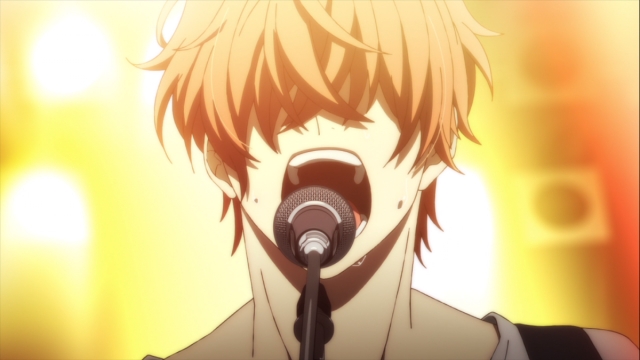
The animation switches to CGI for the instruments during performance scenes, which some people hate, but I think it works. You can see the fingerings on the guitars are accurate. The drums sync up perfectly. They clearly had musicians consulting on this because the rehearsals look like actual band practice, not like that weird clean montage stuff you see in other music anime where everyone is instantly perfect. There's a scene where they're tuning their instruments and it's just... noise. Beautiful, discordant, realistic noise. Reddit discussion on the performance notes that the technical accuracy is what sells the immersion.
The difference between Centimillimental's released versions and the in-anime performances is important too. When you buy the soundtrack, Atsushi's versions are polished and perfect. But when Mafuyu sings in the show, his voice cracks. He runs out of breath. He sounds like a real teenager singing about his dead boyfriend for the first time in public. That imperfection is what makes it devastating.
The Older Guys Who Complicate Everything
Akihiko and Haruki could have been background characters. In a lesser show they would have been the comic relief senpai who give advice and disappear. Instead, Given gives them a whole messy subplot about unrequited feelings and toxic exes that almost overshadows the main couple. Haruki has been in love with Akihiko forever, watching him from behind his bass guitar, content to just be in the same room. Akihiko is living with his ex-boyfriend Ugetsu Murata, who is a violin prodigy and absolute emotional poison.
Their relationship is this codependent nightmare where Ugetsu loves Akihiko but can't stand to see him happy, and Akihiko keeps going back because he thinks he deserves to be miserable. It's dark and realistic and makes Ritsuka and Mafuyu's high school romance look simple by comparison. Character analysis from reviews points out that Akihiko represents what happens when you don't process your trauma, while Mafuyu represents the possibility of healing.
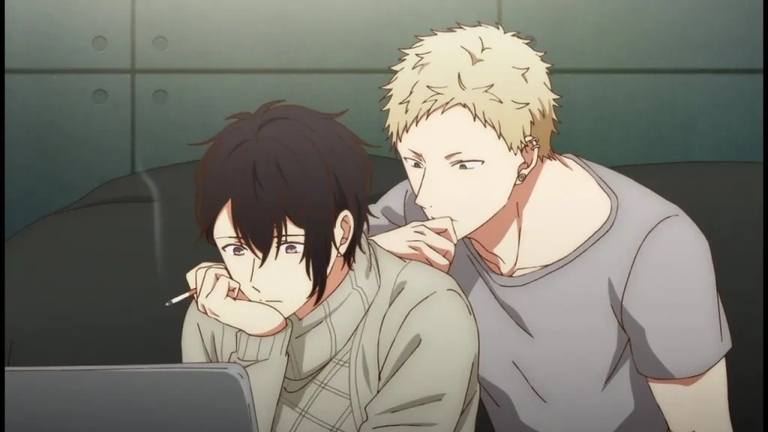
The scene where Akihiko finally leaves Ugetsu and shows up at Haruki's door is one of the most satisfying moments in the series because it doesn't fix everything. They're still awkward. They still don't know how to talk to each other. Akihiko has to learn how to be loved without flinching, and Haruki has to learn that patience isn't the same as passivity. It's messier than the main couple's arc, which is why some fans prefer it. More on the side couple
Where the Animation Gets Weird
Studio Lerche did a solid job overall, but we need to talk about the CGI. During that climactic episode nine performance, the switch to computer generated instruments is jarring. It looks like they ran out of budget for hand-drawn guitars and just pasted in some 3D models. It doesn't ruin the scene because the audio is so strong, but it's definitely a "what the hell" moment visually that pulls you out of the immersion for a second.
The character designs are simple but expressive. They use a lot of shading and lighting to show mood, which works great for the quiet moments. But sometimes the faces go too manga-ish with the exaggerated expressions during comedy bits, and it clashes with the serious tone. The show is at its best when it lets the silence do the work, like in the scene where Ritsuka carries Mafuyu's CDs home and they just walk together without talking, the sunset doing all the emotional heavy lifting.
Also, the pacing in the middle episodes drags a little. Episode four through six feel like they're stalling for time, repeating the "Mafuyu can't write lyrics" conflict without moving it forward. It's a short series, only eleven episodes, so every minute counts, and some of those minutes feel like filler that could have been spent developing the secondary characters more. Yayoi, Ritsuka's sister, gets some screen time but not enough to make her feel like more than a plot device to get the boys in the same room. Technical review details
What Given Means for BL Going Forward
Given aired on Noitamina, which was huge because that's a mainstream late-night block, not some niche satellite channel. It proved that BL stories can be about more than just getting two guys together. They can be about grief and healing and the music industry and found family. Why it matters for the genre
It avoids so many gross tropes that plague the genre. There's no "you're mine" possessiveness played as romantic. There's no sexual assault played as a meet-cute. When Ritsuka realizes he's attracted to Mafuyu, he doesn't freak out about being gay, he freaks out about whether Mafuyu is ready for a relationship while still mourning Yuki. Akihiko explicitly states that same-gender attraction isn't unusual, which shouldn't be revolutionary but somehow is in this genre. Stop calling it just another BL
The show treats its queer characters like people first and shipping fodder second. That's why the given anime series review community is so protective of it. We know how rare this is. Most BL anime are made for straight women to fetishize gay men, but Given feels like it was made for people who understand that love is complicated and music is therapy and sometimes you have to break down completely before you can build yourself back up.
If you're looking for a show where boys cry and play guitar and learn that love doesn't fix grief but makes it bearable, watch Given. Don't skip to the kiss scene. Don't watch it on your phone while doing other things. Put on good headphones and listen to the songs the way they're meant to be heard. Let the silence in the early episodes sit heavy in your chest so that the music in the later episodes can break you open.
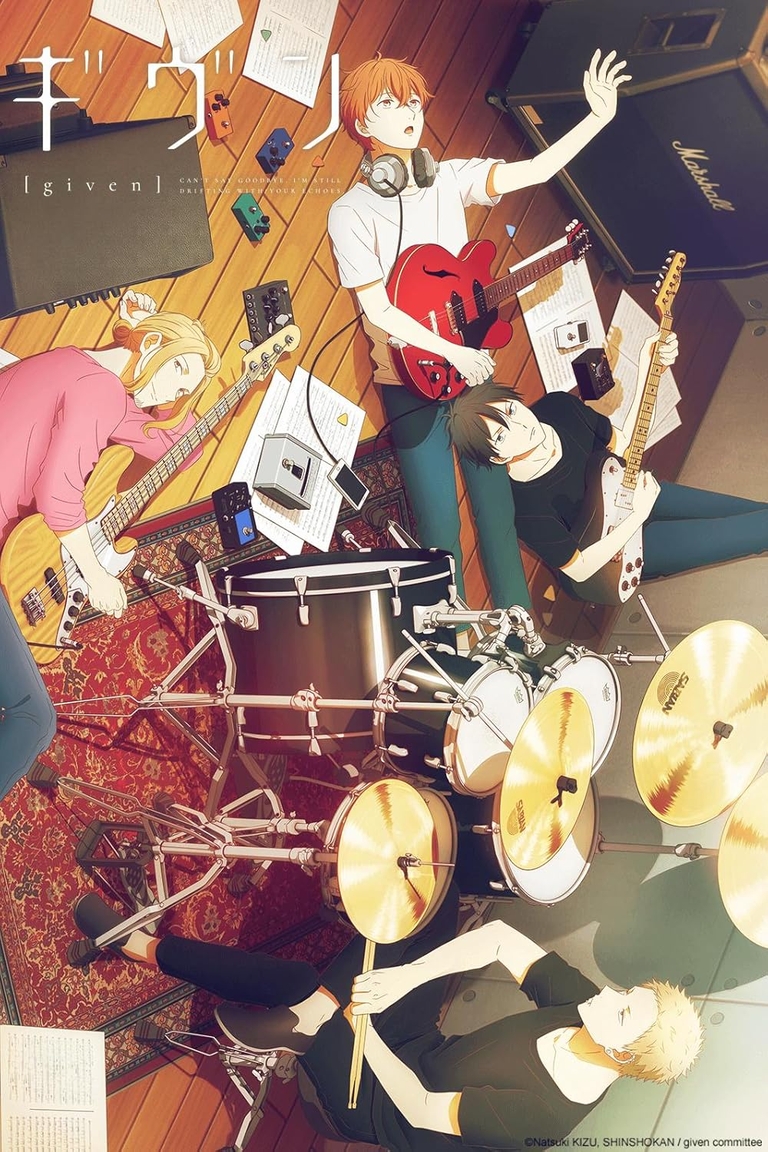
Mafuyu doesn't get over Yuki by the end. That's not how this works. But he learns that he can carry the memory and still make new ones. He learns that the guitar doesn't have to stay broken. Ritsuka learns that technical perfection is empty without emotional truth. And the audience learns that sometimes the most romantic thing you can say to someone isn't "I love you," it's "You did so damn well" when they finally manage to sing. The given anime series review consensus is right about one thing: this isn't just another BL. It's a story about how we keep living when the people we love stop, and how music is just screaming with better timing. Watch it for the romance if you want, but stay for the grief. That's where the real story lives.
Frequently Asked Questions
Is Given appropriate for younger viewers?
Given deals with heavy themes like suicide, grief, and toxic relationships. While there's no explicit sexual content in the TV series, the emotional weight is pretty heavy. I'd say it's better for older teens and up who can handle discussions about mental health and loss.
Do I need to read the manga before watching the anime?
Nope. The anime stands on its own, though it only covers part of the manga's story. The manga continues with more development for Akihiko and Haruki, plus Mafuyu and Ritsuka's relationship progresses further. But the anime gives you a complete emotional arc with a satisfying ending.
Why is the band called Given?
The name comes from the guitar that Yuki gave to Mafuyu. It's also a play on the Japanese word for 'seasons' since all four members have names corresponding to seasons: Ritsuka (Summer), Mafuyu (Winter), Akihiko (Autumn), and Haruki (Spring).
Is the music in Given performed by the voice actors?
It's a mix. The actual songs are composed and performed by Centimillimental (Atsushi), but Mafuyu's voice actor Shougo Yano sings the in-series performances. You can hear the difference between the official releases and the anime versions because Yano's voice cracks and strains in a way that sounds authentically live.
Does Given have a movie?
Yeah, there's a 2020 sequel movie that focuses more on Akihiko and Haruki's relationship. It continues directly from where the TV series leaves off and resolves some of the unresolved tension between them. It's worth watching if you want closure for the side couple.