
Grave of the Fireflies Anime Movie Analysis Reveals Hard Truths
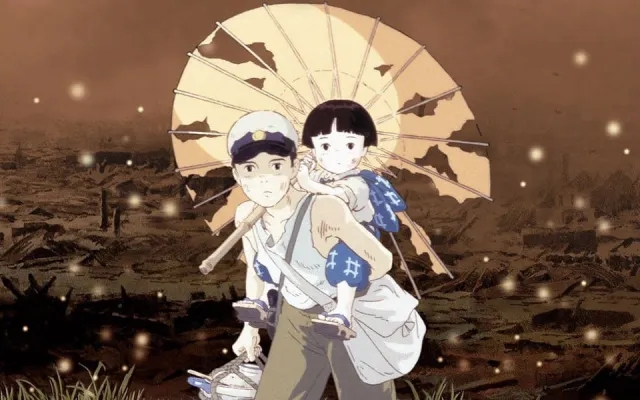
Grave of the Fireflies anime movie analysis usually misses the point completely. Everyone wants to call it an anti-war masterpiece because it shows kids dying in firebombed Japan, but that's the lazy take that ignores what Isao Takahata was actually doing with this story. He straight up said it isn't an anti-war film, and if you watch it thinking the bombs are the bad guy, you're letting the real monster off the hook.
The movie is about social collapse. It's about how pride kills faster than bullets. It's about a 14-year-old boy who'd rather watch his sister starve than swallow his ego and apologize to his aunt. The war is just the backdrop, the setting, the excuse. The real tragedy is human nature cracking under pressure and a teenager choosing stubbornness over survival.
It's Not Actually Anti-War
Takahata hated when people called this an anti-war statement. He said the film is about how Japan failed its children, how the community collapsed, and how Seita's pride destroyed his family. The war creates the conditions, yeah, but the death happens because of personal choices and social abandonment.
If this were a pure anti-war film, it would focus on the American bombers or the military leadership or the emperor. Instead, it focuses on rice balls turning into rocks. It focuses on a doctor telling Seita his sister needs nutrition and Seita walking away to steal fruit instead of begging properly or going back to his aunt's house. The enemy isn't the USAF. The enemy is the breakdown of empathy and the refusal to adapt.
The film shows the war ending and Japan surrendering, and Seita still dies. Setsuko still dies. The war stops and they keep starving because Seita can't figure out how to function in the new reality. That's not an anti-war message. That's a critique of rigid pride and social structures that chew up the vulnerable.
Seita's Stubbornness Kills Them
This is the part that makes people uncomfortable. Seita is not a pure victim. He's a teenage boy who makes terrible decisions because he wants to be the hero of his own story. He wants to be the provider, the big brother who saves his sister through sheer willpower, and it gets her killed.
Look at the facts. Their aunt takes them in. She's cold, yeah, and she sells their mother's kimonos for rice, but she's feeding them. She's giving them shelter during firebombing raids. Seita leaves because his feelings get hurt. He'd rather live in a cave by a lake and catch fireflies than deal with adult criticism. He's 14, so he's old enough to work, old enough to help around the house, but he chooses to play with his sister instead.
When Setsuko gets sick from malnutrition, a doctor tells Seita she needs food. Real food, not water and fruit drops. Seita has money in the bank from his mother. He has options. He could go back to the aunt and beg forgiveness. He could try harder to find work. Instead, he keeps stealing and hiding, waiting for his naval officer father to come save him, refusing to accept that the old world is gone.
The Real History Behind the Story
Akiyuki Nosaka wrote the original novel as an apology to his sister. He survived the Kobe firebombing and she didn't, and he carried that guilt his whole life. The real Setsuko died of malnutrition while Nosaka tried to care for her, and he wrote the story to punish himself.
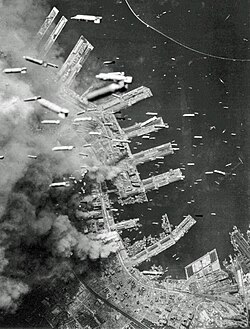
This isn't fiction about generic war victims. It's specific to the 1945 firebombing of Kobe, which burned down most of the city and killed thousands. The US Army Air Forces were hitting Japanese cities with incendiaries to break civilian morale, and it worked. The infrastructure collapsed. Food distribution stopped. Kids were orphaned in minutes.
Nosaka's guilt comes through in every frame. Seita isn't portrayed as a perfect hero. He's portrayed as a failure, a boy who couldn't save his sister because he didn't know how to be an adult yet. The anime keeps this self-critical tone. It doesn't let Seita off the hook, and it doesn't let Japan off the hook either.
Why the Animation Style Matters
Takahata used a realistic style that shocks you because it's beautiful. The fireflies glow. The sunsets look like paintings. And then you see a dead body on the beach or a kid eating dirt because she thinks it's rice. The contrast is brutal.
The colors shift as the film goes on. Early scenes have bright reds and oranges, warm colors of home and safety. By the end, everything is gray and brown and sickly green. Setsuko develops rashes that look like red paint splattered on her skin, visual proof that her body is shutting down. The animation doesn't flinch. It shows her ribs. It shows her hallucinating that rocks are rice balls.
This isn't the fantasy style of My Neighbor Totoro, which came out the same year. This is documentary realism done with paint and ink. It works because animation can show you the inside of a tragedy without the distraction of actors or sets. You accept the reality of it more easily, which makes the horror hit harder.
The Aunt Is Not the Villain
Western audiences love to hate the aunt. She yells at the kids. She calls them lazy. She gives them less food while her own family eats better. But she's not evil. She's surviving.
Put yourself in her shoes. It's 1945. Rice is rationed. Her husband is off at war, probably dead. She's got her own kids to feed, and now her dead sister's kids show up with nothing but entitlement and attitude. Seita doesn't work. He doesn't help around the house. He just plays with Setsuko all day while the aunt breaks her back trying to keep everyone alive.
She tells them to sell the kimonos because cloth is valuable and food is scarce. She's being practical. When Seita leaves, she doesn't chase him because she can't afford to feed him. It's brutal, but it's math. The war forced people into impossible choices, and she chose her own children. That's not villainy. That's desperation.
What the Fireflies Really Mean
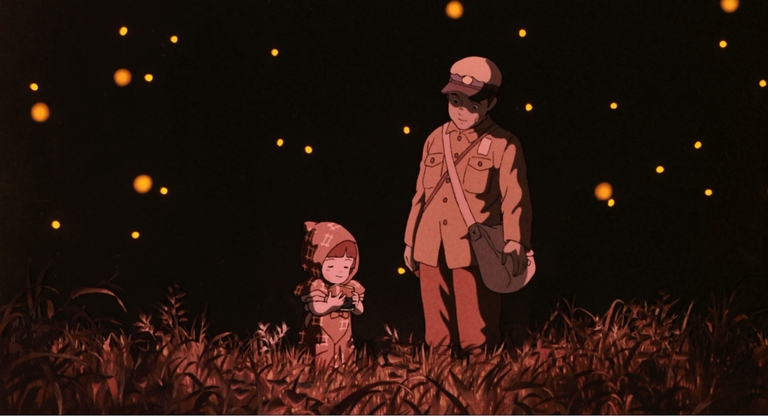
The title isn't just poetic. The fireflies are a metaphor for short, fragile lives that burn bright and die fast. Setsuko catches them and puts them in a jar to light up their cave, and they die overnight because there's no air. She buries them in a grave and asks Seita why they have to die so soon.
She's asking about herself. She knows she's dying. The fireflies represent the Japanese civilians, the children who burned in the firebombings or starved in the aftermath. They represent hope that can't survive the conditions. When Seita cremates Setsuko at the end, fireflies surround the flames, connecting her death to the insects she loved.
It's heavy-handed symbolism, but it works because the film earns it. You've watched these kids suffer for 90 minutes. When that question comes, it doesn't feel cheap. It feels like the only question worth asking.
The Food Problem
Every meal in this movie is a ticking clock. Early on, Setsuko eats white rice balls with pickled plums, normal kid food. By the middle, they're trading heirlooms for sweet potatoes. By the end, Setsuko is trying to eat marbles and dirt because her brain is breaking from hunger.
The fruit drops tin becomes the most important object in the film. It's the only constant. When Setsuko dies, Seita puts her ashes in the can. The candy that couldn't save her becomes her coffin. It's cruel and perfect.
The film shows how money becomes worthless. Seita has thousands of yen in the bank, but when he finally withdraws it, there's no food to buy. The economy collapsed. Currency is just paper. Only rice matters, and Seita doesn't know how to get rice without stealing it.
The Opening Scene Ruins Your Hope
Takahata starts the movie with Seita dying alone in a train station. You see his ghost watch his own body get robbed by a janitor. Then you see Setsuko's ghost meet him. So you know from minute one that they both die.
This choice seems like it would ruin the tension, but it does the opposite. It makes every happy moment feel like a knife. When they're playing on the beach or catching fireflies, you know it's temporary. You know the ending is coming. The inevitability makes it worse, not better.
Some critics say this structure is too manipulative, that it's forcing sadness down your throat. But Nosaka's story was the same way. The original novel is a confession, a letter to a dead sister. The ending is known from the start because the narrator is already broken.
Comparing It to Barefoot Gen
People always lump Grave of the Fireflies with Barefoot Gen because they're both anime about Japanese kids surviving WWII. But they're totally different animals. Barefoot Gen is about resilience and the will to live. It's got hope in it. Grave of the Fireflies is about the inevitability of death when pride meets collapse.
Gen survives Hiroshima. Seita and Setsuko die in Kobe. That's the difference. One is about the bomb, the other is about the slow rot after the bombs stop falling. Gen fights. Seita gives up slowly.
Takahata's film is also quieter. There are long stretches with no music, just the sound of flies and wind. Barefoot Gen has energy and anger. Grave of the Fireflies has resignation and grief.
The Wartime Mentality That Traps Them
Seita believes in the war. He believes his father is coming back. He believes Japan will win. Even when the cities are burning, he clings to nationalism because it's all he has left of his identity. He can't imagine a world where the navy doesn't save him.
This is the gyokusai mentality, the idea of honorable death over surrender. Seita would rather starve with dignity than live with shame. He chooses isolation over community because he's been taught that self-reliance is virtue and asking for help is weakness.
The film shows how toxic that mindset is. When Seita finally hears that Japan surrendered and his father is dead, he's already too far gone. The news breaks him because the fantasy was the only thing keeping him moving.
Why It Hits Harder If You Have Siblings
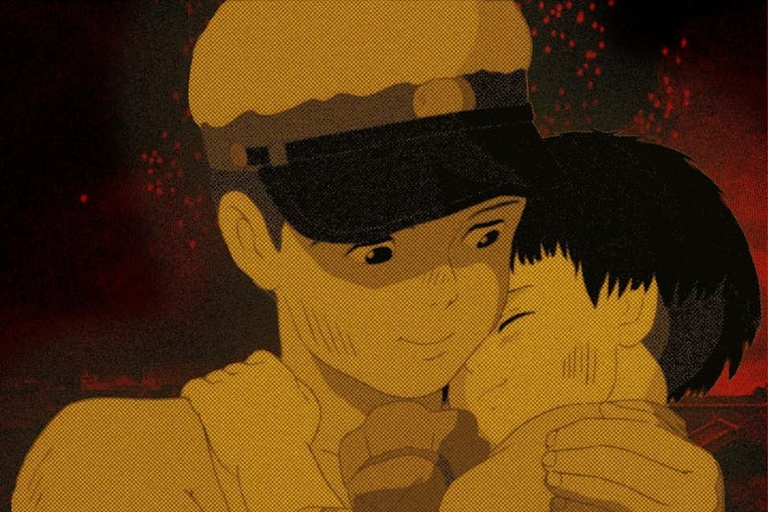
The film weaponizes sibling love. Seita isn't fighting for himself. He's fighting for Setsuko, and he fails her. If you have a younger sister or brother, this movie is almost unwatchable because you see yourself in Seita's desperation.
You remember times you failed to protect them. Times you were too proud to ask for help. Times you thought you knew better than the adults. The film knows this. It targets that specific relationship, the older sibling as surrogate parent, and it shows how heavy that burden is when the world falls apart.
Setsuko's voice acting, especially in the Japanese version, is painfully real. She sounds like an actual four-year-old, not a cartoon character. When she cries, it doesn't sound theatrical. It sounds like a kid who doesn't understand why she's hungry.
The Doctor Scene
There's a moment where Seita takes Setsuko to a doctor. The doctor looks at her, sees malnutrition, and tells Seita to feed her. That's it. No medicine. No help. Just "give her food."
Seita stands there confused because he can't get food. The doctor knows this. Everyone knows this. But the social contract has broken down so completely that the doctor just moves on to the next patient. There's no emergency room for starving orphans. There's no social services. There's just a diagnosis and a closed door.
This scene shows the failure of institutions. The war destroyed the safety net. Neighbors don't help neighbors. Family turns away family. The state that demanded total loyalty from its citizens abandoned them the moment they became inconvenient.
The Ghost Ending
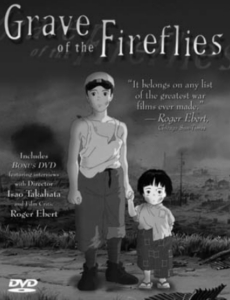
The film ends with the ghosts of Seita and Setsuko sitting on a bench overlooking modern Kobe. They're together, finally at peace, watching the city that killed them. Some people find this comforting. I find it haunting.
They're still stuck there. They never moved on. The trauma of 1945 is still present in Japan's memory, and the ghosts are still waiting for someone to acknowledge them. Takahata said he made the film for young Japanese audiences who didn't understand what their grandparents survived.
The ghost framing device isn't supernatural fluff. It's a reminder that the dead don't disappear. They haunt the living until their stories are told properly. Seita and Setsuko represent the forgotten children of a nation that marched itself into oblivion and expected its youth to carry the weight.
Grave of the Fireflies anime movie analysis always circles back to the same truth. This film hurts because it's honest. It doesn't let you blame easy targets like bombers or politicians. It forces you to look at how regular people fail each other when things get hard, and how pride can be deadlier than any weapon. Watch it once, remember it forever, and never look at a tin of fruit drops the same way again.
Frequently Asked Questions
Is Grave of the Fireflies actually an anti-war film?
Nope. Director Isao Takahata explicitly stated it's not an anti-war film. He said it's about social isolation, the collapse of community, and how Seita's stubborn pride killed his sister. The war is just the setting, not the main message.
Is the story based on real events?
Mostly, yeah. Akiyuki Nosaka wrote the original story based on his own experiences surviving the Kobe firebombing while his sister died of malnutrition. The guilt and specific details are autobiographical, though some events were condensed for the story.
Is the aunt supposed to be the villain?
It's complicated. She represents the harsh reality of survival during total war. She had her own kids to feed and no resources. While she's cold to Seita and Setsuko, she's not evil, just desperate. Seita could have swallowed his pride and helped around the house, but he chose to leave instead.
Why is this movie so sad compared to other war films?
Because it refuses to give you easy answers. It shows the slow grind of starvation and social collapse rather than quick explosions. Plus, if you have siblings, watching Seita fail to save Setsuko triggers specific protective instincts that make the ending devastating.
Does the film accurately show trauma and PTSD?
Absolutely not. It shows the psychological toll on Seita, who clearly has PTSD from the bombings and his mother's death. Setsuko's hallucinations and physical decay are also realistic depictions of severe malnutrition and trauma in children.