
Grave of the Fireflies Is Not The Anti-War Film You Think It Is
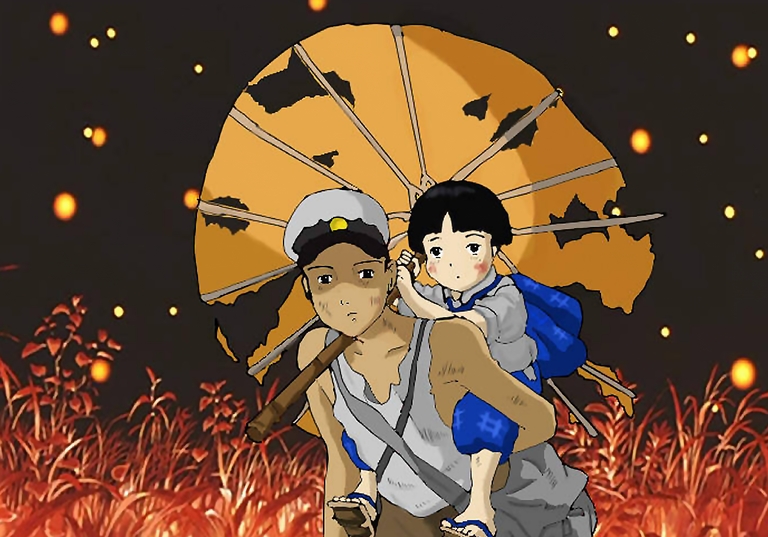
Grave of the Fireflies a deeper look beyond anti-war interpretations reveals something way more uncomfortable than simple pacifism.** Most people walk away from this movie thinking they just watched a devastating anti-war statement. They cry, they feel hollow, they blame the bombs and the soldiers and the chaos of 1945 Kobe. But they are missing the point entirely. Isao Takahata never set out to make a film that says "war is bad" in big flashing letters. That message is there, sure, but it sits in the background like static noise while the real horror plays out in the foreground. The real horror is Seita himself.
You have probably seen this film described as the saddest movie ever made. Studio Ghibli's most heartbreaking work. A masterpiece you will only watch once. All of that is true. But the reason it destroys you is not because it shows you burning cities or exploding bombs. It destroys you because it shows you a teenage boy slowly killing his sister through stubbornness and pride while the world watches in indifference. The war creates the conditions, yes, but the tragedy is personal, intimate, and completely avoidable. That is what makes it unbearable.
Takahata Hated The Anti-War Label
Isao Takahata spent years telling interviewers to stop calling Grave of the Fireflies an anti-war film. He said it outright. He rejected the label completely. According to Frieze Magazine's analysis, Takahata framed his own work as a critique of how war betrays children, sure, but more specifically as a study of isolation and the breakdown of social bonds. He wanted to show what happens when a society turns its back on the vulnerable. The war was just the catalyst that speeds up the rot.
Takahata survived the bombing of Okayama himself when he was a child. He knew what fire looked like falling from the sky. He knew the smell of burning wood and the sound of air raid sirens. But when he adapted Akiyuki Nosaka's semi-autobiographical novel, he was not interested in making a political statement about American aggression or Japanese militarism. He was interested in the specific psychology of a boy who would rather die with his sister in a cave than swallow his pride and apologize to his aunt. That is the movie he made. Everything else is wallpaper.
The director understood something that Western audiences often miss. In Japan, the film reads differently. Asian Studies analysis notes that Japanese viewers often blame Seita for his choices. They see a boy who had options and chose death because he could not bend. Western viewers tend to blame the aunt, or the war itself, or abstract concepts like "society." But Takahata constructed the film to make you uncomfortable with Seita's decisions. He wants you to scream at the screen for Seita to just go back inside, to just help with the chores, to just accept help.
Seita's Pride Kills Setsuko
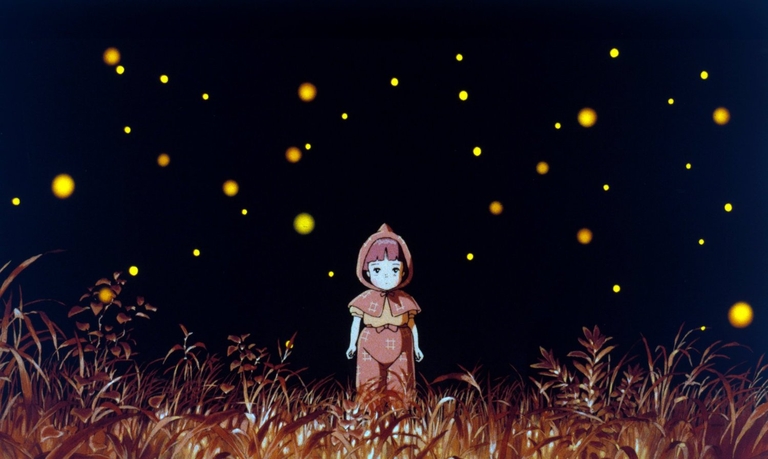
Let's be direct about what happens in this story because people soften it with euphemisms. Seita does not die because of the war. He dies because he is proud. He dies because he would rather steal from farmers and get beaten than work for his aunt. He dies because he thinks keeping Setsuko in a bomb shelter with fireflies is romantic and free when it is actually just a slow starvation chamber.
The movie gives you every chance to see this. When they first move in with the aunt, things are tense but survivable. The aunt is harsh, yes. She is cruel with her words. She makes them sell their mother's kimonos for rice. But she is feeding them. She is providing shelter during an apocalypse. Seita cannot handle the shame of being a burden. He cannot handle the lectures about contributing to the war effort or working for food. So he takes his four-year-old sister and runs away to live in a hole in the ground.
That is not heroism. That is ego. Shonen Vanguard's analysis breaks this down brutally. Seita had choices. The doctor told him Setsuko needed nutrition. The farmer told him to go back to his aunt. Even the aunt, in her own rough way, was offering survival if he would just conform to household labor. But Seita is fourteen and headstrong and infected with the same romantic nationalism that killed his father. He thinks he can be the provider. He thinks he can protect his sister from reality. Instead, he isolates her from the only food source available and watches her fade away.
When Setsuko starts hallucinating rocks are rice balls, that is not the war doing that. That is Seita's choices doing that. When she dies with her skin hanging off her bones in a muddy shelter while fireflies rot around her, that is the direct result of Seita's inability to accept help. The film frames this with devastating clarity. You see him steal. You see him get caught. You see him refuse to farm or work. You see him choose dignity over survival every single time until there is nothing left.
When Communities Fail
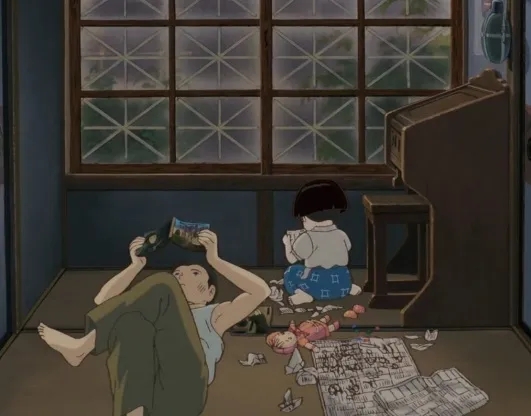
The secondary tragedy, the one that sits behind Seita's personal failure, is the collapse of Japanese social fabric in 1945. Takahata shows you a world where the bombs have stopped falling but the people have become ghosts. The aunt is not evil. She is exhausted. She is trying to feed her own family while the empire collapses around her. When she criticizes Seita for not working, she is expressing a desperate need for everyone to pull weight because the systems are breaking.
But the film goes further. It shows you neighbors who look away. It shows you doctors who diagnose Setsuko with malnutrition but offer no food, only a prescription. It shows you a society so drained by years of total war that empathy has become a luxury nobody can afford. This is the "betrayal of children" that Takahata actually cared about. The war machine consumed the fathers, then the resources, then the community spirit, leaving children to starve in plain sight.
Global Anime News emphasizes this point about social collapse. The film documents the shift from collective survival to individual desperation. When Seita tries to trade his mother's belongings for food later in the film, he finds that nobody wants them. The economy has shifted to pure calories. Rice is currency. Sentimental value means nothing. The community that once might have supported orphans has atomized into strangers guarding their own stores of grain.
The Aunt Is Not The Villain
Western audiences love to hate the aunt. She is the wicked stepmother figure, right? She is mean to the kids, she takes their stuff, she drives them out. But that reading is lazy and misses the historical context completely. The aunt represents the last gasp of communal obligation in a dying society.
She takes Seita and Setsuko in when they have nowhere else to go. She feeds them from her own family's limited rations. Yes, she is resentful. Yes, she is harsh. But she is also realistic. She sees a teenage boy refusing to work while her own daughters labor in factories. She sees resources being diverted to children who contribute nothing. Her cruelty is the cruelty of scarcity. She is trying to keep her own household alive.
When Seita leaves, she does not stop him. But she also does not lock the door. She represents the fork in the road. She is the last opportunity for Seita to rejoin society, to accept hierarchy and rules and safety in exchange for labor. He cannot do it. He chooses freedom and death instead. Blaming her for the tragedy ignores that she kept them alive for weeks while Seita's pride burned through their resources.
Shonen Vanguard's deeper look points out that Japanese audiences often see the aunt as sympathetic or at least understandable. She is a widow in a bombed-out city trying to maintain order. Seita's refusal to contribute violates the social contract that was holding Japan together during the final months of the war. The film is not asking you to forgive her sharp tongue, but it is asking you to recognize that she offered life while Seita chose a beautiful, terrible independence.
Fireflies And Rotting Tins
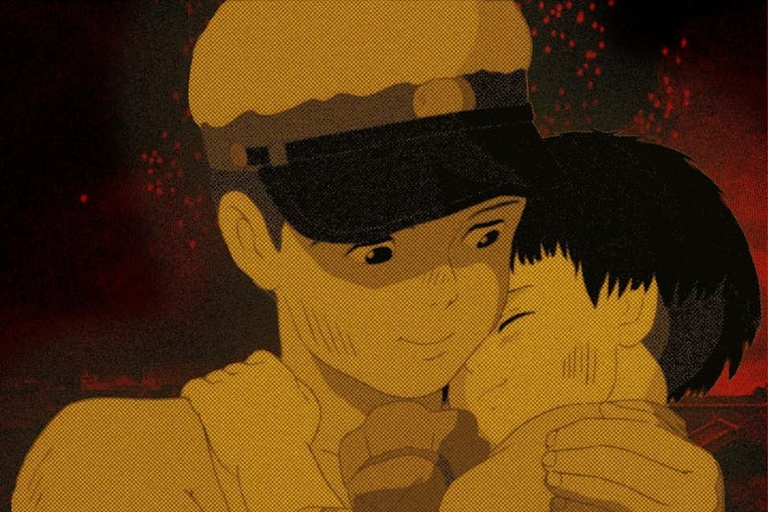
The symbolism in this movie hits you over the head because it is supposed to. The fireflies represent the souls of the dead, specifically the children killed by war. They represent the brief, glowing life of Setsuko herself. They are beautiful and they die fast and they leave nothing behind but a slight glow in the dark.
But the real symbol is the fruit drop tin. That red tin of Sakuma drops becomes a coffin, a treasure chest, a time capsule. When Seita places Setsuko's ashes in the tin at the end, he is completing a ritual he started when he first gave her candy to distract her from their mother's death. The tin represents the sweetness of childhood that Seita tried to preserve in a world that demanded he grow up immediately.
The fireflies they catch in the shelter die the next morning. Setsuko buries them. She asks why fireflies have to die so soon. That is the question that breaks you. It is not asking why war is bad. It is asking why innocence cannot survive in a world that has no room for it. The fireflies die because they are fragile. Setsuko dies because Seita tried to keep her in a glass jar like a firefly, protecting her from reality until reality killed her.
Traversing Tradition's review notes how the film uses these images to force empathy. You cannot watch Setsuko bury fireflies and not understand that she is digging her own grave. The imagery is obvious but effective. It works because it is grounded in the dirt and sweat of real survival, not fantasy.
Why This Film Destroys You
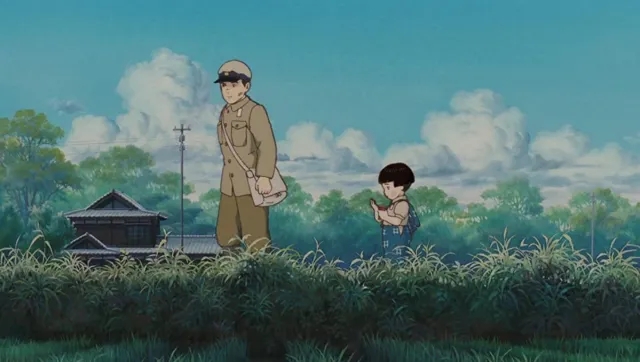
Grave of the Fireflies hurts because it denies you the comfort of blaming systems. You cannot just say "war is hell" and move on. You have to sit with the fact that a boy loved his sister to death. You have to watch him make the wrong choice over and over because he cannot bear to lose face. You have to watch a community turn away and a doctor shrug and a farmer beat a thief who is just trying to feed a dying child.
The animation makes it worse. Takahata uses Ghibli's famous attention to detail to show you the texture of starvation. He shows you the flies around Setsuko's mouth. He shows you the distended belly and the hair falling out. He shows you Seita's slow realization that he has killed her with his love. It is unbearable because it is specific. It is not a general statement about war victims. It is one boy and one girl and one series of irreversible mistakes.
That is why Takahata rejected the anti-war label. Anti-war films let you off the hook. They let you blame politicians and generals and foreign enemies. This film puts the blame on human nature, on pride, on the fragility of social bonds. It says that even without the bombs, we are capable of destroying each other through sheer stubbornness. The war just makes it happen faster.
People say they will never watch this movie again. They say it is too sad, too painful, too real. They are right. But they are also missing that the sadness comes from recognition. We all know someone like Seita. We have all been too proud to ask for help. We have all chosen isolation over humiliation. Grave of the Fireflies shows us where that road ends. It shows us that sometimes the firefly dies not because of the storm, but because we kept it in a jar to protect it from the storm, and we forgot to feed it.
Frequently Asked Questions
Is Grave of the Fireflies really an anti-war film?
No. Director Isao Takahata explicitly stated multiple times that he did not intend for the film to be a simple anti-war statement. While it depicts the horrors of war, Takahata focused on themes of social collapse, isolation, and Seita's personal pride as the driving forces of the tragedy. He wanted to examine how communities fail children during crisis, not just condemn war itself.
Who is really to blame for Setsuko's death?
The tragedy results from a combination of circumstances, but Seita's stubbornness and pride are the immediate causes of Setsuko's death. He refuses to work for his aunt, isolates them in a bomb shelter, and ignores medical advice and offers of help. While the war creates the scarcity and chaos, Seita's choices to prioritize his dignity over survival directly lead to the starvation.
Is the aunt supposed to be the villain?
The aunt represents the strained but still functioning social safety net of 1945 Japan. She is harsh and demanding, but she provides food and shelter. Japanese audiences often view her as sympathetic, recognizing that she is trying to survive total collapse. She offers survival in exchange for labor, which Seita refuses. She is not the villain, but rather the last opportunity for the siblings to survive that Seita rejects.
Is Grave of the Fireflies based on a true story?
The film is based on Akiyuki Nosaka's 1967 semi-autobiographical short story. Nosaka wrote it as a personal apology to his real younger sister, who died of malnutrition during the war while he failed to keep her alive. The survivor's guilt and specific details of the fruit drops and the bombing of Kobe come from his actual experiences.
What do the fireflies and fruit drops symbolize?
Fireflies represent the fragility of life and the souls of children killed by war. The fruit drop tin symbolizes lost innocence and childhood sweetness. When Seita puts Setsuko's ashes in the tin, it completes the metaphor of childhood being preserved but ultimately destroyed. The fireflies dying overnight foreshadows Setsuko's fate.