
Grave of the Fireflies Is Not The Movie You Think It Is
Grave of the Fireflies sits in this weird spot where everyone calls it an anti-war masterpiece but the director himself said that's not what he made. Isao Takahata adapted Akiyuki Nosaka's semi-autobiographical short story about the 1945 Kobe firebombing and created something way messier and more honest than a simple 'war is bad' message. The film tracks two siblings, Seita and Setsuko, as they try to survive after American B-29s burn their city to the ground, but the tragedy isn't just that bombs fell. It's that everyone failed them. Their aunt, their neighbors, their government, and most painfully, Seita himself.
The historical context matters here because this isn't fiction. Nosaka lived through the Kobe air raids on March 16-17, 1945, and he wrote the original story as an apology to his dead sister Keiko. He blamed himself for her death from malnutrition. Takahata also survived air raids as a child. These guys weren't making up fantasy scenarios about war being scary. They were processing real trauma and real guilt. The film opens with Seita's ghost saying "September 21, 1945... that was the night I died," which immediately kills any hope for a happy ending and frames everything as a memory we're watching from beyond the grave.
The Firebombing of Kobe and What Actually Happened
The United States Army Air Forces hit Kobe with incendiary bombs on March 16-17, 1945, part of a strategy to burn Japanese cities until the government surrendered. The film doesn't show you the military strategy or the pilots. It shows you what it felt like to be on the ground when the sky rained fire. Seita and Setsuko's mother dies in the attack, her body wrapped in bandages so thoroughly she looks like a mummy, and the kids move in with their aunt.
This is where the movie gets interesting. The aunt starts off okay but gradually turns hostile. She resents having to feed extra mouths. She mocks Seita for not working or going to school even though the school got bombed and he's twelve. She sells their mother's kimonos for rice then gives them smaller portions. She's not a cartoon villain. She's a normal person under extreme scarcity who decides her own family matters more than these orphans. The film tracks this degradation of empathy with brutal precision.
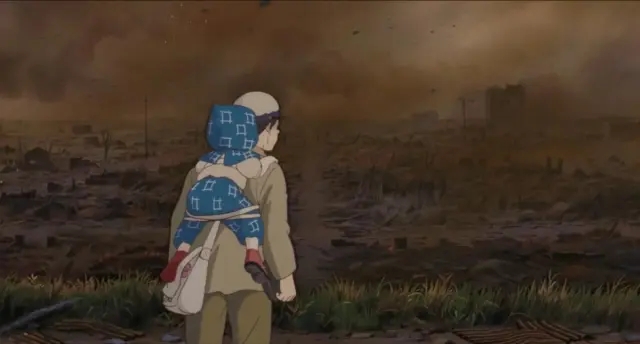
The historical context of the 1945 Kobe bombing wasn't just about the physical destruction. It broke the social contract. When Seita tries to use the money his mother left, he finds out paper currency is worthless because food is the only currency that matters. When he tries to trade their possessions, he gets almost nothing. The infrastructure for protecting civilians had collapsed. The government told people to stay strong and endure while failing to provide actual support systems for orphans.
Why Takahata Said It's Not An Anti-War Film
This is the part that confuses people. Takahata gave interviews where he straight up said Grave of the Fireflies isn't an anti-war movie. He pointed out that Seita and Setsuko don't die because of the bombs directly. They die because Seita makes a series of terrible decisions driven by pride and because the community rejects them. If Seita had just stayed with his aunt and endured the humiliation, or if he had accepted help from adults instead of trying to be the man of the house at fourteen, Setsuko might have lived.
The controversy around the film's message usually splits between people who see it as a condemnation of war and people who see it as a study of human failure during crisis. Takahata seems to have leaned toward the second reading. He was interested in how war breaks down social bonds and turns people selfish, but he was also interested in how Seita's specific personality, his refusal to compromise his dignity, becomes fatal when combined with extreme scarcity.
Seita's father is a naval officer who probably died when his ship sank. Seita carries this loyalty to the military and this sense of himself as the son of a patriot. He won't beg. He won't accept charity that comes with strings attached. He'd rather steal from farms at night and get beaten for it than ask for help. This isn't noble. It's deadly. The film doesn't let him off the hook for this.
The Fireflies Aren't Just Pretty Lights
Everyone remembers the scene where Seita and Setsuko catch fireflies and put them in their shelter. It's beautiful. The animation glows. Then the fireflies die overnight and Setsuko buries them in a little grave. She asks why fireflies have to die so soon. Seita doesn't have an answer.
In Japanese culture, fireflies (hotaru) are associated with the souls of the dead, particularly warriors. The title itself, Hotaru no Haka, uses a word for grave that implies a burial mound. These aren't just insects. They're the spirits of people who died young in the war. The symbolism of fragility and fleeting life runs through the whole movie. The fireflies represent Seita and Setsuko themselves. They burn bright for a moment then they're gone.
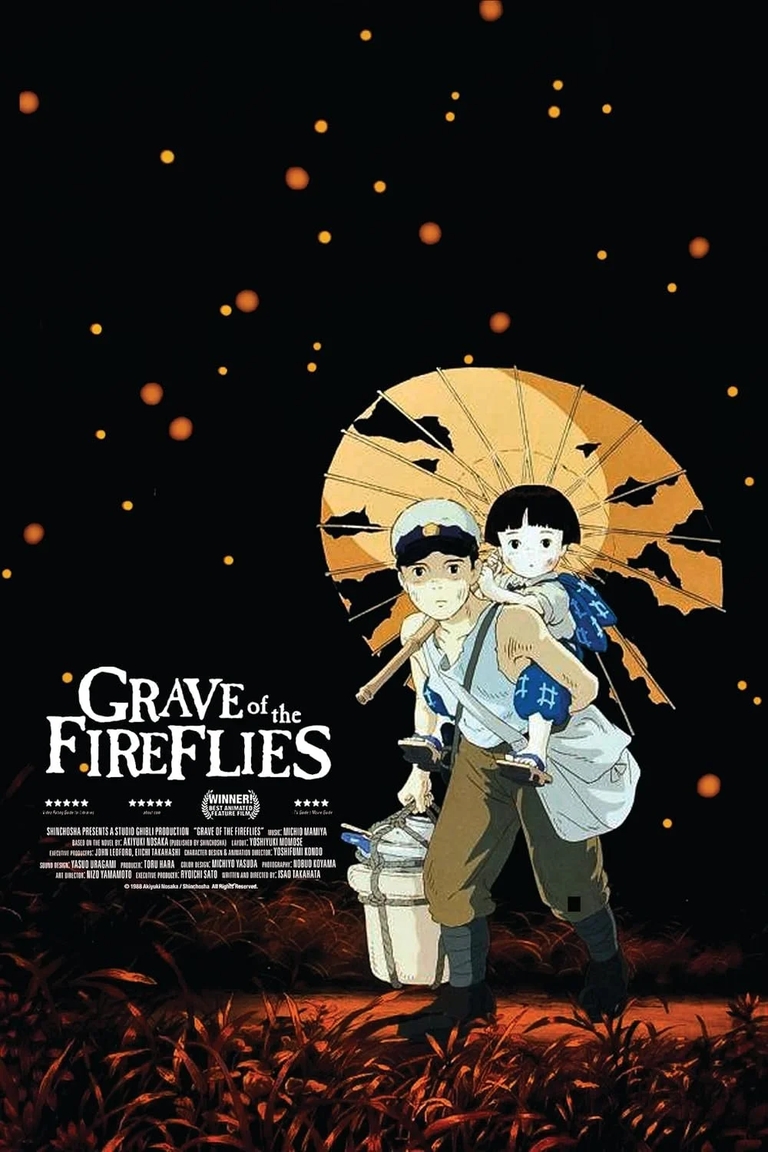
There's also the candy tin. Setsuko carries this fruit drop tin everywhere. It starts as a treat, something sweet in a world of ash. By the end, Seita is using it as an urn for his sister's cremated bones. The transformation of this object from childhood joy to death container is the movie in miniature. The analysis of physical objects shifting meaning from hope to hopelessness tracks the kids' physical deterioration. Before the war, a rice ball (onigiri) represents prosperity. After, Setsuko tries to eat a rock thinking it's food.
PTSD and The Psychology of Guilt
If you watch this film looking at Seita's behavior through a modern lens, he shows clear signs of PTSD and complicated grief. He has flashbacks triggered by normal aircraft sounds. He dissociates from reality as Setsuko gets sicker. After she dies, he basically gives up on living and lets himself starve to death in a train station.
The critical analysis of trauma points out that Seita isn't just sad. He's experiencing survivor's guilt so intense it becomes suicidal. Nosaka wrote the original story to process his own guilt over his sister's death. He admitted later that he was selfish with food and didn't do enough to save her. The fictional Seita carries this same weight. The movie isn't asking you to forgive him. It's asking you to understand how guilt and trauma destroy people even when the bombs stop falling.
Setsuko's trauma shows up differently. She trembles at fire. She develops psychosomatic symptoms. She plays with dirt pretending it's rice because her brain can't handle the reality of starvation. The film depicts childhood psychological breakdown with disturbing accuracy. These kids aren't just hungry. They're breaking apart mentally while their bodies waste away.
How It Compares to Other War Films
People always lump Grave of the Fireflies with Barefoot Gen, another anime about Hiroshima. They're both realistic depictions of Japanese civilian suffering in WWII, but they hit differently. Gen is angrier. It's anti-war in a straightforward way. Grave of the Fireflies is more interested in shame and social failure.
Then there's the comparison with The Wind Rises, Miyazaki's film about the guy who designed the Zero fighter plane. Research comparing these two films notes that Miyazaki romanticizes the creative impulse even when it's used for war machines, while Takahata refuses to romanticize anything. The Wind Rises says 'we must live' even when the wind rises. Grave of the Fireflies says sometimes living requires help we refuse to ask for.
There's also In This Corner of the World, which covers similar territory with a broader scope. That film has been criticized for sanitizing Imperial Japan's aggression while focusing on civilian suffering. Grave of the Fireflies avoids this trap by staying extremely narrow. It doesn't try to represent all of Japan's war experience. It's just about these two kids and their specific tragedy. It doesn't excuse Japanese militarism, but it doesn't focus on it either. The father is absent, the military is losing, and the kids are victims of both the bombs and their own society's collapse.
The Social Collapse Nobody Talks About
Everyone focuses on the firebombing as the villain, but the real monster in this movie is the breakdown of community. Seita and Setsuko aren't just orphaned by the bombs. They're abandoned by their aunt, ignored by doctors who say Setsuko needs food but offer none, beaten by farmers protecting their crops, and stepped over by people in the train station who comment that dead kids are becoming common.
The review emphasizing empathy erosion points out that Takahata shows how desperation makes people cruel. The aunt isn't evil. She's scared. The farmers aren't monsters. They're protecting their own families. The bystanders at the train station aren't heartless. They're numb. The film suggests that war doesn't just kill with explosives. It kills by making everyone too exhausted to care about anyone beyond their immediate circle.
When Seita finally goes to a doctor with Setsuko, the doctor confirms she has malnutrition and needs food. Seita asks where he can get food. The doctor just looks at him. There's no answer. The system has collapsed. The safety net is gone. Seita tries to become the provider, but he's a fourteen-year-old boy. He fails because he has to fail.
The Ending and Historical Legacy
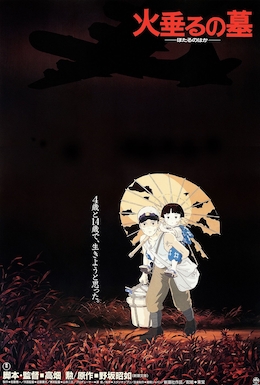
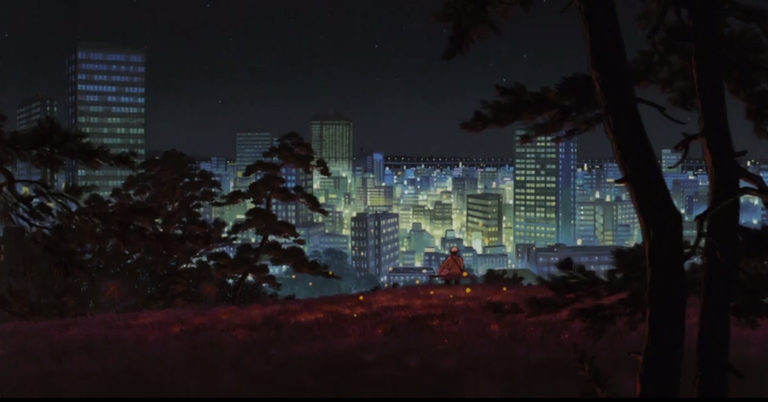
The film ends with Seita and Setsuko's ghosts sitting on a hill overlooking modern Kobe. They're eating candy. The city below is alive with cars and lights. It's peaceful. This final scene hits different once you know the context. It's not saying 'the war is over and everything is fine.' It's saying 'we died so you could have this.'
The analysis of historical legacies suggests this scene is about responsibility. The living must remember the dead. Not in a nationalist way, not as war heroes, but as people who suffered because society failed them. The film functions as a memorial. Nosaka wrote it to apologize to his sister. Takahata animated it to make sure people don't forget that civilian suffering continues long after the surrender is signed.
Setsuko's death is quiet. She falls asleep and doesn't wake up. Seita cremates her body using wood he collected for their shelter. He carries her ashes in the candy tin until he dies of starvation in Sannomiya Station. When he dies, we loop back to the beginning. The whole movie has been his memory, his confession, his attempt to explain why he couldn't save her.
Grave of the Fireflies remains devastating because it refuses easy answers. It won't let you blame only the Americans for dropping bombs or only the Japanese government for starting the war. It makes you look at the human cost of total war and the ways pride, scarcity, and social breakdown combine to kill children who didn't need to die. The fireflies keep dying. The candy tin stays empty. And we're left with the weight of knowing that sometimes survival requires asking for help, and sometimes the people who should help are too broken to do so.
Frequently Asked Questions
Is Grave of the Fireflies an anti-war movie?
No, director Isao Takahata specifically stated it isn't an anti-war film. He intended it as a story about human relationships and how societal support structures collapse during crisis. The tragedy stems as much from Seita's pride and the aunt's cruelty as from the bombing itself.
Is Grave of the Fireflies based on a true story?
The film is based on Akiyuki Nosaka's semi-autobiographical short story about his own experiences during the 1945 Kobe firebombing. Nosaka survived but his adopted sister Keiko died from malnutrition, and he wrote the story as an apology to her, carrying intense survivor's guilt.
What do the fireflies symbolize in Grave of the Fireflies?
Fireflies (hotaru) in Japanese culture represent the souls of the dead, particularly those who died young. In the film, they symbolize Seita and Setsuko's fleeting lives, their fragility, and the brief moments of beauty before death. The candy tin also transforms from a symbol of childhood joy to a funeral urn.
How does Seita die in Grave of the Fireflies?
Seita dies from starvation and grief in Sannomiya Station on September 21, 1945, shortly after Japan's surrender. The film opens with his death and is told as a flashback from his perspective as a ghost. Setsuko dies of malnutrition earlier, leaving Seita alone until he also succumbs.
What historical event does Grave of the Fireflies depict?
The film depicts the March 16-17, 1945 firebombing of Kobe by the United States Army Air Forces. These were part of a strategic bombing campaign using incendiary bombs to destroy Japanese cities and infrastructure, killing thousands of civilians and leaving many orphaned.