
Great Teacher Onizuka Life Lessons Hit Harder Than Textbooks
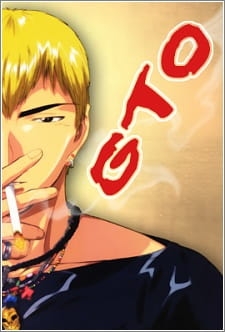
Great Teacher Onizuka isn't some wholesome after-school special about a nice guy who helps kids. It's about a 22-year-old virgin ex-biker gang leader who becomes a teacher mostly because he wants to meet high school girls and live out a fantasy, but ends up saving a bunch of broken kids because he actually gives a damn when no one else does. That's the hook. That's why it works. You expect a comedy about a creep who gets punched a lot, and instead you get this weird, messy story about how the people society throws away are sometimes the only ones who can see what's really wrong with the system.
I've watched this show more times than I can count, and I keep coming back because Onizuka Eikichi is the only teacher in fiction who feels real. He doesn't have a degree from a good college. He barely graduated from a third-rate university. He smokes, he gambles, he shoots fireworks off the school roof, and he definitely shouldn't be allowed near children by any reasonable standard. But here's the thing. He teaches lessons that actually stick. Not math. Not history. The stuff that keeps you alive when you're fourteen and thinking about jumping off a building because your classmates won't stop torturing you. He teaches you how to take a beating and get back up. He teaches you that your flaws don't make you garbage. He teaches you that someone giving up on you is the worst thing that can happen, and he refuses to do it no matter how much you push him away.
Onizuka's Core Philosophy on Self-Acceptance
The biggest lie they sell you in school is that you need to fix yourself before you're worth anything. Onizuka doesn't buy that garbage for a second. He wears his flaws like a bad leather jacket. He's a pervert, he's crude, he's violent, and he's dumb as a rock when it comes to book smarts. But he never pretends to be something he's not. I saw some Reddit users talking about this, and they nailed it. The top lesson everyone takes from GTO is that you need to embrace yourself, faults and all, because pretending to be perfect is just going to break you.
There's this moment in the live action where Onizuka tells a student that being weird or messed up isn't the problem. The problem is hiding it. The problem is letting shame eat you alive. He hangs a bully over the edge of a roof to teach them what real fear feels like, sure, but afterwards he pats them on the head and smiles. He doesn't hold a grudge. He doesn't keep a record of your wrongs. He beats the lesson into you, literally sometimes, and then he treats you like a clean slate. That's the opposite of how schools actually work. Schools keep files. Schools remember every detention. Onizuka forgets the moment you stop doing the stupid thing.
Why Being an Ex-Delinquent Makes Him Better
Professional teachers come out of university with all these theories about classroom management and pedagogical frameworks. Onizuka comes out of the Shonan Junai Gumi with a history of street fighting and a rap sheet. According to Wikipedia and the lore, he was a legendary biker gang member before he ever stepped into a classroom. That's not a bug, that's the feature. He understands these kids because he WAS these kids. He knows what it's like to have adults look at you like you're trash. He knows what it's like to be angry at the world and not know why.
When Class 3-4 tries their usual tricks to get him to quit, he doesn't call a faculty meeting. He doesn't file a report. He fights back. Not with violence against the kids, but with this relentless, annoying refusal to be driven away. He uses his delinquent street smarts to see through their defenses. He knows when a kid is acting tough because they're scared. He knows when a kid is bullying others because they're being abused at home. The other teachers see problem children. Onizuka sees himself twenty minutes ago. That changes everything.
The Truth About Extra-Curricular Lessons
People get weird about Onizuka's methods. They call it abuse or illegal or whatever. Sure, technically it is. You can't hang students off roofs or break into their houses or drag them across Tokyo on a motorcycle. But here's the part those critiques miss. The "extra-curricular lessons" are the whole point. When Yoshikawa is getting tortured by Anko and her friends, Onizuka doesn't organize a sensitivity workshop. He grabs Anko, dangles her off the roof until she understands what real terror feels like, and then he helps her find her lost necklace until morning. One blogger wrote about this specific pattern, noting that after these intense lessons, Onizuka always comforts the student with a smile and a pat on the head.
It's brutal, but it's honest. The world isn't fair. People will hurt you. Onizuka's lessons aren't about avoiding pain. They're about surviving it. They're about understanding that your actions have weight. When he forces a student to confront the consequences of their bullying, he's not being cruel. He's being kind in a way that actually works. The regular curriculum teaches you algebra. Onizuka teaches you that you're responsible for the damage you do to other people, and that you can't hide behind your own trauma forever.
Handling Bullying Without the After-School Special Nonsense
Most anime handle bullying with speeches about friendship and the power of believing in yourself. GTO spits on that approach. Onizuka knows that bullies don't stop because you asked nicely. He knows that victims don't recover just because someone said "it gets better." He intervenes directly, sometimes violently, and he forces confrontation. He makes the bully feel what the victim feels. He breaks the cycle by inserting himself into it as an immovable object.
There's this arc with Urumi Kanzaki where she nearly commits suicide because of how the school system treated her genius. Onizuka doesn't talk her down with platitudes. He fights for her. He puts his own job on the line. He shows up when no one else does, and he proves that she's worth saving even when she's being a complete monster to everyone around her. That's the lesson. You're worth saving even at your worst. Especially at your worst.
The Virginity Subplot and Real Connection
People laugh about Onizuka being a 22-year-old virgin who carries around a condom with "CONGRATULATIONS ON YOUR FIRST TIME" written on it. It's funny, yeah, but it's also the heart of why he's a great teacher. He isn't sleeping with students. He isn't exploiting his position. He's looking for something real. One analysis pointed out that in the prequel manga Shonan Junai Gumi, Onizuka actually rejects casual sex because he wants it to mean something. That restraint, that old-fashioned romantic idealism under the lecherous surface, is why he can teach kids about respect.
He wants a connection. He wants to matter to someone. That's why he cries when his students tell him they love him. Not romantic love. Just... love. Acknowledgment. He spent his whole life being a thug that people crossed the street to avoid. Now these kids see him, really see him, and he falls apart because it's the first time anyone has. That's the lesson about purity of heart. You don't have to be clean. You just have to be real.
A Middle Finger to the Education System
Great Teacher Onizuka is basically one long rant against how schools destroy kids. The faculty at Holy Forest Academy is a parade of nightmares. You've got Vice Principal Uchiyamada, who cares more about his car and his pension than students. You've got teachers who molest kids, teachers who ignore bullying because it's inconvenient, and a system that treats students like products on an assembly line. Onizuka hates all of it. The Hypercritic review called it a cheeky critique of Japanese society, and that's putting it mildly.
He refuses to grade on a curve. He refuses to rank students. He tells them to forget about getting into Tokyo University if it means killing their souls to do it. He sabotages standardized tests because he knows those numbers don't mean anything about who these kids are. He's the teacher every kid wishes they had and every administrator wishes they could fire. That's the point. The system isn't broken by accident. It's designed to crush individuality, and Onizuka is the wrench in the gears.
Anime vs Manga vs Live Action Lessons
The 1998 live action drama starring Takashi Sorimachi hits different than the anime. Some viewers say the drama changed their lives because it stripped away some of the cartoonish elements and made Onizuka's interventions feel more grounded. In the anime, he lives at the school and does impossible stunts. In the drama, he lives with his biker friends and deals with problems one episode at a time. Both work. Both teach the same core lesson. Care about people more than you care about rules.
The manga goes deeper into the backstories, especially with the Shonan Junai Gumi prequel material. You see where Onizuka came from. You see that he wasn't just a thug, he was a thug with a code. That code, loyalty to friends, protection of the weak, never backing down from a fight for what's right, that's what he imports into the classroom. The anime compresses some arcs and changes endings, but the soul stays the same. The lessons land in every format because they're based on something true about human nature.
Handling Trauma Without Therapy Buzzwords
Modern shows love to have characters sit down and talk about their feelings in clinical terms. Onizuka doesn't know what cognitive behavioral therapy is. He wouldn't care if you explained it. When a student is traumatized, he doesn't hand them a pamphlet. He shows up. He physically removes them from the situation if he has to. He demonstrates through action that the world isn't entirely evil, that there are adults who won't hurt you, that you can trust someone even after you've been betrayed.
Take the arc with the student whose mother tried to burn down the house with her in it. Onizuka doesn't process that trauma through careful discussion. He protects her. He stands between her and the danger. He teaches her that she's allowed to be angry, allowed to hate her parents, allowed to want to run away. He validates her feelings by sharing his own messed up past. That's the therapy. Being seen. Being defended. Being told that your rage is justified but you still have to be better than the people who hurt you.
Loyalty and Standing Up for the Weak
Onizuka has two settings. Helping kids, and beating up adults who hurt kids. There is no middle ground. The lesson about loyalty isn't subtle. If you're strong, you protect the weak. If you have power, you use it for people who don't. He beats up yakuza who try to recruit students. He suplexes vice principals who enable abuse. He single-handedly fights entire gangs if they mess with his class. One review mentioned the legendary German Suplex on Uchiyamada, and yeah, that's a teaching moment. It's about showing that authority figures can be wrong, and that sometimes you have to knock them down to make them listen.
He teaches kids that respect isn't given automatically because someone is older or has a title. Respect is earned through action. And if someone proves they don't deserve respect by hurting the vulnerable, you don't have to pretend they do. That's a dangerous lesson in the wrong hands, but Onizuka shows the right way to use it. You stand up for the kid getting shoved in a locker. You stand up for the girl being harassed. You stand up even when it costs you everything.
Why Onizuka Cries When Students Win
There's this running gag where Onizuka cries huge, ugly tears whenever a student accomplishes something or tells him they appreciate him. It's played for laughs sometimes, but it's the most important visual in the series. He cries because he never expected to matter. He cries because he knows what it's like to be told you're worthless, and he can't handle the sudden weight of being told you're the reason someone didn't give up.
The WordPress blog about living like Onizuka points out that he cries from happiness, not sadness. That's the lesson about emotional availability. You don't have to be stone-cold to be strong. You can be a grown man who weeps when his student passes a test they were failing, or when they stand up to their abusive parents, or when they finally smile after months of depression. That's not weakness. That's being human.
Teaching Without Credentials
The "Onizuka Paradox" is this weird thing where the least qualified teacher is the most effective. One Medium article broke this down, explaining that traditional teaching methods often fail because they're too rigid, too focused on control rather than connection. Onizuka has no credentials. He faked his way into the job. He doesn't know the curriculum. But he knows people. He knows pain. He knows how to listen without judgment.
He treats students like equals, not subordinates. He shares his own failures freely. He doesn't pretend to have all the answers. When he doesn't know something, he admits it. That humility, that willingness to learn alongside his students, is why they trust him. Professional teachers put up walls to maintain authority. Onizuka tears down walls to build trust. The lesson here is that expertise isn't about certificates. It's about caring enough to show up every day and try.
Suicide and Depression Without Being Preachy
GTO handles heavy stuff. Urumi's suicide attempt. The kid who wants to jump because of bullying. The girl who starves herself. Onizuka doesn't give speeches about the value of life. He physically intervenes. He grabs Urumi before she can fall. He sits with the suicidal kid and tells them that dying is the easy way out, and that surviving is the real fight. He doesn't minimize their pain. He validates it. He says yeah, life is garbage sometimes, and people are cruel, and the system is rigged against you. But you still have to live. You have to live out of spite if necessary. You have to live to prove them all wrong.
That's the lesson about survival. It's not pretty. It's not about finding rainbows and meaning. Sometimes it's just about refusing to give the bastards the satisfaction of watching you disappear. Onizuka teaches that stubbornness, that refusal to quit even when quitting makes sense, is the only way through.
The Role of Crude Humor
Yeah, Onizuka is a perv. The show has fan service. The first few episodes are rough with the sexual humor. But here's why it works. The crudeness makes the sincerity hit harder. You expect a gag anime, and then you get this gut punch about child abuse or neglect. The tonal whiplash is intentional. It mirrors how life actually works. One minute you're laughing at a fart joke, the next you're crying because your dad hits you.
The humor keeps the show from being unwatchably depressing. The serious moments keep the humor from being pointless. That's the balance. Life is gross and funny and sad all at once. Onizuka embodies that. He's inappropriate, but he's also the only one who notices when a student hasn't eaten in three days. The lesson is that goodness doesn't always look clean. Sometimes it looks like a guy with a cigarette hanging out of his mouth giving you his last 1000 yen because he knows you need it more.
Why Paradise Lost Forgot the Lessons
The sequel manga, Paradise Lost, is controversial for a reason. It strips away the teaching element and turns Onizuka back into just a thug dealing with idol industry drama. Reddit users pointed out that it wastes the original Class 3-4 students and replaces them with flat celebrity kids. More importantly, it forgets the central lesson. In the original GTO, Onizuka guides students to realizations. In Paradise Lost, he just uses brute force to solve problems.
The original works because Onizuka changes the students, but the students also change him. It's reciprocal. Paradise Lost makes it one-sided. The lesson about teaching as a two-way street gets lost. That's why it feels hollow compared to the original. Without the classroom, without the slow build of trust between teacher and student, Onizuka is just another action hero. And that's boring.
Class 3-4 and Why They Hated Teachers
Before Onizuka arrived, Class 3-4 had driven away every teacher through increasingly brutal pranks. They set traps, they humiliated instructors, they made life hell. Why? Because their first homeroom teacher, a woman they trusted, betrayed them in the worst way possible. She used them, manipulated them, and then abandoned them. They decided that all adults were liars, that trusting anyone was stupid, and that the only way to survive was to strike first.
Onizuka breaks through because he doesn't flinch. He takes their abuse, their traps, their hatred, and he keeps showing up. He proves through endurance that he's different. He doesn't break. He doesn't quit. He doesn't betray them even when they try to destroy him. That's the lesson about trust. It's not given. It's earned through consistency and pain. You have to be willing to get hurt to prove you're safe.
The Soundtrack That Hammers It Home
You can't talk about GTO's emotional impact without mentioning the music. The soundtrack by Yusuke Honma uses these melancholy piano pieces and these intense rock tracks to punctuate the lessons. "Hitori no Yoru" by Porno Graffiti isn't just a catchy opening. It's about loneliness and finding your place. The music tells you when to pay attention. It guides your emotions without manipulating them.
When Onizuka carries a student to the hospital on his back and that guitar kicks in, you feel it in your chest. The score understands that these aren't just anime moments. They're life moments. The soundtrack respects the viewer's intelligence enough to let the music do the talking when words would be too much.
Modern Teachers Still Steal From Onizuka
Twenty-five years later and educators are still talking about this show. I read this analysis about how new teachers use Onizuka's methods, and it's true. The good ones, the ones who actually care, they do what Onizuka does. They learn their students' names immediately. They remember details about their lives. They show up to the games, the concerts, the funerals. They don't clock out at 3 PM.
The lesson for teachers is that your job isn't to deliver information. Your job is to see the kid in front of you. To notice when they're not eating, when they're being abused, when they're about to break. You can't teach someone who is fighting for survival. Onizuka understood that. He fixed their lives first, and the grades followed. Or they didn't, and he didn't care, because the kid was still alive and that was the win.

Great Teacher Onizuka works because it refuses to separate the personal from the educational. Every lesson is about life. Every life problem is something you can teach your way through. Onizuka doesn't fix kids by changing who they are. He fixes them by refusing to let them stay broken. He sees the good in them when they can't see it in themselves. He fights for them when they've given up fighting.
The show tells you that your past doesn't have to define you. Onizuka was a thug, now he's a teacher. Miyabi was a victim, now she's strong. Urumi was suicidal, now she's alive. Change is possible if someone believes in you hard enough to not let go. That's the final lesson. Believe in people. Even when they're awful. Especially when they're awful. Because that's when they need it most. And don't ever, ever give up on them. Not for a paycheck, not for convenience, not because it's hard. You stick around. You get hurt. You cry. And you keep teaching until they finally hear you.
Frequently Asked Questions
How does Great Teacher Onizuka teach self-acceptance?
He shows them that flaws don't make you worthless. Onizuka wears his own imperfections openly, from his lack of formal education to his crude behavior, and teaches students that pretending to be perfect is what actually breaks you.
What makes Onizuka's anti-bullying methods different?
He uses physical intervention and 'extra-curricular lessons' that force bullies to feel the consequences of their actions. Instead of lectures, he creates situations where students experience empathy directly, like hanging a bully off a roof to teach real fear.
What's the difference between the GTO anime, manga, and live-action?
The anime focuses more on the classroom dynamics and school life, while the live-action drama strips away some cartoonish elements for grounded realism. The manga goes deeper into backstories and connects to the prequel Shonan Junai Gumi, but all three teach the same core lesson about caring for students over following rules.
Is Onizuka actually a bad teacher since he breaks rules?
Yes, but that's the point. His lack of formal training means he treats students as people rather than problems to manage. He connects through shared experience and empathy rather than authority, proving that credentials matter less than genuine care.
How does GTO critique the Japanese education system?
It rejects standardized testing, ranking systems, and rigid authority. Onizuka sabotages exams, refuses to grade on curves, and tells students to prioritize their souls over their university prospects, making it a direct critique of Japan's pressure-cooker education system.