
Haikyuu Power System and Player Abilities Are More Broken Than You Think
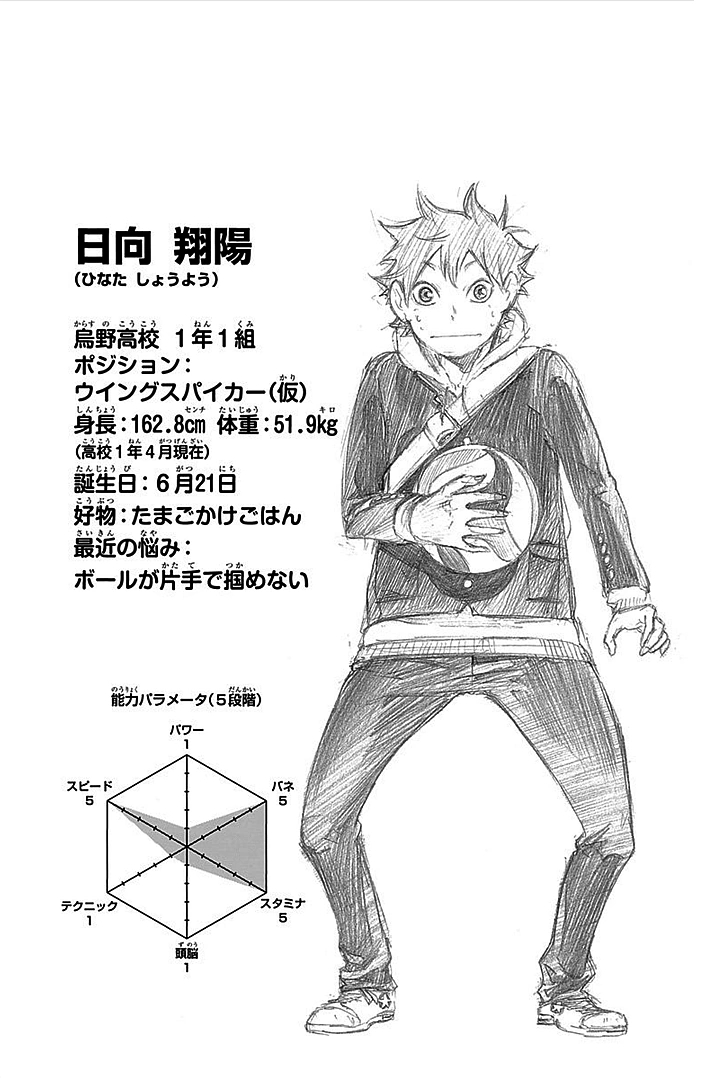
The haikyuu!! power system and player abilities look straightforward at first glance. Every character gets a neat little grid with six categories rated one through five. Power, Jumping, Stamina, Game Sense, Technique, Speed. That is it. That is the whole system. But if you have watched Hinata Shoyo spike a ball through a double block while having Technique and Game Sense stats of one, you already know something is wrong with this picture.
The truth is that Furudate's stat system is basically useless for figuring out who would win in a real match. It is too simple. It treats every position like they need the same skills. It ignores specialization. It ignores clutch factor. And it completely misses the specific abilities that really decide games, like being able to read a setter's toss from the other side of the net or having the mental stability to not choke when the score is twenty four to twenty four.
I have seen people try to powerscale Haikyuu characters like it is Dragon Ball Z. They look at Ushijima's Power 5 and Hinata's Power 1 and think it is a stomp. But that is not how volleyball works. A power system in a sports anime should reflect the actual sport, not just who punches harder. Volleyball is about combinations, timing, and covering your weaknesses with your teammates' strengths.
I am going to break down why those numbers on the character cards are lying to you, how the real power system works through position-specific broken abilities, and what the timeskip reveals about how these players scale when they go pro. Forget the official stats. They are just decorations.
The Six Stat Categories Are a Simplification That Misses the Point
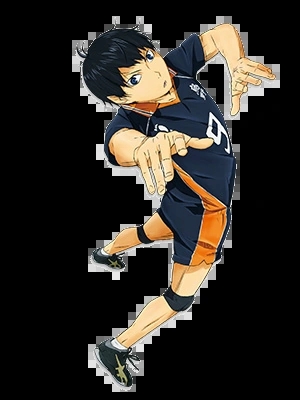
Look at Tobio Kageyama's card from the first year. Power 4, Jumping 4, Stamina 5, Game Sense 4, Technique 5, Speed 4. Solid numbers across the board. Now look at Hinata's first year card. Power 1, Jumping 5, Stamina 1, Game Sense 1, Technique 1, Speed 5. According to these numbers, Hinata should be a liability who gets subbed out immediately. Instead, he is the core of Karasuno's entire offensive strategy.
The problem is that the haikyuu!! power system and player abilities are not meant to be compared directly across positions. A libero with Power 1 is fine. A wing spiker with Power 1 is cooked unless they have some other trick. But the cards do not explain this distinction. They just throw numbers at you and hope you understand the context without any explanation.
I saw some data that said fans on Reddit tried to fix this mess with a improved stat system proposal. It splits into three categories with fifteen total stats. Technical has Blocking, Overhand, Serving, Spiking, and Underhand. Mental has Anticipation, Composure, Decisions, Movement, and Positioning. Physical has Agility, Jumping Reach, Speed, Stamina, and Strength. That makes way more sense because it actually separates a middle blocker's blocking IQ from their spiking power. It separates a setter's touch from their raw arm strength.
But even that expanded system does not capture the special techniques that break the game. How do you rate Hinata's ability to close his eyes and still hit the quick set? How do you rate Bokuto's emotional momentum swings? The numbers are just too flat to represent three-dimensional skill.
Haikyuu Power System and Player Abilities by Position
Setters play a completely different sport than everyone else. Kageyama is not just good because his numbers are high. He is good because he has perfect tempo control with spin that falls downward. That is not reflected in his Technique 5. That is a unique ability that only he and a few others possess. Oikawa has the tactical mind to exploit specific weaknesses. Atsumu has the flexibility to set from any position including the floor. These are not stat differences. These are playstyle differences that change the entire flow of the game.
Then you have the liberos. Yaku and Nishinoya do not need Power stats. They do not need Jumping stats really. Their game is about platform angle, reading arms, and knowing where the spiker is going before they swing. The official stats try to force them into the same six boxes as Ushijima, who just needs to hit the ball hard and break wrists. It is comparing apples to oranges and then saying the apple has bad orange stats.
The position breakdowns on the wiki show how middle blockers need explosive speed for quick attacks but also need to maintain that jump height for the entire match. Tsukishima is not the tallest or strongest blocker, but he has the timing to shut down Ushijima, who is physically superior in every measurable way. That is not a Power stat. That is an IQ stat that the cards do not show separately from Game Sense.
Wing spikers have their own hierarchy too. You have the power types like Asahi and Ushijima who rely on arm speed and contact height. Then you have the tool users like Hoshiumi who do not have the raw power stats but have the accuracy to spike around blocks. The 1-5 system cannot show that Hoshiumi is hitting sharp cross-court shots while Ushijima is blasting through the block. Both might have Power 5 but they use it in opposite ways.
The Special Techniques That Break The Scale
Here is where it gets messy. Some abilities in Haikyuu are basically superpowers that ignore the stat system entirely.
Take the read block. Tsukishima does not have the highest jumping reach. He is not the strongest. But he can read a spiker's shoulder angle and elbow position to know exactly where the ball is going. That is not a stat on the card. That is a skill that makes his blocking better than someone with higher Power and Jumping. He guessed Ushijima's cross shot in the Shiratorizawa match not because he is faster, but because he studied the timing.
Then you have the decoy effect. Hinata's speed and jumping ability force blockers to commit to him on every play, even when he does not get the set. That opens up the back row for Asahi and Tanaka. The stat card does not show Gravity Manipulation or Defensive Attention Draw. It just shows Speed 5. But that speed creates a tactical advantage that is worth more than having a third blocker.
Bokuto's emotional volatility is another broken mechanic. When he is feeling it, he is unstoppable and hits line shots that scrape the antenna. When he is not, he is a liability who gets blocked by mediocre players. How do you rate that on a 1-5 scale? You cannot. His Game Sense might be high but his Mental Composure would be a 2 on a bad day. Yet when he is on, he beats teams with higher average stats.
And do not get me started on serve specialists. Yamaguchi comes in for one play, does a jump float serve that clips the tape and drops dead, then gets subbed out. His Power stat is probably a 2. His Stamina is probably a 1. But in that one moment, he is the most valuable player on the court. The power system has no way to account for substitution strategies or situational specialists.
Why The 15-Stat Fan System Makes More Sense
The Reddit proposal for a 15-stat system using a 1-10 scale instead of 1-5 fixes a lot of these issues. It allows for specific detail. You can have a player with Blocking 8 but Spiking 4, which describes a defensive specialist middle blocker perfectly. You can have a setter with Technique 9 but Strength 3, which fits someone like Kenma who has perfect touch but cannot spike hard.
Under this system, Hinata's growth makes more sense. He starts with Spiking 3, Technique 1, and Positioning 2. By the timeskip, he has Technique 9, Positioning 9, and Spiking 9. The flat 1-5 system jumps him from 1 to 5 in Technique, which skips over the gradual improvement we see in the story. The 1-10 scale lets you show the steps between beginner and master.
It also separates Anticipation from Decisions. You can have a player who knows where the ball is going but makes the wrong choice, or a player who guesses wrong but has the athleticism to recover. The official Game Sense stat bundles these together into one vague number. That is useless for analysis.
The Physical category in this fan system also splits Jumping Reach from Agility. Hinata has high reach for his height but his Agility is about quick changes of direction. Kageyama has good jumping reach for a setter but his Agility is about court coverage. The official Jumping and Speed stats do not capture this distinction well.
Growth Trajectories From High School To Pros
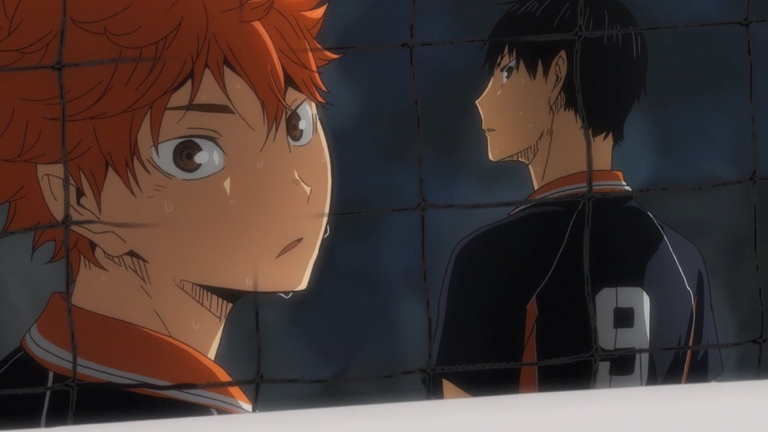
The post-timeskip stats show you exactly how much the high school numbers mattered, which is to say not at all after a certain point. Hinata goes from 162.8cm to 172.2cm. His technique jumps from 1 to 5. His spiking reach hits 350cm. But the real change is in specialization. Adult Hinata is not just a decoy anymore. He is a complete wing spiker who can receive, block, and run the quick attack from anywhere.
Kageyama grows from 180.6cm to 188.4cm and his speed goes from 4 to 5. But more importantly, he learns to adjust his tosses to match different spikers. The official statistics from the final guidebook show that by the time he joins Schweiden Adlers, he has evolved from a dictator to a supporter who brings out the best in others. That is not a stat change. That is a playstyle evolution.
Atsumu Miya goes from being a high school prodigy with attitude problems to a pro setter with perfect connection to his spikers at MSBY. His stats go up, sure, but his growth is in consistency. In high school, he might try a flashy behind-the-back set and miss. In the pros, he lands it every time.
The physical growth data shows that most players gain significant height and weight, but the stat increases are selective. Some players get better technique. Some get better stamina. The system recognizes that you cannot max out everything, so pros choose what to specialize in. Ushijima stays a power hitter but improves his technique to avoid being read. Bokuto stabilizes his emotions. Everyone finds their niche.
Stamina Is The Real MVP Stat
Everyone talks about Power and Jumping because they look cool in slow motion. But watch any five-set match and tell me what actually wins games. It is stamina.
Kageyama has a 5 in Stamina for a reason. He is running from the back row to the front row, setting up quick attacks, blocking, diving for saves, and doing it for two hours straight. When other setters start getting sloppy in the fifth set, their sets start floating or they set too tight to the net. Kageyama is still hitting the target with perfect precision because his legs are not dead yet.
Nishinoya's stamina is also cracked. He is constantly moving, rolling, diving, and getting back up. A libero who gets tired starts missing digs. They start playing the ball with their hands instead of their platform. They start misjudging angles. Yaku from Nekoma has elite stamina too, which lets him play defense at full intensity for the entire match.
Middle blockers feel this the most. If your stamina drops, your blocking timing drops. You cannot close the block quick enough. You start getting tool'd by wing spikers who are not even that good, just less tired than you. Aone from Date Tech has the physical gifts, but if he gets tired, that iron wall becomes a chain-link fence.
This is why the 1-5 system is annoying for analysis. It puts Stamina on the same level as Power like they are equally important for everyone. But for a setter or libero, Stamina is the whole game. For a pinch server, it does not matter at all. A specialist like Yamaguchi could have Stamina 1 and still be valuable. The flat rating system ignores positional needs.
Team Synergy Over Individual Numbers
Here is the thing that makes power scaling discussions in Haikyuu kind of pointless. Karasuno is not good because they have the highest stats. They are good because their system covers everyone's weaknesses.
Hinata cannot receive. That is a fatal flaw for a wing spiker normally. But Daichi is a defensive specialist who covers half the court. Nishinoya handles the other half. They hide Hinata's weakness so well that opponents forget about it until they try to serve at him in the clutch.
Tsukishima cannot attack from the back row effectively. But that is fine because they run a quick offense that keeps him in the front row for three rotations, and then they switch to a different strategy when he rotates back. Asahi provides the back row attack. Everyone fits together like a puzzle.
Compare that to Shiratorizawa. They have Ushijima with his ridiculous Power 5 left-handed spikes that break floors. They have Tendo with his guess blocking that should not work but does because he has good instincts. They do not need complex systems. They just need to get the ball to Ushijima and let him destroy the floorboards. Their power system is simple. Overwhelm with raw ability.
Then you have Nekoma, who plays defense so tight that they turn games into grinding wars of attrition. Kenma has mediocre physical stats but his game sense lets him predict exactly where you are going to spike before you know it yourself. That is not reflected in a 1-5 rating. He is playing chess while everyone else is playing checkers.
The real player comparisons make this clear. Karasuno is compared to the Japan Men's National Team because of their speed and floor defense. Shiratorizawa is like Zenit Kazan, all about power and height. Nekoma is like the Panasonic Panthers, focused on serve-receive and transition plays. Each team has a different philosophy that makes individual stats matter less.

The Professional Tier And What Changes
When these kids hit the V.League, the stat system becomes even more useless for comparison. MSBY Black Jackals has Hinata, Atsumu, Bokuto, and Sakusa. Schweiden Adlers has Kageyama, Ushijima, and Tendo. At that level, everyone has Power 5. Everyone has Technique 5. The difference is in the specifics and the combinations.
Sakusa has that weird wrist snap that makes the ball spin differently and drop sharply. That is not a standard stat. That is a mechanical quirk. Atsumu can set perfect tosses from the sand, from his knees, from a dive. That is flexibility, not just Technique 5. Kageyama has evolved past the King to become a setter who can match any spiker's rhythm, fast or slow.
The final guidebook stats for these pro teams show that the gap between good and great is not in the numbers anymore. It is in the versatility. High school stats are about potential and raw gifts. Pro stats are about refinement and consistency. You cannot have a 1 in Technique anymore. You cannot have a 1 in Game Sense. Everyone is at least a 3 in everything, and then they have their specializations at 5 or beyond.
If you try to power scale Haikyuu using just the official cards from volume 1, you end up thinking Asahi is worse than some random middle blocker from Date Tech because they both have 3s in certain stats. But Asahi is an Ace who carries the offense against national-level competition. The numbers do not capture the pressure he faces or the difficulty of his angles. They do not capture that he is doing it against double blocks while being the primary target.
Stop Looking At The Numbers
If you are new to the series, ignore the character cards in the manga volumes. They are flavor text. They give you a rough idea of who is athletic and who is smart, but they do not tell you who wins matches.
Watch how the players move. Watch how the setters adjust their tosses mid-air based on the blocker's position. Watch how the liberos position their feet before the spike even happens. That is where the real haikyuu!! power system and player abilities live. It is in the details of form, the split-second decisions, the stamina to still jump your highest in the fifth set when your lungs are burning.
The 1-5 system is a nice visual for the manga covers. It looks cool on a trading card. But it is not the truth. The truth is that Hinata started with mostly 1s and became a pro MVP through specific skill growth. The truth is that Yamaguchi has one skill and it is enough to win entire sets. The truth is that volleyball does not care about your overall rating, it cares about whether you can get the ball over the net one more time than the other guy when it matters most.
That is the real power system. Not numbers on a page, but the ability to stay in the fight when your legs are screaming and the score is tied and everyone is tired. That is what Haikyuu is actually about.
Frequently Asked Questions
What are the official stats in Haikyuu?
The manga uses a simple 1-5 scale across six categories: Power, Jumping, Stamina, Game Sense, Technique, and Speed. But these don't tell the full story of a player's abilities since they ignore position-specific skills and special techniques.
Why do Hinata's stats look so bad?
Hinata starts with mostly 1s except for Jumping and Speed. The system doesn't account for his decoy ability or growth potential. By the timeskip, his Technique reaches 5, showing the initial stats were just a baseline that didn't reflect his real impact.
What is the best stat in Haikyuu?
Stamina is probably the most underrated stat. It determines who can still play at full power in the fifth set. Setters like Kageyama with 5 stamina have a huge advantage in long matches because they don't lose precision when tired.
How do positions affect the power system?
Each position values different stats. Liberos don't need Power or Jumping. Setters need Game Sense and Technique. Wing spikers need a mix. The 1-5 system tries to force everyone into the same boxes which doesn't work for comparing across positions.
Do the stats matter in the pro league?
Not really. By the timeskip, everyone has high stats. The difference is specialization and consistency. Pro players have eliminated their weaknesses and focused on specific skills that work with their team system, making the simple 1-5 scale obsolete.