
Heavenly Delusion Plot Mysteries and World Building Explained
Heavenly Delusion plot mysteries and world-building explained starts with one hard truth: the show is constantly lying to you about time. Most post-apocalyptic anime hand you a clear backstory in episode one. Not this one. It drops you into two separate stories that seem to happen at the same time, then slowly reveals they're connected in ways that break your understanding of the disaster that ruined Japan.
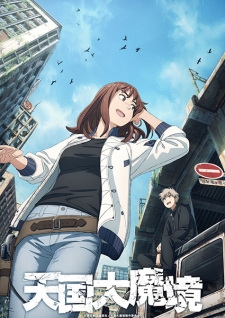
The series follows Maru and Kiruko driving through a wasteland filled with man-eating monsters called Hiruko. They're looking for a place called Heaven and a guy who looks like Maru. Meanwhile, kids live in a clean, high-tech facility also called Heaven, completely sealed from the outside. The show cuts between these two groups like they're happening simultaneously. They're not. The timeline is twisted, and figuring out how twisted is half the point.
The Dual Timeline Hides the Real Horror
The facility scenes and the wasteland scenes don't line up like you think. The kids in Takahara Academy, Tokio and the others, they're living in a controlled environment that exists before or during the early stages of the collapse. Maru and Kiruko are traveling fifteen years after everything went to hell. The show uses this split to hide the cause of the apocalypse while showing its effects.
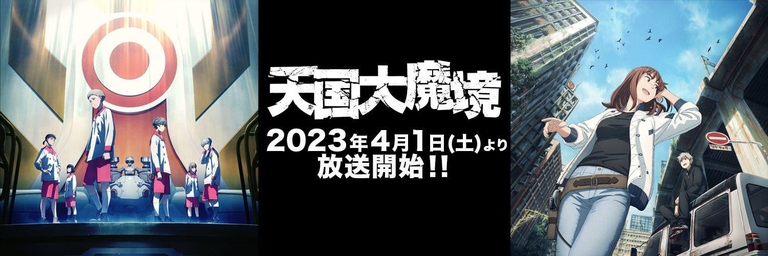
You get clues through visual contrast. The outside world is rust, broken concrete, and blood. The facility is white walls, soft lighting, and rounded corners. One looks like a horror movie, the other like a children's hospital. This isn't just style. The facility is actively trying to stay clean while the outside rots. The kids are being prepared for something, kept pure, while Maru and Kiruko fight through the corruption that's already taken the world.
The connection between these two settings is the core mystery. Characters in the facility mention the outside like it's a theoretical place. Characters outside mention Heaven like it's a myth. Both are right. The facility is Heaven, or it becomes Heaven, or it was Heaven before it fell apart. The timeline confusion makes you question which events caused which.
Three Apocalypse Theories and They're Probably All Wrong
Episode 11 drops three possible explanations for why the world ended. Juichi, a scavenger Maru and Kiruko meet, tells them three stories. First, an asteroid hit earth. Second, aliens invaded and the Hiruko are extraterrestrial. Third, terrorists used a special weapon that broke reality.
Here's the thing. Juichi is a liar. The show proves it when his branding tattoo turns out to be fake paint. But the theories stick because they fit the evidence. The Hiruko look like chimeras, mixed-up biology that could be alien or could be weaponized mutation. There's a photo showing a weird bird-like thing that looks like Asura, one of the facility kids who has strange powers and a weird face.
The misdirection works because the show never confirms anything. It throws red herrings that double as real clues. Maybe an asteroid brought alien life that got weaponized. Maybe the facility created the Hiruko as part of the Noah Project. The three theories overlap in ways that suggest the truth is worse than any single option.
The asteroid theory gets support from the landscape. Impact craters, weird weather, destroyed cities. The alien theory fits the Hiruko's biology, which doesn't follow normal evolution. The weapon theory explains why some areas are more mutated than others. But Juichi's unreliability means you can't trust any of it completely. The show wants you guessing.
Kiruko's Body Horror and Why It Matters
Kiruko isn't just a tough woman with a gun. She's Haruki, a boy whose brain got transplanted into his sister Kiriko's body after they both died in an accident. This isn't played for shock value. It's a core part of the world-building that shows how advanced and how messed up the pre-collapse technology was.
The body swap explores identity without getting preachy. Kiruko identifies as male inside a female body. He uses male pronouns for himself but lives in a woman's form. The show handles this through character interaction, not lectures. Maru doesn't care. He likes Kiruko for who he is, not what body he's wearing. Their relationship grows naturally because of this acceptance, not despite it.
This element ties into the bigger themes of corruption and purity. The facility kids are being kept in pristine condition, but Tokio gets pregnant mysteriously, suggesting the outside world is leaking in. Kiruko represents the opposite, a mind preserved while the body changes. Both situations question what makes a person real. Is it the brain, the body, or something else?
The reveal comes early, in episode one, with Kiruko saying "I'm also a boy." Most viewers miss it until later. The show trusts you to remember details without flashing back constantly. This respect for viewer intelligence is rare. It doesn't hold your hand or explain twice.
The Facility's True Purpose and the Noah Project
Takahara Academy isn't a school. It's a survival bunker, or a lab, or an ark. The kids inside have special abilities. Mimihime sees the future. Asura has weird telekinetic powers. Tokio looks exactly like Maru but lives in a separate timeline. They're being groomed for the "outside of the outside," a phrase that suggests the facility itself is just a middle layer between the ruined earth and something else entirely.
The Noah Project gets mentioned late in the series. It sounds like a plan to repopulate earth or escape it. The facility has artificial wombs, clone babies in incubators, and an AI named Mina running everything. The robotic teachers aren't protecting the children out of kindness. They're preparing cargo for transport.
The kids think they're in a paradise. The reality is they're specimens. The clean walls hide dirty experiments. When Tokio gets pregnant without having sex, it implies the facility is using them for breeding programs. The "outside of the outside" might be space, or a digital world, or a timeline where the disaster never happened.
Visual Storytelling Over Exposition Dumps
The show never has a character stand around explaining the history of the world. You learn through background details, newspaper clippings, and environmental decay. A ruined convenience store tells you more than a monologue ever could. The facility's sterile halls speak to control and fear of contamination.
This approach creates immersion. You feel like you're discovering the world alongside Maru and Kiruko. When they find a photograph of pre-disaster Tokyo, you see the contrast without needing a lecture. The Hiruko designs tell you about the corruption of flesh, mixing human and monster features in ways that suggest they were people once.
The color palette shifts between timelines. The facility uses soft pastels and warm lights. The outside uses harsh grays and blood reds. When these colors mix, like when facility kids finally see the outside, the clash is disturbing. It shows the two worlds colliding in real time.
Why the Manga's Mysteries Work Better in Animation
Production I.G adapted this with a level of care that improves the source material. The manga is dense, with Ishiguro packing panels full of detail. The anime cuts the fat but keeps the meat. It moves faster without losing meaning, using camera movement to show relationships instead of internal monologue.
The action scenes benefit massively from animation. Maru fights like he's doing a weird martial dance, using his special power to destroy Hiruko from the inside. In the manga, this looks cool. In the anime, with Kensuke Ushio's soundtrack pounding and the fluid movement of Production I.G's team, it's terrifying. The man-eaters move wrong, like their bones are broken, which you can't get from still images.
The adaptation also handles the sensitive material better than expected. Kiruko's gender identity and the sexual violence themes could have been exploitative. Instead, they're treated as facts of this broken world. The show doesn't glamorize or moralize. It just shows what happens when society collapses and people try to survive.
The Robin Twist and Why It Hurts
Late in the series, Kiruko finds Robin, a doctor from his past. The reveal that Robin is actually Dr. Inazaki, the one who performed the brain transplant, shatters Kiruko's stability. This man saved Kiruko's life but also destroyed his original body. Their confrontation is messy, emotional, and doesn't have a clean resolution.
Robin represents the old world trying to maintain control in the new one. He wants to keep experimenting, keep "fixing" people by breaking them apart. His death, or apparent death, doesn't solve anything. It just leaves Kiruko with more trauma and fewer answers. This is how the show operates. It gives you solutions that create bigger problems.
The Connection Between Maru and Tokio
Maru looks identical to Tokio. They're both small, dark-haired, and have a weird innocence about them. The show hints that Maru might be Tokio's son, or a clone, or the same person from different points in time. The timeline confusion makes every theory possible.
Maru has the power to kill Hiruko with a touch. Tokio has dreams of the outside and draws pictures of places he's never seen but Maru has visited. They're psychically linked across time, or they're genetic copies, or the facility sent Tokio's consciousness into Maru's body. The show won't say yet.
This mystery drives the plot more than the search for Heaven. Maru wants to find his "brother" who looks like him. He doesn't know he's probably looking at his own origin story. When the two timelines inevitably collide in future seasons, the fallout will rewrite everything we know about the disaster.
Why the Ending Leaves You Empty and Full
The last episode of season one doesn't resolve much. Kiruko and Maru drive off together, their bond solidified by shared trauma. Some kids escape the facility. Others stay behind. The Noah Project is mentioned but not explained. It feels like the end of a chapter, not a book.
This works because the show is about the search, not the destination. Finding Heaven would end the story, and the story isn't ready to end. The mysteries are too big for thirteen episodes. The world is too detailed to wrap up neatly. The show respects your time by not giving you fake closure.
Heavenly Delusion plot mysteries and world-building explained comes down to this: it's a puzzle box where the pieces keep changing shape. The dual timeline isn't a gimmick. It's the whole point. The show asks what happens when the world ends but doesn't tell you which ending is real. It shows you the aftermath and makes you figure out the cause. That's why it sticks with you. Not because it answers questions, but because it asks the right ones in ways that make you uncomfortable.
The facility and the wasteland are the same place at different stages of decay. The children and the survivors are the same people at different points in their lives. The monsters and the humans are harder to tell apart than anyone wants to admit. And Heaven? It's probably not a place you want to find.
Frequently Asked Questions
What is the connection between Maru and Tokio?
They are likely the same person or genetically identical clones existing at different points in time. Tokio lives in the Takahara Academy facility which appears to exist before or during the early stages of the apocalypse, while Maru travels the wasteland fifteen years later. They share identical appearances, and Tokio has visions of places Maru visits, suggesting a psychic or genetic connection that hasn't been fully explained yet.
What is Kiruko's real identity?
Kiruko was originally Haruki, a boy who died in an accident along with his sister Kiriko. A doctor named Inazaki transplanted Haruki's brain into Kiriko's body, creating Kiruko. This is why Kiruko uses male pronouns and identifies as male despite having a female body. The series explores this identity without moral judgment, focusing on Kiruko's personal experience rather than using it for shock value.
What caused the apocalypse in Heavenly Delusion?
The series presents three main theories through the unreliable narrator Juichi: an asteroid impact, an alien invasion where the Hiruko are extraterrestrial life forms, or a terrorist attack using a special weapon. The show uses misdirection to suggest all three might be partially true or completely false. The truth likely involves the Takahara Academy's experiments and the Noah Project rather than any natural disaster.
What is the Noah Project?
The Noah Project appears to be a survival or repopulation plan orchestrated by the Takahara Academy. The facility contains artificial wombs, genetically modified children with special abilities, and seems to be preparing them for life outside the facility or possibly leaving Earth entirely. The "outside of the outside" mentioned in the series likely refers to the project's end goal, whether that's space colonization or escaping to another dimension or timeline.
Are the facility scenes and wasteland scenes happening at the same time?
No, they are happening at different points in time. The facility scenes with Tokio and the other children take place around the time of or shortly after the disaster, while Maru and Kiruko's journey happens approximately fifteen years later. The show uses editing to make them appear simultaneous as a misdirection technique, hiding the cause-and-effect relationship between the facility's experiments and the state of the outside world.
What are the Hiruko creatures?
Hiruko are man-eating monsters that roam the post-apocalyptic landscape. They appear to be chimeric creatures mixing human and animal traits, suggesting they were either created through genetic experimentation or are mutated humans. Maru has the unique ability to destroy them from the inside using a special power, implying he has a connection to their creation or the facility that made them.