
Higurashi Gou Anime Mystery and Plot Explained by Someone Who Gets It
Higurashi Gou anime mystery and plot structure isn't a remake no matter what the marketing tried to sell you. It's a direct sequel that spits on the happy ending from Kai and drags Rika back into hell, except this time her best friend is the one holding the shovel.
You probably watched the first two episodes and thought you were seeing a prettier version of Onikakushi-hen. Same Keiichi, same Rena, same paranoia about the dam project and the creepy village festival. Then episode three hits and suddenly Mion is gouging her own throat with a kitchen knife while Satoko watches from the doorway with dead eyes. That's when you realize Passione isn't retelling the 2006 story. They're continuing it, and they've turned the psychological horror into something way more personal and way more brutal.
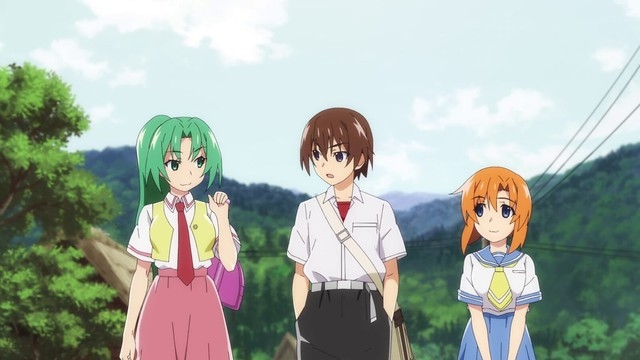
The core mystery here isn't about the Hinamizawa Syndrome or the dam construction conspiracy. Those questions got answered years ago. The new puzzle is why Satoko Hojo, the trap-obsessed kid who used to cry about her abusive uncle, is now looping through time like Rika used to, except she's doing it on purpose to destroy her friend's future. That's the engine driving everything, and it's why Gou feels so different from the original Studio Deen run.
The Remake Lie and Why the First Arcs Feel Wrong
They marketed this thing as a reboot. Passione said it was a new adaptation for modern audiences, which technically isn't a lie since it is new animation, but it's also dirty trickery because you can't watch Gou without knowing who Rika is, what the Fragments are, and why the 1983 Hinamizawa loop mattered. If you started here, you got spoiled on the entire original series by episode four.
The show mirrors the Question Arcs from 2006 but with wrong notes everywhere. In Onidamashi-hen, Keiichi survives the encounter with Rena at his house, which never happened in the original timeline. In Watadamashi-hen, Mion drowns in a septic tank off-screen after acting completely out of character regarding her feelings for Keiichi. In Tataridamashi-hen, Satoko's uncle Teppei returns, but instead of being pure evil, he shows signs of redemption and care, only to die violently anyway.
These aren't animation errors or lazy writing. They're clues that the rules have changed because someone new is writing the script of this tragedy, and she's sitting in the classroom wearing a yellow ribbon. The mystery isn't who Oyashiro-sama is or why the village is cursed. The mystery is who is changing the variables and why do they hate Rika specifically. You can see the 07th Expansion Wiki for the full episode breakdowns, but the short version is nothing is accidental.
Satoko Hojo Is the Villain Now
This is the big twist that redefines the Higurashi Gou anime mystery and plot. Satoko isn't a victim anymore. After the events of Kai, Rika escaped the loop, grew up, and got into St. Lucia Academy, which is basically a fancy boarding school for rich girls that looks like a prison with better gardens. Satoko followed her there because she couldn't imagine life without her big sister figure, but she flunked out hard. She couldn't handle the academics, the social pressure, or watching Rika thrive while she drowns in homework and loneliness.
So she finds this witch named Eua in the Sea of Fragments. Eua gives Satoko looping powers way stronger than what Rika had. Satoko can not only remember every timeline like Rika can, but she can choose exactly when to return, and she can carry physical objects between loops. That's how she steals the H-173 syringe from Takano's lab and starts injecting people manually to trigger outbreaks whenever she wants.
She's not trying to solve the mystery or save the village. She wants to break Rika's spirit so completely that Rika gives up on the future and stays in Hinamizawa forever. It's pure toxic friendship dressed up as devotion, and it makes Satoko one of the most disturbing villains in horror anime because she knows exactly what she's doing and she chooses to keep doing it for hundreds of years. She lives through centuries of violent death just to make one girl give up on her dreams. One detailed review breaks down exactly how many loops she endures voluntarily, and the number is staggering compared to Rika's ordeal.
How the Horror Shifted From Dread to Body Horror
The 2006 series built dread through atmosphere. Deen's weird art style, the off-model faces, the cicada sounds, the slow realization that the cute girls were actually murderers. It was psychological horror that made you uncomfortable because you couldn't trust your own perception of the slice-of-life scenes. You didn't know what was real or who was infected until it was too late.
Gou doesn't have time for that subtlety. Passione's animation is cleaner, brighter, more colorful, which should kill the mood except they replace the slow dread with immediate body horror. Heads explode like watermelons. Satoko disembowels Rika with a ritual hoe in a scene that lasts way too long and shows way too much. The violence isn't implied or off-screen. It's center frame, detailed, and repetitive.
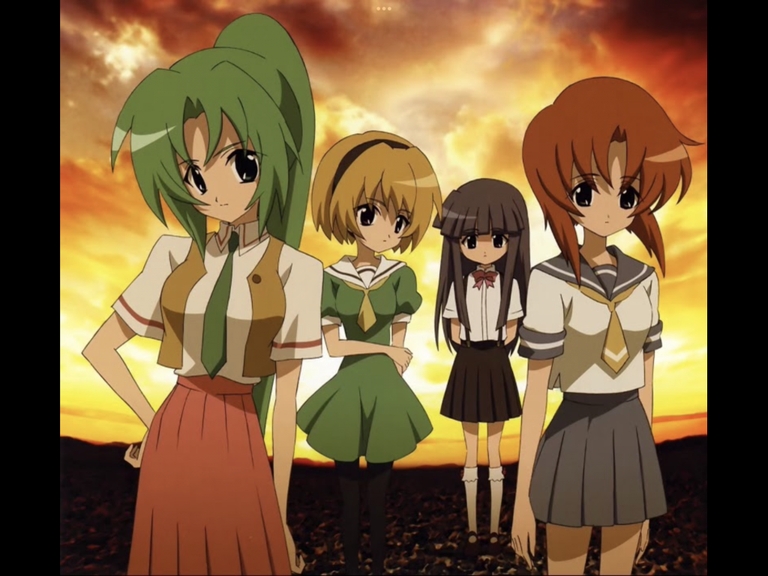
Some fans hate this shift. They say it loses the mystery element and becomes torture porn where you're just waiting for the next creative kill. Others argue it fits because Satoko's loops are different in nature. Rika's loops were about survival and figuring out the rules of the game. Satoko's loops are about punishment and control. The horror isn't the unknown anymore. It's watching someone you love deliberately choose to hurt you in creative ways, and that requires showing the hurt in graphic detail. A Reddit analysis points out how this shift makes Gou a bizarre entry that prioritizes thrills over the original's creeping dread.
The Timeline Bleeds and Characters Start Remembering
Here's where the Higurashi Gou anime mystery and plot gets weird in a good way. Because Satoko is manipulating time so aggressively, memories start leaking between fragments in ways that never happened in the original series. Her uncle Teppei, who was the worst kind of abusive garbage in the original series, suddenly remembers all the ways he hurt her across hundreds of timelines. He breaks down, tries to redeem himself, becomes a decent guardian who actually cares about Satoko's wellbeing. Miyo Takano, the main antagonist from Kai, gets hit with the memory of her own failure and abandons her plans to release the virus, breaking down in tears instead.
These moments should fix everything. If Teppei is good and Takano stops the plot, the tragedy should end. The village should be safe. But Satoko can't allow that because a peaceful Hinamizawa means Rika leaves for college and Satoko gets left behind. So she actively sabotages these redemption arcs. She murders Teppei herself when he gets too nice. She steals the H-173 and infects people manually to keep the blood flowing even when the original triggers are gone. She's not just a victim of circumstance anymore. She's the author of the tragedy, and she edits out any character development that doesn't serve her goal of trapping Rika in a hell of her own design.
St. Lucia Academy and the Fear of Growing Apart
People miss that Gou isn't really about the 1983 village. It's about the fallout from St. Lucia. The middle school arc where Satoko and Rika drift apart is the real horror because it's so grounded in reality. Satoko can't keep up with Rika's new friends who speak in refined accents and care about grades. She sits alone at lunch while Rika laughs with students who don't know anything about Hinamizawa or traps or the trauma they shared. She fails tests while Rika gets perfect scores. The isolation drives her to suicide in one timeline, and when that doesn't work, she loops back and decides violence is the only language Rika will understand.
This is the emotional core that makes the mystery matter. If you don't buy that Satoko would destroy the world because her friend moved on and grew up while she stayed the same, the whole thing falls apart. But if you've ever had a friendship die because one person changed and the other couldn't handle it, it hits hard. Satoko isn't just evil. She's stuck in childhood, and she'd rather burn Hinamizawa to the ground than be left alone in the adult world where she doesn't fit.
The Umineko Connections and Meta-Fiction
Eua isn't just a random witch. She looks exactly like Featherine Augustus Aurora from Umineko When They Cry, and she keeps calling Satoko "Vier" or talking about Bernkastel and Lambdadelta. This has led to theories that Gou is secretly an Umineko prequel, that Satoko is becoming Lambdadeltta, the witch of certainty, and that Rika is Bernkastel, the witch of miracles, being born through this suffering.
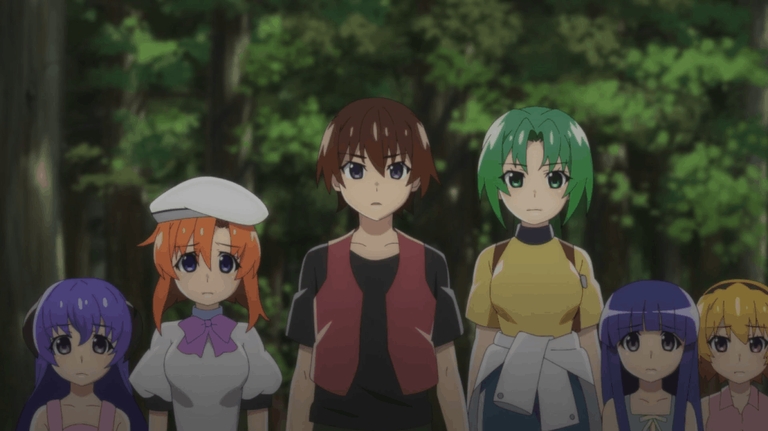
Whether you buy into the meta-fiction connections or not, it changes the stakes of the story. Suddenly the loops aren't just time travel or quantum physics. They're reality warping on a multiversal scale. Satoko isn't just a girl with a trauma response. She's ascending to godhood through repetition, and Rika is her opponent in a game board that spans centuries. It makes the Higurashi Gou anime mystery and plot feel bigger than the village, maybe too big for some fans who liked the grounded parasite explanation from the original series.
Why Watadamashi-hen Felt Empty
The third arc, Watadamashi-hen, is where the pacing falls apart for many viewers. In the original, this was the arc where you learned about the Sonozaki family secrets, the underground torture chambers, and Shion's complicated relationship with her twin sister Mion. In Gou, it spends three episodes on cute club activities and curry cooking, then rushes through the horror in the last ten minutes. Mion drowns in a septic tank off-screen. Shion acts out of character. The mystery gets solved by exposition dumps instead of clues you could have spotted yourself.
This happens because Satoko is the only character with real agency now. Everyone else is just a puppet she infects with H-173 or manipulates through emotional abuse. So the traditional mystery structure where you try to figure out who killed who based on Hinamizawa Syndrome symptoms doesn't work anymore because you know Satoko did it, or she made someone else do it, and she doesn't care about the village secrets or the dam project anymore. The arc feels hollow because Ryukishi07 is more interested in the relationship drama than the village conspiracy at this point, and it shows. An Otaku Study critique notes this shift toward fanfiction-style storytelling as the weakest link in the new series.
The Soundtrack and Visual Differences
Passione's art looks like Monogatari had a baby with a slasher film. The characters are cuter, rounder, more moe than Deen's 2006 designs, which makes the gore hit harder. When Satoko smiles with her eyes closed while holding a bloody weapon, the contrast is disturbing in a different way than the original's off-model creepiness. Akio Watanabe's character designs emphasize the youth and innocence of the cast so that when that innocence breaks, it breaks completely.
The music still uses cicadas because you can't have Higurashi without that sound, but Kenji Kawai's score adds electronic elements and modern synth that feel cold and clinical. It fits the new tone. This isn't a folk horror story about village traditions and local gods anymore. It's a sci-fi thriller about time wars and witchcraft, and the soundtrack knows it. The opening theme, I believe what you said, hits different once you know Satoko is the one singing about betrayal.
The Finger Scene and Escalating Violence
There's a scene in Tataridamashi-hen where Satoko breaks her own finger to frame someone, and the camera doesn't look away. It lingers on the bone, the sound design makes you hear the crack, and it's one of many moments where Gou crosses a line from psychological thriller into outright body horror. Rika gets disemboweled with a hoe. Keiichi gets his head bashed in with a baseball bat in first-person perspective. Satoko cuts her own throat with a knife while smiling.
These aren't just shock value. They represent the escalation of Satoko's desperation. Each loop gets more violent because she's trying to find Rika's breaking point, the exact amount of trauma that will make her give up. It's clinical and cruel, and it makes the mystery less about figuring out who is guilty and more about wondering how much more the characters can take before they shatter completely.
Hanyuu's Absence and Weakened Protection
In the original series, Hanyuu Furude acted as Rika's guardian and comfort, a ghost only Rika could see who helped her survive the loops. In Gou, Hanyuu is weak, fading, and eventually leaves completely after Satoko confronts her. This removal of Rika's support system is crucial because it isolates Rika further. She doesn't have her god on her side anymore. She's alone against Satoko, who has a more powerful witch backing her.
This power imbalance makes the loops feel more dangerous. Rika can't just reset and try again with her full memories intact in the same way. She's vulnerable, aging mentally while her body stays twelve, watching her best friend become a monster she can't reason with.

Does It Respect the Original Ending
This is the argument that splits the fanbase down the middle. Gou renders Takano's redemption and the club's victory in Kai meaningless because it establishes that Rika just got pulled back into another loop anyway. The happy ending was temporary. The village they saved gets destroyed again, worse this time, by one of their own.
On the other hand, it adds layers to Satoko that make her more than the tragic little sister archetype she was stuck in. She gets to be complex, broken, powerful, and terrifying. The horror shifts from external threats like government conspiracies to internal ones like jealousy and possessiveness, which is what good sequels should do. It asks whether you can really save someone who doesn't want to be saved, or if trying to drag your friends backward into your comfort zone is its own kind of violence that destroys both people. You can read more about this interpretation explained here.
Higurashi Gou anime mystery and plot work best when you accept it as a separate beast from the original. It's not trying to recreate the slow-burn paranoia of 2006. It's a thriller about friendship gone wrong, about the fear of being left behind, and about how love can curdle into possession if you let it loop long enough.
Satoko's betrayal stings because it feels real. We've all known someone who couldn't handle us growing up or moving on. Most of them don't trap us in time loops with supernatural parasites, but the emotional beat is the same. Gou takes that feeling and stretches it across centuries of murder until both girls are monsters, and then asks if they can still forgive each other after all that blood.
It's flawed. The middle sags, the Umineko teases might never pay off in a satisfying way, and the body horror gets excessive to the point of numbing. But it's never boring, and it never treats the original story with kid gloves. It burns the village down again just to see what rises from the ashes, and for that alone, it's worth watching even if it makes you uncomfortable.
Frequently Asked Questions
Is Higurashi Gou a remake or reboot?
No. It is a direct sequel set after the events of Higurashi Kai. You need to watch the original series first or Gou will spoil everything and make no sense.
Who is the main villain in Gou?
Satoko Hojo becomes the villain after receiving looping powers from Eua, a witch from the Sea of Fragments. She loops through time to break Rika's spirit and force her to stay in Hinamizawa forever.
What is Eua in Higurashi Gou?
Eua is a witch who resembles Featherine from Umineko When They Cry. She grants Satoko the ability to loop through time with perfect memory and the ability to carry objects between timelines.
Is Gou more violent than the original series?
Yes, significantly. While the original focused on psychological dread and mystery, Gou features graphic body horror, on-screen disembowelment, and extended scenes of physical torture.
What is St. Lucia Academy?
St. Lucia Academy is the prestigious boarding school Rika attends after escaping Hinamizawa. Satoko follows her but fails academically and socially, which triggers her descent into madness and time manipulation.