
How the Btooom! Survival Game Actually Works
Btooom! anime survival game and plot doesn't waste time with power fantasies or friendly competition. You're dropped on a tropical island with a gem embedded in your hand and a bag of bombs, and the only way home is collecting eight chips from dead players. That's the whole setup. No tutorial, no consent forms, just immediate deathmatches with explosives that feel way too real.
Ryota Sakamoto figures this out fast. He's a 22-year-old NEET who spent his entire life playing the online game Btooom!, so he recognizes the BIM grenades and radar mechanics immediately. But knowing the game doesn't prepare you for the smell of blood or the reality that these are real people trying to murder you. The anime wastes zero time getting to the explosions, and that's exactly why it works despite its flaws.
The setup is simple but brutal. Someone in your life nominated you to die. They filled out a form, paid money, and boom, you got kidnapped. Ryota's own mother sent him there because she hated his gaming addiction. That detail changes everything. It isn't random bad luck. It's personal revenge, which makes the paranoia way worse than standard survival stories.
The Nomination System Is Cold as Hell
Most survival anime throw random people together for vague reasons. Btooom! makes it intimate and messed up. The Schwaritz Foundation runs this thing with Tyrannos Japan, and they take requests from family members, coworkers, or anyone who wants someone gone. You don't get picked by lottery. Someone you know signed the papers to have you eliminated.
This explains why the island mixes actual criminals with regular folks like Ryota who just pissed off the wrong relative. One guy got sent there by his business partner. Another by his wife. It creates this atmosphere where you can't trust anyone because everyone carries baggage. They've all been rejected by someone they knew, which makes them unstable from the start.
The game masters give you a parachute and push you out of a plane over the island. You land wherever physics takes you. Some people hit forests, others hit beaches, and some break their legs on rocks. You get a starter pack with food, water, and random BIM types. Then it's kill or be killed until you collect eight IC chips from corpses. The chips are embedded in the left hand, so you literally have to cut them out or wait for the body to decompose enough to grab them. It's gross and practical and nobody wants to talk about how nasty that gets after a few days in tropical heat.
BIM Weapons Make or Break You
You don't get guns or knives. You get bombs with specific behaviors, and your survival depends on knowing the meta. Cracker BIMs are your basic timed explosives that beep before detonating. Implosion BIMs create vacuum spheres that crush people into meat paste. Homing BIMs chase heat signatures and can't be dodged easily. Remote BIMs let you set traps with triggers. Poison gas BIMs clear rooms slowly and force people out of cover.
Ryota dominates because he knows the timing and blast radius of each type from his gaming days. He understands that Cracker BIMs have a three-second fuse and Implosion BIMs take time to arm. Other players fumble with their own weapons because they never played the video game. There's this weird divide between the gamers who understand the systems and the regular people just trying to figure out which button to press. It makes the fights tactical rather than just strength-based.
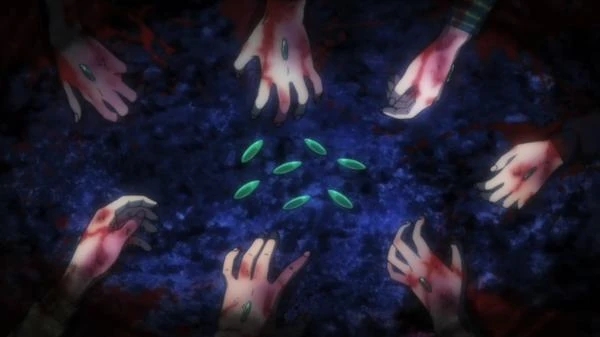
The radar system adds another layer. Everyone has a crystal implanted that shows nearby players as moving dots. You can see them but they can see you. Unless you turn off your radar, which makes you invisible but also blind. Ryota uses this constantly, toggling his radar to misdirect opponents or hide in bushes while watching blips walk past. It's like playing a shooter with wallhacks except the lag means you might see someone who already moved, or they might see you first.
Some players figure out jamming techniques. Kousuke Kira, the teenage serial killer, uses his radar intermittently to confuse tracking. Others set decoy BIMs to make noise and draw attention. The game rewards brains over brawn, which keeps Ryota alive despite being a scrawny shut-in who probably couldn't win a fistfight against a middle-aged accountant.
Ryota and Himiko's Weird Dynamic
The anime centers on these two because they need each other but can't trust each other. Himiko is Ryota's in-game wife from Btooom! online, but they don't recognize each other immediately because they used different avatars. She's fifteen, traumatized by past assault, and carrying a stun gun with serious trust issues. He's a shut-in who hasn't talked to a real girl in years and doesn't know how to read social cues without a chat window.
Their relationship grows messy and slow. Himiko isn't some damsel waiting for rescue. She kills when she has to, and she freezes up when the situation triggers her PTSD. The anime doesn't shy away from showing her fear of men for real reasons, not just for drama. She was assaulted before arriving on the island, and several male players try to attack her again once they realize she's young and armed only with electricity.
Ryota tries to be the hero but sucks at it sometimes. He hesitates when he shouldn't. He trusts the wrong people, like when he teams up with Masahito Date the doctor who seems nice but is actually collecting chips from his "patients." Ryota gets angry at the game masters and makes stupid decisions based on emotion, charging into fights without planning. But he learns. He figures out that playing Btooom! online didn't teach him anything about actual survival, just the mechanics. The guilt of killing real humans breaks him down episode by episode until he's shaking and vomiting after confrontations.
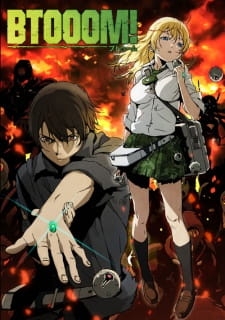
They eventually figure out who each other is through specific phrases and play styles. When Himiko uses a specific trap setup that Ryota recognizes from their online matches, he realizes this scared girl is the same person he married in the game. That revelation hits different because he's been protecting her without knowing it, and she's been fighting alongside her "husband" without recognizing his face. It's cheesy but it works because the show earns it through twelve episodes of them almost dying together.
The Side Characters Are Disposable but Messed Up
Kiyoshi Taira is this middle-aged salaryman who teams up with Ryota early on. He seems like the rational adult in the room, the steady hand who knows about business and negotiation. But the island breaks him slowly. He gets injured early, develops an infection, and becomes a liability. This creates awful tension where you know Ryota might have to leave him behind or put him down like a wounded animal. Taira's descent into madness is gradual and painful to watch because he represents what happens when normal people get stranded without antibiotics or clean water.
Kousuke Kira is fourteen years old and already a serial killer who got sent to the island by his own father. He's completely unhinged, uses radar jamming techniques, and represents what happens when you remove all consequences from an already broken kid. Every scene with him feels dangerous because he doesn't value his own life or anyone else's. He sets traps for fun and watches people bleed out while eating their food. The anime doesn't try to make him sympathetic. He's just a monster who happens to be small.
Masahito Date is the handsome doctor who seems helpful until he isn't. He backstabs his allies for chips and shows how medical knowledge becomes a weapon when you know exactly where to place explosives for maximum damage. He's the worst kind of predator because he pretends to be civilized right up until he murders you. There's also Nobutaka Oda, an older player who teams up with a woman named Hidemi only to betray her immediately when he needs her chip. These characters prove that age and social status mean nothing on the island. A CEO dies just as fast as a high school dropout when the Implosion BIM goes off.
Why the Anime Stops Abruptly
The 2012 adaptation by Madhouse only covers the first fifty chapters of the manga. It ends on a cliffhanger where Ryota and Himiko are separated again after fighting through a massive alliance of players. The show got decent ratings but never got funding for a second season, which sucks because the story gets way crazier after that point. You can read more about the continuation in this breakdown of what happens after the anime ends.
According to the manga, which you have to read to get any closure, Ryota encounters a group that stopped playing the game and tried to build a society on the island. They farmed food and made rules and tried to wait for rescue. It falls apart when one member starts murdering the others for their chips anyway. Human nature wins over cooperation when the chips are literally worth your life.
Meanwhile, Ryota's stepfather investigates the disappearance back in Japan and sends a rescue team while the game masters send their own cleanup crew. The two groups clash while Ryota tries to survive the fallout. The conspiracy goes deeper than just a survival game. It's revealed that Tyrannos Japan is using the island to test virtual reality tech for Project Themis, which aims to merge digital and physical warfare. Longer Schwart, Himiko's father, runs the Schwaritz Foundation and has been watching his own daughter fight for her life as some kind of twisted experiment.
The manga ended with two different finales because the author couldn't decide on the tone. The Dark Ending has Ryota dying heroically to save Himiko, and she spares the main villain after confronting him at headquarters. The Light Ending has both surviving and planning to marry with his parents' blessing. The sequel series Btooom! U-18 follows the Light Ending, so that's technically the canon one now, but both exist in print if you want to be depressed.
The Psychological Horror Hits Harder Than the Explosions
Yeah, there are lots of explosions. The animation budget went to making BIM detonations look crisp and terrifying with good sound design. But the real horror is watching people rationalize murder. Characters keep mental scorecards. They convince themselves that the other players deserve it because they're criminals or because they attacked first. They form alliances knowing they'll have to betray each other eventually because only one person can theoretically collect eight chips and leave, though later it's revealed that groups can technically pool chips and leave together if the game masters feel like allowing it.
The radar system adds to the paranoia. You can see other players moving nearby as green dots, but you don't know if they're hostile or scared. You can turn off your radar to hide, but then you're blind and every sound makes you jump. Every encounter becomes a calculation of risk versus reward. Do you chase that blip on the screen or hide and hope they pass? The silence between explosions is worse than the blasts themselves because you're just waiting for the beeping to start.
The show also deals with sexual violence in a way that isn't exploitative but is definitely disturbing. Himiko's backstory involves assault by her previous friends, and the threat of rape hangs over the female characters because several male players are literal predators who see the lack of law as permission. The anime doesn't show graphic scenes but the implication and aftermath are enough to make your skin crawl. It grounds the survival aspect in real danger rather than cartoon violence where everyone is just playing tag with weapons.
How It Compares to Other Survival Games
People always compare Btooom! to Battle Royale and The Hunger Games, which makes sense because the author cited Battle Royale as direct inspiration. But Btooom! differs because it isn't government-sanctioned or televised for entertainment. It's corporate and private. The Schwaritz Foundation runs this as a test for military applications and world domination schemes, not for public spectacle.
There's no audience cheering in the stands. The game masters watch through cameras and drones, but the players aren't performing for fans. They're just dying in isolation. That makes it bleaker than Battle Royale's media circus. It also focuses more on the logistics of survival. You see characters starving, dehydrating, getting infected wounds from rusty metal. The tropical island is beautiful but deadly if you don't know how to find fresh water or avoid the sun.
The bombs replace guns because the game is literally called Btooom!, but it works tactically. Gunfights in anime often come down to who draws faster. Here, you have to think about blast radius, timer delays, trap placement, and whether your opponent has a shield BIM that reflects explosions back at you. Ryota wins fights because he understands geometry and psychology, not because he has bigger muscles. He leads people into narrow corridors where Cracker BIMs are unavoidable. He fakes radar signals to make people walk into minefields. It's more chess than boxing.
You can find additional analysis of why this messy explosive take works better than expected in this review that covers the character arcs in detail.
Why It Still Matters
Btooom! anime survival game and plot remains unfinished in animated form, which is probably its biggest weakness. Twelve episodes isn't enough to explore the conspiracy behind Tyrannos Japan or resolve Ryota and Himiko's relationship properly. You have to read the manga to get the full picture of Project Themis and Longer Schwart's connection to Himiko. The anime also censors some of the more graphic manga panels, particularly regarding the sexual violence and gore, which softens the impact slightly.
But even as an incomplete story, it delivers something most survival anime miss. It captures the feeling of playing a competitive shooter where you trash talk strangers online, then asks what would happen if that lobby became real and the respawn button stopped working. The guilt, the adrenaline, the paranoia of not knowing if the footsteps behind you are a friend or a landmine trigger. It nails that specific anxiety of modern gaming culture taken to its logical extreme.
If you can handle the abrupt ending and the dark themes, it's worth watching. Just don't expect a happy resolution from the anime alone. The explosions look great, the character writing is solid for a survival thriller, and the premise feels fresh even years later because no other show committed this hard to the bomb-throwing battle royale concept. Check it out, then grab the manga if you want to know how Ryota's story actually ends. The Wikipedia page has a good breakdown of where the anime stops and the manga continues if you need a roadmap.
Frequently Asked Questions
How do you win the Btooom! survival game?
You need to collect eight IC chips from other players' left hands and use them to call for extraction off the island. You get the chips by killing other contestants or taking them from corpses, which requires cutting them out of the left hand where the gems are embedded.
Why was Ryota sent to the island?
His mother nominated him through the Schwaritz Foundation because she was sick of his NEET lifestyle and gaming addiction. Anyone can nominate someone to be sent to the island if they pay the fee and fill out the paperwork, making the selection personal rather than random.
What's the difference between the Dark and Light endings?
The Dark ending has Ryota dying to save Himiko, while the Light ending has both surviving and planning to marry. The sequel manga Btooom! U-18 follows the Light ending as canon, though both versions exist in the final volume.
Do Ryota and Himiko know each other in real life?
They don't recognize each other initially because they used different avatars in the online game. They were married in Btooom! online but only figure out their real identities through specific gameplay habits and phrases they used during matches.
Will there be a second season of the anime?
Probably not. The anime aired in 2012 and covered the first 50 chapters. Since the manga has finished with two alternate endings and got a sequel series, studios don't seem interested in revisiting it despite consistent fan demand for closure.