
Inuyashiki Last Hero Themes and Analysis Expose Raw Humanity
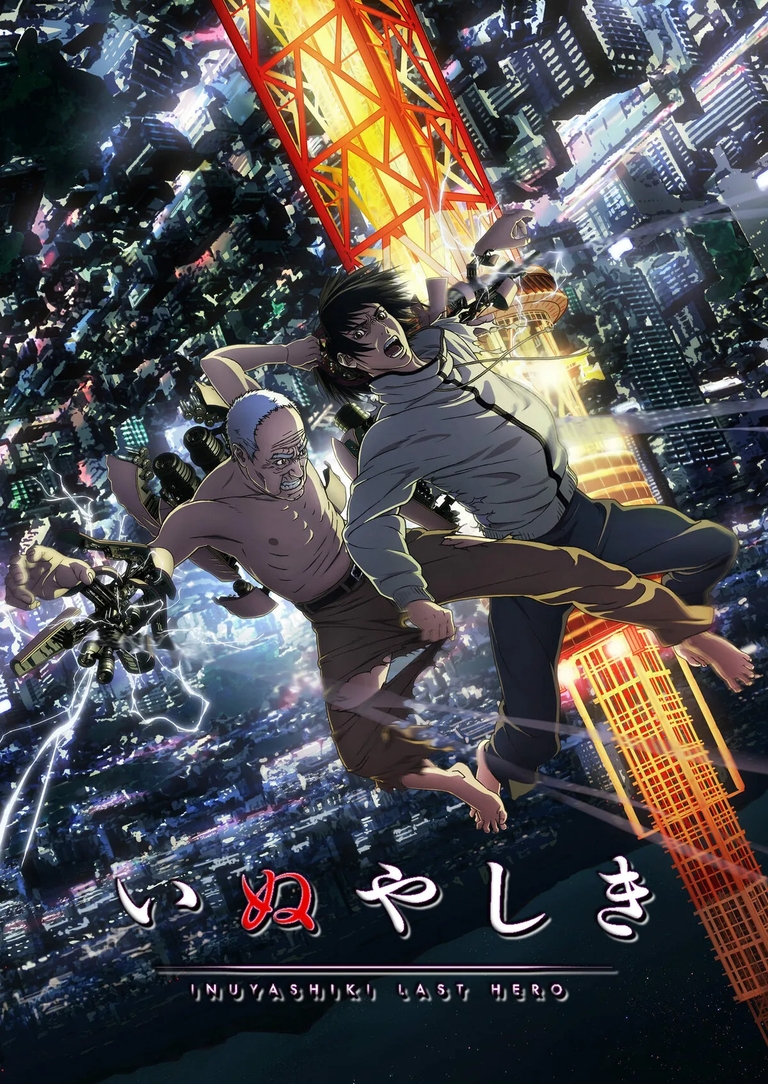
Inuyashiki Last Hero themes and analysis always circle back to one uncomfortable question. What happens when you give godlike power to someone society already threw away? Ichiro Inuyashiki isn't some teenage chosen one. He's a 58-year-old salaryman with terminal cancer and a family that treats him like furniture. Then aliens crash their ship in the park where he's crying and rebuild his body using weaponized robotics. Suddenly this invisible man has to decide if he's still human, and more importantly, if anyone else deserves to live.
The series hits different because it refuses to sanitize the violence or the kindness. When Inuyashiki heals a homeless man or stops a mugging, it lands harder than standard hero stuff because he was worthless to society yesterday. Meanwhile Hiro Shishigami gets the exact same android body and decides to murder random families for fun. The contrast isn't subtle but it's effective as hell. You're watching two sides of the same coin spin in opposite directions, and the show wants you to feel every rotation.
Why Two Androids Tell One Story About Loneliness
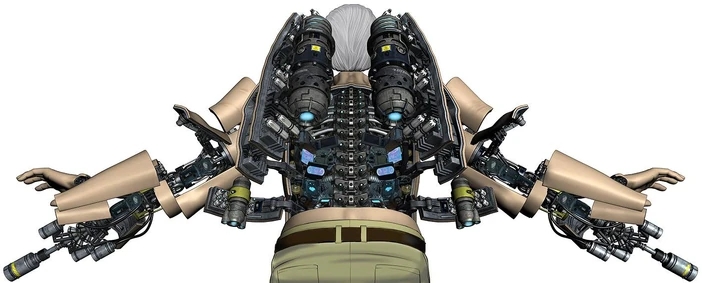
Most anime would give us one protagonist and call it a day. Hiroya Oku, who also made Gantz, decides to double down and give us two guys who get disintegrated and rebuilt by the same aliens on the same night. They both wake up with mechanical bodies that can fire missiles from their fingers and regenerate from bullet wounds. They both have to Google how to use their new parts because the aliens didn't leave an instruction manual. That's where the similarities end.
Inuyashiki was already dying alone. His wife barely talks to him, his kids roll their eyes when he enters the room, and his boss treats him like a replaceable cog. He's the definition of a disposable salaryman in modern Japan. Hiro, on the other hand, is a high school student with a loving mother, good grades, and friends who care about him. He's got everything Inuyashiki lacks. So naturally, Inuyashiki uses his powers to save people while Hiro uses his to destroy them. It's not about what happened to them. It's about what was already inside them waiting for an excuse to come out.
The loneliness manifests differently for each. Inuyashiki craves connection so badly he'll risk exposing his secret identity to save a stranger's life. Hiro isolates himself deliberately, pushing away his mother and friends because he sees other humans as NPCs in his personal game. Some viewers on Reddit pointed out that Hiro's characterization gets messy in the second half, flipping between cold sociopath and caring friend without much warning. They're not wrong. The writing gets inconsistent with him, especially regarding his moral compass. But that messiness kind of works for a teenager who's literally become a god and doesn't know how to process it.
The Old Man Nobody Wanted
Japanese salaryman culture is brutal and the anime doesn't shy away from showing it. Inuyashiki's family ignores him at dinner, his daughter Mari treats him with open contempt, and his wife seems annoyed by his existence. When he gets diagnosed with stomach cancer and has three months to live, he can't even tell them because he knows they won't care. He goes to the park to cry alone, which is when the aliens find him.
This neglect becomes the engine for the entire story. Once he gets his robotic body, he doesn't immediately seek revenge on his ungrateful family. Instead, he starts saving strangers. He cures a homeless man's paralysis. He stops a guy from stabbing a woman in an alley. He visits hospitals and heals cancer patients in their sleep. He's doing everything he wished someone would do for him, projecting his own need for care onto the entire city.
The irony is thick enough to cut with a knife. His family only starts caring about him after he becomes a hero, which some critics argue exposes the conditional nature of their love. They ignored him when he was a weak old man but suddenly he's valuable when he's flying around shooting lasers at bad guys. The show doesn't excuse this behavior. It just presents it as the ugly truth of how we treat the elderly and powerless. Inuyashiki doesn't even hold it against them. He keeps protecting them even as they misunderstand him, which makes him either a saint or a doormat depending on how you read it.
There's a specific moment early on where he tries to eat dinner with his family and realizes his mechanical body can't process food. He excuses himself and goes to the bathroom to vomit oil and machinery. It's a visceral body horror scene that drives home what he's lost. He can't enjoy a simple meal with his family anymore. He can't taste his wife's cooking. All he can do is fly through the city at night and look for people to save, hoping that service will fill the void where his normal life used to be.
The Kid Who Had Everything and Chose Violence
Hiro Shishigami is what happens when you give unlimited power to a kid who's read too much philosophy and not enough basic empathy textbooks. He's smart, good-looking, and his mom loves him unconditionally. He should be the hero of any other anime. Instead, he decides to test his new abilities by walking into a random house and murdering the family inside while they eat dinner.
His psychology is fascinating and frustrating. He claims not to feel emotions like normal people, yet he cries when his mother dies. He says humans are worthless insects, yet he protects his friend Ando and his classmate Shion. TV Tropes breaks down how he fits the cold and charming villain mold, befriending people right up until he vaporizes them. The inconsistency isn't necessarily bad writing, though some fans argue it is. It reads more like a genuine mental break. He's a teenager given the power to end all life on Earth and he's treating it like a video game cheat code.
Shion becomes his moral anchor for a while, hiding him from the police and making him feel human connection. When she's hurt by punks targeting Hiro, he goes full scorched earth and murders the entire Yakuza family responsible. It's messy, over-the-top violence that serves no strategic purpose. He just wants to hurt things because hurting things makes him feel something other than the emptiness he's carried his whole life.
The scene where his mother dies hits different from his other killings. He's cold and methodical when murdering strangers, but when she passes he breaks down completely. It suggests he wasn't born a monster, just made into one by whatever wiring in his brain doesn't work right. The show doesn't excuse him. It just shows that even monsters have mothers, and sometimes that's not enough to save them.
Healing Hands Versus Murder Machines
The specific powers each cyborg uses reveal everything about their character. Inuyashiki figures out he can heal people by touching them and immediately starts curing cancer patients in the hospital. He sneaks in at night, touches the sick kids, and watches them wake up healthy. He doesn't want credit. He just needs to know he's doing something that matters before his battery runs out or the government catches him.
Hiro figures out he can blow things up and immediately starts terrorizing the country. He shoots down planes, assassinates politicians, and murders families on live television. The show draws a clear line between constructive and destructive uses of power without being preachy about it. Inuyashiki's healing scenes are quiet and intimate, usually set at night with soft lighting. Hiro's murder sprees are loud, chaotic, and shot with shaky camera work that makes you feel nauseous.
This split gets at the core philosophical question of the series. If you have the power to shape the world, do you fix it or break it for fun? Inuyashiki chooses repair because he's spent his whole life being broken and knows what it feels like. Hiro chooses destruction because he's never been broken and doesn't understand fragility. They're both using their abilities to feel alive, but one does it through creation and the other through annihilation.
When Inuyashiki stops bullets with his face to save a child, there's a weight to the scene that feels earned. He's not showing off. He's just tired of watching bad things happen to good people. When Hiro blows up a police station, it's flashy and terrifying but ultimately hollow. He's trying to fill a void that can't be filled with explosions.
That Ending Divided Everyone For Good Reason
The finale goes off the rails in the best way possible. After Hiro has his redemption arc and dies stopping a meteor, another bigger meteor shows up. Inuyashiki realizes he has to self-destruct to save Earth, taking the rock out with him. He calls his family to apologize for being a robot, looks at old honeymoon photos to prove to himself he's still the real Ichiro, and then blows himself up in space.
Some people hate this ending. They say it comes out of nowhere, that the meteor is a lazy plot device, and that Inuyashiki's sacrifice feels forced. Others argue it's the only logical conclusion for a man who spent the entire series giving himself away to others. He heals until he has nothing left, then he dies to protect the planet that never protected him. The live action movie changes this, letting him survive and keep his secret identity with only his daughter knowing the truth.
The anime ending works better thematically even if it's clunky plot-wise. Inuyashiki runs thousands of simulations in his robot brain and realizes there's no other way. He has to die. He records a final message for his friend Ando and apologizes to his wife and kids for not being the man they wanted. Then he flies into the meteor and detonates with a smile on his face, finally at peace with who he became.
His family watches him explode on national television and finally understands who he was. They see the news reports of all the people he healed, the crimes he stopped, the lives he saved while they were ignoring him. It's tragic but weirdly satisfying. He got to be a hero and a father, if only for a moment. The final shot of his kids crying but holding their heads up high suggests they learned something from his sacrifice, even if it came too late for them to thank him.
What The Robotic Body Really Means
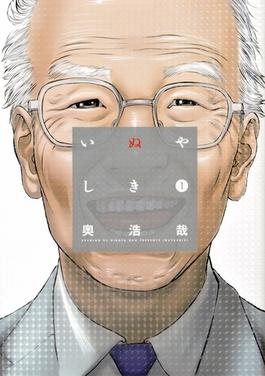
The identity crisis Inuyashiki faces isn't just about being a machine. It's about whether kindness can exist without biological imperative. He worries he's just an AI programmed to act like Ichiro, that the real man died in the park and he's just a copy running on alien software. This existential dread drives him to seek out proof of his humanity.
He finds it in tears. When he saves the homeless man and the guy thanks him, Inuyashiki cries for the first time since the transformation. The tears are made of some kind of nanomachine fluid but they feel real to him. Later, he remembers his honeymoon with his wife, a specific memory about her smile that no database could fake. These moments prove to him that he's still the same consciousness, just housed in a tougher container.
Hiro never has this crisis. He never questions if he's human because he stopped caring about humanity long before the aliens showed up. The mechanical body just gives him the tools to express the nihilism he already felt. Inuyashiki's journey is about discovering he's more than his body ever allowed him to be, while Hiro's is about proving he's less than human despite looking like one.
The series asks us whether humanity is hardware or software. Are we our meat and bones, or are we the choices we make with whatever body we happen to occupy? Inuyashiki answers that question by dying to save strangers. Hiro answers it by dying to save the one person he decided was worth it. Both answers count, but only one saves the world.
This analysis covers similar ground about purpose and neglect, but the show itself refuses easy answers. It presents two paths and asks which one you'd take. Most of us would like to think we're Inuyashiki, healing the sick and protecting the weak. The scary truth is that power without context usually creates more Hiros, people who break things just to hear the noise.
The animation by MAPPA uses CGI that looks janky sometimes, but that robotic stiffness actually helps sell the idea that these guys aren't quite right anymore. When Inuyashiki moves, there's a weight to him that feels mechanical. When he stops bullets with his face, the unnatural physics remind you he's not Superman. He's a walking tank who happens to have a pensioner's memories.
In the end, Inuyashiki Last Hero themes and analysis boil down to one hard truth. You don't need to be human to be humane, and being born human doesn't make you humane at all. The aliens gave two men the same tools. One built a shelter. One started a fire. The show makes you sit with that choice and wonder which one you'd be.
Frequently Asked Questions
What is the main theme of Inuyashiki Last Hero?
The main theme is that humanity is defined by choices, not biology. The show contrasts two men who become androids; one uses his powers to heal and protect while the other uses them to destroy, proving that morality exists independently of physical form.
Why does Hiro Shishigami kill people?
Hiro kills because he lacks empathy and views humans as disposable. Despite having a loving mother and friends, he sees himself as separate from humanity and uses his new powers to satisfy his curiosity about death and exert control over a world he feels disconnected from.
Does Inuyashiki die at the end?
Yes, in the anime and manga, Inuyashiki sacrifices himself by self-destructing to destroy a meteor threatening Earth. The live action movie changes this, letting him survive and continue as a secret hero with only his daughter knowing his identity.
Is Inuyashiki related to Gantz?
Both series were created by Hiroya Oku and share similar themes of ordinary people gaining extraordinary abilities through alien intervention. They also share graphic violence and philosophical questions about human nature, though Inuyashiki focuses more on altruism versus nihilism.
Why does Inuyashiki's family ignore him?
His family represents the neglect faced by many elderly salarymen in Japanese society. They take him for granted and treat him as useless until he gains power and becomes a hero, highlighting the conditional nature of their respect and love.