
JoJo's Bizarre Adventure Anime Series Review
JoJo's Bizarre Adventure anime series review requests usually miss the point by trying to make this show sound smarter than it is. It isn't smart. It's a soap opera about vampires and ghosts and Italian gangsters where everyone poses like they're on a runway during fights. David Production started adapting Hirohiko Araki's manga back in 2012 and they haven't stopped since, pumping out over 150 episodes covering the first six parts of this sprawling family saga. You either buy into the camp immediately or you bounce off it hard. There is no middle ground here and that is exactly why it works.
The show grabs you with these huge meaty hands and refuses to let go. Each part follows a different member of the Joestar bloodline, jumping decades between stories, swapping protagonists like other anime swap costumes. You get Jonathan Joestar the gentleman, then Joseph the trickster, then Jotaro the delinquent, then Josuke with the pompadour, then Giorno the gangster, then Jolyne the prisoner. This structure keeps things fresh because if you hate one lead, you just wait twenty-six episodes and get a completely different vibe. Most shonen anime ride one protagonist into the ground but JoJo dumps them and moves on to the grandkid. It is refreshing and risky and somehow they keep sticking the landing.
But let us be clear about what you are getting into. This is not subtle storytelling. Characters explain their powers out loud for five minutes. People wear outfits that make no sense. The fights are less about punching hard and more about figuring out weird puzzle boxes where the solution is usually something like "I turned my enemy's attack into a reflected boomerang using my ghost that fixes things." If that sounds annoying, stay away. If it sounds fun, you are in for a ride that lasts over a hundred episodes and never stops throwing new ideas at you.
The David Production Treatment
David Production took on this adaptation knowing they had a limited budget from Warner Bros. They got clever instead of getting expensive. The anime looks like a moving comic book, with thick black outlines and these wild color shifts that happen during dramatic moments. One minute the sky is blue, the next it is purple, then it is orange, all during the same conversation. It should not work but it does because it matches Araki's art style perfectly, creating what fans call the "living manga" aesthetic. Apparently this approach came from necessity, but it became the signature look that separates this show from everything else on TV.
They use still frames a lot. You will notice it especially in Part 1 and Part 3 where characters just stand there with speed lines behind them while someone monologues. Some people call this lazy. I call it stylistic consistency with the source material. When they do animate, it hits hard. Episode 20 of Battle Tendency and the final fights of each part get actual fluid movement. The "torture dance" in Golden Wind is like twelve seconds long and probably ate half the season's budget but it is beautiful. They prioritize the important moments and skate through the connective tissue with style.
The sound design is just as important as the visuals. They licensed "Roundabout" by Yes for the ending of Part 1 and 2, which fits so well it feels like the song was written forty years earlier specifically for this vampire punchfest. The opening themes are original compositions that reference the manga's love of classic rock, with "BLOODY STREAM" and "Great Days" standing out as fan favorites. The background music switches between orchestral Victorian arrangements for Part 1 and weird hip-hop techno fusion for the Pillar Men in Part 2. It is all over the place and it rules. Voice acting is universally over the top, with actors like Takehito Koyasu delivering lines so passionately you can hear the spit hitting the microphone.
JoJo's Bizarre Adventure Anime Series Review By Part
You cannot review JoJo's Bizarre Adventure anime series without breaking down the parts because they are totally different shows wearing the same skin.
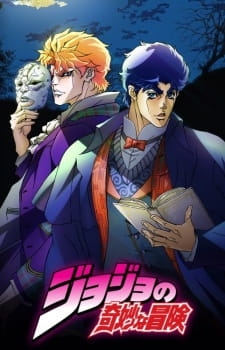
Phantom Blood starts in 1880s England with Jonathan Joestar, the nicest boy who ever lived, getting his life ruined by Dio Brando, the worst stepbrother in history. Dio puts on a stone mask, becomes a vampire, and Jonathan has to learn Hamon ripple energy to stop him. The pacing here is rough. Episodes one through three are perfect television. Then it drags in the middle with some boring side quests before picking up again at the end. Jonathan is kind of a boring protagonist because he is just good all the time. Dio carries this part hard with his pure evil charisma and the famous "You thought it was someone else but it was me, Dio" moment that spawned a thousand memes. Will Zeppeli shows up to teach Jonathan the ripple, then dies in a way that sets up the Zeppeli family tradition of dying to help Joestars. Speedwagon shows up here too, becoming the narrator and exposition machine for the rest of the series. The final battle in the burning mansion is solid but you can tell Araki was still finding his footing.
Battle Tendency jumps fifty years to the 1930s and introduces Joseph Joestar, Jonathan's grandson. Joseph is a liar, a cheat, and a genius. He fights the Pillar Men, ancient super-beings who created the stone masks. This part moves faster, hits harder, and has better fights. Joseph has to outthink his opponents instead of overpowering them. He uses clackers, grenades, and trickery to beat enemies who are physically perfect. The bromance between him and Caesar Zeppeli hits emotional beats that Part 1 missed, and the final battle against Kars in a volcano is one of the most satisfying endings in anime. Lisa Lisa shows up as the ripple master but gets sidelined in the finale which still annoys me. If you try JoJo and bounce off Part 1, skip to Part 2. Most fans agree this is where the show finds its feet and where Araki figured out that clever protagonists are more fun than purely strong ones.
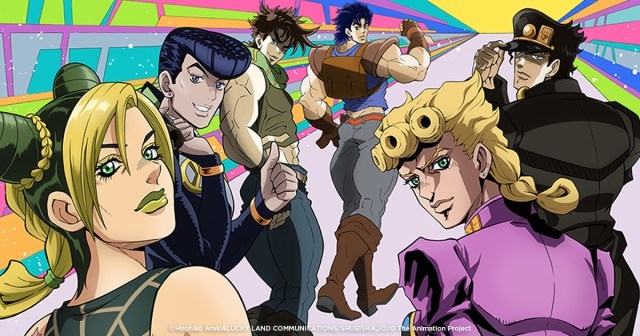
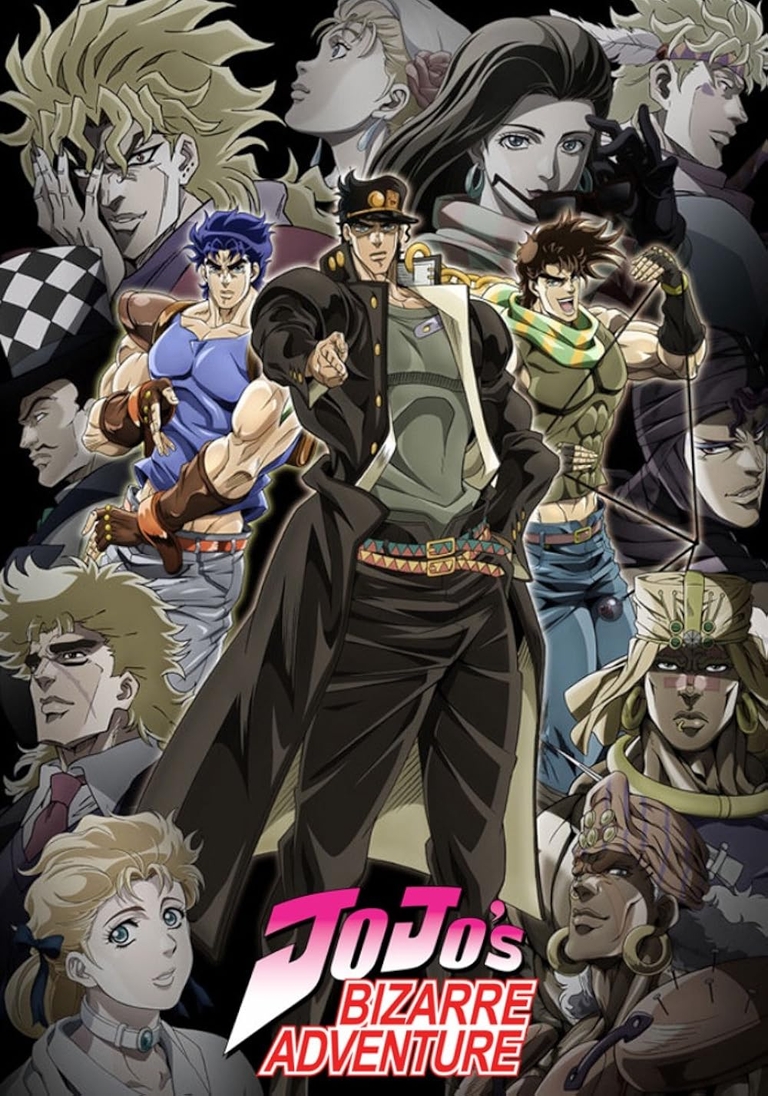
Stardust Crusaders is the longest part and where the series blew up internationally. Jotaro Kujo is Joseph's grandson and he can punch ghosts now because Araki replaced Hamon with Stands, psychic manifestations that reflect the user's soul. This changes everything. Instead of martial arts, you get battles about whether a guy can possess a doll or if a bird can shrink people or if a blind man can control an entire ship. It is a road trip across Asia to Egypt to kill Dio, who is back and wearing green lipstick and yellow pants. The crew includes Joseph, Avdol, Kakyoin, Polnareff, and Iggy the dog. The "Stand of the week" format gets repetitive around the middle. You will watch Jotaro punch his way out of twenty similar situations before the final confrontation. Still, the crew dynamic is solid with Polnareff providing comic relief and the gambling fight against D'Arby is a highlight. The final fight against Dio stops the internet every time someone posts the "WRYYYYY" clip. This is the part that gets referenced in other games like Persona and fighting games because it established the visual language of Stands.
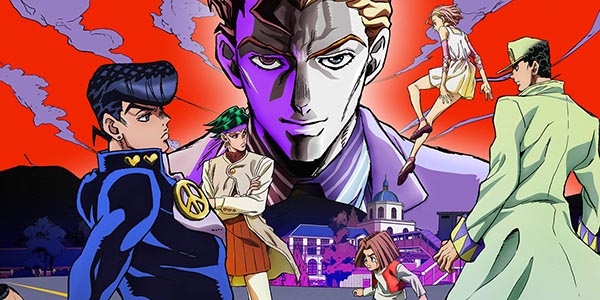
Diamond Is Unbreakable shifts the tone again. Now we are in 1999 in a small Japanese town called Morioh. Josuke Higashikata is Joseph's illegitimate son and he has a pompadour you could use as a weapon. This part is a murder mystery mixed with slice of life. The villain is Yoshikage Kira, a serial killer who just wants to live a quiet life but keeps having to kill women to satisfy his hand fetish. Yeah, it gets dark. The color palette goes bright and pastel, the fights get more strategic, and the cast is the tightest in the series. Koichi and Okuyasu get real development instead of being sidelined. The "Duwang" translation memes come from this part but the official dub fixes that. Many fans think this is the best part because it combines the Stand battles with actual character development for everyone involved, not just the main JoJo. The final battle with Bites the Dust is time travel done right.
Golden Wind moves to Italy and follows Giorno Giovanna, who is technically Dio's son but looks like he belongs on a fashion magazine cover. He joins the mafia to become a gang-star and take over the drug trade to stop kids from getting hurt. Bruno Bucciarati becomes the real heart of this part, with his zipper powers and his moral code. The Stand battles here are the most complex in the series, involving time skips, body swapping, and mold that grows on you if you move down. It is complicated and some people bounce off the dense plotting, but the main team has great chemistry and the villain Diavolo is terrifying with his split personality. The animation quality peaks here with scenes like the torture dance sequence that looks better than most anime movies. Cioccolata and Secco provide some of the most disturbing body horror in the franchise. The Rolling Stones arc at the end hits emotionally even though it is technically a flashback.
Stone Ocean got dumped on Netflix all at once which killed the weekly discussion vibe, but the content itself is solid. Jolyne Cujoh is the first female JoJo and she is stuck in a Florida prison fighting her father's old enemies. Enrico Pucci is the villain and his heaven plan is confusing but scary. The ending is controversial and weird and splits the fanbase right down the middle. Some people hate the reset, others think it is beautiful. This part has some pacing drag in the middle with too many prison fights that feel like filler, but the highs are very high and Jolyne is a fantastic protagonist who carries the emotional weight of the series' themes about fate and family. The snail scene is disgusting and perfect. Netflix releasing it all at once meant nobody talked about it weekly like they did with previous parts, which hurt the community hype.
Why Stands Beat Hamon Every Time
When Araki switched from Hamon to Stands in Part 3, he saved the series from becoming repetitive. Hamon is basically sunlight karate that hurts vampires. It is cool but limited. You can only do so many "ripple punch" variations before it gets old. Stands can be anything. They can be a ship that exists inside a bottle, or a shadow that controls the floor, or a gun that shoots with perfect accuracy, or a fishing rod that steals memories.
This means every fight is a puzzle. You cannot punch harder to win. You have to figure out the enemy's ability, which usually has some weird rule like "it activates when you look at my back," then find a loophole. It turns every battle into a logic problem with violence as the timer. This keeps things fresh for hundreds of episodes but it also leads to some bullshit. Sometimes the rules change mid-fight. Sometimes a character pulls out a new ability that was never mentioned before and wins. Araki forgets things or ignores previous established limits when it suits the drama. You have to accept this going in. Consistency takes a backseat to cool moments, and for most fans, that trade is worth it.
The Problems Nobody Wants To Admit
Some people will tell you JoJo's Bizarre Adventure anime series is perfect. They are lying. The dialogue is too explanatory. Characters will stop a life-or-death battle to explain exactly how their power works for two minutes straight while their opponent politely waits. The pacing drags, especially in Part 3 and Part 6 where you get filler fights that do not matter and could be cut entirely. The animation uses still frames constantly, sometimes for seconds at a time, which looks cheap. The plot holes are numerous and annoying if you think about them too hard. Women characters get sidelined or fridged constantly, with Lisa Lisa being the only major female fighter in the early parts and even she gets shafted in the finale of Part 2. Reddit discussions often bring up these valid complaints even while praising the show.
Stone Ocean fixes some of this by making Jolyne the lead, but the Netflix release model meant nobody talked about it weekly like they did with the previous parts. The community hype died because everyone watched it at different speeds. That is not the show's fault but it hurt the experience.
The Fashion, Music, And Memes
Araki loves rock music and it shows. Characters are named after bands and songs. There is a character named Robert E. O. Speedwagon. There is a dog named Iggy Pop. The villains in Part 5 are named after Italian food and fashion brands. It is copyright infringement waiting to happen but it gives the series this unique texture where everything feels like a reference to something cool from the 70s and 80s. You can learn about classic rock just by reading the character list. IMDb trivia confirms Araki's love of Western music drove these choices.
The fashion is ridiculous. Everyone wears designer clothes or custom outfits that would get you stared at on the street. Jotaro's hat blends into his hair so you cannot tell where one ends and the other begins. Giorno has ladybug brooches on a suit with no shirt underneath. Josuke's hair is a geometry problem that defies gravity. It is part of the visual identity. You can recognize a JoJo character from silhouette alone, which is more than you can say for most anime protagonists who look like standard teenagers.
The memes are unavoidable. "It was me, Dio," "ORA ORA ORA," "MUDA MUDA MUDA," "Yare Yare Daze," and "Is this a JoJo reference?" have infected internet culture so thoroughly that you see them in completely unrelated threads. The show earns these memes through sheer conviction. It commits so hard to the stupid lines that they become iconic.
Is It Worth Watching
If you have any tolerance for camp, yes. JoJo's Bizarre Adventure anime series is one of the most distinct things in the medium. It influenced Persona, One Piece, Hunter x Hunter, and countless other properties. It is stupid and smart at the same time, emotional and ridiculous, ugly and beautiful. It is a mess that knows it is a mess and leans into it hard.
Start with Part 1. Give it three episodes. If you are not feeling Jonathan and Dio's beef, skip to Part 2. If you hate Hamon, jump to Part 3 where Stands start. Do not force yourself to watch every episode if you are getting bored. The series is designed so you can pick your favorite part and ignore the rest, though you will miss some references.
The Netflix model for Stone Ocean hurt the community discussion but the adaptation quality remains high. David Production treats this property with love. They get the weirdness. They do not try to sand down the edges to make it normal. They keep the posing, the colors, the rock references, the homoerotic subtext, the violence, and the heart. Loud and Clear Reviews called it the perfect quarantine watch because of its frenetic pace and visual density, and they are right.
This show is about family lines, fighting spirits, and looking cool while doing it. It is not for everyone. Nothing this specific could be. But if you let it, it will become one of your favorites. The memes are funny but the show earns them. It puts in the work. It builds characters you care about then puts them through hell. It is one of the best shonen adaptations out there, warts and all. MyAnimeList user reviews consistently rank it as a classic despite the flaws.
So that is the JoJo's Bizarre Adventure anime series review you need. It is weird, it is long, it is occasionally frustrating, and it is completely unforgettable. David Production took a risk on a thirty-year-old manga that looks nothing like modern anime and turned it into something that stands alone. Whether you are here for the vampire punching, the ghost battles, the gangster drama, or just want to understand why people keep yelling "ORA ORA" at conventions, this show delivers. Watch it. Hate it or love it, you will not forget it.
Frequently Asked Questions
Should I skip Part 1 of JoJo's Bizarre Adventure?
You can, but you shouldn't. Phantom Blood sets up Dio and the stone masks. It is only nine episodes. If you really hate it, jump to Part 2, but you will miss Jonathan's entire deal and Dio's original beef with the family.
Why do people like Joseph Joestar more than Jonathan?
Joseph is clever, funny, and cheats to win. Jonathan is just good and strong. Joseph has personality and strategy. Most fans prefer Part 2 for this reason.
What is the best part of JoJo's Bizarre Adventure?
Most fans say Part 4 Diamond Is Unbreakable or Part 5 Golden Wind. Part 4 has better daily life vibes and Kira. Part 5 has better animation and the mafia story. Part 2 is also a favorite for Joseph.
Is the JoJo anime finished?
No. They have adapted up to Part 6 Stone Ocean. Part 7 Steel Ball Run and Part 8 JoJolion from the manga have not been announced yet, but fans want them.
Why are the characters named after musicians?
Hirohiko Araki loves classic rock and fashion. He names everyone after bands, songs, or designers. It is his trademark. It causes copyright issues in the US so some names get changed in the dub.