
JoJo Stardust Crusaders Analysis Reveals Why Part Three Still Dominates
JoJo's Bizarre Adventure Stardust Crusaders analysis always starts with the Stands. You cannot talk about this anime without admitting that Araki completely ditched Hamon and threw psychic punching ghosts at the wall. It worked. The series went from vampire karate to spiritual warfare in one season and never looked back.
Some fans claim this part drags harder than a car with four flat tires. They are not entirely wrong. With 48 episodes covering a road trip from Japan to Egypt, you hit stretches where nothing seems to move forward. But that criticism misses the point. Stardust Crusaders invented the modern battle shonen formula where creativity beats raw power levels. Every fight becomes a puzzle instead of a slugfest.
The anime adaptation by David Production took this legendary manga arc and stretched it across two seasons. They captured the weird fashion, the impossible poses, and that specific 1980s energy that makes everything feel slightly dangerous. Whether you love it or hate it, Part 3 changed how anime handles superpowers forever.
Stardust Crusaders Anime Analysis Starts With The Stand System
Before Part 3, JoJo fought vampires using sunlight breathing exercises. That got old fast. Araki needed something fresh that let him draw weirder stuff every week. Stands solved everything. These psychic manifestations range from punch ghosts to actual cars to microscopic colonies. The rules stay simple enough. Only Stand users see other Stands. Damage transfers between user and Stand. Everything else goes.
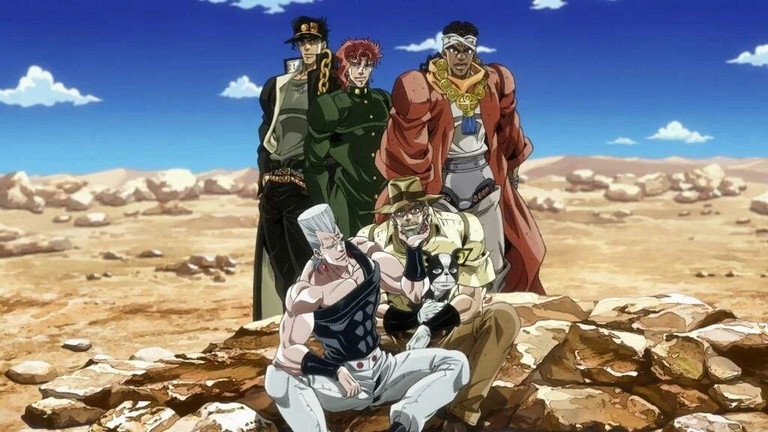
This shift allowed Araki to stop worrying about physical strength charts. Jotaro's Star Platinum hits hard and fast. Joseph's Hermit Purple does almost no direct damage but provides information. Kakyoin's Hierophant Green works at range with tentacles. Avdol's Magician's Red controls fire but also detects life signs. Suddenly every matchup matters more than who benches more weight.
The Tarot card naming scheme helped early viewers track what was happening. Magician's Red, Hermit Purple, Hierophant Green. These names gave you a hint about the powers without spelling everything out. Later the show switches to Egyptian gods when they reach Cairo, which signals a power creep but keeps things organized. The stats system, with letter grades for power, speed, and range, looks official but Araki breaks his own rules constantly. Star Platinum has a range of C but sometimes grabs things from miles away. You learn to ignore the charts and just watch what happens.
Why Hamon Disappeared And Nobody Cared
Hamon killed vampires. That was its entire job description. Once Dio stole Jonathan's body and started hiring Stand users instead of zombie armies, breathing techniques became useless. The anime pays lip service to Hamon early on when Joseph wraps Hermit Purple around cameras, but that is it. The show moves on completely.
This decision allowed the battles to get cerebral. Instead of charging up ki blasts, characters had to figure out if the enemy Stand works through touch, sound, or spatial manipulation. The fight against Death Thirteen, the dream Stand, shows this perfectly. You cannot punch a nightmare until you understand the rules. Kakyoin has to figure out he is asleep and then smuggle his Stand into the dream world using his own ear. That is the kind of weird logic that makes Part 3 special.
Tower of Gray, the very first enemy Stand, attaches to tongues and rips them out at high speeds. You cannot punch a bug moving that fast. Jotaro has to bait it into a trap using his own mouth. That level of gross creativity separates Stardust Crusaders from every other fighting anime.
The Pacing Problem Is Real But Overblown
Forty eight episodes covers a lot of ground. Some fans online complain that the middle section moves slower than molasses. One Reddit thread mentions how the weekly villain format makes rewatching feel like a chore. They suggest condensing episodes.
That criticism holds water for the first half. The group fights random assassins on boats, trains, and planes. Each fight takes two episodes. Some feel like padding. The Strength episode with the giant ship Stand goes nowhere memorable. The Empress fight drags despite being gross and creative. The Wheel of Fortune chase lasts forever just to show off a car that eats people.
But the anime needs those episodes. They establish how Stands work through repetition. By the time you reach Egypt, you understand range, power, and speed stats intuitively. You need that foundation for the finale to hit properly. The show teaches you to look for environmental clues. If a character stands in a certain spot, that means something. If the camera lingers on an object, it is probably about to kill someone.
The Egypt Arc Saves The Show
Everything changes when the Crusaders hit Cairo. The animation gets sharper. The stakes spike because Dio actually appears instead of hiding in shadows. The enemies switch from random mercenaries to Dio's personal guard with Egyptian god Stands.
This section includes the best fights in the series. Pet Shop versus Iggy stands out as brutal animation. The D'Arby the Gambler episodes replace punching with psychological warfare. A review from Anime Hajime points out how these battles forced the heroes to strategize instead of just overpowering enemies.
D'Arby the Gambler plays poker and video games for souls. He cheats using his Stand, Osiris. Jotaro has to bluff him into folding a winning hand without using Star Platinum's fists. That episode contains zero physical violence yet ranks as one of the most tense sequences in anime history. It proves the show did not need constant punching to stay interesting.
Jotaro Kujo Works Better Than He Should
Jotaro should suck. He talks in monosyllables. He wears a hat that blends into his hair. He solves most problems by punching harder. On paper he is every boring shonen protagonist ever made.
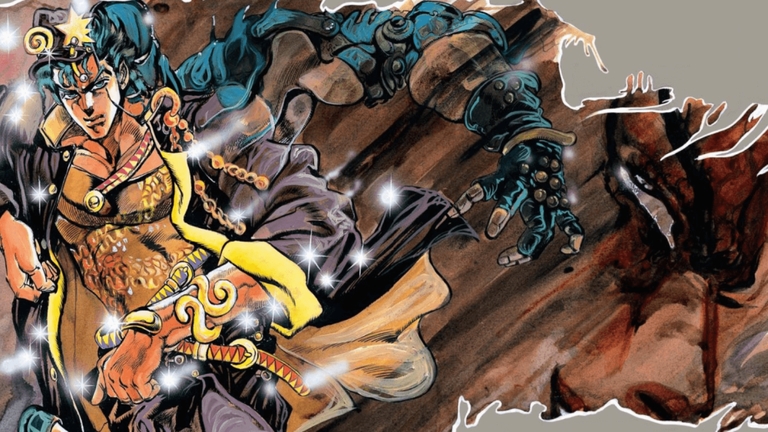
But he clicks somehow. His silence makes him intimidating. When he breaks character to save someone or crack a joke, it lands harder because he built up that stoic credit. His relationship with his mother Holly provides the only emotional motivation he needs. He does not want to save the world. He wants to save his mom. That simplicity cuts through the noise.
The anime captures his menace through small details. The way he points before attacking. The cigarette tricks they had to censor sometimes. His voice acting sells the exhaustion of dealing with idiots constantly. When he tells someone to shut up, you believe they should shut up.
Joseph Joestar Carries The Comedy
Old Joseph should not work either. He is a sixty year old man who screams "Oh my God" constantly. His Stand, Hermit Purple, mostly just breaks cameras and swings him around. He cannot fight like he used to in Battle Tendency.
Yet every scene he touches turns gold. He lies constantly. He plays the coward then saves everyone. His dynamic with Jotaro, mixing exasperation with genuine grandfatherly concern, keeps the group scenes alive. One Japanese fan review specifically praised Joseph's wisdom in the Bastet fight against Mariah. He figures out her magnetic Stand by getting himself stuck to a metal fence and surviving through pure stubbornness.
Joseph represents the past generation refusing to fade away. He uses trickery and experience instead of raw power. His moments using Hamon to save himself at the end connect back to Part 2 in ways that reward long time viewers without alienating newcomers.
The Supporting Cast Gets Uneven Treatment
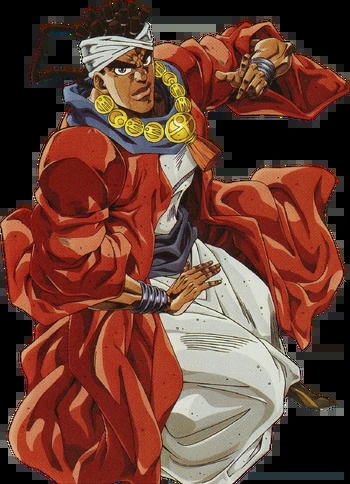
Avdol gets disrespected. The show fake kills him early then brings him back with almost no fanfare. His Stand, Magician's Red, controls fire but the anime rarely lets him show off. He feels like a mentor who never gets to mentor. His death against Vanilla Ice hits hard because it is permanent, but he deserved more screen time before that point.
Kakyoin suffers from late introduction syndrome. He joins episode two, gets brainwashed, then becomes a loyal soldier. His backstory remains vague. He likes video games and cherries. That is it. His final sacrifice hits hard emotionally but you barely knew him as a person. The hieroglyphics on his uniform suggest depth that the anime never explores.
Polnareff gets the opposite problem. He has too much screen time. The show keeps sending him into rooms alone to get attacked. He provides comic relief through toilet humor and stupidity. But his revenge plot against J. Geil gives him legitimate pathos. His sister's death drives him more than Holly's illness drives half the cast. His Stand, Silver Chariot, starts as just a sword fighter but gains the ability to shoot its rapier later. That upgrade saves the group multiple times.
Iggy's Introduction Is Stupid But His Ending Is Perfect
They added a dog to the team halfway through Egypt. Iggy, a Boston Terrier with sand powers, starts as an annoying gag character. He farts on people. He refuses to help. He seems like mascot merchandise bait.
Then the Vanilla Ice fight happens. Iggy dies saving Polnareff. The animation goes hard on his injuries. He crawls despite broken legs. It is horrifying and sad and completely redeems his earlier antics. Akachi Comics noted how this sacrifice made the victory feel earned rather than cheap. The Fool, his Stand, manipulates sand into physical shapes. That ability seems weak until you realize he can fly and shape shift. He fights a falcon with ice powers and wins through attrition. That fight alone justifies his existence.
Dio Brando Remains The Gold Standard
Part 1 Dio was a vampire jerk. Part 3 Dio becomes something else entirely. He lounges in shadows for thirty episodes, building hype through reputation alone. When he finally stands up, the show changes color palettes to make him look supernatural.
His Stand, The World, stops time. That ability breaks the game completely. Araki knew this. Instead of nerfing it, he made Dio arrogant. The villain wastes time monologuing and testing his power instead of killing instantly. That character flaw, his inability to drop his ego even after becoming a god, gives Jotaro the opening he needs.
The final fight spans multiple episodes. It mixes road roller punching with internal monologues about breathing. Some fans prefer the OVA version's animation for its smoother shading, but the David Production version captures the manga's chaotic energy better. The anime adds the steam roller scene which became a meme for good reason. It is stupid and over the top and exactly what the series needed.
The Soundtrack Defines The Era
The music choices make zero sense and perfect sense simultaneously. Yes, they renamed characters to avoid lawsuits. Vanilla Ice becomes Cool Ice. But the themes slap. "Stand Proud" opens the first half with brassy arrogance. "End of the World" brings operatic doom for the Egypt arc.
The ending theme, "Last Train Home," plays over still frames of the characters traveling. It is melancholy jazz that reminds you they are just kids on a road trip between monster attacks. That contrast works better than it should. The sound design during time stops deserves special mention. The bass drop when The World activates creates physical tension in your chest.
How The Road Trip Structure Changed Shonen
Most battle anime stick to one location. Tournament arcs. School settings. Stardust Crusaders moves constantly. Japan to Hong Kong to Singapore to India to Pakistan to Egypt. Each location brings new background art and cultural references that may or may not be accurate but always look cool.
This structure influenced everything that came after. Golden Wind keeps the road trip vibe. Even non JoJo anime copied the format. The constant movement prevents the setting from getting stale. It also lets Araki kill characters without worrying about police investigations or social consequences. They just leave the bodies behind and catch the next plane.
The Animation Quality Debate
David Production faced an impossible task. The manga art is detailed and weird. Characters wear school uniforms covered in chains and hearts. They pose like fashion models during fights. Translating that to moving pictures without looking ridiculous requires commitment.
The TV anime chooses to embrace the ridiculousness. Characters change size slightly between shots. Colors shift for dramatic effect. It looks like the manga came alive, imperfections and all. The OVA from the nineties went for a grittier realistic style. That animation analysis suggests the OVA handled the final Dio fight with more fluid motion. But the TV version has better pacing and voice acting overall.
Stand Designs That Stick With You
Star Platinum looks like a purple phantom boxer. The World looks like a yellow cyberpunk muscleman. Hierophant Green resembles a segmented snake made of emerald. These designs are simple enough to remember but distinct enough to tell apart during fast cuts.
The enemy Stands get even weirder. Hanged Man appears as a mirror assassin made of light. Cream becomes a void sphere that devours space. Death Thirteen looks like a clown reaper. The variety keeps your eyes engaged even when the plot slows down.
JoJo's Bizarre Adventure Stardust Crusaders analysis comes down to this. It is messy, long, occasionally repetitive, and completely indispensable. The anime established tropes that every battle shonen copied since. The Stand system opened doors for power systems that value intelligence over screaming louder.
You can complain about the pacing. You can wish Kakyoin got more development. But you cannot deny the impact. From the first "Ora Ora" to the final time stop, Part 3 delivers exactly what it promises. Bizarre adventure, indeed.
Frequently Asked Questions
What are Stands and why did they replace Hamon?
Stands are psychic manifestations of a user's life energy that appear as spiritual guardians with unique powers. Unlike the Hamon breathing techniques from earlier parts, Stands follow specific rules: only other Stand users can see them, damage to a Stand transfers to the user, and each Stand has distinct abilities based on the user's personality. They replaced Hamon because Araki wanted a more versatile power system that allowed for creative puzzle-based battles rather than just physical strength comparisons.
Is Stardust Crusaders too long or paced poorly?
The 48-episode count receives mixed reactions. Some viewers find the middle sections drag due to the villain-of-the-week format, particularly during the journey from Japan to Egypt where standalone fights occasionally feel like padding. However, others argue the length is necessary to establish Stand mechanics through repetition and build attachment to the characters before the high-stakes finale in Egypt. The anime is split into two seasons covering the journey and the Egypt arc separately.
Why is Jotaro such a quiet protagonist compared to Joseph?
Jotaro appears stoic and silent compared to previous protagonist Joseph Joestar, but this personality serves the story effectively. His quiet demeanor creates an intimidating presence, and his limited dialogue makes his rare emotional moments or jokes land harder. His motivation, saving his mother Holly rather than generic world-saving, provides a simple but effective emotional core that cuts through the series' complexity.
Should I watch the OVA or the TV anime adaptation?
The OVA from the 1990s features smoother animation and more realistic character designs, particularly praised for the final Jotaro versus Dio fight. However, the David Production TV anime from 2014-2015 remains more faithful to Hirohiko Araki's manga art style, captures the bizarre poses and fashion accurately, and features superior voice acting and musical score. Most fans recommend the TV version for first-time viewers despite the OVA's animation strengths.
How does Jotaro beat Dio's time-stopping ability?
Dio's Stand, The World, possesses the ability to stop time for several seconds, making it seemingly unbeatable in direct combat. Araki balanced this by giving Dio a critical character flaw: his arrogance. Dio wastes time monologuing, testing his power, and playing with his food instead of killing instantly. This ego, stemming from his inability to fully shed his humanity despite becoming a vampire god, creates the openings Jotaro needs to win.