
Kizumonogatari Part 3 Reiketsu-hen Analysis The Damaged Goods Compromise
People think Kizumonogatari Part 3 ends with a fight. They're wrong. It ends with a surrender. If you're looking for a kizumonogatari part 3: reiketsu-hen analysis that tells you this is a triumphant conclusion where the hero saves the day, you're in the wrong place. This movie is about Araragi Koyomi failing to be a hero in the exact way that defines him for the rest of the series.
He doesn't kill the monster. He doesn't save the girl. He creates a situation where everyone stays equally miserable because that's the only way nobody dies. That's the whole point of Reiketsu-hen. It's cold, it's messy, and it's exactly what Araragi deserves after spending two movies pretending he can fix things without getting blood on his hands.
The third film picks up right after Oshino hands back Kiss-Shot's heart. She's whole again. Adult form, full power, all limbs attached. Araragi thinks he's done the good thing. He thinks he's restored her dignity. Then he walks in on her eating Guillotine Cutter's corpse like a buffet and realizes he's been an idiot. He spent all that effort gathering limbs for a creature that eats people. That's the punchline of his heroism.
The Horror of Wholeness

Kiss-Shot isn't cute when she's complete. She's terrifying. The movie doesn't hide this. When she gets her heart back and regenerates into her adult form, she's not the helpless blonde child Araragi carried around in Part 1. She's a 500-year-old apex predator who solves her problems by tearing through them.
The scene where Araragi finds her eating Guillotine Cutter isn't just gross body horror. It's the moment Araragi's savior complex breaks completely. He wanted to save her because she looked like she needed saving. He didn't want to save a monster who eats people. That's the problem with Araragi. He wants to help without accepting what he's helping.
I saw some data that mentioned how this scene recontextualizes her entire existence. She's not a victim of circumstance. She's a vampire. She drinks blood and eats flesh and has done so for centuries. Araragi's spring break incident with heroism hits a wall here because he can't reconcile his image of Kiss-Shot the helpless girl with Kiss-Shot the immortal cannibal.
The vampire transformation isn't pretty. It's not sparkles and romance. It's meat and blood and the realization that you've restored something that was dangerous for a reason. Araragi looks at her eating a man and understands that his kindness has enabled a predator.
The Samurai's Shadow
Before the eating scene, there's that quiet moment on the roof. Kiss-Shot tells Araragi about the samurai. This isn't filler. This is her explaining why she wants to die.
She had a servant before Araragi. A man who served her loyally until he couldn't handle being a vampire anymore. He asked her to kill him so he could become human again. She couldn't do it. She was too afraid of being alone. So he killed himself. He walked into the sunlight and burned because she was too cowardly to give him a clean death.
She's been carrying that guilt for hundreds of years. When she turned Araragi, she was planning this ending from the start. She wanted Araragi to be the one to kill her so he could live, because she couldn't do it for the samurai. It's her second chance at doing the right thing, and she's manipulating Araragi into being her executioner so she doesn't have to face the choice herself.
This makes her less of a victim and more of a complicated perpetrator. She's using Araragi's guilt to get what she wants. She knows he's got that savior complex. She knows he'll blame himself for everything. She's counting on it to drive him to kill her.
The Kiss-Shot loneliness isn't just sadness. It's a weapon she uses to make people feel sorry for her. She's been alone for 500 years because she keeps turning people into vampires and then watching them die or kill themselves. She creates the loneliness she complains about.
Kizumonogatari Part 3 Reiketsu-hen Analysis The Hanekawa Problem
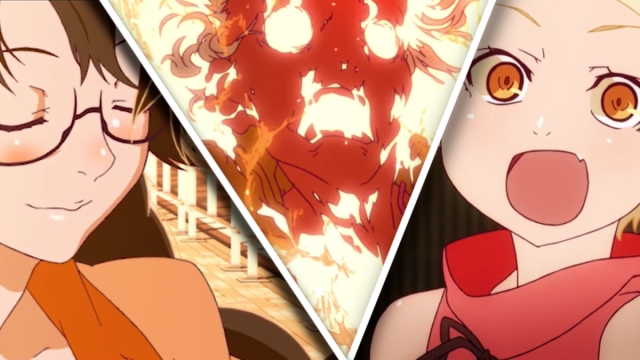
Tsubasa Hanekawa shows up and makes things worse. That's not an opinion, that's plot mechanics. When Araragi calls her after seeing Kiss-Shot eat a man, he's looking for permission to die. He's sitting in that gym storage room ready to end it because he can't handle the weight of what he's done.
Hanekawa won't let him. She shows up, smacks some sense into him, and tells him he has to live. She also tells him he has to kill Kiss-Shot. This seems like good advice. It isn't.
Here's the thing Hanekawa doesn't know. Kiss-Shot wants to die. She's been planning it since she turned Araragi. She knows the only way to turn him human is to die, just like she knew it with the samurai. She couldn't do it then because she's a coward about her own death. She's hoping Araragi will be strong enough to kill her.
But Hanekawa interferes. She shows up at the stadium during the fight and tries to tell Araragi that Kiss-Shot is suicidal. This ruins the plan. Kiss-Shot wanted Araragi to kill her in a fit of rage or justice, thinking it was his choice. Instead, Hanekawa exposes it as Kiss-Shot's manipulation.
Apparently this intervention is what forces the compromise ending. If Hanekawa hadn't shown up, Araragi probably would have killed Kiss-Shot thinking it was necessary. Instead, he learns she wants it, which makes him refuse to do it. Araragi's contrarian nature won't let him give her what she wants.
There's another layer here. Hanekawa offers herself to Araragi before the fight. She tells him he can do whatever he wants with her body. He chickens out, which is classic Araragi, but the offer stands as this weird promise of a future that never happens. They agree to pick this up in the new semester but we know from later in the series that they don't. They never become a couple despite this intense spring break bond. The Hanekawa relationship is built on almosts and nevers.
The Stadium Fight Isn't Epic

People remember the fight at the old Olympic stadium as this big climactic action scene. It's not. It's two immortal beings tearing each other apart in a way that stops being cool and starts being pathetic. Heads get punched off. Limbs get dislocated. Blood sprays everywhere. Then they regenerate and do it again.
The fight is repetitive on purpose. It shows how pointless this conflict is. Neither can win. Kiss-Shot will keep healing. Araragi will keep healing. They could do this for eternity.
The only way it ends is when Araragi starts drinking her blood. This weakens her. It's gross and intimate and weird, which is exactly how vampires should work in this story. He doesn't beat her with strength or tactics. He just drains her until she can't fight back.
This is where the movie reveals its hand. Kiss-Shot stops fighting back because she never wanted to win. She wanted to lose. She wanted Araragi to drain her completely, kill her, and become human. She was using his savior complex against him, making him the executioner so she wouldn't have to face suicide alone.
The human vs vampire identity crisis comes to a head here. Araragi realizes that to become fully human, he has to commit murder. But he's not a killer. He's a pretender. He wants to be the hero who saves the day, not the executioner who ends a life. Even if that life is 500 years old and wants to end.
Oshino's Worst Solution
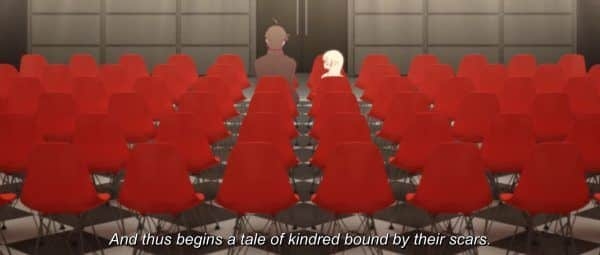
Meme Oshino is the worst kind of helpful. He sits on the sidelines watching Araragi and Kiss-Shot destroy each other, waiting to be asked. When Araragi finally calls for him, he offers a solution that satisfies nobody.
He tells Araragi to drain Kiss-Shot almost to death but stop before killing her. This leaves her in a weakened, child-like state. It leaves Araragi mostly human but still vampire enough to feed her. They become codependent. She can't hunt humans because she's too weak. He can't be fully human because he has to sustain her.
According to one breakdown I read, this is the only logical end to their relationship. Two damaged people who hurt each other deciding to sit together licking wounds. That's the quote from the movie. We damaged goods will each seek the other out in comfort.
It's not romantic. It's practical. It's two monsters agreeing to leash each other so they don't hurt anyone else. Oshino knows this is the only way because Araragi won't kill her and Kiss-Shot won't kill him. They're stuck in a stalemate of mutual survival.
The Oshino compromise is annoying because it's fair. Nobody gets what they want. Kiss-Shot doesn't get death. Araragi doesn't get humanity. They both get survival, which is the most boring and necessary outcome. Oshino frames it as making everyone equally dissatisfied. That's his brand of justice.
The Chicken and The Catastrophe
Yeah, there's a chicken scene. Araragi has to buy a chicken for Kiss-Shot to eat because she's hungry and he doesn't want her eating humans. It's weird and comic relief and absolutely necessary for the pacing. Without that scene, the movie would be unrelenting doom. The chicken breaks the tension just enough that the final horror hits harder.
It also establishes that Araragi is trying to find a third way. He thinks maybe he can feed her animals. Maybe he can manage the situation. He's wrong, but the attempt matters. It shows he's still trying to solve the problem with logistics instead of accepting the moral weight of what needs to be done.
The chicken dies so that Kiss-Shot can live a little longer, and that's funny and sad at the same time. It's the last moment of normalcy before everything goes to hell in the stadium.
Why The Ending Feels Empty

Some viewers walk away from Reiketsu-hen feeling like it ended with a whimper. They're right. It does. That's the entire point.
Araragi doesn't get a victory. He doesn't get to be the hero who slew the demon and got the girl. He gets a compromise where he has to feed his blood to a child vampire for the rest of his life. Kiss-Shot doesn't get the death she wanted. She gets to live in a weakened state, dependent on the boy who couldn't finish the job.
The spring break ends not with a bang but with a whimper because that's how trauma works. You don't cure it. You don't fix it. You just learn to carry it differently.
I saw a review that called this anticlimactic and lacking heart, but I think that's missing the point. The movie has plenty of heart. It's just broken heart. It's the heart of a 500-year-old woman who watched her last servant kill himself because she was too afraid to die properly. It's the heart of a teenage boy who wanted to be special and found out being special means being a monster.
The anticlimactic ending is honest. Real fights don't end with heroic music. They end with both people too tired to keep going and having to figure out how to live with what they did.
The Birth of Shinobu
The child form of Kiss-Shot that we see for the rest of the Monogatari series is born here. She's not a new character. She's a reduction. She's what happens when you drain a god of almost all her blood and leave her on the brink.
This form is important because it changes their relationship from master and servant to something closer to equals. She can't overpower him anymore. He can't abandon her because she'll die without his blood. They're chained together by this failed resolution.
The movie calls this the birth of Shinobu but it's really a stillbirth of what Kiss-Shot was. She loses her power, her dignity, and her death wish all at once. Araragi loses his humanity, his hero status, and his clean conscience. The Shinobu origin story isn't a cute anime girl backstory. It's a trauma bond formed in blood and compromise.
Kizumonogatari Part 3 Reiketsu-hen Analysis The Final Verdict
Kizumonogatari Part 3 isn't about winning. It's about finding the least worst option when every good option is gone. Araragi spends the whole trilogy trying to save people without getting his hands dirty. He ends up with blood in his mouth and a vampire in his shadow.
The analysis of Reiketsu-hen has to center on this failure. If you watch this movie expecting Araragi to become a hero, you'll hate it. If you watch it understanding that he's learning to be a damaged person who takes responsibility for the damage he causes, it works.
Kiss-Shot and Araragi don't fix each other. They don't heal each other. They just agree to stay broken together so nobody else gets hurt by their sharp edges. That's the cold-blooded truth of the ending. It's not satisfying. It's not supposed to be. It's just honest.
When you start Bakemonogatari after this, you're not seeing a hero and his sidekick. You're seeing two survivors of a mutual suicide pact that neither could go through with. That's what makes their later relationship work. It started here, in blood and compromise, not in friendship or trust.
The spring break ends. School starts. But nothing goes back to normal because normal was never an option. They just found a new way to be broken.
Frequently Asked Questions
Why doesn't Araragi just kill Kiss-Shot at the end?
He doesn't kill her because he learns she wants to die. Once Hanekawa exposes that Kiss-Shot is suicidal and wants Araragi to kill her to restore his humanity, Araragi refuses out of pure spite. He won't let her win by dying, so he chooses the compromise where they both stay alive and miserable instead.
Is the ending of Reiketsu-hen a happy ending?
It's the exact opposite of a happy ending. It's a compromise where nobody gets what they want. Kiss-Shot stays alive but powerless. Araragi stays human-ish but has to feed her blood forever. Oshino explicitly calls it a solution where everyone stays equally dissatisfied.
What does Hanekawa do that changes the ending?
She accidentally ruins Kiss-Shot's plan. Kiss-Shot wanted Araragi to kill her in a fit of righteous anger or survival instinct. When Hanekawa tells Araragi that Kiss-Shot wants to die, it changes the dynamic from self-defense to assisted suicide. Araragi won't cooperate with what Kiss-Shot wants, so he refuses to kill her.
Why is this movie important for understanding the rest of the series?
It shows how their relationship actually started. They're not friends. They're not master and servant. They're two damaged people who tried to kill each other, failed, and decided to stay together out of guilt and necessity. Every interaction in the later series carries this weight.
Is Oshino really neutral in this conflict?
He pretends to be neutral but he isn't. He hides Kiss-Shot's heart at the start, which forces the whole conflict. Then he offers the compromise solution at the end. He claims specialists don't pick sides, but he absolutely intervenes to ensure both survive in a codependent state rather than letting one die.