Legend of the Galactic Heroes Is the Most Political Anime Ever Made
Legend of the Galactic Heroes is the only correct answer when someone asks what is the most political anime ever produced. You can throw out Code Geass or Psycho-Pass or whatever dystopian flavor of the month got popular on TikTok, but none of them hold a candle to 110 episodes of pure unfiltered statecraft. This show doesn't just have politics in the background. It is the politics. It is tax policy and legislative sessions and newspaper propaganda and supply chain management stretched across a galactic civil war that lasts longer than most real world empires.
People usually get this question wrong because they think political anime means explosions with flags in the background. They see Lelouch Lamperouge blowing up a mecha and waving a black flag and they call that revolutionary theory. It isn't. That's just a terrorist with superpowers. Real political anime is watching Yang Wen-li argue about pension reform while his democratic government tries to cut military funding during an active war. It's boring. It's messy. It's exactly how actual power works.
Why Legend of the Galactic Heroes Stands in Its Own Category
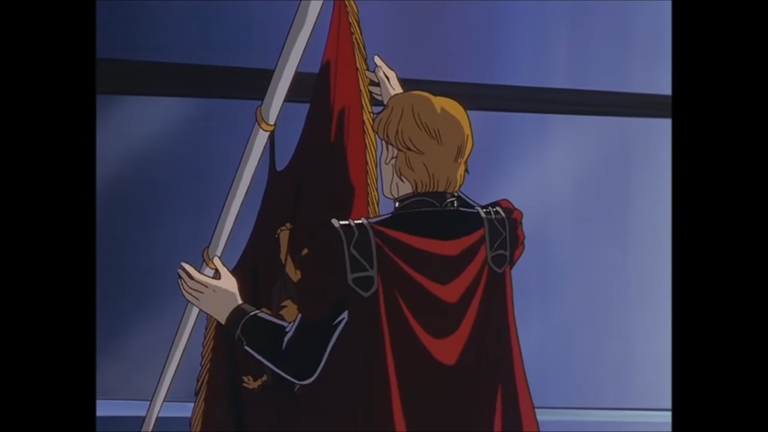
You cannot understand how deep this rabbit hole goes until you've sat through the fifth consecutive episode about grain tariffs. The series follows two massive spacefaring nations, the autocratic Galactic Empire and the democratic Free Planets Alliance, locked in a century-long war that has become institutionalized. On one side you've got Reinhard von Lohengramm, a genius aristocrat climbing the ranks to reform a corrupt imperial system from within. On the other you've got Yang Wen-li, a reluctant historian who keeps getting promoted because he's the only admiral who actually reads books about how republics fall apart.
The genius here isn't the space battles. Those exist and they're fine, but they're secondary to cabinet meetings. You'll spend twenty minutes watching the Alliance's High Council debate whether to surrender territory to save civilian lives, and the arguments aren't about honor or glory. They're about polling numbers, election cycles, and which district gets the defense contracts. The Empire isn't just evil guys in fancy uniforms. It's a feudal system choking on its own bureaucracy, where noble houses control resource flows and the emperor is practically a prisoner of his own court.
What makes this the most political anime isn't just that it has government stuff happening. It's that the entire narrative engine runs on ideological conflict between systems of governance. Reinhard believes benevolent dictatorship can cut through red tape and actually help people, while Yang is terrified of heroes and strongmen because he knows democracy dies when citizens get lazy and let one guy make all the hard choices. The show never picks a side. It just lets both systems rot from within in excruciating detail, showing you exactly how democracies become oligarchies and how empires collapse under the weight of inherited privilege.
The Gundam Franchise Never Quite Got There
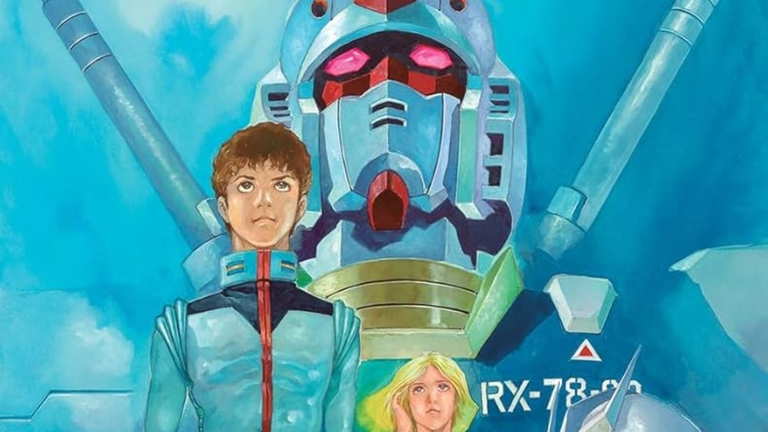
Don't get me wrong. Mobile Suit Gundam invented the idea that mecha anime could talk about war crimes and refugee crises. The Universal Century timeline is packed with colonialism, environmental disaster, and military-industrial complexes run amok. But here's the problem. Every time Gundam gets close to real political complexity, it gets distracted by Newtype magic or teen drama or the need to sell more model kits.
Gundam Wing tried to be political but ended up being five pretty boys in robot suits making vague statements about pacifism while blowing up everything in sight. Gundam 00 had a solid premise about private military corporations and energy crises, but then it turned into a conversation with aliens about human understanding. Iron-Blooded Orphans came the closest with its focus on child labor and Martian independence movements, but it rushed through the actual nation-building in favor of tragedy porn and brutal fight scenes.
The original 1979 series is probably the most grounded, dealing with the Federation's corruption and Zeon's legitimate grievances about space colonization. Even then, it simplifies everything into good guys versus bad guys by the end. Compare that to Legend of the Galactic Heroes where you can't tell who the good guys are because everyone is compromised by budget constraints and institutional inertia. One show has characters dying because they ran out of fuel due to supply chain corruption. The other has characters dying because someone activated the glowing psychic laser sword. There's a difference.
When Rebellion Anime Fakes the Politics
Code Geass is the biggest offender here. People call it political because it has empires and rebellions and occupation zones, but it's really just Death Note with mecha. Lelouch doesn't actually build any institutions. He doesn't reform the tax code or establish representative assemblies. He just blows things up, manipulates people with his eye power, and creates a vacuum of authority that he fills with himself. That's not politics. That's a coup fantasy for teenagers who think being smart means wearing a cape and outwitting chess opponents.
The series pays lip service to Japanese independence and the horrors of colonialism, but it resolves everything through superpowers and sacrificial martyrdom rather than sustainable governance. By the end, the solution to global tyranny is apparently one really dramatic assassination and a teenage girl with pink hair. Real political change doesn't work like that. It requires boring stuff like constitutional conventions and transitional justice committees, which Code Geass skips entirely in favor of melodrama.
Attack on Titan tried to get political in its later seasons and it was a disaster. The first half was solid military fiction about corruption and information control within the walls. Then it tried to tackle ethnic nationalism, historical revisionism, and cycles of revenge, but the author clearly bit off more than he could chew. The political mechanics became incoherent, with the Yeagerists representing... something... and the alliance representing... something else? It devolved into fascist apologia accidentally because the story couldn't handle the weight of the geopolitical themes it introduced. When you compare its messy nationalism to the clear-eyed examination of imperial decline in LotGH, you see why one is considered a masterwork and the other ended with the author receiving death threats.
The Dystopian Thrillers Stay in Their Lane
Psycho-Pass is a solid political anime but it's narrow. It focuses entirely on the Sibyl System and the philosophy of predictive policing. That's rich territory, exploring how algorithms can determine criminal potential before a crime happens, but it's one idea stretched across three seasons. It doesn't give you the full spectrum of legislative, judicial, and executive dysfunction that you get from a galactic civilization collapsing under its own weight.
Ghost in the Shell Stand Alone Complex comes closer with its examination of cyber-warfare, refugee policy, and the relationship between military and civilian oversight. The second season specifically tackles the problem of media manipulation and manufactured consent in a surveillance state. But it's still limited by its format as a police procedural. You're following Section 9 solving cases that have political implications, rather than watching the actual sausage-making of government.
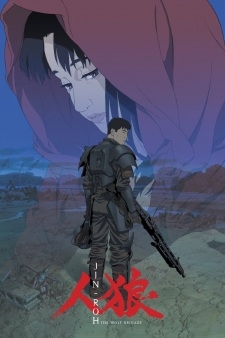
Jin-Roh The Wolf Brigade is worth mentioning here as a counterpoint. It's a movie, not a series, but it captures the grinding horror of paramilitary police states and the psychology of counter-insurgency. It's political in the sense that it shows how governments manufacture enemies to justify their own existence, but it's claustrophobic and specific. It doesn't have the grand historical sweep of watching two entire civilizations evolve and decay over decades.
The Weird Political Anime Nobody Mentions
Everyone talks about the space operas and the dystopias, but the most political anime list has some weird entries that get ignored because they're too embarrassing or too obscure. Shimoneta A Boring World Where the Concept of Dirty Jokes Doesn't Exist sounds like trashy comedy, and it is, but it's also a razor-sharp satire about censorship and government control of information. The premise is that Japan banned all pornography and dirty language, and monitors citizens with cameras to enforce public decency laws. That's a genuine exploration of totalitarianism and the suppression of biological reality through legislative force.
Then there's The Leader, which is literally a biopic of Karl Marx and Friedrich Engels. It exists. It was produced by Chinese funding and it dramatizes the writing of Das Kapital and the Communist Manifesto. It's not subtle. It's propaganda. But it's also one of the few anime that deals directly with economic theory and labor movements rather than wrapping politics in sci-fi metaphors.
Moriarty the Patriot takes the Sherlock Holmes villain and turns him into a class warrior fighting the British aristocracy. Every episode involves William James Moriarty destroying wealthy nobles who abuse the poor, using terrorist tactics to force social reform. It's didactic and heavy-handed but it's explicitly about wealth inequality and the mechanics of the British class system.
Kino's Journey takes a different approach, using an episodic format to explore isolated societies with different political experiments. One episode features a country where everyone votes on who dies that day. Another shows a nation that walled itself off and executed all adults to create a child-only paradise. It's philosophy-heavy and light on continuity, but it asks real questions about the social contract and the legitimacy of state violence.
What Separates Real Political Anime from War Stories
Here's the test. If you can replace the government with a Dark Lord and the plot still works exactly the same, it wasn't political. It was just war. Most anime that people call political are actually just military fiction with extra steps. They have kings and councils but the resolution always comes down to who has the bigger sword or the more powerful magic.
Real political anime requires institutional failure. It needs scenes where the hero can't save the day because the budget got cut. It needs villains who aren't evil, just bureaucrats following protocol. Legend of the Galactic Heroes has entire story arcs where nobody fires a shot, where the war is won or lost based on which newspaper publishes a story first, or which general gets promoted because his uncle is a minister.
My Hero Academia tried to get political with its Meta Liberation Army arc and it was laughable. It reduced complex sociological debates about superpowers and regulation to punching harder. Compare that to Gundam's depiction of how colonies get taxed into starvation, or how LotGH shows democratic citizens voting to surrender their civil liberties because they're scared of terrorists. One understands that politics is about resource distribution and institutional inertia. The other thinks politics is about whether you're Team Hero or Team Villain.
Why Japan Makes These and America Doesn't
There's a reason the most political anime comes from Japan and not Western animation. American shows have to keep the ADHD audience engaged with cuts every three seconds and explosions every ten minutes. They can't make 110 episodes of middle-aged men in suits arguing about grain subsidies because Netflix would cancel it after season one.
Japanese anime production allows for slow burns. Legend of the Galactic Heroes was an OVA series released over ten years. It didn't care about weekly ratings. It could afford to be boring because it wasn't trying to sell toys to American children. It was made for adults who wanted to watch political theory play out across star systems.
Western political dramas like House of Cards or The West Wing are about personalities and charisma. Anime political dramas are about systems and entropy. Yang Wen-li isn't charismatic. He's a depressed alcoholic who hates his job. Reinhard is charismatic but the show constantly undercuts him by showing how his brilliance can't fix the structural rot of feudalism. These stories understand that individuals don't matter as much as the institutions they serve.
The Left-Wing Bias in Political Anime
Most political anime leans left, sometimes hard left. You can trace it back to the student protests of the 1960s in Japan that influenced creators like Miyazaki and Oshii. Shows like Future Boy Conan and Castle in the Sky explicitly depict workers' unions as heroes and industrial capitalism as destructive. LotGH has strong anti-war messaging that questions the military-industrial complex on both sides of the conflict.
Even Gundam, which is about war, is usually anti-war. It shows how conflict perpetuates itself through profit motives and how young people get fed into the meat grinder by old men in offices. Iron-Blooded Orphans is practically a Marxist text about labor rights and the exploitation of colonized peoples.
There are right-wing political anime but they're rare and usually bad. GATE is the most obvious example, featuring the Japanese Self-Defense Forces as noble heroes conquering a fantasy world and spreading democracy at gunpoint. It's jingoistic military propaganda that fetishizes the JSDF. Most fans agree it's politically gross even if they enjoy the premise. Generally, the anime industry skews toward stories that critique authority rather than celebrate it.
If You Actually Want to Watch This Stuff
Be warned. Legend of the Galactic Heroes is a commitment. The original series is 110 episodes plus side stories, and the first twenty episodes look like they were animated in a basement. The character designs are dated. The pacing is glacial. You'll watch entire episodes about supply chain logistics and constitutional crises. If you can't handle dialogue-heavy storytelling, you'll hate it.
The new remake, Die Neue These, is prettier and faster-paced but it cuts a lot of the political nuance to fit into movie-length chunks. It's fine, but it's diet soda compared to the original's whiskey.
If 110 episodes sounds like too much, try ACCA 13 Territory Inspection Department. It's only twelve episodes and it's about a guy auditing government agencies in a fictional kingdom. It sounds boring but it's a tight political thriller about federalism and food independence. Moriarty the Patriot is also accessible if you want class warfare with pretty boys.
Avoid Code Geass if you want serious politics. It's fun but it's anime politics, which means it's about as realistic as a high school student council that rules with an iron fist. Watch it for the mind games and the mecha, not the governance.
Legend of the Galactic Heroes remains the gold standard because it respects your intelligence enough to bore you. It knows that real power isn't exciting. It's committee hearings and budget reports and backroom deals that determine whether millions live or die. That's what makes it the most political anime ever made.
Frequently Asked Questions
What is the most political anime ever made?
Legend of the Galactic Heroes is widely considered the most political anime because it focuses exclusively on governance systems, legislative procedures, and bureaucratic warfare across 110 episodes. Unlike other series that use politics as a backdrop for action, it depicts the actual mechanics of running a galactic empire and a democratic republic, including tax policy, election cycles, and military procurement.
Do political anime always have lots of fighting?
Not necessarily. While many political anime feature war settings, true political anime focuses on statecraft, diplomacy, and institutional power structures rather than combat. Series like ACCA 13 or The Twelve Kingdoms focus on governance and administration with minimal action sequences.
Which version of Legend of the Galactic Heroes should I watch?
The original 1988 OVA series is the definitive version with the most political depth, though it requires a significant time investment of 110 episodes. The newer remake Legend of the Galactic Heroes Die Neue These offers updated animation but compresses the story, losing some of the legislative detail that makes the original unique.
Are political anime biased toward left or right wing ideologies?
Most political anime lean left, emphasizing anti-war messages, labor rights, and critiques of authoritarianism and capitalism. This stems from the influence of 1960s student movements on Japanese animation. However, some right-leaning series like GATE promote military nationalism and positive portrayals of the Japanese Self-Defense Forces.
What are some underrated political anime?
Shimoneta A Boring World Where the Concept of Dirty Jokes Doesn't Exist is a sharp satire about censorship and government control of information. Moriarty the Patriot explores class warfare and British aristocracy. The Leader is a biographical anime about Karl Marx and the development of communist theory. Jin-Roh examines paramilitary police states and counter-insurgency tactics.