
Life Lessons with Uramichi Oniisan Anime Review Why This Show Breaks People
Life Lessons with Uramichi Oniisan anime review requests always miss the point when they call this show a laugh riot or a feel good series because the reality is much bleaker and honestly more honest than most people expect from a cartoon about a guy in a tracksuit teaching kids to exercise. If you go into this expecting wholesome vibes and heartwarming moments about growing up you are going to get punched in the gut by a 31 year old ex gymnast who smokes too much and drinks cheap beer alone in his apartment while doing pushups at 2 AM to stave off the dread of waking up for another day of forced smiles. This show is a mirror held up to working adults who are trapped in careers they hate and it refuses to look away from the ugliness of that reality even when the colorful mascots are dancing in the background.
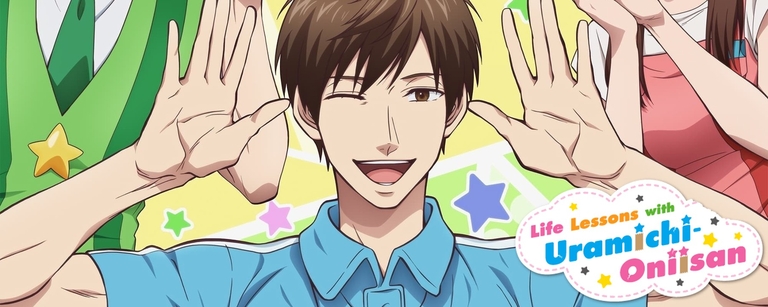
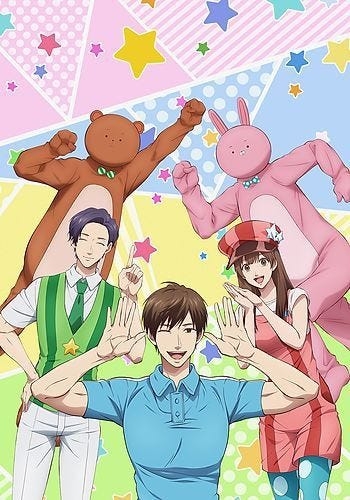
The setup sounds cute on paper until you actually watch it. Uramichi Omota works as the exercise instructor on Together with Maman which is basically a direct parody of the real Japanese educational program Okaasan to Issho. He wears a blue tracksuit and leads kids through simple gymnastics while maintaining a bright on camera persona that drops the second the director yells cut. Behind the scenes he is clinically depressed economically anxious and constantly one bad day away from a complete breakdown. He is not quirky or sad in a cute way. He is genuinely miserable and the show does not flinch away from showing him snapping at coworkers chain smoking between takes and contemplating the void while small children ask him innocent questions about why grown ups look so tired all the time.
Why The Jokes Hit Different When You Are Over Twenty Five
The comedy in Life Lessons with Uramichi Oniisan works on a very specific frequency that you cannot access if you are still in school or if you have somehow managed to avoid the soul crushing reality of office work or service industry hell. Every punchline lands with the weight of recognition because Uramichi is not performing sadness for laughs he is simply stating facts about adult life that we are supposed to pretend are not true. When he tells a six year old that dreams die when you turn twenty or explains that exercise is just a way to postpone the inevitable decay of your body he is not being edgy he is being accurate. The humor comes from the contrast between the saccharine pink and yellow set design of the children's show and the black hole of despair that is Uramichi's internal monologue.
This is not a show with a plot arc where things get better. There is no episode where Uramichi discovers his passion or quits his job to pursue his dreams because that is not how reality works for most people. Most people have rent to pay and no safety net and the show knows this. The episodes are structured as disconnected skits that repeat the same beats because that is what working life actually is. It is repetitive. It is cyclical. You wake up you perform happiness for eight hours you go home you try to recover and then you do it again. The show captures that rhythm so perfectly that some viewers find it uncomfortable to watch because it feels like surveillance footage of their own lives rather than entertainment.
The Voice Cast Is Too Good At Being Miserable
You cannot talk about this series without acknowledging that the voice actors are carrying massive amounts of the emotional weight. Hiroshi Kamiya plays Uramichi with this perfect deadpan exhaustion that makes every line sound like it is being delivered through a haze of sleep deprivation and regret. He does not overact the misery he underplays it which makes it funnier and sadder at the same time. Then you have Tomokazu Sugita as Tobikichi Usahara the rabbit mascot who is constantly talking trash about Uramichi behind his back but is just as broken in different ways. Yuuichi Nakamura plays Mitsuo Kumatani the bear mascot who provides this weird stable energy that somehow makes everyone else look more unhinged by comparison.
Mamoru Miyano as Iketeru Daga is doing something genuinely unsettling with his performance because he plays this character who is beautiful and talented but has the brain of a twelve year old boy who just discovered internet porn and knock knock jokes. His laugh is specific and infectious and weirdly threatening. Nana Mizuki as Utano Tadano rounds out the main cast as a former idol who is now stuck singing on a children's show while her love life crumbles around her. The chemistry between all of them feels lived in like they have actually been working together for years in this toxic environment. They bicker they enable each other they occasionally share moments of genuine connection that are immediately ruined by someone making a dick joke or bringing up an unpaid invoice. It feels real in a way that most workplace comedies do not because there is no punchy one liner that solves everything. There is just the slow grind of another day.
When Children's Programming Becomes Psychological Horror
There is a reading of this show that treats it as horror rather than comedy and honestly that reading holds up. The way the camera lingers on Uramichi's fake smile while his eyes remain completely dead creates this uncanny valley effect that makes you physically uncomfortable. The children on the show are not written as annoying or precocious they are just normal kids who ask questions that accidentally slice right through the adults defenses. When a little girl asks Uramichi if he is happy and he freezes for three seconds before forcing out a yes it is terrifying because you can see the mask slip. The show is constantly asking what happens when the people we trust to raise our children are themselves broken beyond repair and it does not offer easy answers.
The horror gets amplified by the music. The opening theme ABC Taiso performed by Mamoru Miyano and Nana Mizuki is this upbeat bouncy track that sounds like pure sugar until you actually listen to the lyrics or watch the visuals which show the characters performing cheerful dance moves while their faces betray complete emotional devastation. It is sonic dissonance used as a weapon against the viewer. You think you are clicking on a fun comedy about a kids show host and by episode three you are questioning every life choice that led you to this corporate cubicle or retail counter. Some reviews mention that the series validates exhaustion without offering false hope and that is exactly what makes it hit so hard.
The Animation Is Fine But That Is Not The Point
Studio Blanc produced this with what was clearly a limited budget and you can tell in some of the static backgrounds and reused animation cycles during the exercise segments. The character designs are simple and the color palette is bright but flat. Usually this would be a criticism but for this specific show the mediocre production values actually enhance the themes. Life Lessons with Uramichi Oniisan is not trying to wow you with sakuga or fluid fight scenes. It is trying to make you feel the crushing weight of economic anxiety and precarious employment. The visual blandness mirrors the beige walls of a thousand office spaces where people are slowly losing their will to live. It looks cheap because the characters lives are cheap. They are disposable cogs in a media machine that chews up talent and spits out depressed thirty somethings who peak at thirty one and spend the rest of their lives doing downward dog for toddlers.
That said when the animation does kick in for specific reaction shots or those moments where Uramichi's face shifts from cheerful to despondent in a single frame it is effective. The character acting is subtle but precise. You can see the exact moment where Uramichi's soul leaves his body when a producer asks him to film a Christmas special in July or when he realizes he has to work overtime for no extra pay. These micro expressions are more important than flashy action sequences for this type of storytelling. The show understands that the real drama happens in the five seconds between takes when the mask comes off.
Why You Should Not Watch This If You Are Already Depressed
I need to be clear about something. If you are currently in a bad place mentally if you are dealing with burnout or depression or just got laid off from a job you hated but needed do not watch this show. It will not cheer you up. It will validate your worst fears about adulthood and capitalism and the lack of meaning in modern work. There is a difference between cathartic comedy and just pure nihilistic reflection and this anime walks that line so closely that it sometimes falls over into the abyss. One analysis points out that the humor stays dark without becoming mean spirited but that does not mean it is easy to digest.
The show offers no solutions. Uramichi does not start a new career. He does not find love. He does not get therapy. He just keeps going because stopping is not an option when you have bills to pay. That is the most realistic part of the entire series and also the most painful. It captures that specific late capitalist dread where you know you are being exploited but you cannot afford to quit so you develop weird coping mechanisms like obsessive exercise or alcohol dependence or just staring at the wall for an hour after work. If you are looking for an escape from your reality this is the opposite of that. It is reality concentrated into twenty three minute episodes that feel both too short and way too long.
The Repetition Is The Point
A lot of people drop this show around episode six or seven because they say the jokes get repetitive. Uramichi makes a dark comment the kids look confused the mascots get yelled at and repeat. What these viewers are missing is that the repetition is not lazy writing it is the entire thesis of the show. Work is repetitive. The degradation of your spirit in a service job or an office job or a media job is repetitive. You do not have one bad day and then a series of varied interesting bad days. You have the same bad day over and over again until you either quit or die or somehow retire which seems impossible for these characters. The show mirrors that experience structurally so that you feel the same monotony the characters feel.
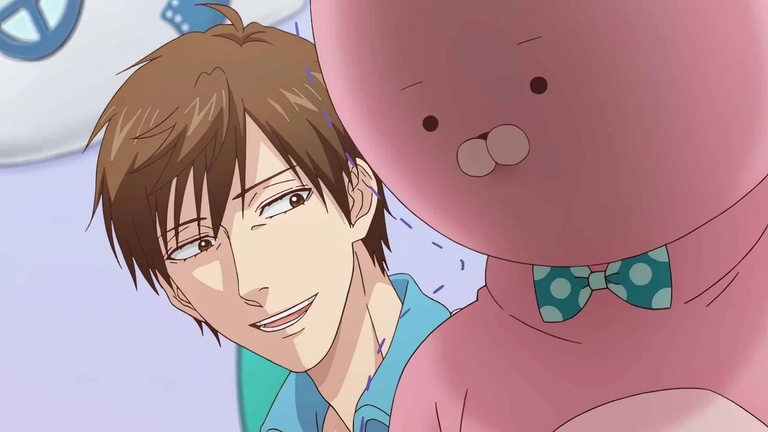
When the show does deviate from its formula like in the flashback episodes to Uramichi's college days or the episodes focusing on side characters like the unhinged merchandise planner Hanbee Kikaku it feels earned. These breaks in the cycle highlight how rare and precious escape from the grind actually is. They also show that none of these people were always this broken. They had dreams and potential and then life happened. The show is a document of lost potential and it refuses to look away from that tragedy even when it is making you laugh at a dick joke.
The Secondary Characters Are Also Broken
While Uramichi is the main attraction the supporting cast deserves mention because they each represent different flavors of workplace dysfunction. Iketeru is the golden boy who skates by on looks and charm while being completely useless in any practical capacity. He represents the unfairness of industries that value appearance over competence. Utano is the woman facing the double standards of aging in entertainment where men can be gray and distinguished but women are considered expired after thirty. She is desperate to get married not necessarily because she wants love but because she wants financial security and social approval before it is too late. Tobikichi and Mitsuo represent the different ways men deal with being failed by the system one through passive aggression and the other through complete withdrawal.
Even the boss Tekito Derekida whose name literally translates to careless or irresponsible is a perfect depiction of middle management that has no idea what they are doing but will work you to death anyway. The only character who seems genuinely happy is the choreographer Capellini and even that is played as a weird eccentricity rather than genuine contentment. This ensemble creates a tapestry of dysfunction that feels more accurate to most real workplaces than any HR approved team building narrative ever could. According to some viewers the side stories keep the show from becoming too monotonous even as they reinforce the central themes of economic anxiety.
The Music Wants To Kill You
I keep coming back to the music because it is such a specific choice. The ending theme is this melancholy almost lullaby like song that feels like it is trying to comfort you after the episode has wrecked you. It is a weird sensation to finish watching Uramichi explain to a child that friendship ends when money gets involved and then hear this soft gentle tune about going home and resting. The soundtrack during the episodes is mostly standard light comedy fare but every now and then there is this discordant note or a moment of silence that stretches too long and you realize the sound design is gaslighting you. It is creating this fake cheerful environment while the visuals and dialogue are screaming that everything is wrong.

The in universe songs that the characters perform on the show are also masterpieces of dark comedy. They have titles that sound innocent but lyrics that reference existential dread or the crushing weight of expectations. When the characters perform these songs with big smiles while the camera cuts to them crying in the dressing room later it creates this tonal whiplash that is physically uncomfortable to watch but impossible to look away from. The opening theme specifically contrasts sharply with the bleak content in a way that makes both the song and the show hit harder.
Final Thoughts On This Depressing Masterpiece
Life Lessons with Uramichi Oniisan anime review scores on aggregate sites usually land around the seven to eight out of ten range which feels appropriate because this is not a perfect show and it is not trying to be. It is a very specific mood piece aimed at a very specific demographic of tired adults who are smart enough to see through the lies of motivational posters but too broke to do anything about their situation. It validates the anger and exhaustion of millennial and gen z workers who were promised stable careers and got gig economy precarity instead. It does not offer hope because hope is often a lie sold to keep you working. It offers solidarity which in some ways is more valuable.
If you have ever worked a job where you had to smile at customers while your brain was screaming at you to run away you will get this show. If you have ever looked at your bank account and felt physical nausea you will get this show. If you have ever looked at a child and felt both protective and deeply jealous of their innocence you will get this show. It is not fun to watch in the traditional sense. It is more like group therapy where everyone is too tired to offer advice so they just nod and pass the bottle. I do not know if I can say I enjoyed it but I definitely needed it. It is a mirror and sometimes mirrors show you things you do not want to see but need to acknowledge. If they ever make a second season I will watch it but I will need to prepare mentally first. Maybe do some stretches. Drink some water. Stare at the wall for a while. You know the drill.
Frequently Asked Questions
What is Life Lessons with Uramichi Oniisan about?
It is a dark comedy slice of life anime about a depressed 31 year old former gymnast who works as an exercise instructor on a children's television show. He maintains a cheerful on camera persona while being clinically depressed and cynical about adult life off camera.
Is Life Lessons with Uramichi Oniisan depressing?
It can be too real for people dealing with depression or burnout because it offers no solutions or happy endings. It validates misery without providing escape which can be triggering if you are already in a bad place mentally.
What show is Together with Maman parodying?
It is a parody of Okaasan to Issho which is a real long running Japanese educational program. The structure music and set design directly mirror that show but with a dark twist.
Who are the voice actors in Uramichi Oniisan?
The main cast includes Hiroshi Kamiya as Uramichi, Tomokazu Sugita as Tobikichi, Yuuichi Nakamura as Mitsuo, Mamoru Miyano as Iketeru, and Nana Mizuki as Utano. The ensemble chemistry is one of the show's biggest strengths.
Does Life Lessons with Uramichi Oniisan have a plot?
No it lacks a continuous plot arc. It uses a skit based episodic structure where each episode contains several short segments. The repetition is intentional and reflects the cyclical nature of dead end jobs.