
Little Busters Anime Character Arcs Explained Without the Fluff
Little Busters! anime character arcs get misunderstood constantly by people who want to rush to Refrain. They think the first season is just filler they can skip if someone hands them a guide telling them which episodes matter. But that's missing the point entirely. The first season builds the foundation that makes Refrain hit hard, and if you don't sit through Komari crying over a dead cat or Mio losing her shadow, the final twist feels cheap instead of earned.
The show looks like a standard visual novel adaptation on the surface. Riki recruits girls for a baseball team, solves their personal problems, and moves to the next one. But there's a difference here. The trauma isn't just backstory flavor. It's active, weird, and often supernatural in ways that don't make sense until you realize the world isn't real. That's the thing people need to understand about these arcs. They're not just sad stories. They're programming Riki to grow up fast enough to save everyone.
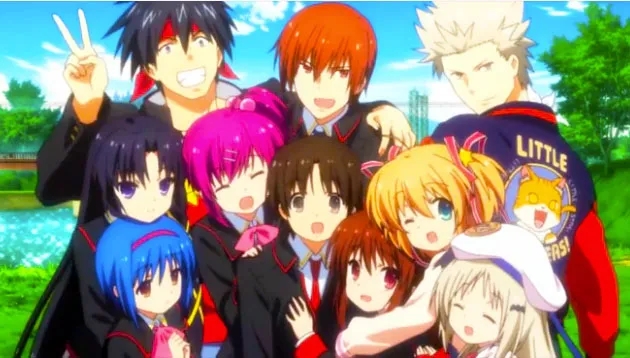
The First Season Trauma Pipeline
People call it a slice-of-life comedy with drama spikes, but that's selling it short. Each arc follows a pattern where the heroines' psychological issues manifest physically in the world. Komari can't accept death, so she literally forgets her brother died and creates a picture book reality where he's still alive. When she sees the dead kitten, her mind breaks because it triggers the memory she's been suppressing. Riki doesn't just comfort her. He has to literally rewrite her coping mechanism by creating a new picture book telling her it's okay to rely on friends instead of fantasy.
Mio's arc is even weirder and more messed up. She's invisible to most people, literally forgotten by her classmates, and her shadow disappears because she feels she doesn't deserve to exist. The show introduces "Midori" as her imaginary sister who became real enough to replace her. Only Riki remembers the original Mio because he's the protagonist of this artificial world. The arc isn't just about loneliness. It's about the fear of being forgotten and the pain of thinking you don't matter enough to cast a shadow. When Riki saves her, he's not just being a nice guy. He's learning that his attention and memory have power in this place.
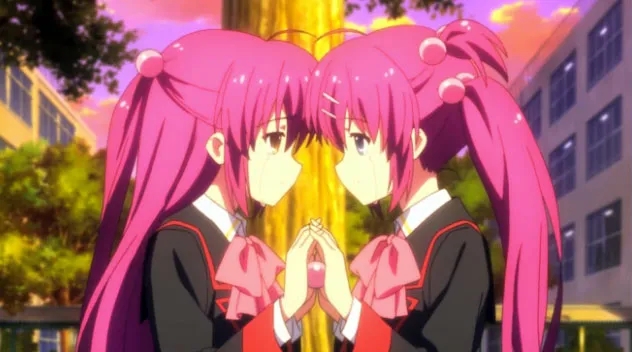
Haruka and Kanata's Family War
Haruka Saigusa's arc hits different because it involves active abuse rather than internal trauma. Her family treats her like garbage because of her father's criminal status, and she acts out at school as a defense mechanism. Kanata Futaki seems like the antagonist here, the strict public morals chair who cracks down on Haruka's disruptions, but they're actually twin sisters. The reveal that Kanata was protecting Haruka the whole time by being harsh adds a layer of tragedy to every interaction they had before.
The family drama here is heavy. Haruka fears abandonment so much she pushes everyone away first, while Kanata accepts the role of villain to keep her sister safe from worse punishment. When Riki and the Little Busters intervene, they're not just solving a school conflict. They're breaking a cycle of abuse that required Kanata to sacrifice her own happiness and reputation. This arc matters for Refrain because it establishes that sometimes the people who seem like they're against you are actually hurting themselves to protect you, which becomes relevant when you learn what Kyousuke's been doing the whole time.
Kud's Fear of Being Ordinary
Kudryavka Noumi looks like the comic relief foreigner character with her broken Japanese and space obsession, but her arc gut-punches you with imposter syndrome. She wants to be an astronaut like her mom, but she's terrified she isn't smart enough for the advanced physics classes. When her mother's rocket fails, Kud faces the reality that sometimes you try your hardest and still fail publicly.
The arc deals with the pressure to live up to parental expectations and the fear of disappointing people who believe in you. Kud runs away from school because she can't handle the possibility of proving her self-doubt right. Riki has to convince her that doing your best is enough even if you don't become special. This feeds into the larger theme of the show about accepting your limits while still trying to grow.
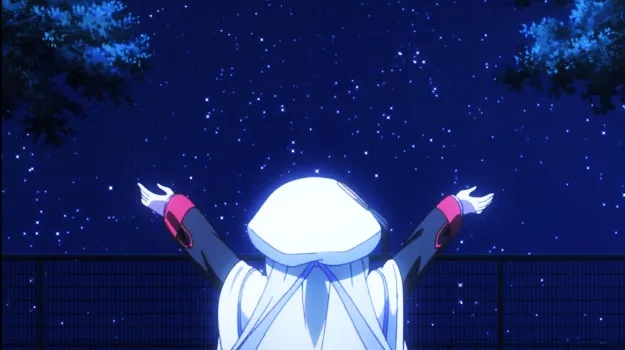
How Refrain Rewires Your Brain
Here's where people who skipped episodes get lost. Refrain isn't just a sequel. It's the explanation for why the first season felt weird. The bus crash already happened. Everyone is dead except Riki and Rin. Kyousuke created an artificial world in the moment before death, a shared dream where he could force Riki to grow strong enough to save Rin in the real world after they wake up.
This recontextualizes every single arc. Komari's trauma about death? She died in the crash and needed to accept mortality. Mio's invisibility? She died feeling forgotten and needed to know someone remembered her. Haruka's abuse? She needed to know family bonds survive death. Kud's failure fear? She needed to accept she could fail and still be worth saving. Every girl was chosen by Kyousuke not randomly, but because their specific traumas mirrored what Riki needed to learn to become a leader.
The first run of the field trip where Rin breaks down and they fail? That was a test run in the dream world. Kyousuke reset it because Riki wasn't ready. When you watch Riki break down in Refrain and fight Masato and Kengo, he's finally applying what he learned from all those heroine arcs. He isn't the passive narcoleptic kid anymore. He's someone who can face reality without running away.
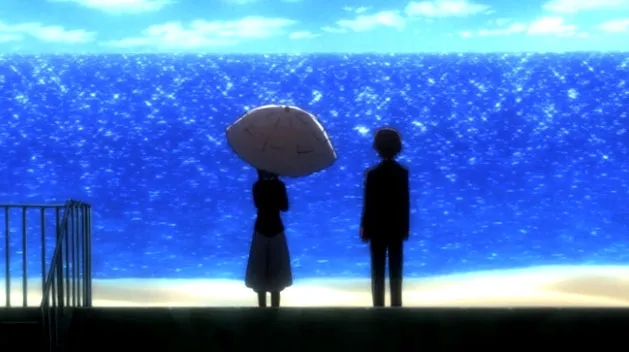
The EX OVA Mess
Little Busters! EX exists because the visual novel had extra routes in the Ecstasy version, but the anime adaptation is a weird cash grab that messes with the timeline. Saya Tokido's arc takes up half the episodes and introduces a romance between her and Riki that feels like a betrayal of the Rin relationship built up in Refrain. Her backstory doesn't even make sense because she wasn't on the bus during the crash, yet she's somehow in the artificial world.
Sasami's arc involves her turning into a cat and living in a fantasy version of the world, which cheapens the stakes established in Refrain. If anyone can just have a personal dream world within the dream world, the rules get muddy. Kanata's arc in EX rehashes her sister stuff from season one but with less impact because we already know they're twins. It feels redundant rather than additive.

The problem with EX is that Refrain ended perfectly. The emotional closure was complete. Adding these side stories about characters who weren't central to the bus crash tragedy feels like the studio milking the franchise. Saya's character shifts between tsundere, chuunibyou delusions, and clumsy airhead so rapidly she never feels real. The romance plot assumes you'd drop Rin's development for a girl who literally didn't exist in the main timeline properly.
Why the Baseball Team Framing Matters
People dismiss the baseball team as just a slice-of-life hook to get the girls involved, but it's structural to the themes. Baseball requires trust and coordination. You can't play it alone. Every time Riki recruits a new member, he's learning how to lead and support someone else. The games they play aren't about winning. They're about creating situations where the characters have to rely on each other.
Kyousuke set up the team specifically to create bonds strong enough to survive the revelation of death. He needed Riki to have practiced leading people and solving their problems so that when the real world crash happened, Riki could keep his head and save Rin. The team is literally training wheels for grief and adulthood. Without spending 26 episodes seeing how these people fit together, the final episodes where they say goodbye in the dream world wouldn't hurt as much.
Which Arcs You Actually Need
If you're really pressed for time and can't do the full first season, you need at least the common route episodes that establish the group dynamic, plus Rin's arc because she's the endgame. Komari's arc is essential because it deals with death acceptance directly. Mio's arc helps you understand the artificial world's rules about memory and reality. Haruka's arc gives you the twin sister dynamic that pays off in understanding Kyousuke and Rin's relationship better.
You can probably skip some of the standalone comedy episodes if you must, but skipping entire heroine arcs leaves you without the emotional vocabulary to understand Refrain. The show is built like a machine where every part connects. Some people made a guide for skipping episodes, and while it works for following the plot, it kills the emotional impact. You need to sit through the slow parts so you care when things get fast in season two.
Riki's Growth Is the Real Protagonist Arc
Everyone talks about the girls' traumas, but Riki's the one who actually changes. He starts as a passive kid with narcolepsy who follows Kyousuke around because he doesn't know how to function without a leader. Through solving the heroine arcs, he practices being the supportive one instead of the supported one. By Refrain, when he figures out the world is fake, he's ready to take over as the protagonist of his own life.
The fight with Masato and Kengo in Refrain isn't just physical. It's Riki proving he's willing to fight his friends to save them, something the old Riki couldn't do. He's applying the lessons from every arc. From Komari he learned to face painful truth. From Mio he learned that remembering someone matters. From Haruka he learned that harsh words can hide love. He puts it all together to break the time loop and save everyone from the bus crash.
The Difference From Clannad
People always compare Little Busters! to Clannad because they're both Key visual novel adaptations, but the structures differ. Clannad's After Story continues the timeline linearly. Little Busters! Refrain reveals the first season was happening in a suspended moment. The heroine arcs in Clannad are mostly separate from the After Story plot, but in Little Busters!, every arc is directly training Riki for the Refrain crisis.
Clannad hits you with tragedy after you've relaxed into domestic bliss. Little Busters! hits you with the revelation that the bliss was a goodbye all along. The character arcs serve different functions. Clannad's arcs establish Tomoya's ability to connect with people. Little Busters' arcs establish Riki's ability to function without his safety net. Both work, but Little Busters! is more focused on the group dynamic dissolving and reforming.
Little Busters! anime character arcs work best when you view them as a complete system. The first season isn't optional buildup. It's the lesson plan. Refrain is the final exam. EX is the extra credit nobody asked for. If you treat it like a puzzle where every sad girl story teaches Riki a specific skill he needs to save Rin from the bus crash, the whole thing clicks into place. The show isn't just about baseball and crying. It's about growing up fast enough to survive your worst day, and that's why it sticks with you.
Frequently Asked Questions
Can I skip the first season and just watch Refrain?
No, don't skip them. The first season builds the relationships and teaches Riki the skills he needs in Refrain. Every heroine arc trains him to handle a specific aspect of the final crisis. If you skip straight to Refrain, the emotional impact falls flat because you won't care about the characters yet.
What is the secret of the world in Little Busters?
The artificial world is a shared dream created by Kyousuke in the moments before death after a bus crash. Everyone in the Little Busters except Riki and Rin died in the crash. Kyousuke made the world to force Riki to grow up strong enough to save Rin and wake up in the real world.
Is Little Busters! EX worth watching?
It's mostly unnecessary side content. Saya's arc contradicts the main timeline, and Sasami's arc cheapens the dream world rules. Kanata's arc rehashes her season one story. Watch it only if you need more content, but it doesn't add to the main story's ending.
Which character arcs are essential for understanding Refrain?
Komari's arc about death denial and Mio's arc about being forgotten are the most important. They directly parallel the themes of the bus crash and artificial world. Rin's arc is essential since she's the endgame romance. Haruka's arc helps you understand hidden family bonds.
Why does Riki have narcolepsy?
The narcolepsy represents his escapism and inability to face harsh reality. When he collapses, it's because his mind can't handle the stress. As he grows through the heroine arcs, he has fewer episodes because he's learning to stay conscious and deal with problems directly.