
Made in Abyss Review and Themes
Made in Abyss anime review and themes need to start with one hard truth. This show looks like something you'd put on for a ten-year-old who likes Pokemon, but that would be a horrible mistake you'd regret immediately. The art style lies to you. It uses these big round eyes and soft pastel colors and cozy-looking kids, then it shows you a child bleeding from every hole in her body while her friend tries to saw her arm off. That's not hyperbole. That's episode ten.
The trick works because it mirrors how the Abyss itself operates. The hole in the ground looks beautiful from the rim. Sunlight filters down through the first few layers and makes everything look like a Studio Ghibli fever dream. You see cute fluffy animals and bright plants and these brave little kids going on an adventure. Then you go down far enough and the light becomes the enemy. The cute animals turn out to be deadly predators. And the Curse starts doing things to your body that no human should ever have to experience. The show doesn't pull punches about any of this.
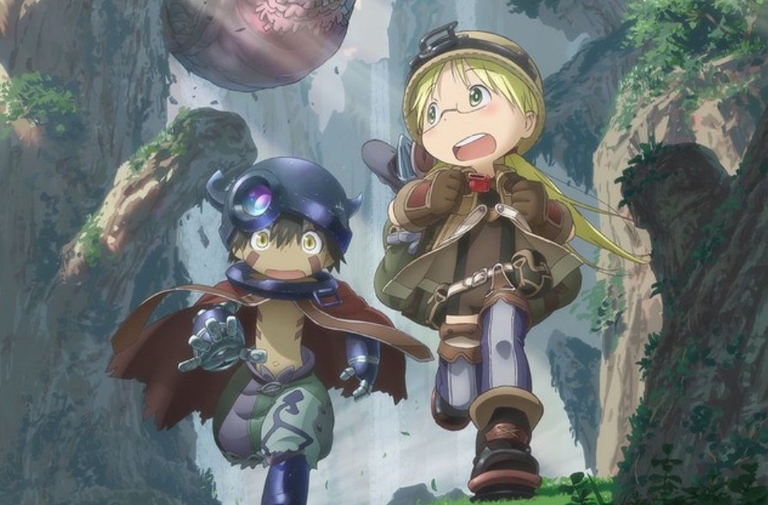
The Art Style Is a Trap
Kinema Citrus knew exactly what they were doing with the character designs. Riko looks like a bobblehead doll with her huge helmet and oversized eyes. Reg has that generic robot-boy aesthetic that feels safe and familiar. Even the backgrounds in Orth city have this warm, hand-painted quality that screams comfort. Then you hit the fourth layer and everything changes. The creatures get weird. The stakes get real. And suddenly those same cute characters are dealing with poison that makes their bodies swell up like balloons or nerve damage that leaves them paralyzed.
This contrast hits harder than if they'd drawn everything gritty from the start. Your brain relaxes because it thinks it knows what kind of show this is. Then Bondrewd shows up and you realize you've been watching horror this whole time. The disconnect between the visual language of kids' adventure and the content of adult nightmare fuel creates this cognitive dissonance that makes the body horror land with extra force. You don't see it coming because your guard is down.
The backgrounds deserve special mention here. Apparently some ex-Ghibli artists worked on this, and you can tell. The Abyss looks like a real place that someone painted. The further down they go, the more alien it gets, but it stays grounded in a kind of biological logic that makes it worse. These aren't just fantasy monsters floating around. They're part of an ecosystem that makes sense if you think about it, which makes the fact that they want to eat the protagonists feel more personal somehow.
How the Curse Actually Works
The Curse of the Abyss isn't magic in the usual anime sense. It's more like extreme decompression sickness combined with reality breaking. Every layer has its own rules for what happens when you try to climb back up. First layer gives you mild nausea. Second layer makes you hallucinate and vomit blood. Third layer screws with your senses so badly you can't tell up from down. By the fourth layer, you're looking at full body paralysis and sensory overload that can leave you a vegetable. Fifth layer and below, people don't come back. Or if they do, they don't come back human.
This mechanic drives the tension better than any traditional villain could. Riko and Reg can't just run away when things get bad. Going down is the only option because going up means death or worse. It turns the entire structure of the show into a one-way trip where the characters have to keep moving forward into worse and worse situations with no escape route. That's a special kind of claustrophobia that most adventure anime never touch.
The Curse also serves as the perfect excuse for the body horror that defines the show's second half. When the kids get hurt, they get hurt bad. Riko takes a stab from an Orb Piercer and the poison doesn't just make her sleepy. Her body starts shutting down in graphic ways. Reg has to perform field surgery with a robot arm while she's screaming. The show makes you watch every second of it because the Curse doesn't care that she's twelve. The Abyss is indifferent to your age or your innocence.
The Soundtrack Knows What It's Doing
Kevin Penkin's score for Made in Abyss is unfairly good. The track "Hanezeve Caradhina" plays during some of the most beautiful moments in the first few episodes, all strings and haunting vocals that make you feel like you're watching something spiritual. Then those same musical cues get reused later when terrible things are happening and the contrast makes your stomach drop. The music doesn't change to tell you something scary is coming. It stays beautiful while the visuals get horrific, which somehow makes both aspects hit harder.
The soundtrack uses a full orchestra recorded in Vienna, which gives it this weight that electronic music couldn't match. When the brass swells during a scene where Riko is just looking at the sunset over the Abyss rim, you feel the vastness of the hole. You feel how small she is. Then later when the strings go crazy during the Bondrewd fight, it doesn't feel like battle music. It feels like grief.
People talk about the opening song too, and yeah, it's catchy, but the real work happens in the background score. There are these electronic elements that creep in during the darker episodes, little static noises and synth growls that sit under the orchestral stuff. You might not notice them consciously, but they put your teeth on edge. The audio design in general is top tier. You can hear the texture of the rocks, the weird biological sounds the creatures make, and the way the wind changes as they descend.
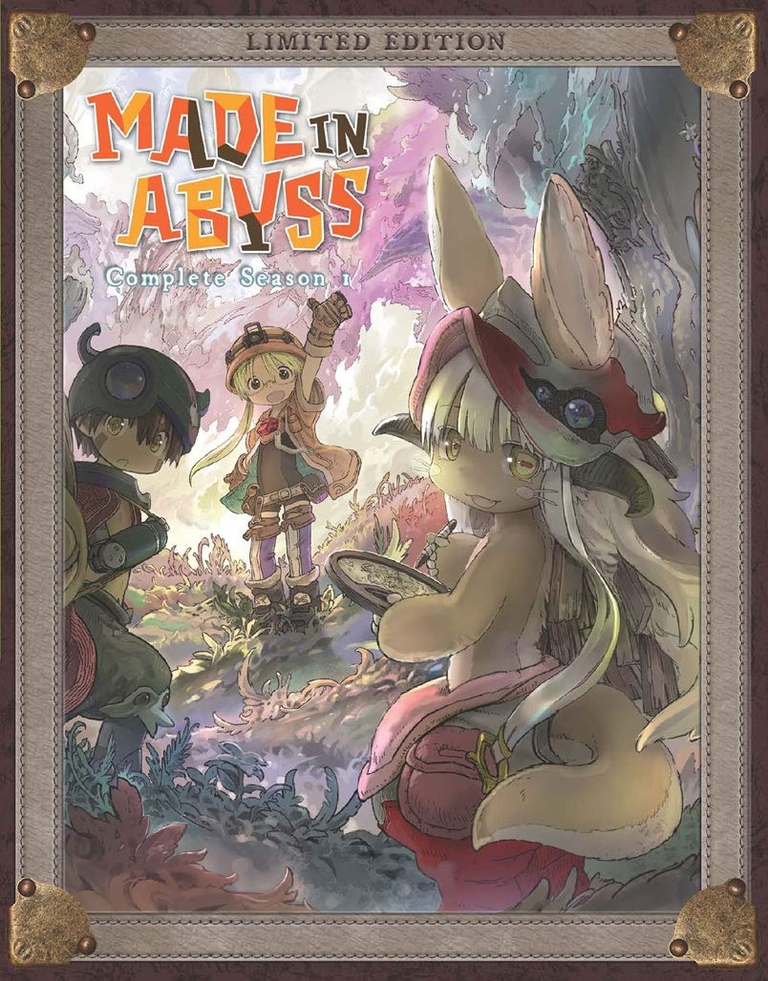
Riko and Reg Work Because They're Broken
Riko shouldn't be the protagonist of a survival horror story. She's physically weak, she has zero combat training, and she's obsessed with her mom to the point of recklessness. But that's exactly why she works. She has to solve problems with knowledge instead of force. She knows the biology of the Abyss, she can cook, she can treat wounds, and she never stops moving forward even when she should be dead. Her optimism isn't cute. It's relentless and kind of scary.
Reg is the opposite. He's got the super robot body with the laser cannon and the extending arms, but he's emotionally fragile. He breaks down crying when things get heavy. He questions everything. Without Riko pushing him forward, he'd probably just camp out in the second layer and live in a cave forever. Together they cover each other's gaps. She has the will, he has the power, and neither of them would survive alone.
Their relationship develops without any romantic clichés getting in the way. Reg clearly cares about Riko, but it's protective and loyal in a way that feels earned. When he has to hurt her to save her from the poison, the show doesn't play it for melodrama. It's messy and awful and necessary. Riko trusts him completely even when he's doing things that look like torture. That level of mutual reliance under pressure is rare in anime that usually just have power of friendship speeches.
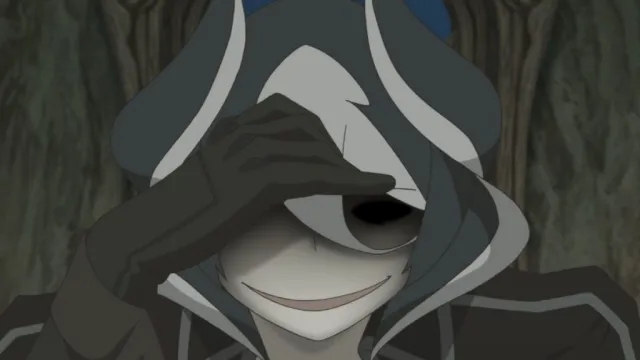
Bondrewd Is a Different Kind of Evil
Most anime villains want to rule the world or get revenge or prove they're the strongest. Bondrewd just wants to know how the Curse works. That's it. He's a scientist who ran out of ethical boundaries so long ago that he doesn't even remember what they look like. He turns orphans into disposable test subjects. He experiments on his own daughter. He uses a weapon that causes unbearable suffering to the user because the data is worth it. He's not insane. He's perfectly rational, which makes him so much worse than the usual cackling bad guys.
His design helps sell the threat. He wears this weird helmet with tubes coming out of it and this perpetual calm voice that never breaks. Even when Reg is shooting lasers at him, he sounds like he's reading a grocery list. The mask hides his face so you can't read his expressions, which makes him feel less human. And his whistler, the thing that marks him as a White Whistle, isn't even a real artifact. It's carved from human bone. Specifically, from the people he's sacrificed.
The show doesn't let him off easy either. When he finally goes down, he doesn't have a change of heart or give a tragic backstory that excuses everything. He stays true to his character until the end, treating his own death as just another data point. The movie Dawn of the Deep Soul expands on this, showing exactly what he did to Nanachi and Mitty, and it's worse than you imagined. He didn't just turn them into Hollows by accident. He did it methodically, recording every scream, because he needed to map the Curse's effects.
Nanachi and the Cost of Survival
Nanachi's introduction in the fourth layer marks the point where Made in Abyss stops pretending to be a fun adventure. This fluffy rabbit-looking thing turns out to be a former human who survived Bondrewd's experiments but lost their humanity in the process. They live in a hut made of corpses and spend their days trying to keep their best friend Mitty alive, except Mitty is now an immortal blob of suffering that can't die no matter what happens to it.
The ethical question the show poses here is brutal. Nanachi loves Mitty but recognizes that Mitty is in endless pain. They ask Reg to use his Incinerator to kill Mitty permanently, knowing it will haunt them forever but unable to bear watching their friend suffer for eternity. The show treats this euthanasia plot with zero sentimentality. It's ugly and sad and there's no right answer. Reg does it, and it breaks him, and it breaks Nanachi, but Mitty finally stops screaming.
Nanachi joins the group after this, providing medical knowledge and a cynical counterpoint to Riko's optimism. They're also one of the best examples of the show's gender-neutral approach to characters. Nanachi doesn't conform to standard anime tropes about how girls or boys should act. They're just a person who got screwed over by the Abyss and is trying to make amends. Their cooking is terrible, their hut smells like death, and they're the most loyal companion you could ask for.
The Descent Theme Runs Deep
Every layer of the Abyss is lower than the last, obviously, but the show uses this physically to mirror the psychological states of the characters. They start off excited and curious at the top. By the third layer, they're tired and scared. Fourth layer brings permanent physical changes. Fifth layer breaks their minds. The show uses a lot of downward camera angles, shots of falling, and visual cues that emphasize how they're sinking into something they can't escape.
Orth city sits on the rim and worships the Abyss like a god. People pray before going down. They leave offerings. The culture is built around this hole in the ground that kills most people who enter it. That religious element isn't just background noise. It suggests that humanity knows the Abyss is evil but is too addicted to the artifacts and the mystery to stop going down. The whistles system, where your rank determines how deep you can legally go, is just organized gambling with children's lives.
Light behaves weirdly in the Abyss. It shouldn't reach the lower layers, but it does, and the show suggests this is part of the Curse or the nature of the place. Light equals danger in this show. The monsters are drawn to it. The safe spots are usually dark caves or shadows. This inversion of the usual "dark is scary" visual language messes with your head. You feel unsafe when the screen is bright and weirdly calm when it's dark, which is the opposite of how human instincts work.
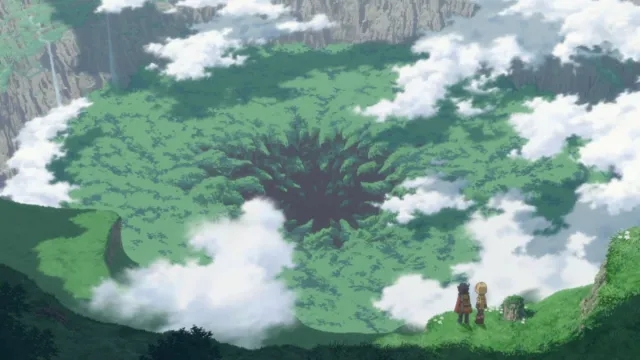
Season 1 Pacing Is Deliberate but Demanding
The first season is only thirteen episodes but it feels longer because the episodes in the middle slow down to show the day-to-day survival. You watch them cook meals, set up camp, treat minor injuries, and navigate by the stars. Some viewers find this boring. They want constant action or plot progression. But this pacing serves a purpose. It establishes the routine of the Abyss so that when the routine gets shattered by violence, you feel the disruption in your gut.
The show spends two full episodes just getting to the second layer. It introduces Ozen the Immovable, who is terrifying in a different way than Bondrewd. She's a White Whistle who has lived in the Abyss so long that she's become something else. She tests the kids by almost killing them, which seems cruel but is actually necessary. If they can't survive her, they won't survive the fourth layer. Her apprentice Marulk provides some brief moments of levity, but even those are tinged with the knowledge that Marulk is trapped down there too.
The ending of season one isn't really an ending. It's a pause point. They reach the fifth layer but haven't found Lyza yet. Reg hasn't recovered his memories. The mysteries are just getting started. This frustrates people who want closure, but it's faithful to the source material and honestly makes sense. You can't explore a hole this deep in thirteen episodes without rushing. The show chooses to go slow and let the dread build naturally.
Why Season Two Doesn't Hit the Same
Made in Abyss Season 2, officially called The Golden City of the Scorching Sun, moves the setting to the sixth layer and introduces a whole new cast of characters in the village of Iruburu. The problem is that it relies heavily on flashbacks to explain the backstories of these new characters, particularly Faputa and the concept of the Hollows. This stops the forward momentum dead. Instead of descending further, you're sitting in one location listening to exposition about things that happened centuries ago.
Faputa divides the fanbase. Some people find her tragic backstory compelling. Others find her personality grating and her motivations confusing. She's supposed to be this primal force of vengeance, but she spends a lot of time standing around looking angry while other characters explain the plot to her. The village itself is interesting as a concept, a place where value and currency are literal physical transformations of the body, but the pacing drags.
The body horror is still there in season two. The Value system lets people trade body parts for goods, so you see characters with missing eyes or limbs or worse. But it feels more like a sideshow than a survival necessity. In season one, the kids got hurt because the environment was hostile. In season two, people get hurt because of social rules and curses that feel more abstract. It's still disturbing, but it hits different. Less "nature is terrifying" and more "society is broken."
The Worldbuilding Holds Up
Orth feels like a real city that evolved around a resource extraction site. The economy makes sense. Kids become cave raiders because there's money in it, not because they have heroic dreams. The orphanage trains them young because that's how you get skilled labor. The government regulates the whistles because they need to control who goes where to limit casualties. Every piece of the setting clicks into place logically.
The Abyss ecosystem is consistent too. Creatures get weirder and more dangerous as you go down because of the Curse's influence on biology. The plants change to adapt to the weird light. The artifacts they find follow their own internal logic about what ancient civilizations might have found useful. Nothing feels randomly generated for video game convenience. Even the monsters have behaviors that suggest they eat, sleep, and reproduce like real animals.
This consistency matters because it makes the horror stick. When you understand the rules of the Abyss, you understand exactly how screwed the characters are when they break them. You know what ascending from the fourth layer means for Riko's body. You know why Reg's laser drains his energy. The show respects your intelligence enough to let you figure out the stakes without spelling everything out in exposition dumps.
Made in Abyss anime review and themes ultimately come down to one question. Are you willing to watch something that will make you uncomfortable in exchange for a story that respects the danger of curiosity? The show argues that exploration isn't clean. It's bloody and painful and sometimes the people who come back aren't the same people who went down. But the alternative, staying safe on the surface and never knowing what's at the bottom, might be worse. The Abyss calls to Riko the same way it calls to the viewer. You know it's going to hurt, but you have to see what's down there anyway.
Frequently Asked Questions
Is Made in Abyss appropriate for children?
No. Despite the chibi art style and child protagonists, Made in Abyss contains graphic body horror, gore, and disturbing themes including child experimentation and euthanasia. The content rating is 17+ for good reason. Don't let the cute character designs fool you into showing this to kids.
How does the Curse of the Abyss work?
The Curse is a set of physical and mental penalties that activate when someone tries to ascend from the Abyss. Each layer has worse effects, starting with mild nausea at the first layer and progressing to hallucinations, paralysis, mutation, and death at deeper levels. It makes retreat impossible and forces characters to keep going down.
Who is Bondrewd and why is he scary?
Bondrewd is a White Whistle cave raider who conducts experiments on children to study the Curse. He turns them into Hollows, which are beings merged with the Curse's power but stripped of humanity. He appears calm and scientific but is completely devoid of ethics, making him one of the most unsettling villains in modern anime.
Does Made in Abyss have multiple seasons?
Yes. Season 1 covers the descent through the fifth layer. Season 2, called The Golden City of the Scorching Sun, covers the sixth layer and the village of Iruburu. There's also a movie, Dawn of the Deep Soul, which covers the Bondrewd fight in more detail than the series.
Why do people call Made in Abyss a masterpiece?
The contrast between the cute, soft art style and the brutal, grotesque content creates a unique tension. It lures viewers into a false sense of security before hitting them with body horror and existential dread. The worldbuilding is also incredibly detailed, and the soundtrack by Kevin Penkin is widely considered one of the best in anime.