
Mafuyu Sato's Backstory and Emotional Journey Hits Different
Mafuyu Sato's backstory and emotional journey isn't your typical anime sob story wrapped in a bow. This kid carries the kind of weight that makes you understand why he doesn't talk much, and when he finally does sing, it sounds like someone tearing their own heart out through their throat. Most people watching Given think they get it, oh tragic past, dead boyfriend, sad songs, but they're missing the mechanics of how trauma really works in this story. It's messy, it's ugly, and it doesn't resolve cleanly after one cathartic concert scene.
The thing that guts me about Mafuyu is how his silence isn't just a personality quirk. It's a survival mechanism built from childhood beatings and the kind of grief that freezes you in place. You see him standing there with that broken guitar at the beginning, and yeah, it looks like a meet-cute setup with Ritsuka Uenoyama, but that guitar is a gravestone. He's been dragging around his dead boyfriend's instrument for a year, unable to play it, unable to let it go, stuck in this horrible limbo where he can't process that Yuki Yoshida is gone because he never got to be angry about it.

The Abuse That Taught Him to Shut Up
People always focus on Yuki's suicide when they analyze Mafuyu, but the damage started way earlier. When Mafuyu was a kid, his father used to hit him for talking. Not for talking back, just for talking at all. Apparently this created a specific trauma response where he physically stops mid-sentence when he's unsure or scared, choking on his own words because his brain is screaming that speaking equals pain. His mother was neglectful, checked out, didn't stop it, so Mafuyu learned that the only safe place was inside his own head.
This isn't just backstory flavor. You see it in real time when he's trying to confess to Ritsuka or when he's stumbling through conversations about his feelings. He'll start a sentence, get to the hard part, and just. Stop. It's frustrating to watch if you don't know why, but once you get it, it's devastating. The kid literally cannot speak his trauma because his body won't let him. His jaw locks up, his throat closes, and he stands there looking like a broken doll while his mind is racing at a million miles per hour.
The physical manifestations of his trauma are everywhere if you know to look for them. He sleeps with the guitar case open beside his bed, not because he's lazy, but because it's a barrier. A wall between him and the world. He flinches when Ritsuka raises his voice, just a tiny twitch, barely there, but it's there. He sits in corners, backs to walls, always positioning himself so he can see exits. These aren't conscious choices. His nervous system is stuck in survival mode, constantly scanning for the next threat, the next person who will hit him for existing too loudly.
His relationship with his mother is barely there. She works, she comes home, she doesn't ask about the guitar, she doesn't ask about the nightmares. She's complicit in the silence. After Yuki died, she didn't get him therapy. She just let him not talk. Let him drop out of school. Let him wander around with that guitar like a ghost. That's neglect, plain and simple, and it reinforced the lesson his father taught him, that his pain isn't important enough to mention.
Yuki was the first person who made him feel safe enough to talk freely. Yuki was loud, charismatic, the kind of person who filled rooms, and he created this bubble where Mafuyu could be loud too. They were kids together, grew up together, shared that guitar and hummed melodies back and forth. That song Fuyu no Hanashi started as something Mafuyu hummed to Yuki), this little intimate thing between them, and Yuki was supposed to write lyrics for it. Instead, Yuki wrote a suicide note and hanged himself while Mafuyu was out buying concert tickets. The last thing they did was fight. Mafuyu yelled at him, words pouring out of him in a way he never allowed himself before, and Yuki took that as permission to leave permanently.
The Year of Frozen Silence
After Yuki died, Mafuyu didn't just go quiet. He went into a full emotional shutdown that lasted a year. We're talking nightmares every night, unable to sleep properly, walking around like a ghost. I saw some data that said he was having intense emotional distress characterized by anxiety and profound loneliness, but here's the kicker, he couldn't even admit he was lonely. He'd tell people he was fine, he'd deny understanding why he felt empty, and he'd carry that guitar everywhere like a security blanket made of knives.
The attachment style here is messy. He's terrified of abandonment because he's already experienced the ultimate version of it, but he's also terrified of getting close because he knows how much it hurts when people leave. Or when they die. Or when they choose death over staying with you. That specific flavor of guilt, wondering if you said the wrong thing, if you didn't say enough, if you could have stopped it, it poisons every interaction he has. He thinks he killed Yuki with his words, that by finally speaking up and being angry, he pushed him over the edge. So he goes back to not talking. It feels safer.
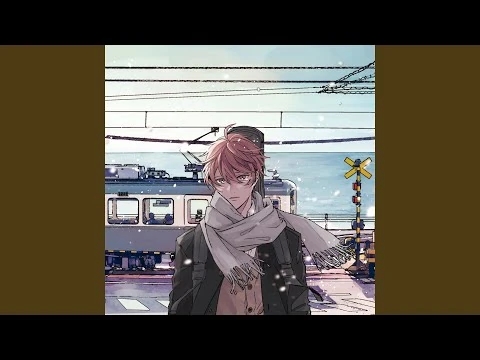
When he meets Ritsuka, he's not looking for a new relationship. He's looking for someone to fix the guitar strings because he can't do it himself, literally and figuratively. The guitar is broken, he's broken, and he doesn't have the tools to repair either. Ritsuka doesn't know this yet, but when he fixes those strings and hears Mafuyu sing for the first time, he's not just hearing a pretty voice. He's hearing a year of repressed agony finally finding an exit. The sound is described as raw and unrefined, not technical perfection, but emotional vomit. It breaks Ritsuka's brain a little because he's never heard anything that honest before.
The Song That Wouldn't Come Out
Joining the band Given forces Mafuyu to confront the thing he's been avoiding. They need lyrics for their performance, and Mafuyu has this melody, the one he shared with Yuki, but he can't write the words. It's not writer's block. It's emotional constipation. He's been holding back the truth about how angry he is at Yuki for leaving, how guilty he feels for being angry, how scared he is that he'll never love anyone again without comparing them to a dead person. Every time he tries to write, he sees Yuki's face, sees the rope, sees the empty room.
Fuyu no Hanashi uses winter imagery) about unmelted snow and frozen time because that's exactly where Mafuyu is stuck. Time stopped when Yuki died. Everything is still covered in snow, cold and white and preserved in the exact state of his grief. The lyrics talk about wanting to move forward but being unable to leave the past behind, and that's not just poetic fluff. That's his daily reality. He's walking through life but he's not living it. He's just existing in the preserved moment of his trauma.
Writing lyrics for Given is excruciating for him because he has to be honest. He can't hide behind metaphors he doesn't mean. When he writes about winter, he's writing about the morning he found Yuki. When he writes about being unable to move, he's writing about the paralysis that keeps him in bed some days. Every word is blood on the page. Ritsuka doesn't push him for explanations, doesn't ask "is this about Yuki?" He just takes the lyrics and writes music that fits the mood, trusting that Mafuyu will explain when he's ready. That trust is new for Mafuyu. He's not used to people trusting him to know his own mind.
The musical progression mirrors his breakdown. It starts sparse and hesitant, just like his speech patterns, then builds to this wall of distorted sound and orchestral strings when the emotion gets too big to contain. The key is E minor, which is that sad, melancholy sound that sits heavy in your chest, and it shifts between minor and major keys to show that mix of pain and warmth he's feeling. The music they create together is different from what Yuki made. Yuki's music was loud, aggressive, punk rock anger at the world. Given's sound is more melodic, more layered, letting Mafuyu's voice be the centerpiece rather than drowning it out. Ritsuka writes guitar riffs that support rather than compete. Haruki's bass lines are warm, grounding. Akihiko's drumming is solid, reliable. It's a sound that holds Mafuyu up instead of pushing him around. That's the difference between a relationship that consumes you and one that lets you breathe.
When he finally performs it live, he's not singing. He's screaming into a microphone with a melody attached. It's raw, unpolished, messy as hell, and it's the first time he's been honest about his feelings in a year. The crowd goes quiet because they've never seen someone bleed on stage like that before. The specific moment during the live performance when his voice breaks, when he stops singing and just screams, that's not choreographed. That's a dissociative episode happening on stage. He's not performing anymore, he's reliving the moment he found Yuki. The crowd doesn't know this. They think it's artistic. Ritsuka knows. He can see the panic in Mafuyu's eyes, the way he grips the microphone stand like it's the only thing holding him up. And Ritsuka plays harder, grounds him with sound, pulls him back to the present with the next chord progression. That's what saves him, not the applause, but the knowledge that someone is there, playing with him, holding the rhythm while he falls apart.
Why the Concert Didn't Fix Everything
Here's where Given gets real and most shows get fake. After that performance, Mafuyu doesn't magically heal. He kisses Ritsuka, yeah, they start dating, but grief isn't a switch you flip. He's still having nightmares. He still stops mid-sentence when conversations get heavy. He's still carrying Yuki's ghost around, and now he's added the guilt of moving on to the guilt of not having moved on fast enough. People expect him to be better, to be grateful for the new boyfriend, to smile more, and that pressure makes him retreat even further.
Hiiragi Kashima and Shizusumi Yagi complicate things because they were Yuki's bandmates, his friends, and they have their own guilt about not seeing the signs. The stress Mafuyu experiences later comes partially from Hiiragi asking them to finish Yuki's song, forcing Mafuyu to engage with his trauma when he's still barely holding it together. It's annoying and unfair and exactly how real life works, people demanding emotional labor from you before you're ready because it makes them feel better. Hiiragi wants absolution, wants Mafuyu to say it's not his fault, and Mafuyu doesn't have the energy to comfort anyone else. He's still trying to comfort himself.
Hiiragi is a complicated figure because he represents everything Mafuyu lost. He was there for the Yuki years, he knows the songs, he knows the inside jokes, and he's angry at Mafuyu for moving on. Or maybe he's angry at himself for not being enough to save Yuki, and he projects that onto Mafuyu. Their dynamic is tense, full of things unsaid, and Mafuyu has to learn to set boundaries with him, to say "I can't talk about this today" without choking on the words. That's growth, real growth, learning that he can say no to people without getting hit.
Mafuyu's relationship with Ritsuka is slow, frustrating, full of misunderstandings. Ritsuka is terrible at vulnerability, scared of his own feelings, and Mafuyu is desperate for connection but terrified of demanding too much. They stumble around each other, hurting each other accidentally, because neither of them knows how to do this healthy relationship thing. Mafuyu has only known codependency with Yuki, where they were each other's entire worlds, and Ritsuka has never known intimacy at all. So you get these scenes where Mafuyu is clearly asking for help with his eyes and Ritsuka is looking away because he's scared, or Ritsuka is trying to be supportive and Mafuyu shuts down because he thinks he's being a burden.

The Cute Trap and the Real Mafuyu
One of the most annoying things about how people perceive Mafuyu is that they see the big eyes and the soft voice and the small stature and they think he's just this innocent, childlike creature who needs protection. That's not it at all. Mafuyu knows he's cute. He uses it. He's cheeky and flirty when he wants to be, especially with Ritsuka, dropping lines that make the older boy turn red because Mafuyu is fully aware of the effect he has. He's not an idiot. He's not a baby.
His bluntness is another thing that shocks people. Because he doesn't talk much, when he does speak, he cuts right to the bone. He tells Akihiko that his lifestyle is messy and hurting Haruki. He points out to Hiiragi that he's being selfish. He doesn't sugarcoat. This comes from that childhood trauma too, strangely enough. Words have power, they can hurt or heal, and he knows that, so he uses them like scalpels when he has to. He's perceptive as hell, reading the room instantly, knowing that Haruki is in love with Akihiko before even Haruki admits it, seeing through Ugetsu's pain, recognizing that Shizu has feelings for Hiiragi. He collects emotional data because he's been trained to watch for danger signs.
People underestimate him constantly because of his face. They treat him like he's fragile, like he needs to be protected from the harsh realities of the music industry or relationships. But Mafuyu has seen the darkest parts of human nature. He's seen what happens when love turns into possession. He's seen a dead body. He's survived things that would break most people, and he's still soft, still kind to his friends, still willing to love again. That's not weakness. That's steel wrapped in silk.
He uses his appearance strategically too. When he wants Ritsuka to pay attention, he leans in close, bats his eyes, speaks softly knowing it makes the other boy lean in to hear him. He's not manipulative in a cruel way, but he's aware. He's been observing human behavior his whole life to stay safe, so he knows how to make people feel comfortable, how to defuse tension with a well-timed smile or a change of subject.
But he can't turn that insight on himself. He doesn't understand his own feelings until he's screaming them into a microphone or writing them down in lyrics that he then has to force himself to sing. The contrast between how well he knows others and how little he knows himself is painful. He'll sit there with his coworkers at the live house, listening to their problems, giving solid advice, then go home and have a panic attack because he can't name what he's feeling.

Learning to Speak Again
The progress Mafuyu makes isn't linear. He goes from denial to anger to bargaining and depression, hitting all the grief stages out of order and repeating some of them. Music becomes his therapy, not because it fixes him, but because it gives him a language when words fail. He can say things in lyrics that he'd choke on in conversation. The guitar stops being a gravestone and starts becoming an instrument again. Slowly. Painfully. With a lot of false starts.
Working at the live house helps. Tsubaki, his coworker, treats him normally, doesn't walk on eggshells, expects him to pull his weight. That's grounding. It reminds him that he's a person, not just a tragedy. He starts writing new music with Given, not just recycling the Yuki song. He starts laughing again, real laughs, not the polite ones he uses to make other people comfortable.
Ritsuka helps, not by being a savior, but by being patient, by sticking around when Mafuyu goes silent, by not demanding that Mafuyu perform his grief for him. When Mafuyu has nightmares, Ritsuka doesn't try to fix it with words. He just stays. That's rare. Most people want a sad backstory with a quick resolution. They want the dead boyfriend to be a stepping stone to the new one. Mafuyu gets to be complicated. He gets to be sad and horny and angry and cute all at once. He gets to miss Yuki while falling for Ritsuka, and nobody tells him he has to choose between honoring the dead and loving the living.
The Continuation in Hiiragi Mix
The story doesn't end with the first season. The Hiiragi Mix arc digs deeper into Mafuyu's continuing struggles), showing that completing one song didn't cure his depression. He's still working through his attachment issues, still having days where he can't get out of bed, still struggling to believe he deserves happiness. The movie and subsequent OVAs show him dealing with the pressure of being the frontman, of having to speak to crowds, of having to be visible when all he wants is to hide.
In the later manga chapters and the Hiiragi Mix movie, we see him handling more responsibility, managing the band's social media, talking to venue managers, using his voice in practical ways. It's not glamorous, but it's proof that he's functional now in ways he wasn't before. He still has bad days. Still has moments where he sees something that reminds him of Yuki and has to leave the room. But he comes back. He always comes back.
But he's trying. That's the thing that matters. He keeps showing up for practice. He keeps writing. He keeps trying to tell Ritsuka what he needs, even when his throat closes up and he has to write it in a text instead. He's rebuilding his ability to speak from the ground up, relearning that words don't always lead to pain, that sometimes they lead to connection, to being seen, to being held.
Mafuyu Sato's backstory and emotional journey works because it refuses to be simple. It shows how abuse and suicide and grief stack on top of each other, creating this heavy silence that music can crack open but not instantly cure. He's not a manic pixie dream boy or a tragic martyr. He's a kid who got hurt badly, learned that speaking was dangerous, and is trying to unlearn that lesson one terrifying word at a time. The anime doesn't give him a miracle cure. It gives him a band, a new song, and the terrifying possibility that he might be allowed to be happy again. That's enough. That's everything.