Nanbaka Anime Series Review The Sparkly Frankenstein Mix That Somehow Clicks
Nanbaka anime series review requests keep popping up because people can't believe this show exists. You've got a maximum security prison filled with glitter, rainbow hair, and inmates who break out constantly just for fun. It looks like someone threw a shonen action series, a slice-of-life comedy, and a disco ball into a blender. Somehow it doesn't give you a headache. Most of the time.
The whole thing centers on Nanba Prison, supposedly the most secure facility on Earth, located on some remote island where the ocean itself acts as a wall. Except security is a joke. The inmates of Building 13, Cell 13, escape daily. They come back for lunch. The guards yell but nobody really stops them. It's that kind of show. You're either going to love how stupid it is or you're going to drop it after three episodes. There's no middle ground here.
The Four Losers of Cell 13
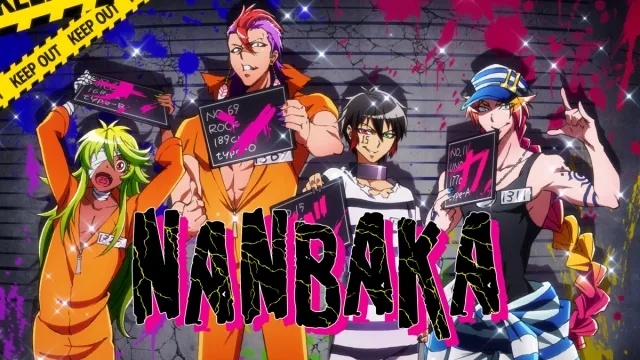
You can't talk about this series without breaking down the main crew. Jyugo is the protagonist, number 15, a guy with heterochromia and red-tipped hair who can pick any lock except the weird black shackles on his neck, wrists, and ankles. He's searching for the man who put them there. Sounds like a standard revenge plot, right? Except most episodes he's just trying to escape to buy snacks or because he's bored.
Then you've got Uno, number 11, the gambler with intuition so sharp it's basically a superpower. He wears a visor, obsesses over women, and acts like the group's big brother even though he's just as much of a disaster as the others. Rock, number 69, is the brawler who loves food more than freedom. He'll punch through a wall for a good meal. Nico, number 25, is the otaku who collects manga and has weird reactions to medication. He's got green hair and carries around a stuffed animal.
These four idiots share a cell and spend their days making life hell for Hajime Sugoroku, their supervisor. Hajime is basically the only sane person in the building. He's strong enough to stop them but tired enough that he mostly just yells. The chemistry between these five characters carries the show when the plot gets wobbly. You'll end up caring about them even when the story makes no sense.
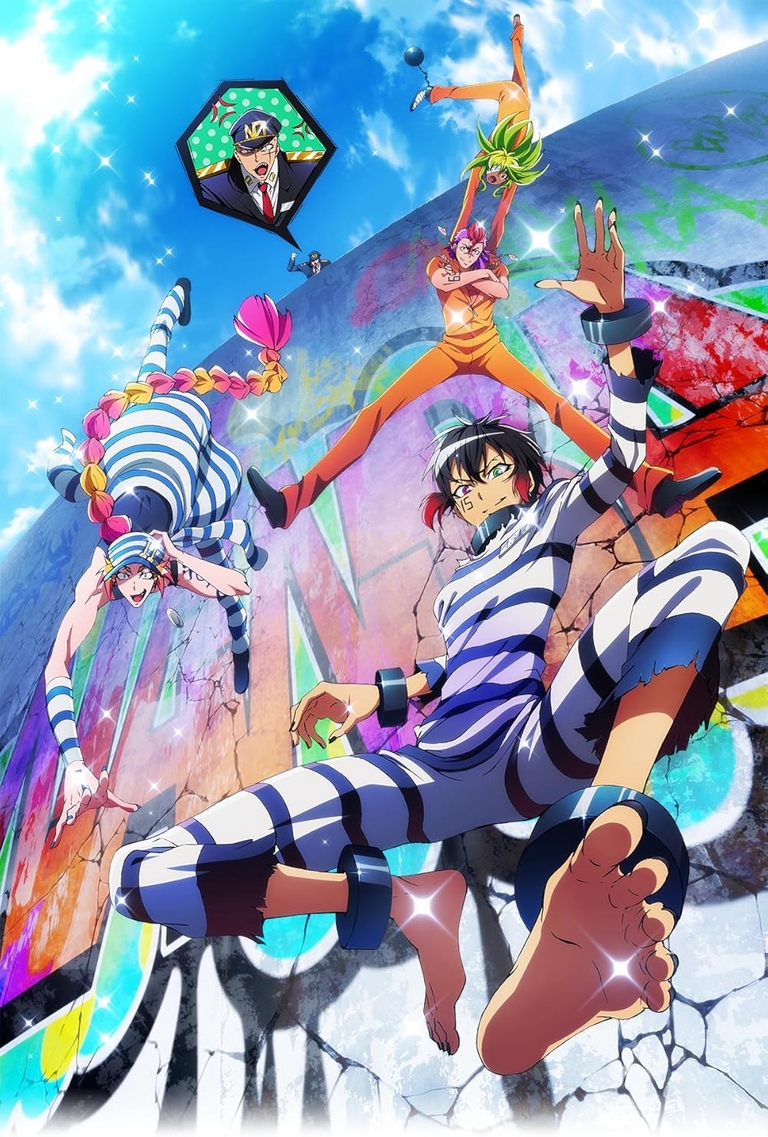
The character designs are loud. I'm talking neon colors, sparkles literally flying off the screen, and outfits that make no sense for a prison environment. Jyugo wears bright red shorts. Uno has a striped uniform. Everyone looks like they walked out of a fever dream. According to some discussion about the visual style, this was a deliberate choice by the creator to make the manga stand out, and the anime doubled down on it with bright bold color combinations that would hurt your eyes if they weren't so weirdly charming.
When Sparkles Meet Shonen Tropes
Here's where things get weird. Nanbaka presents itself as a gag anime. The first few episodes are just sketch comedy. The guys try to escape, fail in a stupid way, eat dinner, repeat. It's funny. The jokes land. The timing is solid. You've got the chibi reaction faces and the exaggerated screaming that you'd expect from a pure comedy series.
Then the New Year's tournament arc hits and suddenly people are throwing fireballs. I'm not kidding. A guy tries to straight up murder Jyugo during what should be a friendly competition. The show switches gears so fast you'll get whiplash. One minute you're laughing at Rock trying to steal cake from the cafeteria, the next minute someone's having a tragic flashback about being sold into slavery by their martial arts master.
This is the show's biggest problem and its weirdest strength. It wants to be a parody of shonen tropes but also wants to be a legitimate shonen series. Sometimes it works. When Jyugo's backstory starts unraveling and you learn about the experiments and the man with the scar, it gets genuinely dark. The problem is the show can't decide if it wants you to take that darkness seriously or if it's just another joke. There's a scene where an announcer literally makes meta-comments about how serious the tournament got, which tells you even the writers knew they were jumping the shark.
The reviews on MyAnimeList point this out constantly. People either love the Frankenstein mix or they hate it. There's a split between viewers who wanted pure comedy and got drama, and viewers who wanted drama but couldn't get past the glitter. I fall somewhere in the middle. When the balance works, like in the second season where the stakes get real with the introduction of Enki and Samon Gokuu's plot twists, it's solid. When it doesn't work, you're sitting there wondering why someone is having an emotional breakthrough while sparkles float around their head.
The Momotaro Connection You Probably Missed
Most viewers don't catch this on their first watch. The staff characters are based on the Japanese folktale of Momotaro. The Head Warden Momoko Hyakushiki represents the peach (Momo). Her three main subordinates represent the animals from the story. Kiji Mitsuba is the pheasant, Kenshirou Yozakura is the dog, and Samon Gokuu is the monkey. Their uniforms have subtle animal motifs. Samon especially plays into this with his monkey-like agility and temper.
This isn't just trivia. It explains why certain characters act the way they do. Momoko is obsessed with strength and beauty. She's terrifying when she's angry but also weirdly maternal toward the inmates she likes. The guards aren't just faceless authority figures. They have their own hangups, rivalries, and backstories. Yamato, the deputy supervisor who can't read maps, and Seitarou, the emotional wreck who cries at everything, round out the staff with their own running gags.
The show spends a surprising amount of time on these guys. You'll get episodes focused entirely on the guards' daily lives, their relationships with each other, and their frustrations with Cell 13. It fleshes out the prison so it doesn't feel like just a backdrop. Nanba Prison becomes a character itself, with its weird festivals and impossible architecture. The inmates have made this place their home even though they're supposed to be trying to leave. That contradiction is at the heart of the show's weird charm.
That Jarring Tone Shift Nobody Asked For
I need to warn you about Season 2. If you liked Season 1 for the comedy, the second half is going to mess with you. The show drops most of the gag elements and becomes a straight-up action drama. We're talking prison riots, betrayals, hidden superhuman powers, and villains who are actually scary instead of funny. The animation gets better. The fights get more intense. But the sparkles never fully go away, which creates this bizarre visual dissonance where someone's getting the life beaten out of them but they look like they're covered in glitter.
Jyugo's character arc goes from "I want to find the man with the scar" to "I am empty inside and don't know who I am." It's heavy stuff. The show introduces the Elf character and the whole plot about artificial humans and superhuman enhancements. Suddenly we're dealing with themes of identity and free will. This isn't what you signed up for when you started watching a show about prison breaks.
Some Reddit users have pointed out that this shift makes the series feel like a generic shonen that doesn't know its own identity. I can see that argument. The dramatic moments sometimes feel forced, like the author realized they needed actual stakes to keep the manga running. But I'll defend it partially because when the show commits to the darkness, it doesn't pull punches. Rock's backstory about being a fighter forced into showbiz is silly. Nico's backstory about medical experimentation is horrifying. The show lets both exist side by side.
The problem is the pacing. Season 2 ends on a massive cliffhanger. We're talking characters preparing for a war, major antagonists revealed, and then... nothing. The anime ends. There's no Season 3. The manga continued but didn't get enough sales to justify more animation. So you're left with an unfinished story that gets really dark and then just stops. It's frustrating because by the end of Season 2, I was invested in seeing how the hell they were going to resolve the Enki situation and whether Jyugo would ever find peace with his shackles.
Why the English Dub Deserves Praise
I usually don't care about dubs one way or another, but the English dub of Nanbaka is genuinely fantastic. The cast nails the comedic timing. They sell the emotional moments even when the writing gets cheesy. Jyugo's voice actor captures that laid-back attitude that suddenly cracks when he gets angry. Hajime sounds tired and annoyed in exactly the right way. Uno's womanizing comes across as charming rather than creepy, which is a hard balance to strike.
The dub script adapts the jokes well. Japanese puns don't always translate, but they found English equivalents that work. The screaming matches between Cell 13 and the guards feel natural. Even the serious scenes in Season 2 hold up. If you're someone who prefers dubs, this is one of the good ones. It doesn't sound like the actors are reading a translation. It sounds like they're actually talking.
The music helps too. The opening theme "Rin! Rin! Hi! Hi!" is catchy as hell and matches the visual chaos perfectly. The ending theme with the chibi characters escaping is adorable. The soundtrack knows when to be goofy and when to get intense. Even when the tone shifts hit you like a truck, the audio keeps you grounded in what you're watching.
The Agony of an Unfinished Story
This is the part that hurts. After 26 episodes, Nanbaka just stops. The second season ends with the characters gearing up for a massive confrontation. The manga continued for a while but wrapped up in a way that left some plot threads hanging. You're not going to get a satisfying conclusion to the anime. That's the reality.
If you can handle investing time in something that doesn't have a proper ending, there's still value here. The journey is fun. The characters are lovable idiots who grow on you. But if unfinished stories annoy you, stay away. You'll get to Episode 24, see the setup for an epic finale, and then realize that's all there is. No resolution. No closure. Just a "read the manga" ending that doesn't even fully resolve in the manga.
Some fans hold out hope for a reboot or continuation, but given that it's been years since Season 2 dropped, I wouldn't count on it. The show was underrated when it came out, overshadowed by bigger Fall 2016 titles. It found its audience later through Crunchyroll, but not a big enough one to justify more episodes. That's the tragedy of Nanbaka. It finally figures out what it wants to be in Season 2, gets really good at being a dramatic action series, and then gets cut off at the knees.
Nanbaka Anime Series Review Final Thoughts
So is it worth watching? Yeah, if you go in with the right expectations. Don't expect a masterpiece. Expect a messy, colorful, ridiculous show about prison breaks that sometimes forgets it's supposed to be funny. Expect characters who look like they belong in a pride parade but have backstories that belong in a tragedy. Expect to laugh, then feel weird about laughing, then get sucked into the drama anyway.
The nanbaka anime series review consensus is split, but I'd say give it a shot if you like shows that take risks. It fails sometimes. The tone is inconsistent. The plot jumps around. But it's never boring. You'll remember these characters. You'll quote Uno's terrible pickup lines. You'll get the opening song stuck in your head. And you'll probably be angry when you realize there's no ending, but that's part of the experience.
It's a solid 7 out of 10 that could have been an 8 or 9 if it had stuck the landing. Watch it for the sparkle effects. Stay for the surprisingly dark character development. Just don't blame me when you finish Season 2 and scream at your screen because you want to know what happens next.
Frequently Asked Questions
Is Nanbaka a comedy or a serious anime?
It's primarily a comedy with action elements, though Season 2 shifts heavily into serious shonen drama. The show parodies prison break tropes while also trying to be a legitimate action series, creating a weird but often entertaining mix.
Does Nanbaka have a Season 3?
As of now, no. The anime ends after Season 2 on a major cliffhanger. The manga continued past where the anime stopped but has also concluded without fully resolving every plot thread. You're investing in an unfinished story.
Is the Nanbaka English dub good?
Yes, surprisingly. The English dub is widely praised for its comedic timing and emotional delivery. The voice actors capture the characters' personalities well, and the script adaptation handles the Japanese puns and humor effectively.
Who are the four main characters in Nanbaka?
Jyugo (15) is the lock-picking protagonist searching for the man who put shackles on him. Uno (11) is the gambler with intuition. Rock (69) is the food-loving brawler. Nico (25) is the otaku with medical issues. They share Cell 13 in Building 13.
Why is Nanbaka so colorful and sparkly?
The bright colors, constant sparkle effects, and ridiculous character designs are deliberate choices to contrast with the prison setting. It visually represents how the characters see their environment not as a grim prison but as their chaotic home.