
Non Non Biyori Is the Only Anime That Gets Rural Life Right
Most slice of life anime are lying to you. They show these perfect clubs where everyone gets along, or these cities where cherry blossoms fall in slow motion while some sad piano plays. Non Non Biyori doesn't play those games. The anime drops you in a village where buses come once every two hours and nobody locks their doors because there's nobody to steal anything. It's annoying how many shows get this wrong, painting the countryside as either some perfect escape or a hellhole full of boredom. This one gets it right because it understands that rural life is just life, except quieter and with more bugs.
I keep seeing people call this show boring, and honestly, that's kind of the point. Non Non Biyori isn't trying to hook you with cliffhangers or tournaments or love triangles. It's trying to make you feel like you're sitting on a porch in August while the cicadas scream at you. If you need explosions or plot twists to enjoy anime, this isn't for you. But if you want something that actually fixes your brain after a bad day, keep reading.
The Village Is the Real Main Character
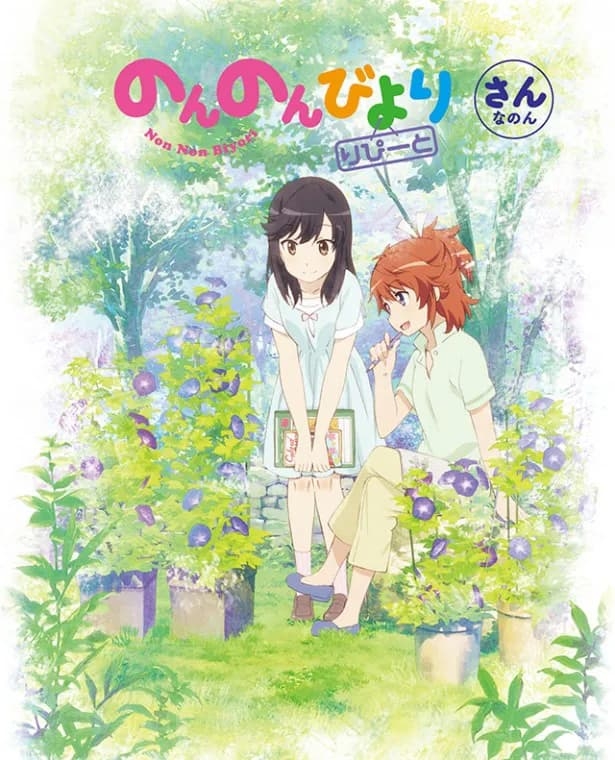
Asahigaoka isn't just a backdrop where cute things happen. The place functions like its own character with its own rules. You see this immediately when Hotaru shows up from Tokyo and realizes she's the only new kid in a school with five total students. The building itself is falling apart, with leaking roofs and floorboards that creak, and the teacher sleeps at her desk half the time. That detail about the infrastructure matters because it grounds everything. This isn't some idealized farm town from a postcard. It's a real place that's a little bit broken but still works.
The background art kills it here. Apparently, Silver Link had artists in Vietnam paint these gorgeous pastoral scenes that somehow feel more Japanese than actual Japanese cities. You can see the texture in everything, from the rice fields to the candy store that looks like it hasn't changed since 1970. The colors merge together in this painterly way that makes you feel the humidity. Some academic paper I saw called this creating "place" versus "non-place," and that's just fancy talk for saying the show makes you feel like you could walk into the screen and know exactly where you are. Background art analysis
What hits different is how the show treats time. You get all four seasons properly, not just a beach episode and a Christmas episode. Renge hangs teru teru bozu dolls when it rains too long. They dig for potatoes in autumn. The snow piles up so high they build tunnels through it. This isn't just seasonal decoration. The show understands that when you live somewhere rural, the weather dictates your life. You can't just go to the mall when it snows three feet. You adapt, and you find weird ways to have fun with what you've got.
Renge Is a Perfectly Weird First Grader
Every other anime treats first graders like they're either tiny adults or complete idiots. Renge Miyauchi is neither. She's got this weird logic that only makes sense if you've spent time around real six-year-olds, where they know facts about bugs but can't figure out basic social cues. Her whole deal with the recorder makes me laugh because it's true, little kids will play the same bad song fifty times and think they're performing a masterpiece. When she says "nyanpasu" instead of good morning, it isn't just a cute catchphrase. It's how kids actually invent words when they're bored.
The voice acting sells it. Koiwai Kotori does this thing where Renge sounds curious but also kind of deadpan, like she's observing aliens instead of her friends. You can't dub that. I don't care how good your English voice actors are, you can't translate the specific rhythm of a Japanese first grader's speech patterns. The show relies heavily on these quiet moments where Renge just stares at something, and the sound design fills in the gaps with cicadas or wind. Character discussion
People call her the mascot of the show, but that undersells how much she carries the emotional weight. There's this episode where she learns to ride a bike, and it's shot like some epic achievement even though it's just a kid pedaling down a dirt road. That's the whole trick of the series. It makes small victories feel huge because for a six-year-old, they are huge. When she makes friends with the older girls, it doesn't feel forced like in other CGDCT shows. It feels like she's tagging along because there's nobody else her age, which is exactly what happens in real rural communities.
The Sound Design Is Half the Experience
If you watch this with the volume off, you're missing the point. The audio in Non Non Biyori does heavy lifting that most anime ignores. Hiromi Mizutani's soundtrack uses a lot of woodwinds and acoustic guitars that sound like they're being played on that porch I mentioned earlier. But it's the ambient noise that really gets me. You hear the river bubbling, the specific sound of summer insects, the way wind moves through grass. It's not just background noise. It's the whole atmosphere.
This is why I get annoyed when people ask about the dub. There isn't one, and there shouldn't be. The Japanese voice acting has these specific cadences that don't translate, especially the way the characters pause or talk over each other. Komari has this tsundere lilt that's annoying in exactly the right way, like she's trying to sound mature but her voice cracks. Natsumi sounds lazy even when she's excited. These are choices that took thought, not just line readings.
The opening song, "Nanairo Biyori," sounds like a kids' song but isn't, which fits the seinen demographic perfectly. And the ending, where the voice actresses sing together, feels like they're actually friends instead of performers. That authenticity matters because fake friendship vibes ruin slice of life shows faster than anything. Seasonal review
Hotaru's Weird Crush and Other Real Kid Stuff
Hotaru Ichijo should be boring. She's the transfer student from Tokyo, the straight man, the normal one surrounded by weirdos. But the show gives her this crush on Komari that's simultaneously wholesome and deeply strange. She makes plush dolls of her "chibi senpai" and hides them in her room. In any other show, this would be played for creepy yuri bait or blackmail comedy. Here, it's just... what happens when you're eleven and you don't know how to process liking someone. It's awkward and funny and real.
Komari herself could have been a one-note joke about being short. The show mentions her height complex maybe too often, but it also shows her genuinely trying to be responsible even though she's immature. Her relationship with Natsumi feels like actual sisters, where they fight over stupid things but also cover for each other. Natsumi is the messy one, the tomboy who breaks rules and can't whistle, and she balances out Komari's try-hard energy.
Then there's Suguru, the older brother who literally never speaks. He's just there in the background, sometimes used for visual gags. It's a weird choice that shouldn't work but does because in a school with only five students, the one guy would be an outsider by default. He doesn't get a harem or a tragic backstory. He just exists, quietly, which is probably the most realistic portrayal of a rural teenage boy in anime history.
Three Seasons of Nothing and That's Fine
The first season came out in 2013, then Repeat in 2015, then Nonstop in 2021. That's eight years of waiting for a show where the biggest event is usually someone catching a weird fish. The movie, Vacation, sends them to Okinawa, which expands the world just enough to feel special without breaking the low-stakes formula. Franchise overview
Repeat is interesting because it's not exactly a sequel. It retells some events from different angles and fills in gaps between episodes. Some people call it lazy recycling, but I think it's smart. The show was never about what happens next, so showing the same summer from another perspective just gives you more time in the world. Nonstop adds new characters like Shiori, the policeman's daughter, without upsetting the balance.
I saw someone write a six-thousand-word essay about why this show works better than Glasslip, and honestly, they're right. Glasslip tried to be mysterious and supernatural and forgot to make the characters interesting. Non Non Biyori commits to being small. It doesn't introduce magic or sudden drama. When they deal with death, like when Renge finds a dead rabbit or they lose pets, it's handled with the confusion and sadness that actual kids feel, not melodramatic crying scenes. Detailed essay comparison
Why This Works as Seinen
Despite looking like a kids' show with bright colors and funny faces, this is seinen manga published in Monthly Comic Alive. That demographic matters because it explains the pacing. This isn't made for children with short attention spans. It's made for adults who want to remember what it felt like to have nothing to do on a Tuesday afternoon.
The seinen label also explains why the comedy hits different. It's not loud or slapstick. It uses long pauses and awkward silences. Kazuho, the teacher, is incompetent in a way that's funny to adults who've had bad bosses, not funny to kids who think teachers are authority figures. The jokes about the school being underfunded and the roof leaking land differently when you pay taxes.
The candy store lady, Kaede, graduated from the same school years ago and came back to run her family's shop. That's a specific rural reality, where you either leave forever or return because there's nowhere else to go. The show doesn't judge her for it. It just shows her being kind to Renge and occasionally looking tired in a way that suggests she knows exactly how small her world is and has made peace with it.
The Technical Stuff That Matters
Silver Link animated this, and they usually do mid-tier work, but they went hard on the backgrounds here. The detail in the trees and water is ridiculous. There's this scene in the first episode where Renge walks to school alone, and the way the light filters through the leaves looks like a painting. Then a 3D bus drives by and looks terrible, which is funny because even when they spend money on the pretty stuff, they still can't make vehicles look right.
The character designs by Atto are distinctive without being overdesigned. Everyone has normal hair colors except Renge's purple twintails, which somehow don't look out of place. The eyes are big but not creepy. They look like people you might know, not dolls. That grounded design choice keeps the show from feeling too saccharine when they do emotional scenes.
And yeah, the show uses that "mono no aware" thing, which is just a fancy way of saying they make you feel sad about nice things because you know they end. Cherry blossoms fall. Summer vacation ends. Renge will eventually graduate from the one-room schoolhouse. The show lets you feel that bittersweetness without spelling it out, which is rare.
Final Thoughts on Healing
Non Non Biyori isn't perfect. Some of the gags repeat too much. Komari's height complex gets old. The episodes where nothing much happens might put you to sleep if you're looking for stimulation. But as an example of iyashikei, of anime that actually heals your stress instead of just distracting you from it, there's nothing better.
The anime works because it doesn't try to be important. It doesn't have a message about friendship or growing up. It just shows you these kids living their lives in a place that's real enough to miss when you stop watching. When Hotaru finally feels like she belongs, or when Renge plays her recorder out of tune, or when they all jump in the river together, you're not watching a story. You're visiting a place that exists somewhere, somehow, and that feels like enough.
Three seasons and a movie later, the show never betrayed its premise. It stayed quiet, stayed rural, and stayed honest about what it's like to be bored and happy at the same time. That's harder to pull off than it looks, and it's why this series will outlast flashier shows that tried to be deeper than they were. Genre analysis
If you haven't watched it, start with season one and don't binge it. Watch one episode, then go outside and listen to the bugs. That's how it's meant to be experienced.
Frequently Asked Questions
What genre is Non Non Biyori?
It's called iyashikei, which means healing. The show focuses on relaxation and atmosphere rather than plot or conflict.
How many seasons of Non Non Biyori are there?
Three TV seasons titled Non Non Biyori, Non Non Biyori Repeat, and Non Non Biyori Nonstop, plus one movie called Non Non Biyori Vacation.
Who is Renge in Non Non Biyori?
Renge is a first grader known for her purple hair, catchphrase nyanpasu, playing the recorder badly, and being oddly philosophical for her age.
Who created Non Non Biyori?
Atto, who also did the character designs for High School Fleet.
What studio made Non Non Biyori?
It's animated by Silver Link and directed by Shinya Kawatsura.