
Okabe Rintarou's Brutal Attempts to Save Mayuri Shiina
Okabe Rintarou didn't just fail to save Mayuri Shiina once or twice. He failed hundreds of times. Most people who watched the anime think he tried maybe a dozen times max, jumping back, trying a different route, watching it fail, then trying again. The reality is way darker than that. According to supplemental materials like Annularly-Chained Ouroboros, which novelizes the visual novel events, Okabe time-leaped approximately 450 times trying to prevent Mayuri's death in the Alpha attractor field. That's not a few bad days. That's over a year of accumulated time watching your childhood friend get run over by trains, shot by agents, hit by cars, or just collapse from brain hemorrhages while you scream and can't do a thing about it.
The anime compresses this into a montage for obvious reasons. Nobody wants to watch 24 episodes of the same girl dying in different ways. But understanding the sheer volume of attempts is crucial to understanding why Okabe is so broken in Steins;Gate 0, why his PTSD is so severe, and why the Reading Steiner ability feels more like a curse than a superpower. He didn't just lose Mayuri once. He lost her nearly every single day for roughly 487 days straight, assuming each leap covered about 26 hours of trying, failing, and leaping back again. The math is crushing. He experienced almost 1.3 years of continuous failure while everyone around him remained oblivious, living their single timeline lives.
This isn't about a guy who got unlucky a few times. This is about a guy who fought the fundamental laws of the universe, specifically the Alpha world line's convergence, and lost 450 times in a row before he finally accepted he needed to change the game completely. The Alpha attractor field, which covers divergence numbers between 0.0% and 0.99%, has Mayuri's death hard-coded into it. It doesn't matter if you push her out of the way of the train today. Tomorrow she falls off a building. The day after she gets hit by a car. The universe corrects itself. Her death is a fixed point, and Okabe spent nearly a year and a half learning that lesson the hardest way possible.
The Convergence Trap That Broke Him
People misunderstand how world lines work in Steins;Gate. They think it's parallel universes where everything happens simultaneously. It's not. There's one active world line at a time, and the universe actively resists changes to certain events through convergence. Mayuri's death in the Alpha line isn't just likely. It's guaranteed. Okabe tried everything. He locked her in the lab. She died of a brain aneurysm. He took her to the hospital. She got shot by a Rounder on the way. He tried to flee the city with her. The car crashed. Every single attempt ended with her empty eyes staring at him while he held her body.
The messed up part is that Mayuri knew something was wrong. She kept having dreams, or rather memories bleeding through from other world lines, where she died. She'd tell Okabe about the dreams where she was falling or getting hit by something, and he'd have to smile and pretend he didn't know exactly which death she was remembering. That psychological weight added to his burden. He wasn't just failing to save her. She was starting to remember failing to survive.
Suzuha tried to warn him. She explained that convergence is like a heavy stone rolling downhill. You can put twigs in its path, maybe slow it down slightly, but the stone keeps rolling toward the same destination. In the Alpha world line, SERN dominates the future. Mayuri's death is the event that keeps Okabe desperate enough to keep working on the time machine, which eventually leads to SERN's dystopia. Her death is the linchpin that ensures the future stays dark. The universe doesn't care about Okabe's feelings. It cares about causality, and Mayuri dying is required for the Alpha line to sustain itself.
The Math of Misery
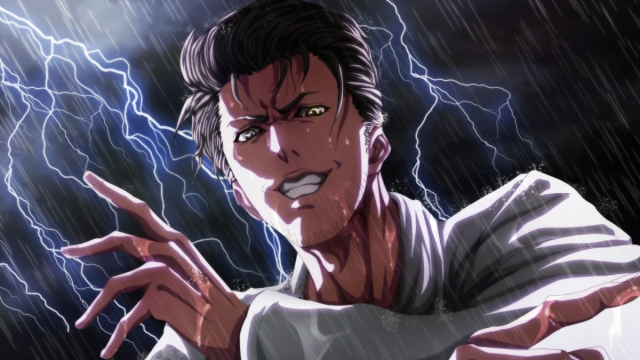
When Okabe used the Time Leap Machine, he wasn't physically traveling back. He was sending his memories from the present to his past self. The machine could only send him back 48 hours at maximum, though apparently some leaps were shorter, around 26 hours according to calculations from fans who analyzed the timeline. So every time he failed, he had to live through those hours again, watch the events leading up to her death, try something different, fail, and then leap again.
Imagine waking up knowing exactly how your best friend is going to die in the next 24 hours. You try to stop it. You fail. She dies in your arms. Then you jump back and do it again. 450 times. You start memorizing every detail. The way the light hits the street before the train hits. The exact sound of the gunshot. The specific look of confusion on her face when the aneurysm strikes. You become an expert on the physics of her death while remaining powerless to prevent it. That's the hell Okabe lived through.
The visual novel makes it clear that this took a massive toll on his cognition. He started having trouble distinguishing between which attempt he was on. Memories blurred together. He stopped caring about his own physical health because what was the point? If he died, he'd just leap back anyway, or worse, he'd fail to save her and have to live with it. The anime shows him getting desperate and aggressive, but the source material implies he was approaching actual brain damage levels of stress and temporal displacement.
When the Mad Scientist Cracked
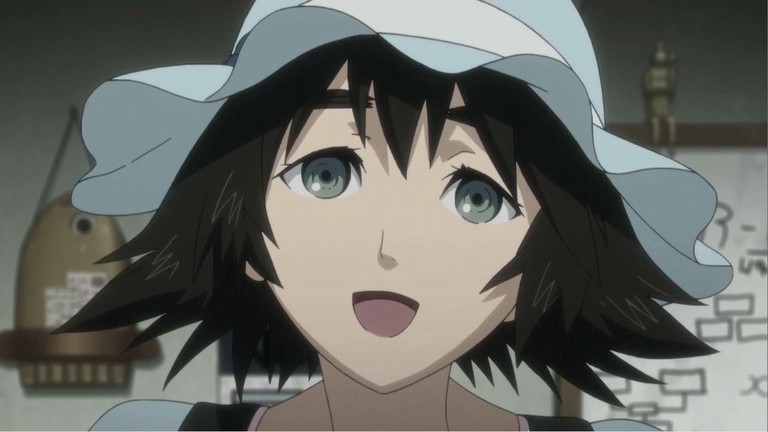
There's a specific scene that hits different once you understand the 450 attempts context. It's when Kurisu finds Okabe in the Radio Kaikan building, after he's tried to fight the Rounders himself and gotten beaten down. He's ready to leap again, to keep fighting, and she stops him. She fixes his torn lab coat, and he just breaks down crying. In the anime, this feels like he's upset after a few failures. In reality, this is a man who has been fighting a war against time for over a year, non-stop, and he's finally hitting a wall where his body and mind can't maintain the Hououin Kyouma persona anymore.
The Hououin Kyouma character, the mad scientist shtick he put on, was originally a defense mechanism to make life more interesting and to cover his social awkwardness. But during the Mayuri rescue attempts, it became armor. If he was the insane mad scientist fighting the Organization, he wasn't Rintarou Okabe watching his childhood friend die for the 300th time. The persona kept him functional. But 450 deaths wore that armor down to nothing.
Steins;Gate 0 shows us what happens when that armor gets permanently damaged. The Beta world line Okabe, the one who failed to save Kurisu, is the Sad Scientist. He's what happens when you take the guy who went through the Mayuri death loops and then add the trauma of killing Kurisu himself with his own hands. That version of Okabe gives up for a while because he knows exactly how the universe works now. He's seen behind the curtain, and he knows that some convergences can't be fought with brute force and time leaps.
Why D-Mails Weren't the Answer
People always ask why he didn't just use the D-Mail system to save Mayuri instead of the Time Leap Machine. D-Mails change the past by sending texts back, altering the world line divergence. The problem is that in the Alpha attractor field, the divergence needs to shift beyond 0.99% to escape Mayuri's death convergence. The D-Mails they had access to could only make small changes, shifting the line maybe 0.1% or 0.2% at a time. Every shift still landed squarely in Alpha territory where Mayuri dies.
To break out of Alpha entirely, Okabe needed to erase the first D-Mail he ever sent, the one about Kurisu being stabbed. That would shove the world line into the Beta attractor field, where Kurisu dies instead. That's the cruel joke of the whole series. To save Mayuri, he has to let Kurisu die. To save Kurisu, he has to find a way to trick the universe into accepting a world line where neither dies, which shouldn't be possible according to attractor field theory.
During those 450 attempts, Okabe tried using D-Mails occasionally, but they kept landing in sub-branches of Alpha. He'd shift from 0.571046% to 0.571015%, and Mayuri would still die, just in a slightly different location or time. The universe is annoyingly persistent about convergence. It doesn't care about your feelings. It cares about maintaining the causal loop that leads to SERN's dystopia.
The Choice That Broke the Loop
The real hell wasn't just watching Mayuri die. It was realizing that the only way to save her was to sacrifice Kurisu. When Suzuha explains that erasing the first D-Mail will move them to Beta, where Kurisu dies and Mayuri lives, Okabe is faced with a choice no one should have to make. He's already traumatized from 450+ Mayuri deaths. Now he has to choose between stopping that cycle and killing the woman he's fallen in love with during those repeated time loops.
Kurisu figures it out before he does. She realizes that Okabe's been protecting her while trying to save Mayuri, and that the only solution involves her own death. The scene where she accepts this, where she tells him to let her die so Mayuri can live, is what finally stops the time leap cycle. Okabe realizes he can't keep looping forever. He's going to have to pick one of them, and he's going to have to live with that choice for the rest of his life.
Of course, we know he finds a third option eventually. Operation Skuld, the plan he sends back from the future via video D-Mail, involves faking Kurisu's death to trick the world line into accepting a divergence where both can live. But that solution came from a future Okabe who had already failed, who had already given up, and who had already lost his mind for a while. The Okabe who went through the Mayuri death loops didn't know about the third option yet. He just knew he was beaten.
Steins;Gate 0 and the Missing Piece
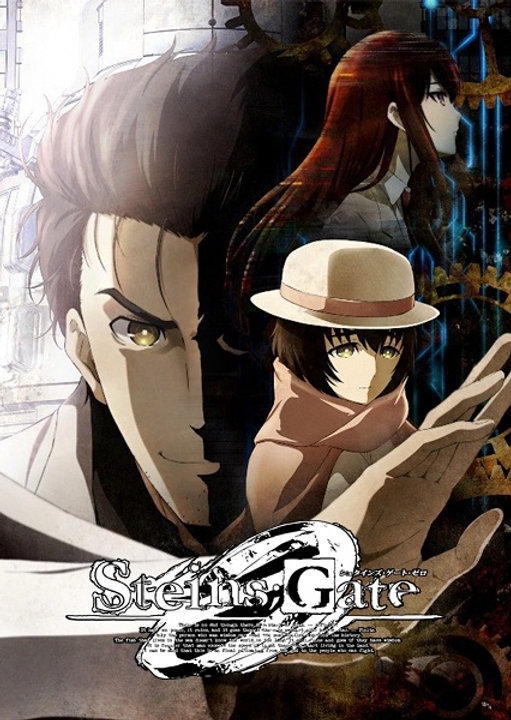
Steins;Gate 0 isn't just a side story. It's the roadmap for how Okabe eventually succeeded. The Beta world line Okabe, the one who gave up after killing Kurisu, eventually figures out the
Frequently Asked Questions
How many times did Okabe actually time leap to save Mayuri?
According to the novelization Annularly-Chained Ouroboros and Steins;Gate 0 references, Okabe time-leaped approximately 450 times trying to save Mayuri in the Alpha world line. This means he experienced roughly 1.3 years of watching her die repeatedly while accumulating memories of each failure.
Could Okabe have saved Mayuri while staying in the Alpha world line?
No. Mayuri's death is a convergence point in the Alpha attractor field (0.0% to 0.99% divergence). The universe actively corrects any changes Okabe makes to ensure she dies, as her death is causally necessary for SERN's future dystopia. Only by leaving the Alpha field entirely could she survive.
What is Reading Steiner and why does it matter for Okabe's trauma?
Reading Steiner is Okabe's ability to retain memories across world line shifts. While others only remember the current timeline, Okabe remembers every death, every failure, and every timeline he changes. This is why he's so traumatized, he carries the weight of hundreds of Mayuri's deaths that no one else knows happened.
Why doesn't Okabe's Reading Steiner activate in Steins;Gate 0 when he sends the video D-Mail?
In Steins;Gate 0, Okabe's Reading Steiner doesn't activate when sending the video D-Mail because he's not changing the past for himself. He's sending information to his past self in 2010. The 2025 Okabe in S;G0 is destined to die or disappear by 2025 in the Beta line, so there's no future version to overwrite. He stays in 2025/2036 while the timeline shifts around the 2010 version of himself.
Is Steins;Gate 0 necessary to understand the original ending?
Not strictly, but it adds crucial context. S;G0 shows the Beta world line where Okabe failed to save Kurisu, became depressed, and eventually devised Operation Skuld. This explains how the original Okabe got the video message telling him how to deceive the world. Without S;G0, the ending of the original feels like a deus ex machina. With it, you see the suffering that created the solution.