
Outbreak Company Anime Plot and Themes Hide A Cynical Truth
Outbreak Company anime plot and themes look like standard harem fluff on the surface but they hide something way more cynical underneath. You think you're watching a show about a lucky otaku who gets to teach elves about manga and maybe collect a maid harem along the way. You're wrong. This series is a brutal takedown of how developed nations use pop culture to exploit weaker countries while pretending they're doing them a favor. The show wears the skin of a comedy but underneath it's all about cultural imperialism and the messed up power dynamics that happen when one civilization decides to civilize another through media consumption.
Shinichi Kanou starts as a shut-in NEET who failed at normal life after his childhood friend rejected him for being too nerdy. He answers a sketchy job posting that asks for obscure anime knowledge and ends up getting drugged by a government agent named Matoba. When he wakes up he's in the Holy Eldant Empire, a medieval fantasy world populated by elves, dwarves, dragons, and actual magic. The Japanese government found a portal to this place and rather than invading with tanks and guns like in that other show Gate, they sent a loser with a suitcase full of manga. Shinichi's official title is General Manager or Otaku Missionary or whatever sounds official that week, but his real job is to make the locals addicted to Japanese pop culture so they'll open trade routes and let Japan strip mine their resources. It's messed up. The show doesn't hide this either. Matoba straight up admits in the final episodes that Japan wants to monopolize the portal and control the Eldant economy through cultural dependency. You can see this cultural imperialism analysis for more on how the show frames this exploitation.
The Eldant Empire looks like your standard fantasy setting with castles and magic but the social structure is rotted through with racism and classism. You've got the ruling human class at the top, pureblood elves and dwarves somewhere in the middle depending on who you ask, and then half-breeds like Myucel Foaran at the very bottom getting treated like garbage. Myucel works as Shinichi's maid and she's a half-elf which means she faces discrimination from everyone. She hides her ears at first because people look at her like she's trash. Shinichi doesn't care about any of that stuff though. He treats her like a person from day one and teaches her Japanese and she ends up being his most loyal supporter. But here's where it gets weird. The show uses her position to explore how cultural exportation can look like liberation on the surface but still serves the colonizer's interests.
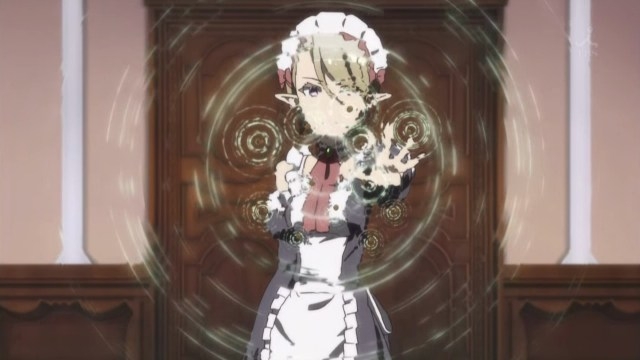
Myucel isn't just a cute maid with a crush. She's a character who represents the complicated position of the colonized subject who benefits from the colonizer's education while being trapped in a system that still exploits her homeland. She learns Japanese faster than anyone and becomes essential to Shinichi's mission but she's still serving the Japanese government's interests even as she gains personal agency. The show doesn't let you forget that she's a half-elf in a world that hates her for existing. Her romance with Shinichi is sweet but it's also part of the soft power package. She falls in love with the culture that treats her better than her own society does which creates a dependency loop. This series recap talks more about how the show handles her character development compared to typical harem stereotypes.
Petralka Anne Eldant III is the sixteen year old ruler of the empire and she looks like a child but carries the weight of a nation. She's got that tsundere thing going on where she acts angry and demanding but really she's insecure and lonely. Her parents died in some power struggle and she ended up on the throne surrounded by advisors who want to control her. She latches onto Shinichi because he doesn't treat her like a fragile monarch. He treats her like a person who can enjoy manga and anime. She gets jealous of Myucel constantly because Myucel can speak Japanese better and spends more time with Shinichi. Episode 8 is the standout moment where Petralka goes full hikikomori and hides in a crate to escape her duties. It's a weird episode that slows everything down to explore the pressure of leadership and how otaku culture offers an escape from reality. But even this plays into the colonial angle. She's escaping her responsibilities as a ruler to consume foreign media which makes her less effective at resisting foreign influence.
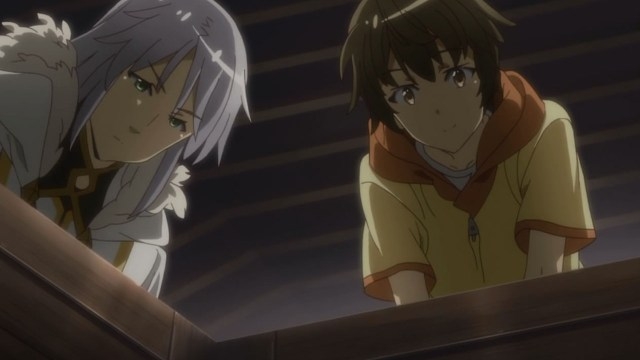
The school setting takes up the middle chunk of the series and it's where the cultural clash becomes most obvious. Shinichi sets up a school to teach noble kids from different races about anime and manga. You've got elf students and dwarf students who historically hate each other sitting in the same classroom arguing about whether mecha or magical girl shows are better. On the surface this looks like progress. The Japanese media is bringing everyone together and ending racism through shared consumer culture. But the show keeps reminding you that this is calculated. Japan isn't doing this out of kindness. They're creating a market. They want these kids to grow up consuming Japanese products so the empire becomes economically dependent on imports from Earth.
The students themselves represent the future of Eldant's compromised independence. Loic Slayson is a pureblood elf who starts off as a typical arrogant noble looking down on dwarves. Romilda Gardo is a dwarf girl who carries a hammer and expects to be treated as a craftsman. They hate each other at first because their species have been fighting for generations. Shinichi makes them play soccer together in Episode 6 and they start bonding over shared physical activity and eventually shared media consumption. By the end they're arguing about whether giant robots or magical girls would win in a fight instead of killing each other over ancestral grudges. This looks like progress. Racism is bad and ending it is good. But the method is insidious. They're not learning to respect each other as equals. They're learning to unify as consumers of Japanese products. Their new shared identity is as otaku first and Eldant citizens second.
Minori Koganuma serves as Shinichi's bodyguard and she's this muscular JSDF soldier who happens to be a massive fujoshi. She's always shipping Shinichi with Galius, the knight captain, and she's got this weird running gag where she sees romantic tension between men where there isn't any. But she's also terrifyingly competent in combat. She beats up armed attackers with her bare hands and serves as the government's watchdog to make sure Shinichi stays on mission. She represents the military backing behind the cultural soft power. Even when the approach seems gentle and friendly there's always a gun in the room. Her fujoshi tendencies aren't just comic relief. They represent how Japanese media consumption changes the way people view reality. She sees romantic subtext between Shinichi and Galius because she's read too many boys love manga. Galius is Petralka's cousin and the captain of the guard. He's a serious knight who takes his duty seriously but even he gets drawn into the culture. By the end he's reading BL manga himself and starts acting differently toward Shinichi. It's played for laughs but it's another example of cultural conversion. The tough military man is softened by imported media. He stops being a potential threat to Japanese interests because he's too busy shipping his own cousin's love interest with fictional characters.
Elbia Hanaiman starts as a spy from the neighboring Bahairam Kingdom but gets caught and almost executed before Shinichi intervenes. She's a werewolf with big ears and she acts like a dog half the time, chasing balls and getting distracted by food. The show uses her for comedy relief but her arc is about conversion. She goes from enemy spy to loyal retainer because Shinichi shows her kindness through otaku culture. She becomes an artist drawing manga style illustrations instead of traditional Eldant landscapes. This is played as a happy development but it's also an example of cultural displacement. She abandons her traditional art forms to adopt Japanese styles because that's where the value is now. Her character details) show how thoroughly she transforms from a threat to an asset for the Japanese mission.
The magic system in Eldant runs on elemental affinities and linguistic components. Spells require specific words and gestures. But the Japanese technology bypasses all that. The translation rings let people speak across language barriers instantly without learning the actual grammar or culture behind the words. The tablets and books Shinichi brings don't require magical talent to use. This creates a hierarchy where Japanese tech is more accessible than native magic, further cementing dependency. Why learn fire magic for years when you can just buy a Japanese space heater?
Outbreak Company Anime Plot and Themes Go Deeper Than You Think
The final two episodes drop the comedy almost entirely and become a political thriller. Terrorists attack the school because they see what Japan is doing. They're not wrong. They recognize that the spread of otaku culture is erasing traditional Eldant values and creating a puppet state. The Japanese government tries to have Shinichi killed once he's served his purpose of opening the market. They send in special forces to eliminate him and the students. Petralka's maids end up fighting JSDF soldiers to protect them. This is where the mask comes off completely. Matoba reveals that Japan never cared about cultural exchange. They wanted resources and they used anime as the wedge to get their foot in the door. Shinichi has to blackmail the government by threatening to expose the portal to other nations unless they agree to fair trade and stop the exploitation.
The terrorist group that attacks in Episode 11 isn't made up of cartoon villains. They're traditionalists who see what's happening to their culture and they panic. They've watched the youth abandon traditional art forms for manga. They've seen the ruler obsessing over foreign cartoons instead of governing. They know the Japanese are after their resources. Their methods are violent and wrong but their diagnosis of the problem is accurate. The show gives them valid grievances which makes the conflict messy and interesting. When they take hostages at the school it's because they see the school as the brainwashing center it actually is. Shinichi has to confront that his students are in danger because of his actions. The JSDF response is to send in commandos to kill everyone including Shinichi since he's outlived his usefulness as a disposable missionary. The government was always going to betray him. They never cared about his ideals of equality or his dreams of a multicultural otaku paradise. They wanted the oil or whatever magical resources Eldant has and they used him to soften the target. You can check the episode summaries to see how the plot develops into this political mess.
The animation by Feel holds up pretty well with shiny character designs and solid background work. The fantasy elements look good and the magic effects are decent. Some people complain about the glowing hair and skin textures looking weird but it fits the overly bright aesthetic of the show. The opening song Univer Page is catchy and the ending Watashi no Houseibako fits the mood. But the visuals serve the story's dual nature. Everything looks bright and cute and moe even when the subject matter is about exploitation and colonialism. That's the point. The moe aesthetic is the candy coating on the bitter pill.
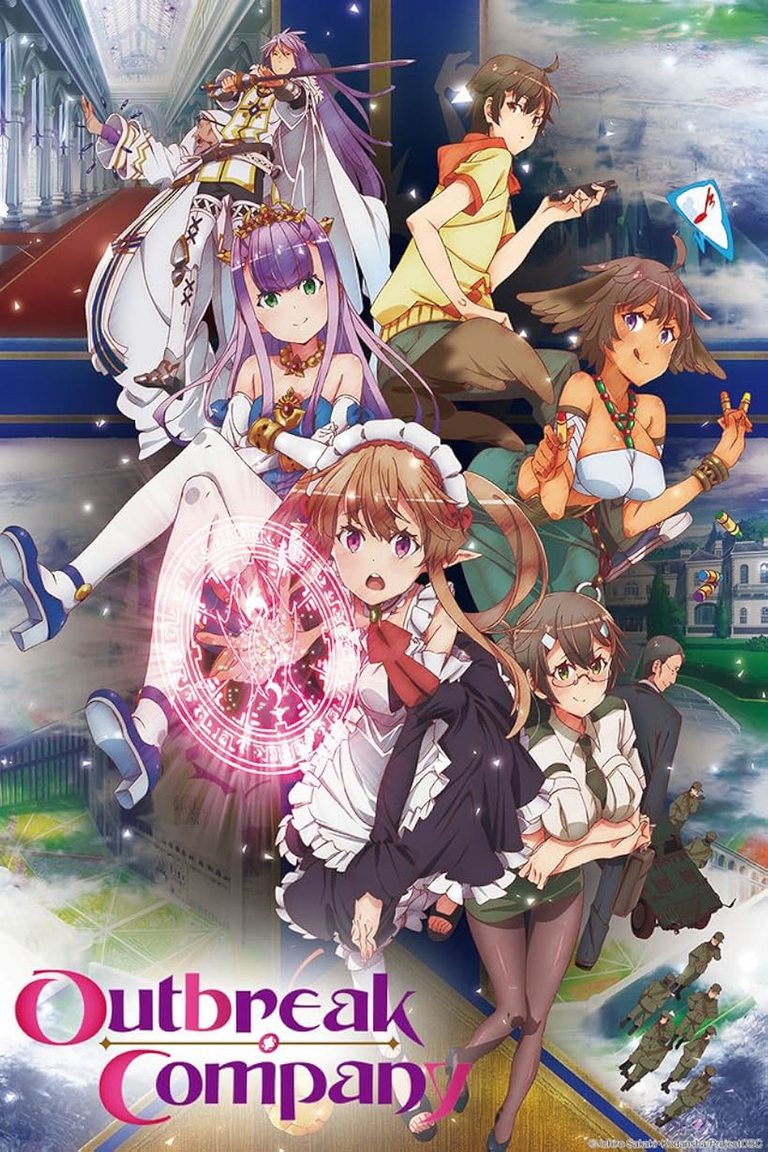
Outbreak Company anime plot and themes matter because they ask whether spreading culture is always good or if it's just another form of control. The show doesn't give easy answers. Shinichi genuinely believes he's helping people by giving them access to education and media that challenges the rigid caste system of Eldant. He teaches half-elves and dwarves to read. He challenges the racism of the nobility. But he's still working for a government that wants to economically dominate this world. The students who learn Japanese and fall in love with anime are being prepared for a future where they serve Japanese interests. Even the romance between Shinichi and Myucel is complicated by the power imbalance between colonizer and colonized.
The series got overlooked when it aired in Fall 2013 because it looked like generic harem trash. People saw elves and maids and assumed it was just fanservice. But it's one of the few isekai shows that actually engages with the political implications of cross world contact. Most isekai protagonists just accept that they're special and start building harems without thinking about how their presence disrupts the local economy or social structure. Shinichi has to confront the fact that his presence is destructive even when he's trying to be nice. The show compares itself to Gate which had the JSDF roll in with guns and tanks to solve problems with military force. Outbreak Company argues that cultural imperialism is slower but just as effective at subjugating a population.
The ending isn't entirely happy despite the wedding bells and graduation ceremonies. Shinichi stays in Eldant and starts a real relationship with Myucel. He gets the government to agree to fairer terms by threatening to expose the portal to other nations like America or China which would ruin Japan's monopoly. But the damage is done. The students are already converted. The culture has already shifted. Even with better trade deals the power imbalance remains because Eldant now needs Japanese media to function. They've lost the ability to imagine their future without Japanese products. That's the real tragedy. Shinichi saved them from slavery and racism but delivered them into consumerism and cultural subjugation.
If you're looking for a show that combines harem comedy with genuine political commentary this is it. It's not perfect. The pacing drags in the middle and some of the humor doesn't land if you don't know the otaku references. The final episodes feel rushed compared to the slow burn of the school arc. But it's worth watching for Episode 8 alone where Petralka becomes a shut-in and Shinichi has to coax her back to her duties. That episode shows what the series could have been if it had fully committed to character drama over harem antics.
Outbreak Company anime plot and themes stick with you because they expose how soft power works in the real world. Japan does exactly this kind of cultural exportation through the Cool Japan initiative. They use anime and manga to build goodwill and economic ties with other countries. The show asks whether that's really any better than showing up with battleships. At least with battleships you know you're being invaded. With cultural exports you start wanting the invasion. You start thinking the invaders are cool and their way of life is better than yours. That's what happens to the Eldant Empire. By the end they've got teenagers cosplaying as magical girls and drawing fan art while their resources get shipped to Japan. And they're happy about it. That's the scariest part.
Frequently Asked Questions
Is Outbreak Company just another harem anime?
No, it's a trap. While it has harem elements with Myucel and Petralka competing for Shinichi's attention, the show is actually a critique of cultural imperialism. The Japanese government uses Shinichi to spread anime culture as a tool to economically dominate the Eldant Empire. The final episodes reveal dark political motives behind the seemingly fun cultural exchange, making it more of a colonialism allegory than a standard harem comedy.
What is the main theme of Outbreak Company?
The main theme is cultural imperialism and soft power. The show explores how developed nations use pop culture, media, and consumer goods to create dependency in less developed societies. It examines the ethics of imposing foreign values, even seemingly benign ones like anime and manga, as a method of economic control. Secondary themes include racism and classism through the treatment of half-elves like Myucel, and the conflict between tradition and modernization.
Who does Shinichi end up with in Outbreak Company?
Shinichi confesses to Myucel and she becomes his official girlfriend by the end of the series. While Petralka has feelings for him too, Shinichi chooses Myucel, the half-elf maid who learned Japanese from him. Their relationship is complicated by the power dynamics of colonizer and colonized, but the show treats their romance as genuine despite these problematic undertones.
Why does the tone change in the last episodes of Outbreak Company?
The first ten episodes focus on comedy and school activities as Shinichi teaches students about anime and manga. The final two episodes abruptly shift to a political thriller tone when terrorists attack the school to resist cultural colonization, and the Japanese government betrays Shinichi by sending commandos to kill him. This tonal whiplash was criticized by some viewers as rushed, but it serves the story's purpose of revealing the dark reality behind the cultural mission.
Is the Outbreak Company light novel different from the anime?
Yes, the anime adapts volumes 1-4 and 7 of Ichiro Sakaki's light novel series but rearranges and condenses events. The anime has a semi-original storyline and ends differently than the light novels which continued for 18 volumes. Key differences include how certain plot threads resolve and the depth of world-building regarding Eldant's politics and the Japanese government's true intentions.