Real Anime Recommendations for Bleach Fans
You finished Bleach and now you are staring at your screen wondering what hits that same spot. Finding good anime like Bleach is not just about sword fights and monsters. It is about that specific vibe where a teenager gets thrown into a supernatural meat grinder and comes out swinging. You want the stylish power ups, the weird spiritual lore, and that feeling of a hidden world lurking just behind the convenience store.
Most recommendation lists just throw random shonen at you and call it a day. That is lazy. Bleach hit different because it mixed high school drama with genuinely creepy supernatural horror and then threw in some of the slickest sword combat ever animated. You felt the weight of Ichigo's bankai. You bought into the whole Soul Society bureaucracy thing even when it made no sense. So when I say something reminds me of Bleach, I mean it actually carries that DNA, not just that it is long and has fighting.
I am going to break down the series that get it right. Some are obvious. Some are not. But they all capture that specific alchemy of cool powers, emotional stakes, and that slightly edgy aesthetic that made Bleach a cornerstone of the Big Three.
Jujutsu Kaisen Is Basically Bleach 2.0
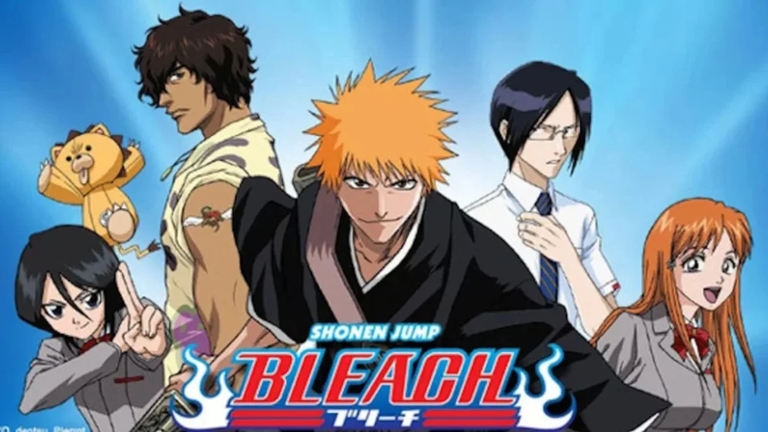
If you want the closest thing to a modern Bleach, you watch Jujutsu Kaisen. I am not just saying that because they both have monsters and swords. Gege Akutami, the creator of JJK, has openly cited Bleach as a massive influence, and it shows in every frame. You have got Yuji Itadori, a high schooler who gets dragged into the world of Jujutsu sorcerers after eating a cursed object, which parallels Ichigo becoming a Substitute Shinigami after Rukia transfers her powers. Both kids start as normal guys who suddenly have to balance homework with fighting invisible monsters that want to eat people.
The comparisons run deeper than just the setup. The Jujutsu High system mirrors the Soul Society structure with its ranked sorcerers and specialized techniques working like the Gotei 13 squads. Satoru Gojo gives off major Kisuke Urahara vibes, that overpowered mentor who acts goofy but knows way more than he lets on. Even the cursed energy system feels like a refinement of spiritual pressure, with domain expansions giving the same kind of visual impact as bankai releases. The animation by MAPPA captures that same fluid, stylish combat that Studio Pierrot managed in Bleach's best moments, all sharp angles and dramatic lighting.
What really seals it is the tone. JJK has that same blend of dark horror and shonen hype, where characters can crack jokes one minute and get dismembered the next. The curses feel like Hollows, these grotesque manifestations of negative emotion that lurk in the background of everyday life. If you loved the Arrancar arc or the early Substitute Shinigami stuff, Jujutsu Kaisen is the natural next step.
The Other Big Three Members
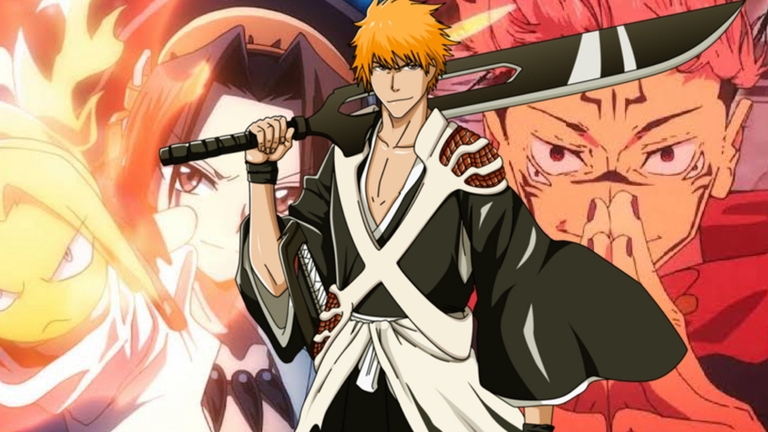
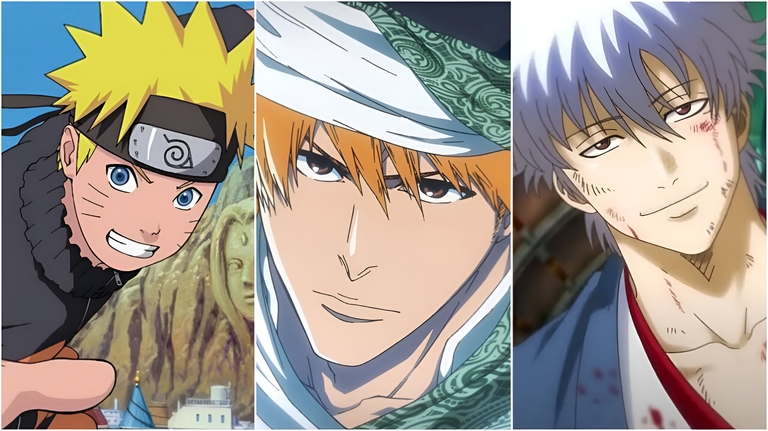
You cannot talk about anime like Bleach without mentioning Naruto and One Piece, the other two legs of the Big Three stool. Naruto is probably the closest comparison in terms of structure, a long running shonen with a massive cast, power escalation issues, and way too much filler. Naruto Uzumaki and Ichigo Kurosaki share that same stubborn refusal to give up, both dealing with inner spirits that could destroy them, the Nine Tailed Fox and Ichigo's inner Hollow respectively. The ninja village system in Naruto operates similarly to the Soul Society, with its hierarchy of Kage and specialized squads mirroring the Captain and Lieutenant structure of the Gotei 13. The action focuses more on hand to hand combat and jutsu rather than swords, but the emotional beats hit the same way, all about protecting nakama and proving your existence.
One Piece is different. It is more about adventure and world building than Bleach's tight focus on combat and spiritual lore, but it shares that same sense of escalating power and iconic character design. The Devil Fruit powers are as varied and weird as Zanpakuto abilities, and the series commitment to long form storytelling with distinct arcs means you get that same satisfaction of watching characters grow over hundreds of episodes. Eiichiro Oda's world building is unmatched, creating mysteries that last decades, which is something Bleach tried with its own lore but never quite managed with the same consistency. If you want the scale of the Soul Society arc but stretched over a thousand episodes, One Piece delivers.
Yu Yu Hakusho Did It First
Before Bleach existed, Yu Yu Hakusho perfected the formula of a teenage delinquent fighting supernatural threats. Yusuke Urameshi dies saving a kid, gets resurrected as a Spirit Detective, and starts hunting demons that threaten the human world. Sound familiar? That is because Tite Kubo clearly took notes from Yoshihiro Togashi's playbook. The Dark Tournament saga is basically the Soul Society arc's older brother, a massive fighting tournament where the stakes get increasingly brutal and the power levels skyrocket.
What makes Yu Yu Hakusho work is the chemistry between the main crew. Yusuke, Kuwabara, Kurama, and Hiei have that same kind of dysfunctional family dynamic that Ichigo builds with his friends, though admittedly with less romantic tension. The spirit gun and other techniques give the same visual flair as Getsuga Tensho, and the demon classification system feels like a precursor to the Hollow and Arrancar hierarchy. If you liked the early Bleach episodes where Ichigo was just figuring out his powers and fighting random Hollows in Karakura Town, Yu Yu Hakusho gives you that vibe but with a 90s filter and way more attitude.
When Your Weapon Has A Personality
One of Bleach's coolest mechanics was the Zanpakuto, swords that contained spirits reflecting the wielder's soul. If you want more of that weapon partner dynamic, you need to watch Soul Eater and Noragami. Soul Eater takes place at the Death Weapon Meister Academy where students team up with partners who can literally transform into weapons. Maka Albarn wields Soul Eater, a scythe who is also a person, and their relationship evolves through resonance and soul wavelengths, which hits the same notes as a Shinigami learning their bankai. The series has that same gothic aesthetic, with creepy enemies called Kishin that corrupt like Hollows, and a focus on soul collection that mirrors the Soul Society's whole deal.
Noragami is more grounded but shares the concept of gods working with human partners. Yato is a minor god who uses a weapon called Yukine, who is actually the spirit of a dead boy. The bond between god and regalia works like the Shinigami Zanpakuto relationship, where trust and compatibility determine power levels. The series explores Japanese mythology in the same way Bleach explored its own spiritual lore, with a focus on phantoms that are invisible to normal humans, creating that same dual world feeling where the supernatural exists just out of sight.
Dark Religious Horror Aesthetics
Bleach had those moments of genuine creepiness, especially with the early Hollow designs and the whole concept of the Soul Society as a bureaucracy of the dead. If you want that same dark religious vibe, check out D.Gray-man, Blue Exorcist, and Chainsaw Man. D.Gray-man follows Allen Walker, an exorcist fighting demons called Akuma that are created by the Millennium Earl using souls of the dead. The Black Order operates like a darker version of the Soul Society, with exorcists wielding Innocence, weapons that evolve like Zanpakuto. The series has that same gothic horror aesthetic, mixing Christian symbolism with shonen action, and the Noah Family villains are as stylish and threatening as the Espada.
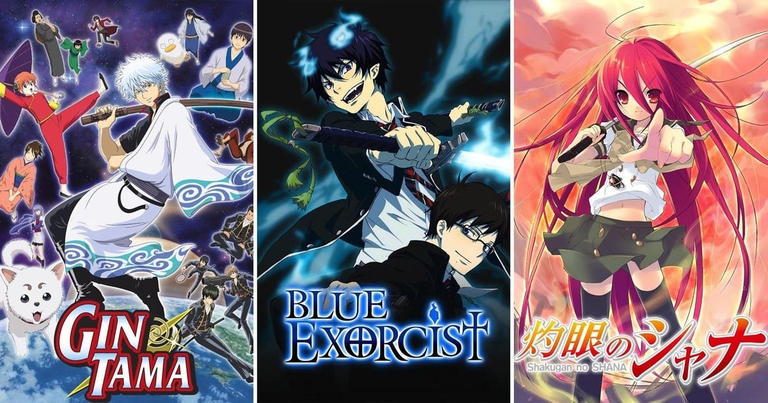
Blue Exorcist puts Rin Okumura, the son of Satan, into an exorcist school called True Cross Academy. The setting gives off major Soul Society vibes, an institution training people to fight demons, with Rin struggling to control his own demonic powers like Ichigo struggled with his Hollow side. It is more school focused but hits those same notes of fighting your own nature while protecting a world that fears you.
Chainsaw Man is the adult version of this concept. Denji becomes a devil hybrid and works for the Public Safety Devil Hunters, an organization that feels as bureaucratic and morally grey as the Soul Society. The devils are similar to Hollows, creatures born from human fear, and the combat is brutal and visceral in a way that recalls Bleach's best moments but with more blood and less regard for the main cast's survival.
Swordsmen In Historical Settings
Bleach's sword combat was always a highlight, so if you want more blade action, look at Demon Slayer, Rurouni Kenshin, and Inuyasha. Demon Slayer is the obvious pick here. Tanjiro Kamado uses Breathing Styles that function like elemental sword techniques, with the flashy animation by Ufotable recreating that same weight and impact that Bleach's fights had. The Demon Slayer Corps has ranks like the Gotei 13, and the Hashira are basically the Captains, elite fighters with distinct personalities and fighting styles. The demons even regenerate like Hollows, requiring specific techniques to kill them permanently.
Rurouni Kenshin is slower and more grounded, set in the Meiji era, but Himura Kenshin's reverse blade sword and his struggle with his past as an assassin mirrors Ichigo's internal conflicts. The swordplay is more realistic but no less stylish, focusing on technique over power levels.
Inuyasha goes the other direction, a classic Rumiko Takahashi series about a half demon with a big sword fighting other demons in feudal Japan. The Tessaiga transforms and gains new abilities like a Zanpakuto, and the series balances action with a long running will they won't they romance that recalls the Ichigo and Rukia tension, though Inuyasha is more upfront about the shipping.
Tournament Arcs And Power Systems
Bleach's Soul Society arc was essentially a massive tournament arc with higher stakes, and its power system involving spiritual pressure and sword releases was complex enough to fuel hundreds of discussions. For more of that mechanical depth, Shaman King and Hunter x Hunter deliver. Shaman King features Yoh Asakura competing to become the Shaman King by integrating with spirits, using a technique called Oversoul that lets him channel ghosts into weapons, basically the same concept as a Zanpakuto's manifested spirit form. The tournament structure is explicit here, with the Shaman Fight providing the same kind of bracket style combat that Bleach fans love.
Hunter x Hunter goes even harder on the power system with Nen, an energy technique that has more rules and limitations than spiritual pressure ever did. The series subverts expectations constantly, but the Yorknew City and Chimera Ant arcs give that same feeling of escalating threat and complex combat strategy that Bleach's best arcs managed. Gon Freecss has that same stubborn protagonist energy, and the Phantom Troupe rivals the Espada in terms of memorable villain design.
The Modern Successors
Recent years have produced anime that feel like direct descendants of Bleach's specific aesthetic. Fire Force, created by Atsushi Ohkubo who also made Soul Eater, captures that same stylish action vibe with pyrokinetics instead of swords. The Fire Force companies mirror the Gotei 13 squads, and Shinra Kusakabe's journey to uncover the truth behind spontaneous human combustion while fighting Infernals gives off major Soul Society mystery vibes. The animation by David Production is gorgeous, all flaming effects and dynamic camera work that recalls Bleach at its visual peak.
Hell's Paradise, animated by MAPPA, shares Bleach's dark action sensibilities and body horror elements. The convicts fighting on the mysterious island face monsters that feel like something out of Hueco Mundo, and the combat is vicious and stylish. Dark Gathering takes the horror elements even further, featuring a protagonist who can see ghosts and gets involved with a girl who hunts them, creating that same dynamic of reluctant humans fighting invisible supernatural threats.
The Weird Ones That Still Fit
Gintama is a comedy series for three hundred episodes until it is not, and when it gets serious, it hits harder than almost anything else. The shift from goofy slice of life to world ending stakes mirrors Bleach's tone shifts, and Gintoki Sakata is one of the best swordsmen in anime when he actually tries. The series parodies Bleach directly at times, but it also earns its emotional beats through sheer character work.
Tokyo Ghoul is worth mentioning because Ken Kaneki starts as a normal guy who becomes a half ghoul, struggling with a monster inside him that threatens to take over, which is basically Ichigo's entire character arc. The Commission of Counter Ghoul operates like the Soul Society's research and development division, and the fights involve transforming weapons called kagune that work like Zanpakuto.
You have options. Whether you want the spiritual successor in Jujutsu Kaisen, the historical fantasy of Demon Slayer, or the 90s classic vibe of Yu Yu Hakusho, these series capture what made Bleach special without just copying it. They have the cool powers, the emotional weight, and that sense of a hidden world existing just beyond what normal people can see. Pick one and start watching. You will know within three episodes if it clicks.
Some data suggests that Bleach remains a cornerstone recommendation for supernatural shonen fans. Others point out that Jujutsu Kaisen explicitly builds on Bleach's foundation. I have seen arguments that Fire Force carries the visual torch better than most. But honestly, just watch what sounds cool to you. That is what Bleach was always about anyway. Finding your own path and cutting down anything in your way with a big sword.
Frequently Asked Questions
What anime is most similar to Bleach?
Jujutsu Kaisen is the closest modern equivalent. The creator cited Bleach as a major influence, and it shares the premise of a high schooler thrust into a secret world of spiritual combat, with cursed energy replacing spiritual pressure and domain expansions functioning like bankai.
Is Yu Yu Hakusho similar to Bleach?
Absolutely. Yu Yu Hakusho established many tropes that Bleach later used, including the spirit detective premise, tournament arcs, and a delinquent protagonist fighting demons. The Dark Tournament saga is a direct predecessor to the Soul Society arc.
Does Demon Slayer have similarities to Bleach?
Demon Slayer shares Bleach's focus on sword combat against supernatural monsters, with ranked fighters (Hashira/Captains) and unique breathing techniques that function like Zanpakuto abilities. Both feature organizations dedicated to fighting invisible threats to humanity.
What anime has weapon partners like Zanpakuto?
Soul Eater features the Death Weapon Meister Academy where students partner with humans who transform into weapons, creating bonds similar to Shinigami and their Zanpakuto spirits. It shares the gothic aesthetic and soul collecting mechanics.
What are the Big Three anime compared to Bleach?
Naruto and One Piece are the other two members of the Big Three. Naruto shares the most similarities with its focus on a hidden world of warriors, inner spirits, and protective protagonists, while One Piece matches the scale and long form adventure elements.