
Rin Okumuras Heritage and Internal Conflict
Rin Okumuras heritage and internal conflict isn't just some side plot in Blue Exorcist, it's the whole engine driving every decision he makes. Being the biological son of Satan sounds like a power fantasy on paper, but Kazue Kato turns it into a psychological nightmare where the protagonist is fighting his own DNA daily. Most shonen heroes spend their time chasing strength or training to defeat the big bad, but Rin's problem is the opposite. He's already got enough power to burn down cities with those blue flames, except the second he slips up he stops being human entirely.
That tension starts the moment Shiro Fujimoto dies and Rin draws the Kurikara sword for the first time. Suddenly this kid who just wanted to fix bikes and eat cheap food is stuck with a demonic heart sealed in a blade, surrounded by classmates who'd rather kill him than look at him. The series doesn't waste time pretending this is cool or edgy either. It's messy, scary, and Rin spends the first few arcs barely holding himself together while everyone around him treats him like a ticking bomb.
The Kurikara Sword Is Both Prison and Power Source
The Kurikara sword isn't just a cool prop for merchandise photos, it's literally keeping Rin alive and human at the same time. Those monks from the Myodha Sect sealed his demonic heart inside that blade the day he was born, which is the only reason he grew up thinking he was a normal kid with anger issues. When the sword stays sheathed, Rin passes for human completely, no tail, no fangs, no blue fire leaking out of his eyes. The second he pulls that blade though, everything changes and he gets access to Satan's signature blue flames along with superhuman strength, speed, and healing that puts every other exorcist trainee to shame.
But here's the catch that makes the whole setup brutal. The sword doesn't just give him powers, it acts as a gatekeeper for his sanity. If the blade gets damaged or the seal breaks, which happens during the Kyoto Impure King Arc, Rin doesn't just lose his powers or die quietly. He risks getting completely consumed by his demonic instincts and turning into something that would burn down everything he loves without a second thought. That sword represents the thin line between Rin being the hero and Rin being the final boss of the series, and he has to carry that weight every single day.
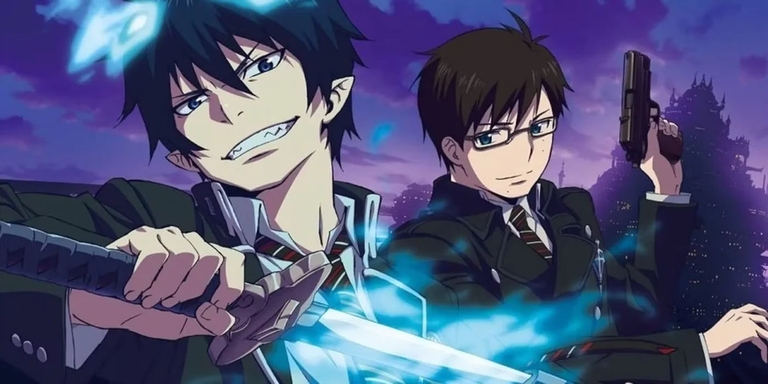
You can see how this messes with his head in every fight scene. In the early episodes, Rin isn't swinging that sword with confidence, he's clinging to it like a life raft. Every time he draws it, there's this split second where he looks scared of himself, and that's because he is. The weapon is supposed to be a tool for killing demons, but for Rin, it's the only thing preventing him from becoming one. That's a weird headspace to live in when you're trying to learn swordsmanship and make friends at True Cross Academy.
According to some details about the sword mechanics, the Kurikara functions as a double-edged tool that anchors Rin's humanity specifically because it contains his heart. Should the seal fail or the blade be damaged, as seen during the Kyoto Impure King Arc, Rin risks being consumed by his demonic instincts completely. This makes the sword less of a weapon and more of a medical device keeping his identity stable.
Yukio Okumura and the Resentment That Destroys Brotherhood
If the sword is Rin's physical leash, then Yukio is the emotional one, except Yukio's grip is way too tight and built on envy that borders on hatred. People always talk about how Rin has it hard because he's Satan's son, but they sleep on how absolutely brutal Yukio's position is and how that affects their relationship. Yukio was born without the flames or the tail, just a normal human kid who worked his ass off to become an exorcist prodigy, and then he finds out his useless older brother got all the demonic power without even trying. That's a recipe for a broken sibling dynamic.
The manga handles this way better than the original anime did. In the anime, Yukio comes off as cold and neglectful in ways that don't always make sense, like he's fighting to save Rin from Gehenna but acts like he can't stand him half the time. The manga keeps his motivations more consistent, showing that Yukio's coldness comes from a deep seated inferiority complex where he feels completely inadequate compared to Rin's raw spiritual strength. Yukio looks at Rin and sees everything he can never be, while Rin looks at Yukio and sees the perfect exorcist he'll never measure up to, and both of them are wrong but too stubborn to admit it.
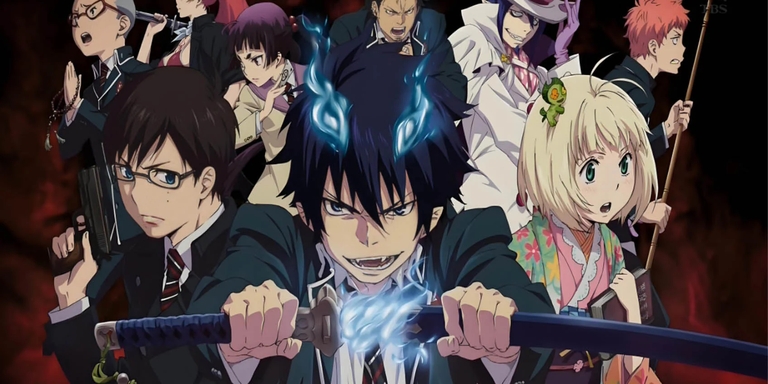
This resentment poisons everything between them. Yukio monitors Rin like he's a prisoner rather than a brother, and Rin responds by acting out and proving he can't be controlled, which just validates Yukio's fear that Rin is a monster. It's a feedback loop of mistrust that makes their shared apartment feel like a war zone. When Yukio starts showing his own demonic potential later in the series, the dynamic gets even messier because suddenly the "perfect" brother is dealing with the same identity crisis he judged Rin for, and Rin has to figure out how to be the supportive one while still barely holding himself together.
One forum discussion about the series points out that Yukio's motivations for fighting Gehenna to save Rin are undercut in the anime by his cold demeanor, creating cognitive dissonance that the manga avoids. This difference is crucial for understanding the twins' shared struggle with their lineage.
True Cross Academy and the Social Death Sentence of Being a Nephilim
Walking into True Cross Academy as the son of Satan is basically like walking into a police station with a bomb strapped to your chest and expecting everyone to be cool about it. The other students aren't just wary of Rin, they view him as an existential threat to both the human world and the exorcist order itself. Suguro Ryuji, Konekomaru, and the others don't see a classmate when they look at Rin, they see a weapon that could go off at any moment and kill them all.
The hostility Rin faces isn't just playground bullying either, it's institutional and theological. As a Nephilim, he's a direct contradiction to everything the exorcists stand for. They exist to send demons back to Gehenna, and here's this kid carrying Satan's blood in their classrooms, eating in their cafeteria, and sleeping in their dorms. The fear is rational from their perspective because if Rin loses control, he could theoretically open a gate to Gehenna right there in the school and end the world. So they treat him like a leper, and Rin feels that isolation deep in his bones.
Shiemi Moriyama is the only one who doesn't run away immediately, and even she spends the first few arcs looking at Rin with this wide eyed fear that hurts to watch. Rebuilding trust with these classmates becomes Rin's secondary mission, harder than any demon he has to fight because at least demons are straightforward enemies. Proving to Suguro that you're not going to burn his family shrine down requires a level of emotional vulnerability that Rin isn't ready for initially. He has to learn that controlling his flames isn't enough, he has to convince everyone else that he's in control, which is exhausting when you're already using half your brainpower just to not sprout a tail in public.
The Kyoto Impure King Arc and Learning to Protect Instead of Destroy
Everything changes during the Kyoto Impure King Arc, which serves as the turning point where Rin stops being a victim of his bloodline and starts weaponizing it for protection. Before this, Rin was mostly reacting to his powers, drawing the sword when he had to and hoping he didn't hurt anyone by accident. The Impure King situation forces him to get intentional about his abilities because the stakes are too high for him to panic or hold back.
This is where he figures out that the blue flames don't have to be a curse, they can be a purifying force if he directs them properly. It's not about suppressing the demon anymore, it's about channeling it. When he uses those flames to protect his classmates instead of just defending himself, he proves that he's not a bomb waiting to go off, he's an exorcist who happens to have demonic tools. That distinction matters because it shifts his identity from "Satan's son pretending to be human" to "human exorcist using inherited power," which is a subtle difference but one that saves his sanity.
The emotional weight of this arc sits heavy on the fact that his classmates finally start believing in him too. Suguro stops looking at him like a threat and starts treating him like a comrade. Konekomaru quits flinching every time Rin walks into the room. That social acceptance is just as important as the power control because Rin's internal conflict is half about genetics and half about loneliness. Knowing that people will catch him if he falls makes it easier to walk the tightrope between human and demon.
As noted in analysis of his character growth, this arc emphasized the importance of cooperation and highlighted Rin's realization that his flames could be used for protection rather than just destruction, marking a significant transition from the impulsive youth seen in Season 1.
From Hot Headed Mess to Disciplined Exorcist
Tracking Rin's growth across the seasons shows a kid who learns to think before he acts, which is harder for him than fighting actual demons. In Season 1, he's all impulse and raw emotion, charging into situations with his fists first and his brain second. That works for a while because he's strong, but it also proves everyone's point that he's dangerous and unpredictable. He breaks things, he loses his temper, and he gives Yukio more ammunition for the "Rin is a monster" argument.
By Season 2 and 3, you can see the shift happening in small ways. He starts checking his surroundings before drawing the Kurikara. He counts to ten when someone provokes him instead of immediately punching them. The Beyond the Snow Saga reportedly takes this even further, using the snowy setting as a metaphor for Rin pursuing inner peace and self control. He's not just trying to suppress the demon anymore, he's integrating it into a disciplined fighting style that combines traditional swordsmanship with controlled flame release.
This evolution from chaotic brawler to focused exorcist mirrors his emotional development. The kid who used to solve every problem with his fists learns that real strength is holding back when you could destroy everything. It's the difference between having power and having mastery, and Rin's arc is all about closing that gap. He stops running from his heritage and starts owning it, not as something shameful to hide, but as a tool he chooses to use for good.
What the Blue Flames Actually Cost
People look at Rin's powers and think "wow, blue fire, that's cool," but nobody talks about the physical and psychological toll of carrying literal hellfire in your chest. Every time Rin uses those flames, he's tapping into his father's power, which means he's opening a direct line to Satan whether he wants to or not. That's not just dangerous because of possession risks, it's existentially terrifying because it reminds Rin that no matter how many good deeds he does, he's still biologically connected to the king of demons.
The flames also mark him physically in ways he can't hide. When he gets emotional, his eyes change, his fangs show, and his ears get pointy. These aren't cool battle mode transformations, they're involuntary biological reactions that out him as a freak in public. Rin has to live with the constant anxiety that he'll slip up in front of normal humans and ruin his life completely. One tail pop in the grocery store and his cover is blown forever.
Then there's the healing factor, which sounds great until you realize it means Rin can survive injuries that would kill anyone else, which just makes him feel more isolated from normal human experiences. When you can't die easily, you stop relating to people who can. Rin's immortality isn't a gift, it's another wall between him and the humanity he's desperate to claim as his own.
The Anime vs Manga Divide on Character Consistency
There's a weird split in how Blue Exorcist handles Rin's internal conflict depending on whether you're watching the anime or reading the manga, and fans have been arguing about it for years. The original anime adaptation, specifically the second half of Season 1, deviates from the manga and creates some cognitive dissonance in how Yukio treats Rin and how quickly Rin seems to master his powers. The manga takes its time, letting Rin struggle with his identity across dozens of chapters without rushing to a resolution.
The Kyoto Impure King Arc in the anime is solid and follows the manga closely, which is why most fans consider it the high point of the series. But the original anime ending created its own canon that muddled Rin's psychological journey by giving him quick fixes to problems that should take years to solve. The manga keeps the struggle messy and ongoing, with Rin still dealing with heritage issues dozens of chapters in, which feels more realistic for someone carrying Satan's DNA.
This matters because Rin's internal conflict shouldn't have a clean ending. You don't just get over being the son of Satan after one good fight. The manga understands that this is a lifelong burden, while the anime sometimes treats it like a level up mechanic that Rin can unlock and then forget about. For a real understanding of how heavy this heritage weighs on him, the manga is the definitive source, even with its pacing problems.
Bloodlines and the Ethics of Demonic Weaponization
At its core, Rin's story asks whether you can use evil tools for good purposes without becoming evil yourself. The exorcist order is divided on this, with some factions wanting to weaponize Rin as a biological asset against Gehenna, while others want him executed before he becomes a threat. Rin has to navigate this political minefield while still figuring out if he agrees with either side.
His existence challenges the black and white morality of the church. If he's good, then demons aren't purely evil, which breaks the theological foundation of the exorcist order. If he's evil, then Shiro Fujimoto wasted his life raising a monster, and Yukio's love for his brother makes him a traitor to humanity. Rin carries the weight of that philosophical crisis everywhere he goes, knowing that his personal choices have implications for the entire war between Assiah and Gehenna.
The series gets interesting when Rin stops asking for permission to exist and starts defining his own ethics. He decides that his bloodline doesn't determine his destiny, his choices do. That's a basic shonen message on the surface, but Blue Exorcist makes it land harder by showing how much Rin loses trying to prove it. He doesn't get to keep his innocence or his father's life or his brother's trust just by deciding to be good. He has to fight for every inch of acceptance, and sometimes he still loses despite his best efforts.
The Future Beyond the Snow and What Comes Next
Looking ahead to the Beyond the Snow Saga and whatever comes after, Rin's internal conflict seems to be shifting from self acceptance to responsibility for others. He's moving into a protector role not just for his friends, but potentially for Yukio as his twin starts dealing with his own demonic awakening. The power dynamic is reversing, with Rin becoming the stable one while Yukio falls apart, which tests everything Rin learned about control and patience.
The snowy imagery in the new season isn't just for atmosphere, it represents the cold clarity Rin is supposedly finding regarding his dual nature. He's not fighting the fire anymore, he's walking through it without getting burned. That maturity is hard won and took four seasons of trial and error to achieve. Whether he can maintain that balance when the Illuminati and the remaining demon kings make their moves remains to be seen, but for now, he's finally in a place where his heritage feels like armor instead of a prison.
Rin Okumuras heritage and internal conflict started as a story about a boy afraid of becoming his father, but it's grown into something more interesting. It's about choosing your family, defining your own morality, and accepting that some parts of yourself can't be changed so you might as well use them. The blue flames will always be dangerous, and Rin will always be Satan's son, but he's also Shiro Fujimoto's boy, Yukio's brother, and an exorcist who protects the innocent. That's not a bad legacy to build, even if the foundation was hellfire.
Frequently Asked Questions
What is Rin Okumura's internal conflict in Blue Exorcist?
Rin Okumura's internal conflict stems from being the biological son of Satan while being raised by the exorcist Shiro Fujimoto. He possesses immense demonic power in the form of blue flames that can destroy everything he loves if he loses control, forcing him to constantly fight against his own genetics to maintain his humanity and identity as an exorcist rather than becoming the monster everyone fears.
How does the Kurikara sword affect Rin's powers?
The Kurikara sword, also known as Koumaken, is a demon-sealing katana forged by the Myodha Sect that contains Rin's actual demonic heart. When sheathed, it suppresses his powers and allows him to appear human, but drawing the blade releases his blue flames and demonic abilities. If the sword is damaged or the seal breaks, Rin risks being completely consumed by his demonic instincts and losing his humanity permanently.
Why does Yukio Okumura resent Rin?
Yukio resents Rin because Yukio was born without demonic powers despite being Satan's son, while Rin inherited all the supernatural abilities without effort. This creates a massive inferiority complex in Yukio, who trained his entire life to be a perfect exorcist but can never match Rin's raw spiritual strength. Their relationship is further strained by Yukio's fear that Rin will lose control and become a threat to humanity.
What happens during the Kyoto Impure King Arc?
The Kyoto Impure King Arc is pivotal because it forces Rin to stop suppressing his powers and instead learn to channel them for protection rather than destruction. During this arc, Rin saves his classmates using his blue flames, proving he can control his demonic nature. This earns him the trust of Suguro and others, transforming his identity from a feared monster into a valued ally and marking his transition from impulsive brawler to responsible exorcist.
How is Blue Exorcist different from other shonen anime?
Blue Exorcist differs from typical shonen because Rin starts with maximum power rather than working to achieve it. His conflict isn't about getting stronger but about controlling the destructive heritage he was born with. The series focuses heavily on psychological and social struggles, including institutional discrimination, family trauma, and the ethics of using "evil" powers for good, rather than just physical combat and power scaling.