
School Live Anime Explained
School live anime explained starts with admitting you got tricked. The first episode looks like soft pastel garbage about high school girls drinking tea and wearing cat hats. Then the final thirty seconds hits and you realize the main character is talking to corpses while her friends try not to get eaten outside the barricaded windows. That's the whole point. The show uses the fluffy moe art style as a weapon against you.

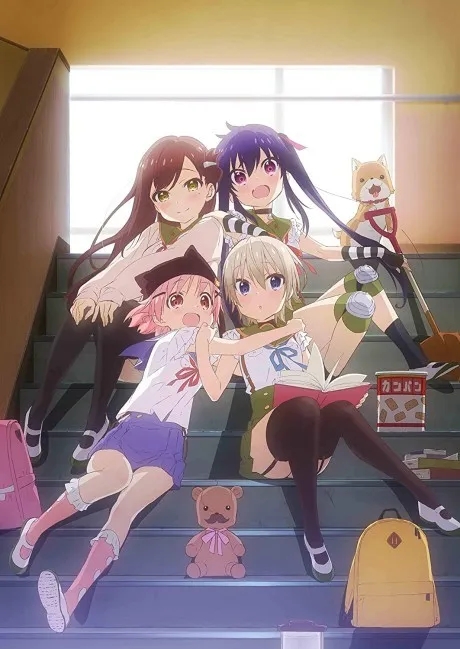
The setup is simple on paper. Yuki Takeya loves school so much she joined the School Living Club, which has one rule: you live at school full time. She walks around with a cat-ear hat talking about how fun everything is while her friends smile nervously and go along with it. Except the school is trashed. The windows are boarded up. Blood stains the walls. And Yuki is the only one who can't see the zombies shambling through the halls. The camera pulls back at the end of episode one and the floor drops out of your stomach. You've been watching a horror show disguised as a slice-of-life comedy.
What Yuki's Broken Brain Is Doing
Yuki isn't just quirky. She's fully psychotic from trauma. The anime makes this clear when you realize she's hallucinating her teacher Megu-nee, who died months ago saving the girls from the initial outbreak. Yuki sees a bright school with students attending class and activities happening. The other girls see a ruin filled with "them" (they never say zombies, always "them" or "those things"). The disconnect between what Yuki sees and what is real creates most of the tension in the early episodes.
The messed up part is how the others treat Yuki. They don't try to fix her. They play along with her delusions because it keeps her functional. When Yuki suggests a "field trip" to the store, it's really a supply run through zombie-infested streets. The girls turn survival into a game so Yuki doesn't snap completely. They're using her mental illness as a coping tool for themselves too. If they pretend everything is a club activity, they don't have to face that they're probably going to die in that school. It is a brutal look at how trauma bonds people together through shared lies.
I saw some data that said the manga handles this differently, but the anime really drills into Yuki's headspace. Episode two has her getting separated from the group and Megu-nee "comforts" her. On first watch it looks like a nice teacher helping a student. On rewatch you realize Yuki is sitting alone in a dark hallway talking to herself while zombies scratch at the doors. That's not cute. That's a kid whose mind shattered to survive. The show never lets you forget that Yuki's happiness is a defense mechanism built on a pile of bodies.
The Club Members and Their Secret Baggage
Yuuri Wakasa acts like the mom. She's the president, she cooks, she manages resources. She's also completely unstable in a different way. Later in the series she finds a teddy bear and decides it's her little sister Ruu. The other girls know it's a stuffed animal but they don't challenge her because Yuuri is the glue holding them together. If she breaks, they all break. So they nod along while she talks to a toy and calls it family. Yuuri's breakdown is quieter than Yuki's but it's just as real. She can't handle that her actual family died, so she built a new one from a doll.
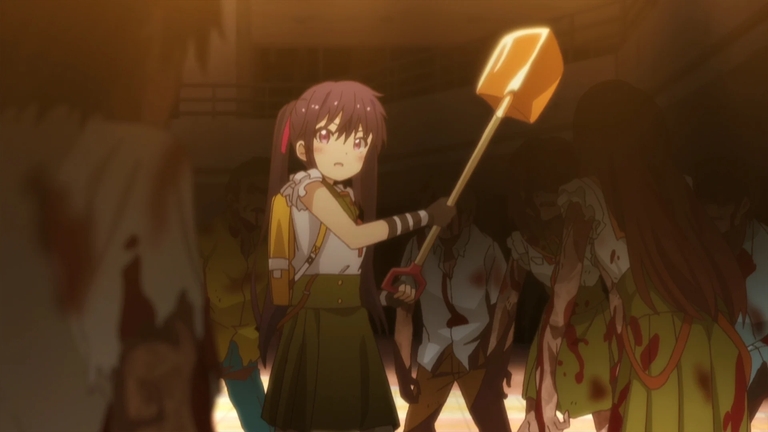
Kurumi Ebisuzawa is the muscle. She carries a shovel everywhere and uses it to crush skulls. She used that same shovel to kill her crush after he got infected, which is the kind of detail that keeps you up at night. She's practical, violent when needed, but even she has limits. The zombies retain some muscle memory from their lives, so sometimes they wander toward the school or repeat old routines. Kurumi can't handle killing them if she recognizes their faces, so she wears headphones or looks away. She's a teenage girl, not a soldier, and the show never lets you forget that fighting for your life at sixteen screws you up permanently. The shovel isn't just a weapon. It's a reminder of the boy she had to murder.
Miki Naoki comes in later. She was trapped in a mall with her friend Kei, who eventually left the safe room and presumably died. Miki starts out hating Yuki's delusions because she sees them as dangerous lies. But she figures out that Yuki's fantasy gives the group hope. Without the pretending, they're just four girls waiting to starve or get bitten. Miki represents the audience, really. She wants to be practical and angry about the situation, but she learns that sometimes lying to yourself is the only way to keep going. Her arc from skepticism to acceptance is the heart of the middle episodes.
The School Isn't a Home, It's a Trap
Megurigaoka Private High School was built with emergency shelters in mind, which is why they have solar power and water purification. That's convenient for the plot but it also creates this weird pressure cooker situation. They can't leave permanently because outside is death, but staying means watching the supplies dwindle and the building decay around them. The school becomes a character itself, rotting slowly while Yuki sees it as pristine.
The anime ramps this up in episode ten when the sanctuary finally falls. The barricades fail, Kurumi gets bitten by a zombified Megu-nee (yeah, the teacher they buried comes back), and Yuuri has her complete breakdown with the teddy bear. The illusion that they could just live there forever shatters. They have to graduate from the school, which is the show's heavy-handed but effective metaphor for growing up and facing reality even when it hurts. The destruction of their safe space forces them to move into a world that doesn't care if they live or die.
The Dog Makes Everything Worse
Taroumaru the Shiba Inu is pure emotional manipulation and I'm here for it. In the manga he's a minor character who gets found, bitten, and abandoned quickly. The anime expands his role significantly. He becomes the symbol of what they lost, a connection to normal life, and when he eventually turns and has to be put down (or dies fighting, depending on interpretation), it hits harder than most human character deaths in other shows.
Apparently the studio wanted to push the trauma by making you love this dog first. It works. When Taroumaru is wandering the halls infected but still trying to get back to the club room because he remembers safety, it's devastating. The girls can't even put him down properly at first because he's still sort of their friend. His death represents the end of their childhood innocence more than any lecture could.
Why This Isn't Just Another Zombie Show
Most zombie fiction focuses on the action or the gore. School Live focuses on the boredom and the fear. The girls aren't fighting hordes every episode. They're eating expired canned food and trying to celebrate birthdays with no presents. They're maintaining a rooftop garden so they don't get scurvy. The horror comes from the contrast between Yuki's pink-filtered view and the gray reality.
The series asks a nasty question: is it better to be sane and miserable, or delusional and happy? Yuki's friends protect her fantasy because they need it too. When they play along with her "club activities," they get to feel like normal teenagers for five minutes instead of survivors. That's the real hook. The zombies are just the setting. The story is about four kids trying not to lose their minds while the world ended around them. The scariest scenes aren't the attacks. They're the quiet moments where Yuuri stares at her teddy bear for too long or Kurumi scrubs blood off her shovel.
The Virus and the Conspiracy
The infection is called Omega, and it's a bioweapon bacteria rather than a supernatural curse. The anime hints that the Randall Corporation was running experiments in Megurigaoka City before the outbreak. This adds a layer of paranoia. It wasn't just an accident. It was probably a test gone wrong or a weapon that escaped containment. The girls don't know this at first, but it explains why the school had such good emergency infrastructure. The city had a history of mysterious disasters.
The bacteria spreads through bites and possibly airborne means. The infected retain some habits from their lives, which is why they cluster at the school. They remember it was important, even if they don't know why. This detail makes killing them harder because they're not just monsters. They're former humans stuck in loops of their old routines. When you see a zombie trying to open a locker or sitting at a desk, it drives home what was lost.
The Ending and Moving On
Without spoiling everything, the anime ends with the girls leaving the school. They don't cure the virus. They don't save the world. They just decide to keep living somewhere else. That's the whole message. You don't fix the apocalypse. You adapt to it. Yuki starts to face reality in small doses, not because she's cured, but because she's strong enough now to handle the truth with her friends beside her.
The final episodes at Saint Isidore University (which the manga covers more extensively) show that other survivors handled the breakdown differently. Some became violent militias. Others formed cults. The School Living Club just tried to keep being a club, and that stubborn refusal to become monsters is what makes them worth rooting for. The anime teases this arc but doesn't fully explore it, which frustrates manga readers but works as an ending for the show. They drive off into an uncertain future, but they're together.
The Production Tricks You
Studio Lerche knew exactly what they were doing with the marketing. They released promotional materials that looked like a generic slice-of-life comedy. The opening song "Friend Shitai" sounds like upbeat pop about wanting friends, but the lyrics talk about not wanting to be alone and holding hands forever, which hits different when you know the context.
The first episode caused the manga sales to jump tenfold because word spread about the twist. It's a gimmick, sure, but it's a gimmick with teeth. The art stays cute even when showing bloodstains. The character designs never change, so you get these big sparkly eyes staring at a corpse like it's normal. That disconnect is intentional and effective. The animators knew that keeping the moe style consistent would make the horror land harder.
Mental Health Portrayal or Exploitation?
Some people argue the show uses mental illness as a plot device. Yuki's psychosis isn't portrayed as something to fix, but as a survival tool. Her friends enable it because they have no other options. That's not exactly a healthy message, but it's honest about what trauma does. The series doesn't romanticize the breakdown. It shows Yuki suffering, hallucinating, and occasionally snapping back to reality at the worst possible moments.
Yuuri's teddy bear delusion is similarly controversial. She's clearly dissociating from the death of her actual family, but the show treats it gently. The other girls don't stage an intervention. They let her carry the bear and talk to it because acknowledging the truth would destroy her. It's messed up, but it's also how people sometimes survive impossible situations. The show isn't saying this is the right way to handle grief. It's just showing what these specific kids did to get through the day.
Why It Still Holds Up
School Live came out years ago but it still gets discussed because it did something rare. It used the cute-girls-doing-cute-things format to tell a story about grief and denial. Most shows in that genre are about nothing. This one is about the psychological weight of being alive when everyone else died.
The anime isn't perfect. The middle drags a bit with a swimsuit episode that feels out of place. Some of the zombie logic doesn't hold up if you think too hard about it. But the emotional core, the relationships between these four broken girls trying to protect each other, that's solid.
When Yuki finally acknowledges that Megu-nee is dead, or when Kurumi has to kill the teacher she loved, or when Miki realizes she's become attached to the delusional girl she initially resented, those moments land because the show earned them. It spent twelve episodes making you care about these characters while slowly peeling back the layers of their damage.

Final Thoughts
School live anime explained comes down to this: it's a horror story disguised as a comfort show. The zombies are scary, sure, but watching a teenager's mind fracture to protect itself is scarier. Watching the others build their lives around that fracture because they love her is heartbreaking.
If you go in knowing the twist, you still get a solid survival story about mental resilience. If you go in blind, you get one of the most shocking first episodes in anime history. Either way, it's worth watching, just don't expect a happy ending. They don't cure the world. They just learn to live in it without becoming zombies themselves, which is probably the best any of us can hope for.
The show stays with you because it doesn't offer easy answers. Yuki doesn't get therapy. The infection doesn't get cured. They just pack up their things, leave the school that kept them alive, and walk into an uncertain future together. That's not just survival. That's living.

Frequently Asked Questions
Is School Live just a zombie anime with cute girls?
No, it's a psychological horror story about trauma. The zombies are the setting, but the real focus is on how the characters cope with the end of the world, especially Yuki's psychotic break from reality.
Why do the other girls pretend Yuki's delusions are real?
They protect her fantasy because believing the school is normal keeps Yuki functional and gives the whole group hope. If they forced her to face reality immediately, she'd probably shut down completely, and they need her optimism to keep going.
What happens to the dog Taroumaru?
In the anime, Taroumaru gets infected by the zombie virus. Unlike the manga where he's quickly abandoned, the anime expands his role and shows him dying after being vaccinated too late, which devastates the characters and viewers.
Is Megu-nee really alive?
No, Megu-nee died early in the outbreak saving the students. Yuki hallucinates her as alive, and the other girls play along. The real Megu-nee became a zombie and eventually bites Kurumi before being put down.
Does the anime have a different ending from the manga?
The anime ends with the girls leaving the school and heading toward Saint Isidore University. The manga continues much further, exploring the university arc, the Randall Corporation conspiracy, and a proper conclusion to the story.