
Shogo Makishima and the Philosophy of Psycho Pass
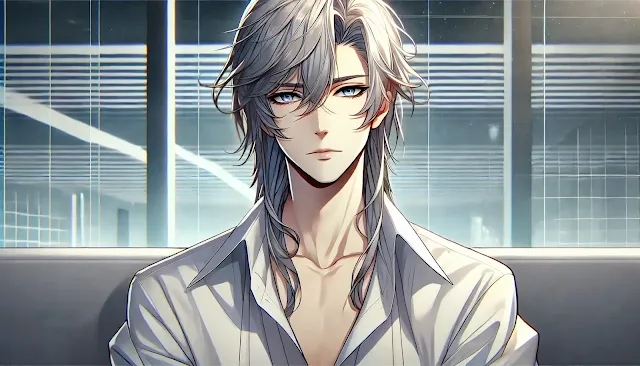
Shogo Makishima and the philosophy of Psycho-Pass start with a simple problem that breaks the entire show's premise. The guy slits a woman's throat in broad daylight and the Dominator, this gun that supposedly measures how dangerous you are by scanning your brain, reads him as completely harmless. His Crime Coefficient stays under thirty while blood drips off his hands. You'd think this is just lazy writing, some plot armor to give the villain an advantage, but it's not. It's the whole argument of the series compressed into one creepy smile.
See, Makishima isn't just immune to the system. He's invisible to it. They call this 'criminally asymptomatic,' which is a fancy way of saying he doesn't feel guilty about the terrible things he does. The Sibyl System, this massive computer network that runs Japan by calculating everyone's mental health and stress levels, literally cannot see him as a threat. And that makes him the only truly free person in a country where everyone else lives in a panopticon of psychological surveillance. While regular citizens get their jobs assigned and their crimes predicted before they happen, Makishima gets to choose. Every single time he kills someone or saves someone or eats a tomato while quoting Shakespeare, he's making a choice that hasn't been calculated and approved by an algorithm. That's terrifying, but it's also weirdly honest.
Why the Scanner Can't See Evil
The Sibyl System works on the assumption that doing bad things makes you stressed out. You murder someone, your Psycho-Pass goes cloudy, the cops show up with their laser guns set to paralyze or explode depending on how stressed you are about the murder you just committed. It's stupidly simple, and that's the trap. Makishima doesn't get stressed because he doesn't think he's doing anything wrong. He thinks the system is wrong, that reducing human existence to a color-coded number destroys what makes people human in the first place. So when he kills, he's calm. The gun looks at him and sees a law-abiding citizen because technically, by the logic of his own internal consistency, he hasn't broken his own moral code. He's just broken society's code, which he considers illegitimate anyway.
This creates a weird loophole where the only people who can truly rebel against the system are the ones who don't feel bad about it. That's the nasty trick Gen Urobuchi built into the show. The system claims to prevent crime by keeping everyone calm and monitored, but it actually creates a world where the most dangerous people are the ones who believe in something strongly enough to kill for it without losing sleep. Makishima isn't a drooling psychopath. He's a reader, a philosopher, a guy who prints books because he thinks the written word is a weapon against tyranny. He just happens to think that murder is an acceptable tool for teaching people how to be free. That's messed up, but you can't deny it makes the cops look like idiots when their robo-guns refuse to fire.
Nietzsche and the Guy Who Won't Follow the Herd
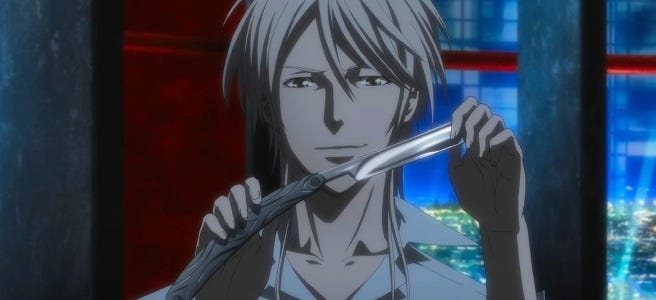
If you've ever read Friedrich Nietzsche, Makishima starts making a lot more sense. The show hits you over the head with it, having him quote 'Beyond Good and Evil' like it's a cookbook. But the philosophy isn't just window dressing. Nietzsche talked about the Übermensch, the person who creates their own values instead of accepting the ones given to them by society or religion or whatever power structure happens to be in charge. Makishima takes this literally. He looks at the Sibyl System, sees a machine that has decided what good and evil are for an entire nation, and decides to blow it up.
The thing is, Makishima isn't doing this because he wants power for himself. That's the weird part. When the Sibyl System finally reveals itself to him as a collective of brains in jars, they offer him a spot. They say, hey, you're pure like us, you're clear-minded like us, come join the council and help us decide how to run the world. He tells them to get stuffed. He'd rather die than become part of their consensus. That's the difference between him and every other villain who just wants to take over. Makishima doesn't want to replace the system. He wants to destroy it so people have to think for themselves again, even if that thinking leads to chaos and suffering. He believes suffering is better than sedation. Most people watching the show think that's crazy, but then you look at the citizens of that world, these bland, smiling people who can't make a decision without checking their hue, and you start to wonder if maybe he's got a point buried under all the blood.
Books as Bombs
Makishima doesn't just read books. He weaponizes them. Every major crime he orchestrates comes with a literary reference attached. He has a killer base her murders on Titus Andronicus. He sets up a hunting club straight out of 'The Most Dangerous Game.' He quotes Joseph Conrad's 'Heart of Darkness' while taunting Kogami. This isn't just him being pretentious, though he definitely is that. He's testing something. He wants to see if anyone in this sanitized, safe, boring world still recognizes the darkness in human nature when it's presented to them as art. Makishima's use of literature reveals his belief that stories are how we understand what we're capable of, and the Sibyl System has essentially banned that understanding by banning strong emotions.
He prints physical books because the digital ones are monitored. He hands them out like contraband. There's a scene where he's eating tomatoes, just sitting there in his apartment eating tomatoes and reading, and it's filmed like he's doing something illegal. Because in that world, having a private thought that hasn't been categorized is illegal. The books represent the messy, unquantifiable parts of being human. You can't reduce Shakespeare to a Crime Coefficient. You can't scan Dostoevsky for stress levels. Makishima uses these stories to wake people up, to remind them that they have agency, that they can choose to be Iago or Othello or Desdemona. Sometimes he kills them if they fail the test, which is where his logic falls apart, but his diagnosis of the disease is spot on. The society he's fighting is one where literature has been replaced by psychological profiles, and that's a dead society walking.
The Splendor of Souls vs The Calculator
There's this line Makishima says about wanting to witness the 'splendor of people's souls.' It sounds like anime villain babble until you realize what he's contrasting it with. The Sibyl System sees people as data points. It calculates the optimal career for you based on your aptitude and stress tolerance. It decides who you should marry based on psychological compatibility. It stops you from feeling angry or sad or too happy because those emotions destabilize the metrics. Makishima looks at that and sees a graveyard. He thinks a soul only shines when it's fighting against something, when it's making a hard choice with real consequences, when it could break but doesn't, or when it breaks spectacularly.
This is where he gets into trouble with viewers. Because to see that splendor, he creates situations where people have to kill or be killed. He forces the choice. He argues that a choice made under duress is still more real than a life spent floating in a bubble of prescribed safety. He's basically saying that a short, violent, free life is better than a long, comfortable, determined one. That's a hard pill to swallow, especially when he's the one holding the knife. But the show keeps putting him next to the Enforcers and Inspectors, these cops who are literally branded as hunting dogs or bureaucrats, and you notice that they're the ones who seem trapped while Makishima seems alive. The Romantic sublime in his character positions him as a figure of transcendence, someone who has broken through to a level of self-knowledge that the system actively prevents. He's wrong about the morality of killing, but he's right that the system has turned everyone else into sleepwalkers.
Two Wolves Chasing Each Other

Shinya Kogami is the protagonist, the detective who becomes obsessed with catching Makishima, and the show sets them up as mirrors. Both hate the Sibyl System. Both read the same books. Both are willing to kill for their beliefs. The difference is that Kogami is trying to restore justice while Makishima is trying to destroy the concept of justice as administered by the state. But Makishima sees Kogami as his equal, maybe the only equal he has. He leaves clues specifically for him. He risks capture to talk to him. He wants Kogami to understand him because he thinks Kogami is the only other person alive who still has the capacity for genuine rage and genuine choice.
When Makishima finally dies, he wants it to be Kogami who kills him. Not the system, not some random cop, but the one person who pursued him as an individual rather than as a number. It's messed up, but it's romantic in the old sense of the word. He wants his death to mean something, to be a choice made by another free will. He doesn't want to be rehabilitated or imprisoned or absorbed into the collective. He wants to be hunted and ended by someone who sees him clearly. That's his final test of the 'splendor of souls' concept. If Kogami kills him out of personal vengeance rather than legal duty, it proves that individual will still exists outside the system's control. And Kogami does it, shooting him with a regular gun instead of the Dominator, which is significant because the Dominator represents the system's judgment while the revolver represents human choice. Makishima dies smiling because he won that argument.
Why He Won't Join the Hive Mind
The reveal that the Sibyl System is actually a bunch of criminally asymptomatic brains floating in jars should make Makishima their best friend. They're just like him. They don't feel guilt. They make hard choices for the collective good. They exist outside the moral framework they enforce on others. But Makishima rejects them completely. He says their 'immortality' is fake and disgusting. He'd rather die than become a component in their machine. This is crucial for understanding his philosophy. He's not a utilitarian. He doesn't think the greatest good for the greatest number justifies anything. He thinks the individual is the only unit that matters, and joining the Sibyl collective would dissolve his selfhood into a bureaucratic mush.
He believes in what Nietzsche called amor fati, the love of fate. He accepts that he's going to die, that he's finite, that his time is limited. The Sibyl brains are trying to escape that finitude by becoming immortal administrators. Makishima thinks that's cowardly. He thinks you can't be truly human without an expiration date, without the urgency that comes from knowing you're going to rot. The system offers him eternity as a god. He chooses a bullet in the head as a man. That choice defines him more than any of his murders do. He's consistent in his belief that metrics, control, and the elimination of risk destroy humanity, and becoming a brain in a jar is the ultimate elimination of risk.
The Messy Contradiction of Forcing Freedom

Here's where Makishima's philosophy gets wobbly and why you can't just call him the hero of the story. He forces people to be free. He kills their friends or blows up their buildings to make them wake up and start thinking. That's stupid. It's contradictory. You can't force someone to have free will. That's just a different kind of coercion. Kant would have a field day with this because Makishima treats people as means to an end rather than ends in themselves, which is exactly what he accuses the Sibyl System of doing. He uses Akane, he uses Rikako, he uses all his pawns to prove a point about autonomy, violating their autonomy in the process.
But here's the annoying thing. He's not wrong about the diagnosis. The society in Psycho-Pass is a nightmare of passive compliance. People have given up their ability to choose in exchange for safety, and they've done it so completely that they don't even know they've lost anything. Makishima sees this and decides the only way to shock them out of it is violence. He's like a doctor who decides to give you a heart attack to cure your depression. It might wake you up, but it might also kill you. The show doesn't let him off the hook for the people he murders. Those are real victims with real lives. But it also doesn't let the audience retreat into the comfort of thinking the system he's fighting is good. It's a garbage system that creates garbage people, and Makishima is the immune response. He's the fever that kills the infection but also makes you miserable.
What We Lose When We Measure Everything
The reason Makishima resonates with people who watch Psycho-Pass is that he articulates something real about modern life. We live in a world of metrics too. Social media algorithms decide what we see. Credit scores decide where we can live. Personality tests decide what jobs we can have. We're not quite at the point of Dominators, but we're drifting toward the Sibyl System's dream of total oversight and total safety. Makishima's philosophy is a warning about that drift. He argues that when you try to quantify the human soul, you kill it. When you optimize for happiness, you eliminate meaning. When you remove all danger, you remove all growth.
Shogo Makishima's character profile lists his favorite authors as Orwell, Foucault, and Philip K. Dick, which tells you exactly what the writers were thinking. He's the guy who read all the dystopian novels and realized he was living in one. His response was to become the monster those novels warned us about, the violent individual who refuses to be categorized. He's wrong in his methods but chillingly correct in his fears. The show ends with the Sibyl System still in place, still running Japan, but now everyone knows it's a bunch of brains in jars. Makishima didn't destroy it, but he did force it out of hiding. He made it show its face. In a world of masks, that's almost enough.
The Tomato and the Text
There's that one scene where Makishima is eating cherry tomatoes and reading, and it's the most peaceful moment in the entire series. He's not plotting. He's not killing. He's just experiencing the texture of a tomato and the ideas in a book. That's his paradise. Not power, not conquest, but the simple, unmeasured sensation of being alive. The Sibyl System can't scan a tomato. It can't tell you if you're enjoying the book correctly. It can't calculate the aesthetic experience of rain on glass or the smell of old paper. Makishima fights for those small, subjective moments. He calls them qualia, the individual experience of consciousness that can't be shared or quantified.
When he dies in that oat field, bleeding out from Kogami's bullet, he quotes the Bible about the sower and the seeds. He knows he's the seed that falls on the path and dies, but he also knows that dying was better than being ground into flour by the system. He accepts his death as the final, uncoerced choice of a free man. He could have joined the collective. He could have run. He chose to stand there and be killed by the only person he respected. That's the philosophy of Psycho-Pass boiled down to one moment. Freedom isn't safe. It's not happy. It's not clean. It's messy and it ends in blood and oat fields. But at least it's real. At least he got to taste the tomato before he died.
Frequently Asked Questions
Why can't the Dominator scan Makishima?
Shogo Makishima is criminally asymptomatic, meaning his Crime Coefficient stays low because he doesn't feel stress or guilt about his actions. The Sibyl System can't judge him as a threat because it relies on stress metrics, and since Makishima is calm and convinced he's right, he appears harmless to the scanners.
Is Makishima supposed to be a Nietzschean Übermensch?
Not exactly. While he quotes Nietzsche and shares the idea of creating individual values beyond societal norms, Makishima is more of a literary terrorist who uses philosophy to justify his violence. He believes in freedom and authentic choice, but his methods are destructive rather than creative like the true Übermensch concept suggests.
Why does Makishima reject the offer to join the Sibyl System?
He refuses because he believes in individual finitude and authentic human experience. Joining the collective would mean becoming part of the machine he hates, losing his individuality for a false immortality. He'd rather die as himself than live forever as a component of the system.
Why does Makishima want Kogami to kill him specifically?
Makishima wants Kogami to kill him because he sees Kogami as the only other truly free individual who understands him. Being killed by the system would validate the system, but being killed by Kogami's personal choice validates Makishima's belief in individual agency and the 'splendor of souls' acting outside of programmed morality.