
Shokugeki No Soma Anime Review Stop At Season Three
Most shokugeki no soma anime review posts try to sell you on the whole five season run and that's a mistake. I'm here to tell you that Food Wars peaks hard in its first two seasons and then slowly drives itself into the ground with bad plot decisions.
You've probably seen the clips. People eating food and their clothes explode off their bodies while they moan about how good the curry is. Yeah that's weird but it's not the point. The show is basically a shonen battle anime where the punches are replaced by knife skills and the power levels are measured in flavor profiles. Soma Yukihira starts as this arrogant kid working at his dad's diner and gets thrown into Totsuki Academy, this elite cooking school where only ten percent of students really graduate.
The setup is solid. The execution for those first 24 episodes is genuinely some of the most fun you can have with a cooking show. But you need to know when to jump off this train because it derails spectacularly later.
The Shokugeki Battle System Explained
Two chefs face off. They get a theme ingredient or a specific challenge type. They have one hour to cook. Judges taste both dishes and pick a winner. That's the whole mechanic and it works because the show treats cooking with this weird seriousness that borders on religious devotion.
You'll see characters researching chemical reactions and protein structures like they're planning a bank heist. Apparently the manga author Yuto Tsukuda worked with a real chef named Yuki Morisaki to get the details right and you can tell. The techniques aren't just made up nonsense. When someone breaks out a molecular gastronomy kit or explains why resting meat matters or talks about the Maillard reaction, it's accurate enough to teach you something if you pay attention.
The stakes feel real too. During the Training Camp arc, which spans like six episodes in the middle of season one, these kids are running on no sleep while teachers threaten to expel them for burning garlic or serving cold soup. It's stressful in a good way. You feel the pressure because the animation shows sweat dripping and hands shaking and knives slipping. J.C.Staff did solid work capturing the physical toll of high end kitchen work.
The shokugeki system mirrors traditional shonen tournament arcs but replaces the violence with sensory descriptions. Instead of measuring power levels with scouters, judges analyze aroma intensity and texture contrast. It's silly but it's consistent.
Why Season One Works So Well
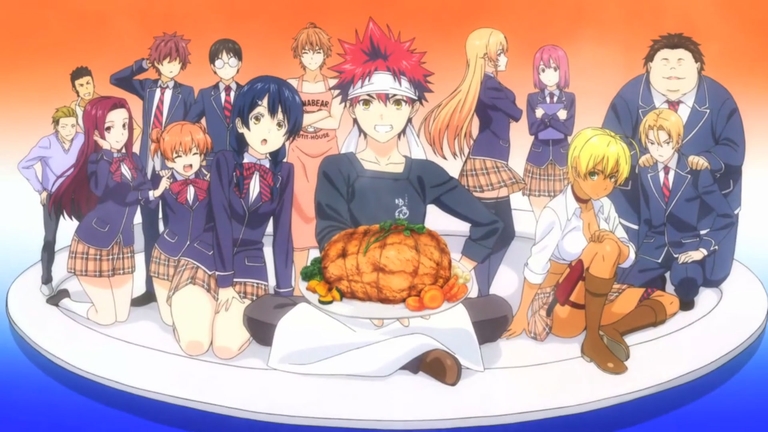
Season one has this tight focus on Soma proving himself to a world that thinks he's trash because he comes from a diner. He lands in the Polar Star Dormitory, this rundown building full of weirdos who are actually genius cooks living in a communal setup that feels like a co-op house.
You meet Megumi Tadokoro, this anxious girl from a fishing village who cooks with heart but lacks confidence and technical skill. There's Satoshi Isshiki who cooks shirtless and acts goofy but ranks seventh in the whole school and serves on the Elite Ten council. Takumi Aldini shows up as the Italian rival with the forehead band and his twin brother Isami. The cast is big but not bloated yet. Everyone serves a purpose.
The pacing moves fast without feeling rushed. Soma picks fights with upperclassmen immediately. He doesn't wait around to level up for fifty episodes. He challenges a guy named Shinomiya in episode eight or nine and almost gets expelled for real. That fight matters because Shinomiya isn't just a jerk. He's a perfectionist who failed a student for changing a recipe without permission. The show sets up this conflict between rigid classical cooking and Soma's creative diner food that breaks rules. It's a real argument that happens in actual kitchens between old school French technique and modern fusion experimentation.
The season builds to the final exam where students must create a buffet for hundreds of customers while being sabotaged by teachers. It tests endurance and creativity under pressure. By the end you believe these kids have earned their spots.
The Foodgasm Problem And Why It Bothers People
Yeah we need to talk about the elephant in the room. When characters eat good food in this show they have what fans call foodgasms. Their clothes explode off their bodies. They moan. Sometimes they hallucinate naked angels or fall into suggestive poses or imagine themselves in harem scenarios. It's ecchi fan service taken to an absurd degree that makes you wonder if the animators were trying to sneak a hentai past the censors.
Some viewers bounce off the show immediately because of this. I get it. It's annoying when you're trying to watch a serious cooking competition and suddenly someone's bra is flying off because they tasted good curry. But here's the thing. The show is self aware about how stupid this is. It's not trying to be porn. It's using exaggerated reactions to show how food makes you feel without using boring internal monologue about flavor notes.
Is it necessary? No. Does it get repetitive? Absolutely. By season three you're skipping these scenes because you've seen every possible variation of a girl blushing while eating soup or a guy groaning while imagining a mountain of meat. The fan service is a barrier to entry that shouldn't exist because the cooking is legitimately good television.
I've seen people on Reddit say they use this show to get their friends into anime because the premise is accessible. Everyone understands cooking competitions. But then the clothes start flying off and their friends look at them like they're weirdos. It's a shame because the character writing is strong when it wants to be and the cooking education is real.
Seasons Two And Three Keep The Fire Alive
The second season covers the Autumn Election arc. Forty freshmen compete in a tournament to see who's the best new cook. Instead of introducing fifty new characters like bad shonen shows do, this arc focuses on the people we already know from season one. Megumi gets her moment to shine against a bully. We see more of the Aldini brothers working together. The animation stays crisp and the dishes look incredible with detailed closeups of seared meat and glistening sauces.
Season three introduces the Stagiaire period where students work at real restaurants in the city. This grounds the show in reality again after the tournament hype. Soma works at a failing family restaurant and has to fix their menu by understanding their customer base. It's practical cooking stuff that feels earned rather than just being about flashy techniques. We also get the Moon Banquet Festival which is like a school cultural festival but with food stalls, and it shows how Soma handles business logistics instead of just cooking.
These seasons maintain the balance between competition and character growth. Soma loses sometimes. He doesn't win every battle and when he does win it's because he figured out a clever trick or worked harder, not because he screamed about friendship and power leveled.
Where Everything Goes Wrong With The Plot
Then Azami Nakiri shows up in season four and the show dies creatively. Erina's absentee father takes over the school with the help of the Elite Ten student council and immediately institutes this fascist regime where only perfect classical cooking is allowed. He creates an organization called Central to enforce his vision and starts expelling students who don't conform to his specific style.
Suddenly the show isn't about creative cooking versus tradition or hard work versus natural talent. It's about evil administrators versus plucky rebels in a plot that feels like it was written by someone who just discovered dystopian fiction and thought it would work in a cooking show.
The problem is the writing gets lazy. Characters stop having complex motivations and become caricatures. The judges become obviously biased until the plot needs them to be fair for dramatic tension. The shokugeki battles lose tension because you know Soma will win with friendship power instead of actual technique. The power scaling goes nuts too. Characters start pulling out supernatural abilities that make no sense in the previously grounded world. One guy literally uses a flamethrower attached to his wheelchair to cook meat.
The themes get heavy handed. Instead of subtle commentary on culinary philosophy we get speeches about the soul of cooking versus oppression. It stops being fun and starts being a slog.
Season Five And The Inevitable Decline
Season five finishes the manga adaptation and it's somehow worse than season four. The final villain is some guy named Asahi who can copy any dish perfectly after tasting it once, which breaks the established rules of the universe where skill and practice matter. The resolution feels rushed and unsatisfying with Erina's character arc getting wrapped up in a bow that doesn't fit.
The animation budget drops noticeably too. Character models get sloppy in wide shots. The food looks less detailed and more like generic shiny objects instead of specific dishes. The fan service increases to try to cover for the lack of compelling story.
I checked some reviews on MyAnimeList and ratings on IMDb and people generally agree the first two seasons are peak content while the latter half struggles to maintain interest. The ratings drop a lot for seasons four and five compared to the initial reception. You're better off reading the manga if you want the ending because at least the art stays consistent there and you can skip the bad parts faster.
The Soundtrack And Production Values
I have to mention the music because it's genuinely great. The first opening, "Kibou no Uta" by Ultra Tower, goes hard. It builds this hype energy that matches the cooking action perfectly with its rising guitar riffs. The second opening "Rising Rainbow" by Misokkasu isn't as good but it's still solid. The background music during cooking scenes uses these intense drum beats and strings that make chopping vegetables feel like a boss fight in a video game.
Voice acting is great across the board. Yoshitsugu Matsuoka as Soma captures that mix of arrogance and earnestness without making him annoying. Risa Taneda as Erina nails the snobby princess voice without making her completely unlikable. Even the minor characters have distinct vocal performances that help you tell them apart in a crowded cast.
The sound design for cooking itself is detailed. You can hear the specific sizzle of different meats, the crunch of vegetables being cut, and the whisk of eggs. It's ASMR level quality sometimes.
Comparing It To Other Cooking Anime
People always bring up Yakitate Japan and Cooking Master Boy when discussing Food Wars. Those shows focus on bread making and Chinese cuisine respectively and they lean harder into the comedy and superpowers. Food Wars stays more grounded for the first half of its run. The cooking techniques are real. The ingredients are real. The pressure of professional kitchens is real.
Yakitate Japan has characters shooting beams of light and transforming into animals when they eat bread. Food Wars keeps the reactions visual but the cooking itself follows physical laws until the later seasons break everything. That's why the decline hurts more. It had something special going and threw it away for shonen power creep.
Character Development That Matters
Megumi Tadokoro gets the best arc in the series. She starts as this nervous girl who can't speak up and grows into a confident chef who trusts her instincts. Her path from potential dropout to respected cook feels earned because we see her fail and try again.
Takumi Aldini serves as a good rival because he's talented but not unbeatable. He has his own family restaurant backstory that parallels Soma's but with Italian cuisine. Their rivalry pushes both to improve without becoming toxic.
Even Erina Nakiri evolves from a stuck up elitist to someone who appreciates diner food. Her God Tongue ability, which lets her taste exactly what's in a dish and find flaws, starts as a tool for snobbery but becomes a way to help others improve.
The side characters in Polar Star Dorm each have distinct cooking styles. Yuki Yoshino specializes in game meat. Ryoko Sakaki does fermentation. Shun Ibusaki uses smoke cooking. They aren't just background decoration. They contribute to the story and have their own moments to win challenges.
The Best Cooking Battles In The Series
The first season has several standout shokugeki that show what the show can do at its best. The egg breakfast battle against the breakfast specialist Ikumi Mito shows Soma using cheap ingredients to beat expensive meat through technique. He makes a transforming dish using chicken breast and egg that demonstrates his creativity.
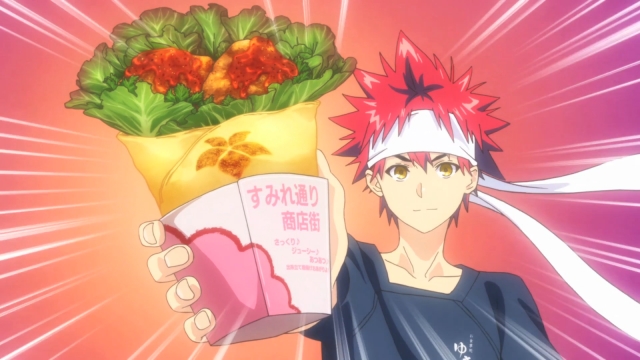
The Karaage arc where Soma saves a shopping district from a corporate chain restaurant is peak Food Wars. He researches oil temperatures and batter consistency to create the perfect fried chicken. It shows him applying scientific method to street food and winning through community support rather than just elite technique.
The semifinal battle in the Autumn Election between Soma and Subaru Mimasaka is brilliant because Mimasaka is a perfectionist who copies other people's dishes and improves them slightly. Soma has to beat him by creating a dish that can't be copied because it's personal to his history. That's good writing that ties into character backstory.
Joichiro Yukihira And The Absent Father Trope
Soma's dad Joichiro is a former Totsuki legend who dropped out to run a diner. He serves as the goalpost for Soma's growth. Their relationship is weird because Joichiro clearly loves his son but also puts him through hellish training by making him cook thousands of dishes. He closes the diner to travel and forces Soma into the academy, which seems harsh but works as a plot device.
The reveal that Joichiro was second seat in the Elite Ten and feared by everyone adds depth to Soma's underdog status. He's not just some random diner kid. He's the son of a prodigy who rejected the elite world. That legacy follows Soma and explains why some teachers hate him immediately while others see potential.
The Elite Ten System Explained
Totsuki Academy is run by the Elite Ten, the top ten students who have authority over school decisions including budget allocation and curriculum changes. It's like student council but with real power. This system creates clear goals for advancement. You can see exactly where Soma ranks in the hierarchy and what he needs to do to climb.
The members have distinct personalities and cooking styles. Eishi Tsukasa is the first seat who talks to his ingredients like they're people. Rindou Kobayashi is second seat and loves wild game. They aren't just obstacles but characters with their own philosophies about food. When the later seasons turn them into puppets for Azami's regime, it wastes that development.
Anime Vs Manga Pacing Issues
The anime follows the manga closely for the first three seasons but starts rushing in seasons four and five to cover hundreds of chapters. They skip character moments and cooking details to get to the plot points faster. This hurts because the appeal was never the plot. It was the process of cooking.
The manga has more time to show Soma's thought process and research. The anime cuts these for time, making his victories feel more like ass pulls rather than earned wins. If you find yourself confused by a shortcut in the anime, the manga probably explains it better.
Why Some People Love The Fan Service
I should mention that not everyone hates the foodgasm scenes. Some viewers find them hilarious and part of the charm. The show knows it's ridiculous and leans into it. The exaggeration serves as a visual metaphor for how good food can make you feel vulnerable or exposed. It's over the top but memorable.
The problem is repetition. When every single tasting scene follows the same pattern of clothing explosion and moaning, it becomes background noise rather than comedy. The show would be better served using these scenes sparingly for maximum impact rather than every episode.
The Cultural Impact
Food Wars spawned a ton of cooking anime copycats and influenced how food is animated in modern series. The detailed shading and glistening effects on dishes became a standard. It also got a lot of people interested in cooking. Sales of cooking equipment and ingredients featured in the show spiked when episodes aired.
The term "shokugeki" entered anime fan vocabulary as shorthand for any competitive cooking. The show proved that sports anime formulas work for non sports activities. You can apply shonen battle logic to basically any competitive skill and make it work if you commit to the bit.
Dishes That Will Make You Hungry
Specific foods featured in the show that look incredible include the Gotcha Pork Roast from episode one, which uses bacon wrapped potatoes to simulate a roast when you can't afford pork. The Rainbow Terrine that uses layers of vegetables compressed into a block. The Sumire Karaage from the shopping district arc. The Risotto with squid ink and cheese from the training camp.
The animation makes these dishes look so good you'll pause the episode to find a recipe online. That's the highest compliment I can give a cooking show. It makes you want to cook.
Why Non Anime Fans Should Try This
If you have friends who think anime is just robots and magic powers, this is a good entry point. It's about a school competition with clear rules. The cooking is grounded in reality. The drama is human rather than supernatural for the first half. You can watch this with someone who knows nothing about anime tropes and they'll follow along because everyone understands wanting to make good food.
Just warn them about the clothes exploding thing so they don't think you're showing them something weird without context.
The Decline In Animation Quality
Seasons one and two had movie level animation for the food. Season three starts to cut corners with more static shots. Seasons four and five reuse animation cycles frequently and the food looks less detailed. You can see the budget running out as the story quality drops. It's a shame because the early seasons set such a high bar with detailed textures on meat and realistic steam effects.
Is The Manga Worth Reading
If you finish season three and want more, read the manga from where the anime leaves off rather than watching seasons four and five. The manga art by Shun Saeki is beautiful and detailed. You can take your time with the cooking explanations and skip the bad arcs faster. The ending is still controversial but at least the path looks better on the page than the cheap animation of the later seasons.
When To Stop Watching To Avoid Disappointment
If you value your time and want to keep good memories of this show, stop after season three. The end of season three provides a good closure point with Soma having grown significantly and established himself at the school. You can pretend that's the end and be satisfied.
Season four introduces Azami and ruins the school setting. Season five ruins the power scaling and ends on a wet fart of a finale. Some fans say you should stop at season two if you want the purest experience, but season three has enough good moments to justify watching.
The manga ending is divisive among readers too, so you're not missing much by skipping the final anime seasons. The show was always best when it was about cooking school politics and creative challenges, not family drama and world domination plots.
Final Thoughts On This Shokugeki No Soma Anime Review
This shokugeki no soma anime review comes down to one truth. The show is great when it's about cooking and terrible when it forgets that. The first three seasons understand that food is the main character. The last two seasons think plot twists and villain speeches are more important than a well prepared meal.
Watch it for the detailed cooking sequences. Watch it for Megumi's growth from scared girl to confident chef. Watch it for the moment Soma serves instant ramen to a snob and blows their mind with technique. Don't watch it for the convoluted family drama or the fascist school takeover plot or the magic copying abilities.
The kitchen is where this show lives. Everything else is just noise that distracts from the heat of the stove.
Frequently Asked Questions
Is Shokugeki no Soma just food hentai?
No, that's a misconception. While the show has ecchi elements with clothes flying off during tasting scenes, it's primarily a competitive cooking shonen with real culinary techniques and solid character development for the first three seasons.
When should I stop watching Food Wars?
Stop after season three. The first two seasons are peak quality, season three is still good, but season four introduces a bad villain and season five has terrible pacing and animation. You'll keep good memories if you quit before Azami takes over the school plot.
Are the cooking techniques in Food Wars real?
Yes, mostly. The author consulted with real chef Yuki Morisaki to ensure the techniques, ingredients, and scientific explanations are accurate. While the reactions are exaggerated, the actual cooking methods follow real culinary practices.
Is the manga better than the anime?
The manga has better art consistency and pacing, especially in later arcs. If you want to continue past season three, read the manga instead of watching seasons four and five to avoid the animation quality drop and rushed storytelling.