Showa Genroku Rakugo Shinjuu Is Character Writing At Its Best
Showa Genroku Rakugo Shinjuu isn't just some period piece about old men telling stories. It's a brutal character study that spans decades of Japanese history while pretending to be about comedy. Most people see the kimonos and the traditional setting and think they're in for a dry history lesson. They're wrong. This anime will wreck you emotionally while teaching you more about performance art than any documentary could manage.
The series started as a josei manga by Haruko Kumota, running from 2010 to 2016 in Kodansha's ITAN magazine. Studio DEEN picked it up for an anime adaptation, and somehow this studio delivered one of the most visually distinct shows of the decade. The first episode throws you into the 1960s with Yotaro, an ex-con who decides to become a rakugo apprentice after hearing a performance in prison. But don't get comfortable with that timeline. The show spends most of its first season flashing back to the 1930s and 40s to show you how the old master, Yakumo, became who he is. This structure isn't just for flavor. It's essential to understanding why everyone is so damaged.
Why The Timeline Structure Defines Showa Genroku Rakugo Shinjuu
The show splits its time between post-war Japan and the earlier Showa era, and you can't understand one without the other. The 1960s sections show Yotaro struggling to find his place as an apprentice while dealing with Konatsu, the orphaned daughter of the legendary Sukeroku. But the real meat is in the flashbacks where we see young Kikuhiko training alongside Hatsutaro, who later becomes Sukeroku.
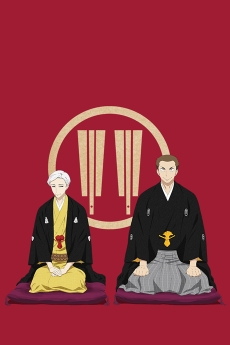
These aren't just separate stories. The past directly creates the trauma that everyone in the present is still choking on. Kikuhiko starts as a failed dancer with a bum leg who gets dumped into rakugo training against his will. He meets Hatsutaro, a natural performer who lacks technical polish but has charisma for days. Their friendship forms the backbone of the entire series, and watching it slowly rot over twenty years is genuinely painful. The show doesn't hold your hand with exposition. It drops you into moments and lets you figure out the timeline from context clues like fashion or radio models.
The flashbacks aren't nostalgia trips. They're autopsies. You know from the start that Sukeroku and Miyokichi die. The title itself gives it away, since "shinju" translates to lovers' suicide. The question isn't what happens, but how it happens and who gets left behind to carry the guilt. Kikuhiko spends forty years carrying that weight, and it shows in every rigid movement he makes.
The Performances Are The Plot
Here's the thing most reviews miss. The rakugo performances aren't interruptions to the story. They ARE the story. Every time a character performs "Shinigami" or "Jugemu," they're revealing something about their internal state that they can't say in normal conversation. When Kikuhiko performs, it's stiff and perfect and controlled because he's terrified of letting anyone see who he really is. When Sukeroku performs, it's messy and emotional and connects with the audience because he has no walls.
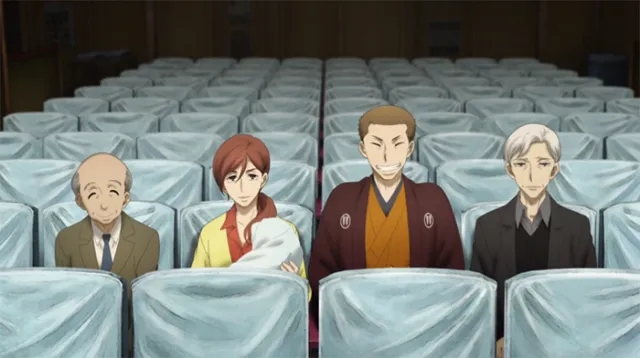
The anime goes hard on showing you the full performances too. These aren't thirty-second montages. You'll sit through five-minute rakugo stories that are animated with such care that you forget you're watching a cartoon. The Anime War Crime Tribunal review pointed out how Konatsu's first public performance for children who don't care about tradition, or Yotaro's rendition of Sukeroku's final story informed by a video recording, gain extra meaning from the specific context surrounding them. You see the sweat on their foreheads. You see their hands shake. You see how the audience reacts, or worse, how they don't react.
Showa Genroku Rakugo Shinjuu Analysis: The Voice Acting
The voice actors deserve medals for this work. Tomokazu Seki, Akira Ishida, and Koichi Yamadera aren't just playing their characters. They're playing their characters playing multiple roles within the rakugo stories. Seki has to voice Yotaro being nervous while also voicing the confident characters Yotaro portrays on stage. It's layers on layers, and if you pay attention to how their stage voices change over the years, you can track their emotional growth without a single word of internal monologue.
Megumi Hayashibara pulls double duty as Miyokichi while also singing the opening themes composed by Sheena Ringo. The second season opening "Imawa no Shinigami" even puts Miyokichi's face on a spinning gramophone record as a visual callback to her voice actor's singing career and the character's lasting ghostly presence. The Anilist review noted how these performers effortlessly capture the essence of the rakugo profession, which is a challenging feat given the vocal demands of switching between multiple characters mid-story.
The Technician Versus The Performer
This is the central conflict that drives everything. Kikuhiko is the technician. He practices until his feet bleed. He hits every beat perfectly. But his rakugo is cold because he learned it as compensation for his ruined dance career, not because he loves it. Sukeroku is the performer. He barely practices, he drinks too much, he improvises, but when he's on stage, the audience can't look away.
The show doesn't pick a side, which is smart. It shows you that Sukeroku's looseness ends up destroying him just as much as Kikuhiko's rigidity nearly destroys him. They're two sides of the same coin, and neither can exist without the other. This dynamic gets complicated when Miyokichi shows up. She's a geisha who bounces between both men, causing friction that eventually leads to the tragedy that defines the rest of the series.
The title itself tells you what happens. Sukeroku and Miyokichi die together in a fall from a balcony after a performance, leaving Kikuhiko to raise their daughter Konatsu while drowning in guilt. The TV Tropes page notes how later revelations show Kikuhiko was physically holding them both when they fell, which explains why his arm was damaged and why he carries such specific guilt. He couldn't save them, and he couldn't let himself die with them.
Gender, Tradition, And Konatsu
Konatsu might be the best character in the whole show, and she gets shafted by the setting in ways that feel brutally realistic. She wants to be a rakugoka like her father, but women aren't allowed to perform professionally in this world. She trains in secret, performing at a soba shop for customers who don't know what they're hearing. The show doesn't pretend this is fair. It lets you sit with her frustration as she watches Yotaro, a former criminal with no background in the art, get opportunities she'll never have because he happens to be male.
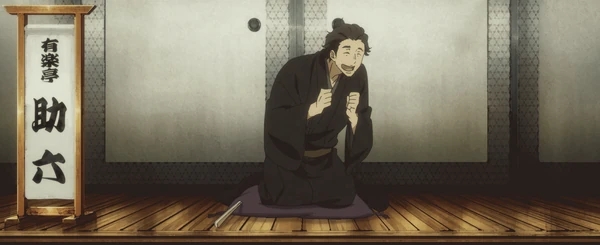
Her relationship with Yakumo (the name Kikuhiko eventually takes) is complicated. She blames him for her parents' deaths at first, and honestly, she's not entirely wrong. Yakumo carries that weight for decades, and their household is basically two people who can't forgive each other but can't leave each other either. When she has a child, Shinnosuke, the dynamics shift again. The show never reveals who the father is definitively, though it heavily implies it might be Yakumo himself, adding another layer of messed up family dynamics to the pile.
The Yatta-Tachi first impressions piece captured Konatsu's frustration perfectly, noting how her desire to perform rakugo herself is hindered by being a woman, a frustration she experiences daily while training Yotaro in her father's style by telling the story "Shinigami."
The Soundtrack And Visual Style
Kan Shibue's music deserves its own paragraph. Instead of going full traditional Japanese, the score mixes jazz and big band sounds with shamisen pieces. It shouldn't work, but it does. The music feels like the Showa era in a way that hits you in the gut without being on the nose. The comparison to "Kids on the Slope" is apt, since both use jazz to evoke a specific period of Japanese history without beating you over the head with it.
Visually, the character designs take cues from Natsume Ono's work. Everyone has long faces and gangly proportions that make them look distinct from typical anime pretty boys. The backgrounds are detailed without being flashy, and the lighting is used to show time periods. The past has a softer, sepia-tinged quality while the present is harsher. Studio DEEN outdid themselves here, especially in the director's cut of episode one, which runs about 90 minutes instead of the broadcast 48 minutes. If you're going to watch this, find the director's cut. The broadcast version cuts scenes that are essential for understanding Yakumo's emotional state.
Season Two And Resolution
The second season, Sukeroku Futatabi-hen, brings the story to the 1970s and resolves the generational trauma that's been building. Yotaro finally earns his place as a shin'uchi (master), taking the name Sukeroku to honor Konatsu's father. This inheritance of names is a big deal in rakugo culture. The "Yakumo" name passes to the most skilled student, while "Sukeroku" gets passed to the one who carries the spirit of the art forward.
The ending is controversial, but it works. Yakumo attempts suicide by fire, wanting to end his life and the Yakumo lineage with him, but he's saved by Yotaro and Konatsu. Instead of dying alone, he ends up surrounded by the found family he's been pushing away for forty years. It's not a happy ending exactly, but it's a healing one. The final rakugo performance he gives for his grandson, "Jugemu," is the same children's story he once refused to perform because he thought it was beneath him. That change shows he's finally let go of his pride and his guilt.
The Glorio Blog's final thoughts described this as a full and beautiful portrayal of a person's life, showing how anime can transcend pop culture to tell universal stories that speak to the human experience. The series grapples with real adult questions about unexpected outcomes, wrong choices, failure, and coping with consequences, without being cynical about it.
Why This Show Still Matters
This anime came out years ago, and people still sleep on it. It won the 38th Kodansha Manga Award and got Haruko Kumota the New Creator Prize at the Tezuka Osamu Cultural Prize, but it never blew up like your typical shonen battle series. That's a crime. This is a show about adults making bad choices and living with them. It's about an art form that's dying as TV and radio take over Japanese entertainment.
The Reddit analysis of Kikuriko's character arc pointed out how his development and personal journey provide literary depth rarely seen in the medium, particularly in how the ending prompts evidence-based analysis of his psychological state. This isn't just good anime. It's good television, period. It tackles sexuality, gender roles, class differences, and the weight of tradition without preaching at you. It just shows you these messed up people and lets you draw your own conclusions.
If you want to see what happens when every department fires on all cylinders, from the direction by Shinichi Omata to the music to the voice acting, this is the show. It proves that you don't need fantasy elements or high concept sci-fi to make something unforgettable. Sometimes all you need is two men, a stage, and the ghosts they're trying to outrun.
Final Thoughts On Showa Genroku Rakugo Shinjuu
Showa Genroku Rakugo Shinjuu analysis usually focuses on the historical accuracy or the rakugo performances themselves, but that's missing the forest for the trees. At its core, this is a story about people who can't communicate normally so they use an ancient storytelling art to finally say what they mean. It's about forgiveness being harder than holding a grudge, and about how you can't outrun your past no matter how perfect your technique gets.
If you haven't watched it yet, find the director's cut and clear your schedule. Don't marathon it in one day. Let each episode sit with you. This isn't fast food anime. It's a ten-course meal that takes its time, and if you give it your attention, it'll change how you look at character writing in animation. The show remains a solid example of what happens when creators trust their audience to handle heavy themes without dumbing anything down.
Frequently Asked Questions
Do I need to understand rakugo before watching?
Nope. The show teaches you everything you need to know through the characters. By the end, you'll understand the art form better than most Japanese people under fifty.
Should I watch the OVAs first?
The first anime episode covers the OVA content, but you should hunt down the director's cut version. It runs 90 minutes instead of 48, and it includes scenes that are crucial for understanding Yakumo's psychology.
Is the manga different from the anime?
The anime covers the complete manga story from start to finish. You don't need to read the manga unless you want more details on side characters like the other rakugoka in the association.
Why is it called Descending Stories in English?
That's the official English title for the manga release. It refers to how rakugo stories get passed down through generations, and how the plot moves through different time periods and social classes.