
Slam Dunk Anime Series Review Without the Nostalgia Filter
Slam Dunk anime series review discussions usually devolve into boomers yelling about how kids these days don't appreciate real sports anime, but let's cut through that noise immediately. This show is simultaneously one of the best character studies in shonen history and a masterclass in how to botch an adaptation's ending so badly it hurts. You've got 101 episodes of genuinely brilliant basketball action, painful filler, and some of the most questionable racial caricatures in 90s anime, all wrapped up in a package that will make you love a sport you never cared about five minutes ago.
I'm not here to tell you it's perfect. It's not. The pacing drags like a busted transmission, the animation quality swings between gorgeous and embarrassing, and the series ends at the worst possible moment, right before the actual championship games that matter. But here's the thing: despite all that garbage, Slam Dunk still hits harder than most modern sports anime because it understands something fundamental about competition that shows like Kuroko's Basketball forgot, namely that losing hurts and improvement takes actual time.
The Realism Makes It Hurt More
Most sports anime give their protagonists superpowers by episode three. Kuroko vanishes into thin air. Eyeshield 21 players move at mach speed. But Slam Dunk anime series review threads always point out the same truth: these kids actually play basketball like real humans. Sakuragi starts off knowing literally nothing, not even the rules, and spends the first twenty episodes learning how to do a layup without falling over. That might sound boring if you're used to protagonists mastering techniques instantly, but it's exactly why the show works.
When Sakuragi finally dunks on someone, it feels earned because you watched him fail hundreds of times first. The mechanics are accurate enough that real basketball coaches used to recommend this show to players. You see actual strategies like pick and rolls, zone defenses, and fast breaks executed with technical precision that respects the sport. The anime even got popular enough in Japan that it reportedly boosted basketball participation rates among high schoolers during the 90s, which eventually led to Takehiko Inoue creating the Slam Dunk Scholarship for aspiring players.
But this realism comes with a cost. The games take forever. A single match can stretch across six or seven episodes, and while that builds tension, it also tests your patience when you're watching on modern streaming services. The show aired from 1993 to 1996, and it shows in the pacing structure designed for weekly broadcast schedules where viewers needed recaps every episode.
Character Development That Actually Develops
Sakuragi Hanamichi begins as an annoying, violent idiot who joins the basketball team solely to impress a girl named Haruko. By the end, he's still kind of an idiot, but one who genuinely loves the game and respects his teammates. That arc doesn't happen over a montage. It happens through repeated failure, humiliation, and slowly building chemistry with the other delinquents on the Shohoku team.
You've got Takenori Akagi, the captain everyone calls Gorilla (which we'll talk about later because it's messed up), acting as the disciplined anchor. Hisashi Mitsui gets one of the most brutal redemption arcs in anime history, going from a legit gang member who gets the team into street fights back to a sharpshooting basketball player haunted by his wasted potential. Then there's Ryota Miyagi, the short speedster point guard whose backstory got expanded significantly in The First Slam Dunk movie, showing his trauma over his dead brother and his move from Okinawa.
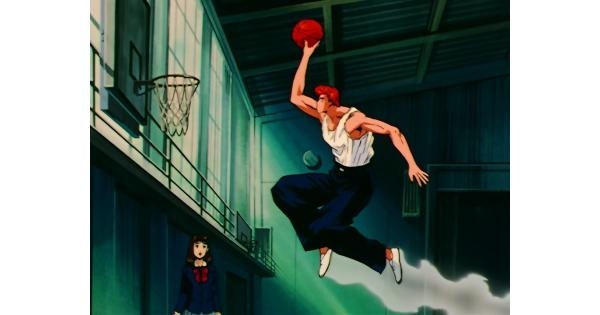
The rivalries feel personal because they grow organically. Rukawa Kaede starts as Sakuragi's enemy because they're both freshmen with massive egos, but their competition pushes both to get better rather than just being static obstacles. Even the opponents get humanized. Sendo, the ace from Ryonan, isn't a villain; he's just another guy who loves basketball and happens to be in the way.
The Ending That Doesn't Exist
Here's where I get angry. The Slam Dunk anime series review community has been collectively furious for nearly three decades because the show ends on a cliffhanger after the team qualifies for the national tournament. That's it. Credits roll. We never see them play Sannoh High, we never see the championship, and we don't get resolution on several character arcs because the anime stopped production before the manga finished.
The manga did conclude properly, showing the brutal Inter-high tournament games where Sakuragi injures his back but keeps playing through the pain, and the team finally faces the undefeated champions Sannoh. These are some of the best basketball sequences ever drawn, full of tactical plays and emotional beats that payoff 31 volumes of buildup. The anime gives you none of it. You invest 101 episodes into these characters only to get blue-balled at the finish line.
Apparently this happened because the anime caught up to the manga and instead of waiting or doing filler arcs (though they did plenty of filler earlier), they just ended it. This is why The First Slam Dunk movie exists, to finally animate that Sannoh game, but even that movie switches protagonists to focus on Miyagi instead of Sakuragi, which left some fans weirded out even though the animation quality is stunning.
The Parts That Aged Like Milk
We need to talk about the racism and sexism because ignoring it would be dishonest. The show constantly refers to Akagi as a gorilla because he's tall and has darker skin. Other characters call him Gori as a nickname, and his dunks get called gorilla dunks. It's played for laughs in the 90s context, but watching it now makes you cringe hard. Common Sense Media flagged this as reflecting Japanese colorism issues from that era, and they weren't wrong.
There's also a Black player on a rival team who gets drawn with exaggerated features that belong in a 1940s propaganda poster rather than a 1990s anime. While less caricatured than some other shows from that period, it's still uncomfortable viewing. The AV Club mentioned this in their review of The First Slam Dunk movie, noting that while the film updates some things, these elements remain problematic.
The female characters get it rough too. Haruko exists primarily as Sakuragi's motivation object. She has her own interest in basketball, but her role is mostly to cheer from the sidelines and be oblivious to Sakuragi's feelings. It's typical 90s shonen romance where the girl has no agency beyond inspiring the male lead to try harder.
Animation Quality Swings Wildly
Let's be real about the visuals. When Slam Dunk started in 1993, the animation was rough. Character models go off-model constantly, the basketball moves look stiff, and the color palette is that washed-out 90s aesthetic that makes everything look slightly yellow. But as the series progresses, particularly during the second half and the movie adaptations, you can see the budget increasing.
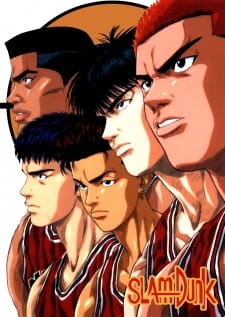
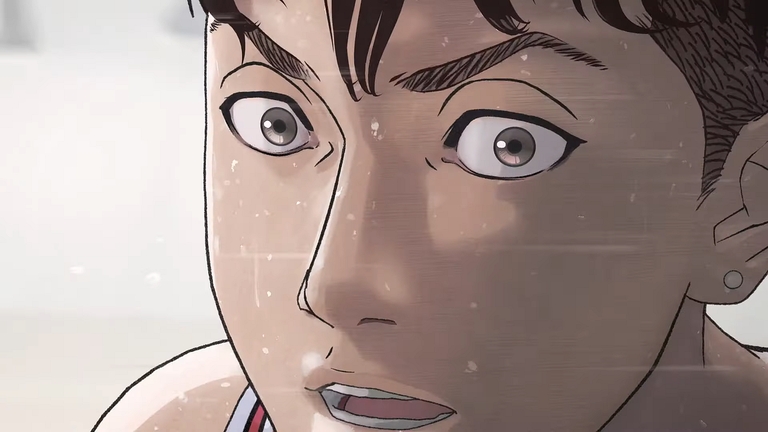
The First Slam Dunk movie finally gives the franchise the animation it deserves, using a mix of 2D and 3D CGI that looks like rotoscoped basketball footage. The characters move like real athletes, with weight and momentum that 2D animation struggles to capture. Ryota Miyagi's speed looks incredible in the film, and the Sannoh game finally gets the cinematic treatment fans waited decades for. The basketball action in that movie is some of the best sports animation ever produced, period.
But going back to the TV series, you're going to notice the pacing problems I mentioned earlier. They reuse animation constantly. How many times do we need to see the same three-point shot animation for Mitsui? The final episodes improve significantly, but early on it's rough watching Sakuragi practice layups for the fifteenth time using the same three frames of animation.
Why It Still Works Despite Everything
Reddit users in r/anime threads consistently rank this as a top-tier sports show even with all its flaws, and I get why. The humor lands. Sakuragi's delinquent friends provide comic relief that breaks up the sports drama without feeling forced. The soundtrack, especially that first opening theme "Kimi ga Suki da to Sakebitai" by BAAD, hits that perfect 90s rock energy that gets you hyped for basketball even if you don't care about the sport.
More importantly, the show understands that sports are about failure. Sakuragi loses constantly. He gets dunked on, outplayed, and humiliated in front of Haruko repeatedly. His first game is a disaster. The team doesn't win the championship in their final year because that's not how high school sports work most of the time. The victory comes from the growth, from the bonds formed in the locker room, from the fact that these angry, messed-up kids found something worth caring about together.
MyAnimeList reviews consistently mention how the show teaches life lessons about never giving up and building strong bonds, which sounds corny until you watch Mitsui crawl back to the gym after betraying the team, begging to play again. That scene hits harder than any superpowered volleyball spike from Haikyuu because it feels like it could actually happen.
Comparison to Modern Sports Anime
People always ask whether they should watch Slam Dunk or Kuroko's Basketball first. Here's my take: if you want realistic basketball where strategy matters and characters improve gradually, watch Slam Dunk. If you want flashier animation and superpowers, watch Kuroko. But Slam Dunk is the better character piece by miles. Kuroko's Basketball is fun popcorn entertainment, but it treats basketball like Dragon Ball treats martial arts.
Haikyuu gets closer to Slam Dunk's realism but with better pacing and modern animation quality. Ace of Diamond handles baseball with similar attention to technical detail. But neither has the same raw, unpolished energy that Slam Dunk carries. The 90s aesthetic, the rock soundtrack, the way the characters look like actual Japanese high schoolers rather than fashion models, it all creates a specific vibe that modern shows can't replicate.
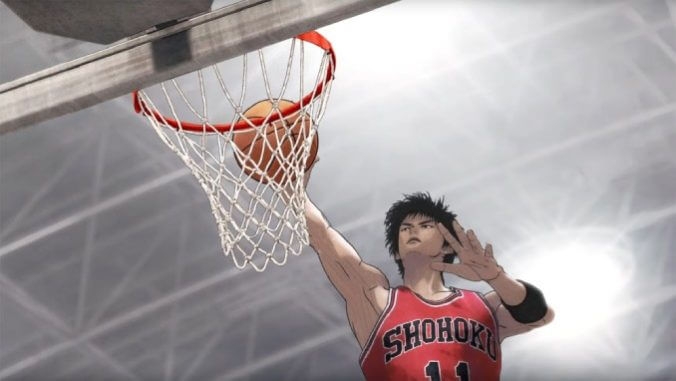
Some fans on Reddit note that the plot can feel tedious compared to modern standards, and they're not wrong. The show takes its time. But that slowness allows for moments like Coach Anzai's mentorship to land properly, or for the rivalry between Sakuragi and Rukawa to develop naturally rather than being declared in episode one.
The Scholarship and Real Impact
I mentioned earlier that the show boosted basketball in Japan, but it went further than that. Takehiko Inoue actually established a real scholarship program in 2006 to send Japanese high school basketball players to study in America. That's the kind of impact most anime can only dream of. When your cartoon about basketball is so effective that it changes real lives and creates educational opportunities, you've done something right.
The manga's art evolution also deserves mention. Inoue's style grew from standard 90s shonen art to something much more realistic and detailed, eventually leading to his masterpiece Vagabond. You can see the seeds of that growth in the later Slam Dunk chapters, where the basketball players start looking like athletes rather than cartoon characters.
Should You Watch It in 2024?
Yeah, but know what you're getting into. Don't binge it expecting Haikyuu pacing. Watch it understanding that it ends prematurely and you'll need to read the manga or watch The First Slam Dunk movie to get closure. Go in ready to overlook some 90s animation shortcuts and some racial stereotypes that haven't aged well.
But if you stick with it, you'll get one of the most satisfying character arcs in anime history. You'll see a kid go from hating basketball to bleeding for it, literally. You'll see teamwork that feels earned rather than declared. And you might find yourself looking up local basketball courts afterward, which is more than you can say for most shows.
The Slam Dunk anime series review consensus is that it's a classic for a reason, even if that reason comes with a bunch of caveats. It's messy, incomplete, occasionally offensive, and paced like a snail racing through molasses. But it's also funny, heartfelt, and technically accurate in ways that respect the sport and the viewer's intelligence.
If you want a show that treats basketball like a real thing that requires practice and failure, not a vehicle for superpowers, this is still the gold standard. Just prepare yourself for that ending, or lack thereof. Keep the manga handy, or wait until after episode 101 to watch The First Slam Dunk movie so you can finally see how the Sannoh game actually plays out. Either way, Sakuragi's journey from delinquent to basketball player remains one of the most convincing transformations in the medium, gorilla jokes and all.
Frequently Asked Questions
Why does the Slam Dunk anime ending feel incomplete?
The anime ends abruptly after Shohoku qualifies for the national tournament. It doesn't adapt the final Inter-high championship games against Sannoh High from the manga, leaving the story incomplete. You'll need to read the manga volumes 23-31 or watch The First Slam Dunk movie to see how the tournament actually plays out.
How does Slam Dunk compare to Kuroko's Basketball?
It's much more realistic. While Kuroko's Basketball uses supernatural abilities like invisible passes and zone states, Slam Dunk focuses on actual basketball fundamentals. Players practice basic skills for episodes, games use real strategies, and characters improve gradually through hard work rather than unlocking superpowers.
Is Slam Dunk still worth watching today?
Yes, but with warnings. The animation starts rough and improves over 101 episodes. The pacing is slow by modern standards with lots of recaps. It contains dated racial stereotypes, particularly regarding darker-skinned characters being called gorillas. However, the character development and basketball action remain excellent.
Did Slam Dunk have any real-world impact on basketball?
Takehiko Inoue created the Slam Dunk Scholarship in 2006, which sends Japanese high school basketball players to study and play in America. The series also significantly boosted basketball's popularity among Japanese youth during the 1990s.
Should I watch The First Slam Dunk movie after the anime?
The movie adapts the Sannoh High game that the TV series never showed, but shifts focus to Ryota Miyagi instead of Sakuragi. It uses modern CGI and 2D hybrid animation that looks incredible, but some fans were surprised by the protagonist switch. It's best watched after completing the anime or manga.