
Sword of the Stranger Anime Movie Analysis and Why Modern Action Looks Fake
People keep sending me clips from new anime with supposedly mind-blowing fight scenes and I keep closing the tab halfway through to rewatch this 2007 movie that most viewers skipped because the poster looked like every other samurai flick. Sword of the Stranger anime movie analysis usually starts and ends with comments about cool sword fights but that is selling this thing short by miles. This is hand-drawn violence that understands physics better than most live-action movies. It is a film where every clash of steel has weight, every step in the snow crunches, and nobody is flying around shooting energy beams or screaming attack names.
I am tired of pretending that modern CGI-heavy productions come anywhere close to what Yutaka Nakamura pulled off here. He spent a full year animating just the action sequences for this film. A full year. That does not happen anymore. The result is combat that feels dangerous in a way that Dragon Ball or Demon Slayer never will, because the characters are limited by human bodies and gravity and the fact that swords are heavy.
The story is dead simple. A nameless ronin protects a kid from Chinese warriors who want his blood for an immortality ritual. That is it. No twists that rewire the plot, no filler arcs, no power-ups. Just a guy with a sword he refuses to draw, a bratty orphan, and a dog walking through feudal Japan while killers hunt them. Director Masahiro Ando wanted to show the Middle Ages as they were, not as we imagine them, and that means mud and rain and exhaustion.
Sword of the Stranger Anime Movie Analysis and the Nakamura Effect
Let us get this out of the way immediately. When you look up discussions of this film online, everyone mentions Yutaka Nakamura, and they should, because he is the reason this film punches you in the chest. He did not use rotoscoping. He did not use motion capture. He just sat there and drew frame after frame of people trying to kill each other with sharp metal, and he did it with an understanding of how bodies move when they are terrified.
The fights hurt because he animates the recovery time. When someone swings a heavy blade, they are off-balance for a few frames. When a guy gets cut, he does not explode into a fountain of blood, he just stops working right and falls over. The final duel between Nanashi and Luo-Lang happens in complete silence except for the wind and the swords. No music, no screaming, just the sound of breathing and steel. That choice guts you because you hear every impact.
Nakamura cares about momentum in a way that most animators have forgotten. A body in motion stays in motion until something stops it, and that something is usually a tree or the ground or another sword. Characters trip. They slip in the snow. They get tired. You can see the exhaustion in the way they hold their weapons by the end of long fights, wrists dropping, shoulders sagging. This is not flashy. It is just right.
The Bridge Fight Sets the Rules
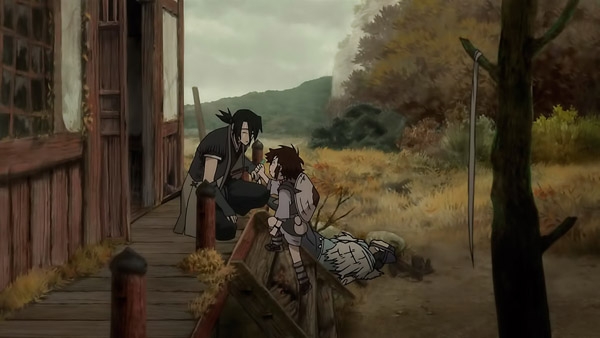
Early in the film there is a fight on a bridge where Nanashi takes on several soldiers without drawing his blade. He uses the scabbard. He uses the environment. He moves like someone who has been in real fights before, not like a dancer. He blocks with the sheath, trips people, throws them off balance. It establishes immediately that this movie cares about space and terrain and the fact that bridges are narrow.
Compare that to modern anime where characters stand in open fields and exchange energy blasts while floating. The bridge fight has texture. You can see the wood grain. You worry about the footing. When the sword finally comes out later in the movie, it means something because you have seen him win without it.
The Snow Duel and Silent Killing
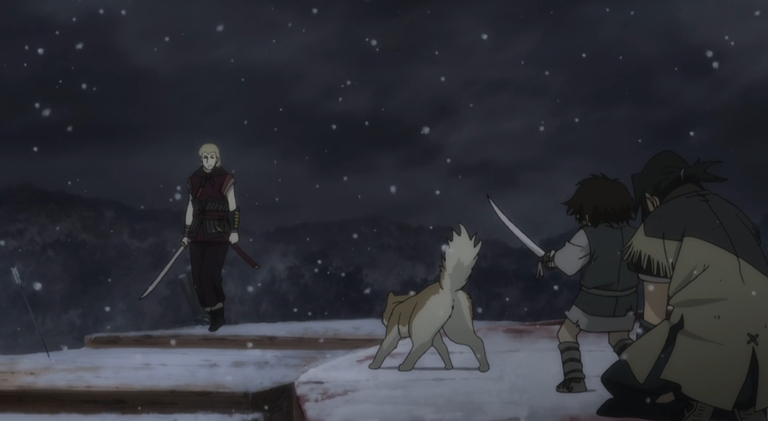
The final battle takes place in a snow-covered field between Nanashi and Luo-Lang. Luo-Lang is a European swordsman working for the Ming who has spent the whole movie looking for a worthy opponent. He finds it here. The animation shows their breath in the cold air. Their feet sink into the drifts. They are both wounded and tired from previous fights.
And there is no music. The score drops out completely. You hear the wind, the crunch of snow, the ring of steel, and the breathing of two men trying to kill each other. This is not a celebration. It is a death match. The film uses silence to make the violence real.
Why Being Predictable Is Not a Weakness
Yeah, the plot is something you have seen before. Wandering warrior with a dark past meets kid who softens his heart, protects him from bad guys, has to confront his trauma to save the day. It is Shane. It is Lone Wolf and Cub. It is every samurai movie made before 1980 and most Westerns too.
That is not a bug. It is the whole point. The film is not trying to reinvent the wheel. It is trying to make the smoothest, roundest wheel possible so you can focus on how it rolls rather than where it is going. The predictability lets you settle in and watch the details instead of worrying about twists or lore dumps.
The screenplay by Fumihiko Takayama knows exactly what it is doing. It sets up the rules early. Nanashi has a sword but he will not draw it because of something he did in his past working for a warlord. Kotaro is annoying but he has a dog that is cool. The Ming dynasty guys want him for a ritual involving his blood. Once those pieces are on the board, the movie just moves them around efficiently without trying to trick you.
The Shane Connection Is Intentional
Critics have pointed out the structural similarities to the film Shane, and they are obvious. A gunfighter, or in this case a swordsman, tries to settle down or just keep moving but gets pulled into protecting a family or a child from violent forces. He deals with his own capacity for violence while teaching the kid that sometimes you have to fight.
This works because it is a sturdy frame. You do not need to spend twenty minutes explaining why Nanashi cares. He just does. The movie trusts you to understand that protecting children is something decent people do, and it spends its time on the how and the when rather than the why.
Characters Who Feel Like Real People
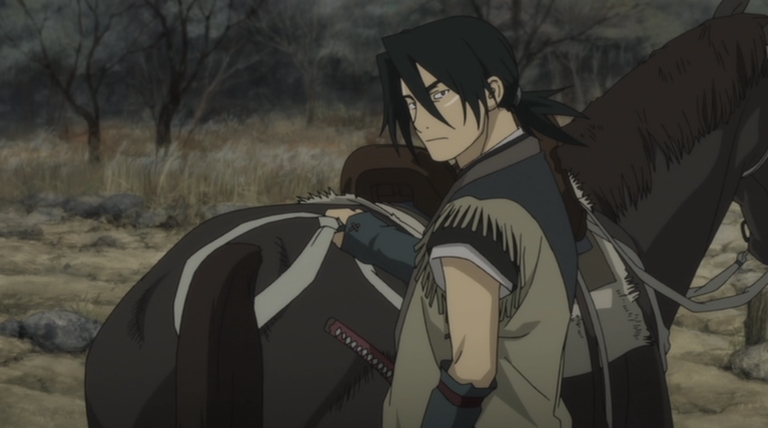
I know the gruff loner learns to care about a kid thing is tired. But Tomoya Nagase voices Nanashi with this weird flatness that works perfectly. He sounds tired. He sounds like a guy who has been walking for years and just wants to sit down and rest his feet. That is exactly right for a ronin who has given up on everything.
Ando cast Nagase specifically because he did not sound like a typical samurai. He sounds modern, detached, almost bored. That adds to the estrangement of the character. You believe he has seen too much and does not care about honor or glory anymore. He just wants to be left alone.
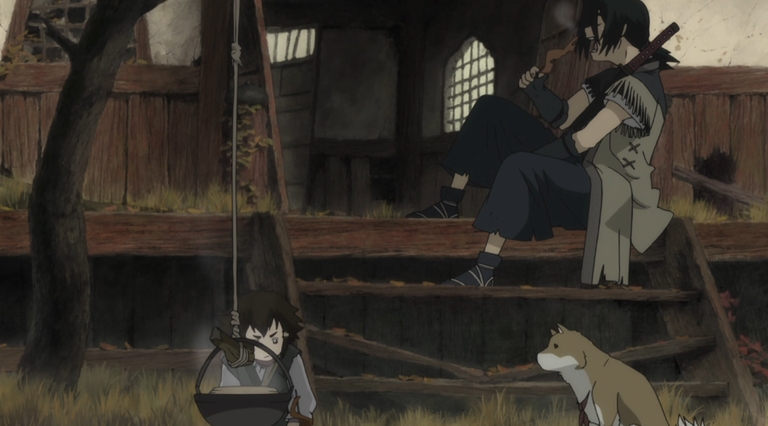
Kotaro is bratty. He whines. He makes bad decisions and he is stubborn in the way that only children can be. But he is a kid, and the movie treats him like a real kid instead of a plot device or a magical chosen one. He gets scared. He gets hungry. He does not understand adult politics and he does not care about the Ming dynasty. He just wants his dog to be okay.
The Dog Grounds Everything
Tobimaru is not just cute filler to sell merchandise. He gets poisoned early on, which forces Nanashi to actually engage with the plot instead of walking away. He is the reason Nanashi stays. And his recovery gives Kotaro something to worry about besides himself, which makes the kid more sympathetic.
The dog acts like a dog. He barks at danger. He eats food he should not. He is loyal without being anthropomorphized. In a movie full of killers and politicians, the dog is just a dog, and that simplicity keeps the story from floating away into fantasy.
The Villains Have Their Own Movie
The villains are usually the weak spot in action films. They are either boring faceless mooks or over-explained masterminds with convoluted plans. The Ming warriors here hit a sweet spot. They have a goal, they are competent, and they have distinct personalities.
Luo-Lang, the blonde European swordsman, is not evil for the sake of it. He is not trying to take over the world or become immortal. He is just bored. He has killed everyone worth killing and he wants someone who can actually challenge him before he dies. That makes him weirdly sympathetic even when he is slaughtering bandits.
He spends the whole film waiting for Nanashi to become a worthy opponent. When they finally fight, it feels earned. You understand both of their motivations. Luo-Lang wants a good death. Nanashi wants to protect the kid. Neither of them cares about the political machinations that put them there.
The Historical Context Matters
The film is set during the Sengoku period when Japan was fractured into warring states, and the Ming dynasty from China had their fingers in everything. The movie does not beat you over the head with history lessons, but it shows you that the Japanese lords are willing to sell out one of their own children to the Chinese for political favor.
That desperation permeates the background. Everyone is dirty. Everyone is scheming. The monks are corrupt. The nobles are weak. It is a world where a nameless ronin is the most honorable person in the room because at least he is honest about being a killer.
The Sound of Silence
Naoki Sato wrote a solid orchestral score with taiko drums and strings that hits hard during the big moments. But the smartest thing he did was drop everything during the final battle. The silence makes you aware of your own breathing. It makes the clash of swords sound like thunder.
Most anime drowns its fights in heavy metal or techno or orchestral bombast that tells you how to feel every second. This movie trusts the animation to carry the emotion. It trusts you to pay attention without being yelled at by the soundtrack.
The music that is there serves the atmosphere. It is not catchy. You will not hum it later. But it builds tension before the release of violence, and that is all it needs to do.
A History Lesson on Why You Missed It
Here is the frustrating part. This movie came out in 2007 in Japan, got a tiny US release in 2008, and then Bandai Visual USA collapsed. That meant it got a one-night screening in maybe two cities and then disappeared into licensing hell. No marketing push, no wide theatrical run, no streaming deal at the time. It just vanished.
It hit right when the industry was shifting from DVD to whatever came next. It had no toy line. It was not based on a manga with a built-in fanbase screaming for adaptations. It was just a standalone movie that came and went. That is criminal because it is better than most of the theatrical anime that gets wide releases now.
Many fans discovered it later through word of mouth and wondered how they missed it the first time. The answer is bad luck and bad distribution, not quality issues.
Why It Aged Better Than Your Favorites
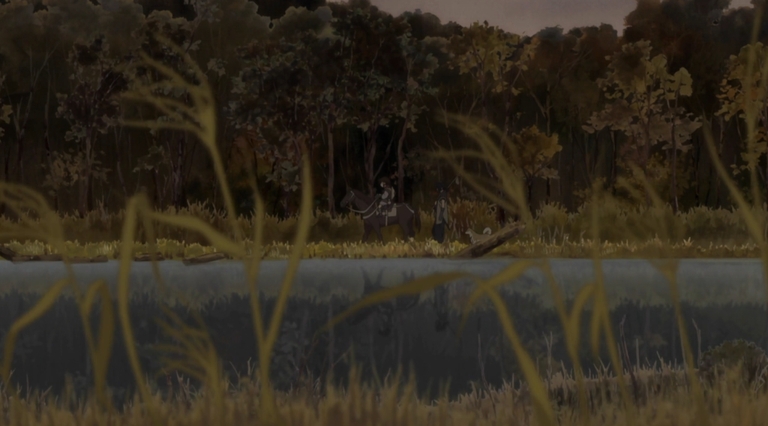
Look at screenshots from other 2007 anime. Most of them look rough now. Either the early digital coloring looks washed out or the CGI sticks out like a sore thumb or the character designs are too spiky to take seriously. Sword of the Stranger looks better now than some movies released last year.
The watercolor backgrounds hold up because they are painted, not rendered. The fight animation has not been matched by anything using computer assistance because computers still cannot replicate the specific timing and impact of Nakamura's work. The character designs are simple enough that they do not look dated, but detailed enough that you remember faces.
No Superpowers Required
I cannot stress this enough. Nobody shoots lasers. Nobody flies. Nobody unlocks a hidden potential or goes Super Saiyan. The most supernatural thing in the movie is the prophecy about Kotaro's blood, and even that might just be superstition. When these guys fight, they are limited by gravity and stamina and the sharpness of their blades.
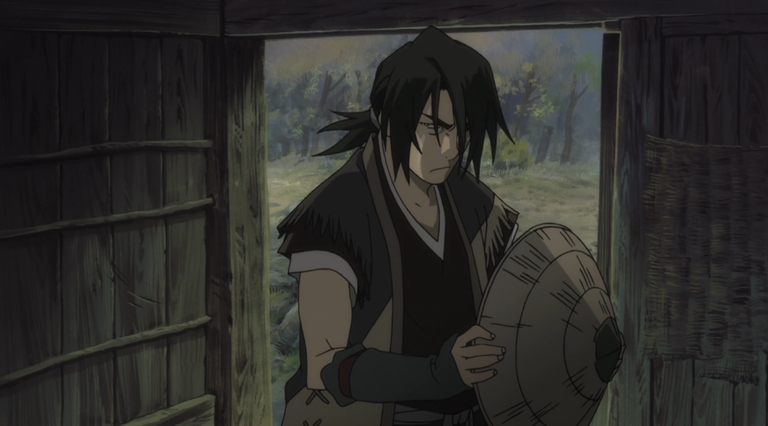
That grounding makes it special. When Nanashi finally draws his sword, it means something because we have seen him refuse to do it for an hour. When he cuts someone, they stay cut. There is no healing factor. There is no power of friendship saving the day. Just steel and skill.
The Bottom Line on This Sword of the Stranger Anime Movie Analysis
If you are writing about this film, you have to talk about how it represents a kind of action filmmaking that is nearly extinct. Hand-drawn, physics-based, character-driven violence that does not need to explain itself with lore dumps or power levels or complicated magic systems. It just shows you two people trying to kill each other and makes you care about both of them.
Is the plot predictable? Sure. Is Kotaro annoying sometimes? Yeah, that is the point, he is a kid. But the movie knows what it is doing. It is a delivery system for some of the best animation ever committed to film, wrapped in a story that understands why we watch samurai movies in the first place. Not for twists, but for the moment when a man who has nothing left to live for picks up a sword one last time because a kid needs him.
Watch it if you have not. Watch it again if you have. It is 103 minutes long and not a second is wasted. The fights still hurt, the snow still looks cold, and the ending still hits like a truck. That is more than I can say for most of the action epics released in the last decade. It remains a benchmark for realistic combat that modern productions should study but probably will not because it takes too long to draw.
Frequently Asked Questions
What is Sword of the Stranger about?
It is a 2007 anime film from Studio Bones directed by Masahiro Ando. It follows a nameless ronin who protects a young boy named Kotaro from Chinese Ming dynasty warriors who want his blood for an immortality ritual. The movie is famous for its realistic sword fights and hand-drawn animation.
Who animated the fights in Sword of the Stranger?
Yutaka Nakamura animated the action sequences. He spent a full year on the fight scenes, focusing on realistic physics, momentum, and weight. The final duel in the snow is particularly famous for having no music, just the sound of swords and breathing.
Is the story predictable?
Yes, but that is the point. It follows classic samurai movie structures similar to Shane or Lone Wolf and Cub. The predictability lets you focus on the character details and the animation quality rather than plot twists.
Why did I never hear about this movie before?
It had a very limited release in the US because Bandai Visual USA shut down shortly after acquiring it. It only screened in a few cities for one night in 2008, so most fans found it later through home video or streaming.
Are there supernatural powers in the fights?
No. The fights are grounded in realistic physics. Characters get tired, slip in snow, and suffer from wounds. There are no energy blasts, flying, or superpowers. It is just skilled swordsmen fighting with actual weight and consequences.