
Taichi Yaegashi and Nagase's Relationship in Kokoro Connect Was Built on Shaky Ground
Taichi Yaegashi and Nagase's relationship in Kokoro Connect starts with all the hallmarks of a standard anime romance before curving hard into a psychological study about why some people can't accept love even when they want it. You watch the first few episodes and you think you've got it figured out. The selfless protagonist and the bubbly club president are obviously going to pair up because that's how these stories usually go. The body swapping gimmick forces them into intimate situations, they learn each other's secrets, and boom, relationship formed. Except that's not what happens at all and the show is way more interested in exploring why that specific pairing crashes and burns than in celebrating it.
The problem isn't that Taichi didn't try hard enough or that Iori was being overly dramatic. The structure of their attraction was rotten from the inside because Iori Nagase didn't have a stable identity to offer anyone. She was performing a version of herself adjusted for every room she entered, a survival mechanism she developed after surviving an abusive household with five different father figures rotating through her childhood. Taichi fell for the performance, which wasn't his fault exactly, but it meant he was trying to build a relationship with a moving target. You can't date someone who doesn't know which version of themselves is going to wake up that morning.
Most of the fandom focuses on the love triangle aspect and treats Iori as the obstacle before the real romance with Inaba begins. That's a lazy read. The relationship between Taichi and Iori matters because it shows what happens when two genuinely good people try to connect across a gap that's too wide to bridge. It's painful to watch because it mirrors real situations where timing and personal growth matter more than shared attraction.
The Body Swapping Forced Intimacy Too Fast
The Hito Random arc throws these five students into a supernatural blender where their consciousnesses swap between bodies at random intervals. On the surface, this creates perfect conditions for a romance to bloom. Taichi and Iori get to see each other's home lives, experience their private struggles, and develop empathy at accelerated speeds. The show even gives them a dramatic moment where Taichi kisses Iori while she's technically borrowing someone else's body, which should be the point of no return for their romantic tension.
But here's the thing about forced intimacy. It doesn't build a foundation, it just removes the walls. When Taichi sees Iori's complicated home situation with her mother Reika and the revolving door of father figures, he feels like he understands her. When he experiences her fear and her performance anxiety firsthand through the swaps, he thinks he's seeing the real Iori. He's not. He's seeing the symptoms of her trauma without understanding the disease.
When Taichi swaps into Iori's body, he has to interact with her mother Reika directly. He sees how Reika treats Iori like a roommate rather than a daughter, how the house feels empty even when people are in it, and he experiences the specific loneliness of waiting for a mother who works nights and dates around. This gives him data about her life but not understanding of her psyche. He knows she hurts but he doesn't know why she can't stop performing.
When Iori swaps into Taichi's body, she meets his sister Rina and sees how Taichi acts as a parent figure because their dad is always away on business and their mom works long hours. She recognizes that Taichi is also performing a role, the reliable big brother, but his performance is consistent while hers shifts constantly. This creates a weird distance between them. They both see each other's family trauma but process it differently. Iori realizes that Taichi is as trapped in his selflessness as she is in her masks, which makes her both respect him and fear him.
The confession scene in the club room happens because Taichi believes the supernatural chaos has revealed their true selves to each other. He thinks they have this unique bond now because of what they've witnessed. Iori rejects him not because she doesn't feel the same way, she absolutely does, but because she knows he hasn't seen the real her. He saw the masks she wears and mistook them for the face underneath. That's not something you can fix with more confessions or more dramatic rescues.
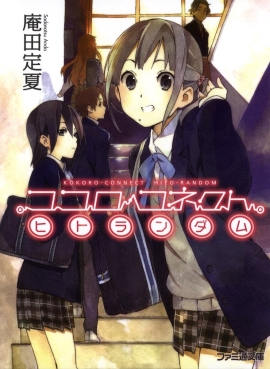
Iori's Masks Weren't Just a Quirk
People mischaracterize Iori's personality switching as her being fake or two faced. That's wrong and misses the psychological weight of what she's doing. After experiencing abuse from one of her stepfathers, Iori learned that survival meant becoming whatever the room needed her to be. If the room needed a cheerful optimist, she became that. If it needed a voice of reason, she became that. She had five different men playing dad throughout her childhood, each with different expectations, and her mother Reika was frequently absent working nights.
This isn't a girl being dishonest. This is a girl who disconnected from her own preferences to avoid conflict and violence. When Taichi tells her he loves her, he's saying he loves the cheerful club president who keeps everyone's spirits up. He doesn't know about the cynical, angry, bitter Iori that shows up later in the series because she hasn't shown him yet. She hasn't shown anyone.
The abusive stepfather wasn't just mean, he was violent. When Iori's mother Reika brought home certain men, Iori learned to read the room immediately. If he looked angry, she became invisible. If he looked bored, she became entertaining. This wasn't conscious manipulation, it was survival programming. By the time she meets Taichi, she's been doing this for so long that she doesn't know what her default personality is.
The show hints at this when Iori can't answer basic questions about her preferences. Ask her what food she likes and she'll tell you what she thinks you want to hear. Ask her what music she enjoys and she'll mirror your taste. Taichi notices this early on but mistakes it for her being accommodating and nice rather than being hollow. He thinks her flexibility is kindness when it's actually a defense mechanism that prevents anyone from knowing the real her.
The relationship was doomed because Iori couldn't show up as a consistent person. One day she might feel like the upbeat girl Taichi likes, the next she might feel like nobody at all. You can't build a romantic partnership on that instability no matter how much mutual affection exists. It's like trying to climb a ladder where the rungs keep changing positions.
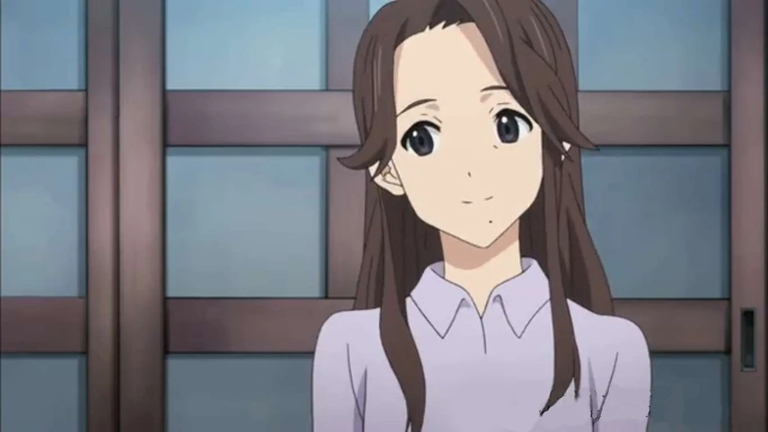
The Rejection Scene Exposed the Gap
When Taichi finally confesses his feelings in that club room scene, Iori hits him with the line about how he doesn't know the real her. Fans sometimes get annoyed at this moment, calling it a cop out or saying she's being cruel for no reason. They're missing that she's doing him a favor. She recognizes that he's in love with a construct, with a specific mask she wears for the Cultural Research Club, and she's warning him that the person underneath isn't as pleasant or as simple.
The kiss that happens earlier in the arc while they're body swapped complicates this further. It creates this weird liminal space where they've been physically intimate but emotionally distant. Taichi thinks the kiss proved something about their connection. Iori knows it happened under supernatural duress and doesn't count as real consent or real vulnerability. She can't accept his confession because she would be tricking him into a relationship with someone who doesn't exist.
This is where the love triangle with Inaba becomes relevant but not in the way shippers think. Inaba is straightforward. She knows who she is, she knows what she wants, and she doesn't perform for other people's comfort. When she eventually confesses to Taichi, she's offering him a stable target. Iori sees this contrast and recognizes that she can't compete because she doesn't even know who she'd be competing as.
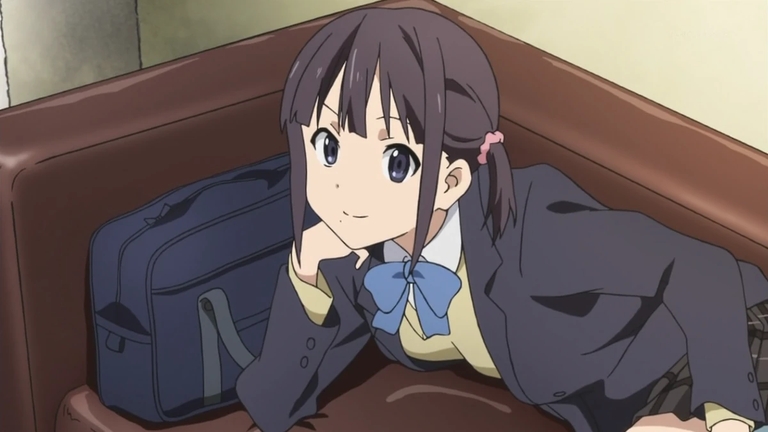
How Taichi Yaegashi and Nagase's Relationship in Kokoro Connect Tested Heartseed's Limits
The supernatural entity messing with them, Heartseed, isn't just throwing random phenomena at these kids for kicks. It's conducting psychological experiments designed to break specific defense mechanisms. For Iori and Taichi, the phenomena force them into situations where their usual coping strategies fail.
The body swapping makes Iori's masks impossible to maintain because other people are literally wearing her body and performing her life. The desire unleashing arc removes her ability to filter her thoughts, forcing her to say the quiet parts out loud. The age regression arc sends her back to childhood memories where the trauma originated. Each phenomenon is peeling back another layer of her performance until she's raw and exposed.
Taichi's role in this is that he's the selfless freak who tries to fix everyone. His instinct is to charge in and save Iori from her pain, but you can't save someone from their own identity crisis. When he tries to help during the Michi Random arc, where Iori becomes sullen and aggressive after rejecting him, he just makes it worse because he's approaching her with the assumption that the cheerful Iori is the real one and this new version is a problem to be solved.
The age regression arc is particularly brutal for Iori. She physically turns into a child while maintaining her teenage memories, and she has to confront her stepfather who shows up at the school. This forces her to process the trauma in real time while her friends watch. Taichi wants to step in and save her, but Inaba stops him, recognizing that Iori needs to handle this herself.
This is the moment where the romantic possibility definitively dies. Iori sees that Taichi can't help himself from trying to rescue her, and she realizes that dating him would mean constantly fighting against his savior complex while she's still trying to save herself. She needs a partner who can stand back and let her struggle, but Taichi's entire identity is built on rushing into danger for others.
The fake Taichi incident is the cruelest test. Heartseed creates a copy of Taichi to see if Iori will accept a confession from a version of him that clearly doesn't know her well. She passes the test by rejecting the fake, but it proves her point. She can't accept love from someone who doesn't see the real her, and she's convinced the real Taichi doesn't see it either.
The Michi Random Breakdown Changed Everything
By the time the Michi Random arc rolls around, Iori has stopped performing. She's angry, she's tired, and she's stopped trying to be the club's sunshine. This is the real Iori that she warned Taichi about, and it's not pretty. She's cynical, she pushes people away, and she treats Taichi's attempts at kindness like personal attacks.
Viewers often hate this version of Iori because she seems like she's just being difficult for no reason. But this is the first time she's being honest. The relationship dynamics shift here because Taichi realizes he can't handle this version of her. He's attracted to the girl who smiles and keeps the peace, not the one who throws tantrums and questions everyone's motives. That's not a flaw in his character exactly, but it proves Iori was right. He didn't love her, he loved the performance.
According to one analysis, Iori's behavior in this arc represents the most authentic version of her personality. The author of that piece relates to Iori's tendency toward cynicism and self deprecation under stress, arguing that telling someone like Iori she's being unreasonable is counterproductive. The Cultural Research Club eventually learns to accept this angry version of Iori rather than trying to fix her, which is what she needed all along.
The arc ends with the group accepting that this angry, bitter Iori is just as valid as the cheerful one. They stop trying to fix her and just let her be miserable for a while. Ironically, this acceptance is what allows Iori to eventually integrate these sides of herself, but by that point the romantic window with Taichi has closed. They've seen too much of each other's limitations.

Why Inaba Worked Where Iori Failed
Inaba is messy and aggressive and paranoid, but she's consistently herself. She doesn't change her personality for different social situations. When she falls for Taichi, she falls as the real Inaba, not as a performance. This allows Taichi to actually know who he's dating. With Iori, he was always dating a projection.
Inaba also challenges Taichi's selflessness rather than rewarding it. When he tries to sacrifice himself for others, Inaba calls him an idiot. She forces him to consider his own needs, which helps him grow out of the savior complex that made him attracted to damaged girls like Iori in the first place. Iori would have let him burn himself out trying to fix her because she didn't have the stability to tell him to stop.
The shift in Taichi's affections isn't him settling for second best. It's him recognizing that he needs someone who can meet him halfway. Inaba can do that because she knows who she is. Iori couldn't do that because she was still assembling herself.
The Visual Novel's Alternate Timeline
The PSP visual novel Yochi Random lets players choose Taichi's romantic partner, including Iori. This is weird and kind of misses the point. In the Iori route, they end up together and it's presented as a happy ending, but it requires ignoring the fundamental identity issues that the anime and light novels spent seventeen episodes establishing. It turns her psychological complexity into just another route to clear.
TV Tropes notes that the visual novel includes scenarios where Taichi can engage in inappropriate physical contact depending on player choices, which undermines the careful consent discussions in the main series. The Iori route in particular feels like fan service for people who wanted the childhood friend to win regardless of thematic coherence.
The existence of this route doesn't invalidate the main story's message, but it does muddy the waters for fans trying to understand why Taichi and Iori didn't work. It suggests that if you just try hard enough, you can fix a broken person through romance, which is exactly the toxic idea that the anime argues against.
The Telepathic Confession and Moving On
In the final arc, when the group starts transmitting thoughts involuntarily, Taichi and Iori finally reach a place of honesty. They can hear each other's internal monologues, which removes the possibility of masks or performances. It's invasive and uncomfortable but it clears the air.
Taichi confesses again from a hospital bed, this time understanding that Iori isn't the girl he thought she was. He loves her, but he recognizes they aren't compatible as romantic partners. She agrees. They decide to date anyway in the moment, testing the waters, but it fizzles out because the fundamental problem remains. Iori is still figuring out who she is, and Taichi needs someone who can meet him halfway consistently.
The light novels make it clearer than the anime that they transition solidly into friendship. Iori supports Taichi's relationship with Inaba because she recognizes that Inaba can give him the stability she couldn't. There's no bitterness in it, just the recognition that their timing was wrong and their connection was better suited for platonic support.
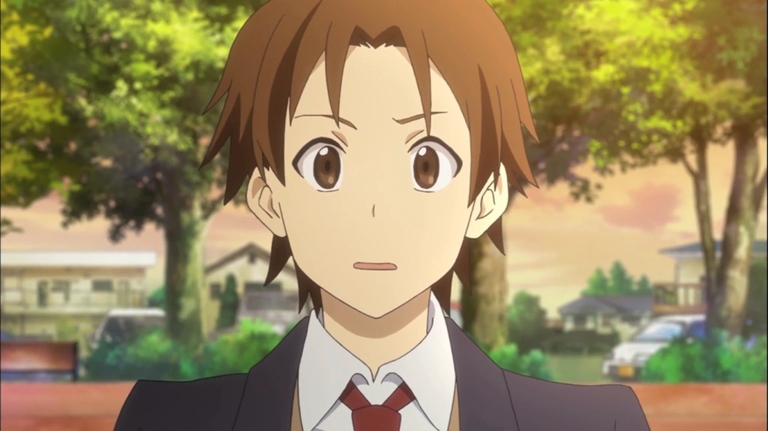
Why This Relationship Matters
People want to categorize Taichi Yaegashi and Nagase's relationship in Kokoro Connect as a failed first love or a stepping stone to the real ship. That's reductive. It represents the painful reality that you can care deeply about someone and still be terrible for each other. Iori needed to fall apart and rebuild herself without the pressure of being someone's girlfriend. Taichi needed to learn that he couldn't save everyone just by wanting it badly enough.
Their arc is about the difference between loving someone's potential and loving their reality. Taichi loved Iori's potential to be happy and whole. Iori couldn't offer him a reality that was stable enough to build a partnership on. When she finally does become whole, in the later light novel volumes where she pursues teaching and finds her own identity, she's a different person than the girl Taichi fell for.
The relationship works as a cautionary tale about forcing connections before people are ready. If Heartseed hadn't interfered, they might have dated casually and broken up normally. The supernatural acceleration forced them to confront deep issues before they had the emotional tools to handle them. It made their connection intense and painful rather than gentle and exploratory.
Taichi and Iori's relationship isn't a tragedy because they didn't end up together. It's a success story because they managed to preserve their friendship despite the romantic failure. They learned to see each other clearly without the masks, and they realized that love wasn't enough to overcome their individual growth arcs. That's a more honest ending than most anime romances get.
Frequently Asked Questions
Why did Iori reject Taichi's confession in the club room?
Iori rejected Taichi because she felt he was in love with a performance rather than the real her. She had spent years wearing different personality masks to survive her abusive home life, and she knew Taichi had only seen the cheerful version she showed the Cultural Research Club. She couldn't accept his confession honestly until she figured out who she actually was underneath the performances.
Did Taichi and Iori actually kiss in the anime?
No, the kiss occurred while they were body swapped, which created a complicated consent dynamic. Iori was technically in someone else's body at the time, making the moment emotionally significant but morally ambiguous. She later treated it as something that happened under supernatural duress rather than as a genuine romantic milestone.
What was the fake Taichi test in Kokoro Connect?
Heartseed created a fake Taichi to test whether Iori would accept a confession from someone who clearly didn't know her well. She rejected the fake, proving her loyalty to the real Taichi but also confirming her belief that nobody, including the real Taichi, truly understood her authentic self.
Do Taichi and Iori end up together in the light novels?
In the light novels, they briefly attempt to date after the telepathy arc but quickly realize it doesn't work. They transition into a solid friendship, and Iori fully supports Taichi's relationship with Inaba. By the end of the series, Iori has become a teacher and found her own identity separate from any romantic plot.
How many stepfathers did Iori have?
Iori had five different men serve as father figures during her childhood due to her mother Reika's multiple marriages and relationships. One of these stepfathers was abusive, which caused Iori to develop defense mechanisms like changing her personality to please others and avoiding conflict at all costs.