
Talentless Nana Plot Twists Expose the Lies We Tell to Kill
Talentless Nana anime plot twists and morality hit harder than most shows because they don't give you time to prepare. You think you're watching another generic superhero academy story where the quiet kid gets bullied then becomes the hero, and then Nana pushes that kid off a cliff in the first episode. That's the show. That's the whole appeal. It takes your expectations, dunks them in gasoline, and lights a match while smiling.
The setup is simple on purpose. Kids with powers called Talents get sent to an island school to fight Enemies of Humanity. Nanao Nakajima looks like your typical shonen hero. He's got the sad backstory, the hidden power that nullifies other abilities, and the kind heart that makes everyone root for him. The anime spends twenty minutes making you like him. He saves classmates from a fire using his anti-talent. He gets elected leader. He bonds with Nana over their shared loneliness. Then Nana, this pink-haired girl who acts like an airhead, lures him to a cliff and murders him while talking about friendship. The ending song plays and you're sitting there wondering what just happened.
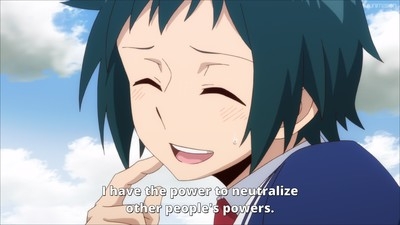
This isn't a heroic journey. It's a horror story wearing a school uniform, and Nana is the monster wearing a human face.
Nana Is Not the Hero and That Is the Point
The first real twist isn't just that Nana kills Nanao. It's that she's got no powers at all in a school full of gods, and she's there to kill every single one of them. The government told her these kids are monsters who will kill thousands of people in the future. She believes it because she's been brainwashed since childhood, ever since a Talent murdered her parents in front of her when she was little. She's not evil, she's convinced. That distinction is what makes the show work.
She fakes being a telepath by reading microexpressions, using cold reading tricks, and paying attention to body language. When she meets someone, she watches their eyes, their hands, the way they breathe. She bluffs her way through conversations with actual mind readers by being careful about what she reveals and when. It's solid stuff to watch, even when you know she's the villain of the piece.
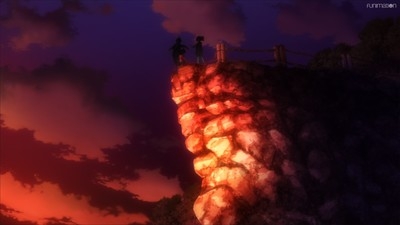
This creates that weird moral nausea where you understand why she's doing it but you hate her for it anyway. She's stabbing teenagers in the back because a spreadsheet said they'll be dangerous later. It's preemptive murder dressed up as national security. The show wants you to sit with that discomfort and not look away. You're watching a child soldier carrying out eugenics with a smile, and the show refuses to let you pretend it's simple.
Kyoya Turns It Into a Cat and Mouse Game
Every assassin needs a detective hunting them. Kyoya Onodera is immortal, literally. He can die but he comes back to life shortly after, and he's got this annoying habit of noticing when Nana's stories don't add up. While the other students buy her ditzy act because they want to believe in her, Kyoya corners her in hallways and asks questions she can't answer without slipping up.
Their back-and-forth carries the show. It's like Death Note if Light was a teenage girl and L couldn't die and had zero social skills. Kyoya isn't charismatic in the normal anime protagonist way. He's awkward, he's blunt, he doesn't care about making friends, and he stares at people until they get uncomfortable. He just wants to find his sister who disappeared on a previous class trip to the island. That personal stake makes him dangerous because he won't drop the investigation just to be polite.
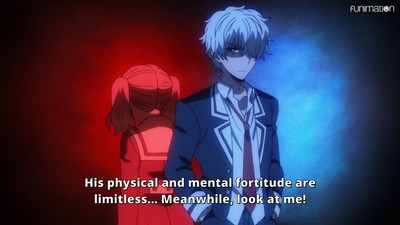
The tension comes from watching Nana try to kill someone who can't stay dead. She poisons his tea, he revives and asks why his throat burns. She drowns him in the ocean, he walks out of the water the next morning asking questions about the homework. It turns the usual murder mystery formula backwards. Instead of figuring out who the killer is, he's figuring out how to prove it to the other students while surviving her attempts to silence him permanently. He knows she's guilty, she knows he knows, and they both have to pretend they're friends while trying to outwit each other.
The Victims Are Not Innocent Either
Here's where the morality gets slippery and weird. The show doesn't let you comfort yourself by thinking Nana's just killing saints who never did anything wrong. These kids are messed up. You've got Tsunekichi who uses precognition to gamble and peek at girls' underwear instead of helping people. You've got Yuuka, the necromancer, who keeps her dead boyfriend's corpse animated and pretends they're still dating, forcing his body to say it loves her. That's not quirky, that's horrifying abuse of a corpse and a person.
When Nana kills them, part of you thinks, okay, maybe the government has a point about these people being dangerous. Then you remember they're teenagers with trauma and bad parenting, not terrorists. They didn't choose their powers. The show keeps you in that gray zone where you're not sure if you're watching a monster hunt or a massacre of mentally ill children.
Yuuka's arc is particularly nasty. She can raise the dead but only at night when her power works. She uses it to control her childhood crush's rotting body and forces him to act like they're still together. When Nana figures this out, she kills Yuuka in broad daylight where the power doesn't work, making it look like suicide or an accident. It's brutal but calculated. You can't call it self-defense, but you can't call it wrong either when Yuuka was basically keeping a zombie slave and planned to kill Nana for discovering her secret.
Michiru Breaks the Pattern Completely
Then there's Michiru, the healer with pink hair and a heart too big for her own good. She's genuinely kind, genuinely naive, and genuinely cares about Nana without wanting anything back. She fixes Nana's wounds without asking questions. She shares her lunch. She becomes the little sister Nana lost years ago when her parents died.
This is where the brainwashing starts to crack because Nana's been told these people are monsters who only know destruction, but Michiru is soft and trusting and cries when she thinks Nana's sad. The show builds their friendship over several episodes, letting Nana get comfortable, letting her forget she's supposed to be a killer. Michiru represents everything Nana thinks she's protecting, and that makes the eventual tragedy worse.
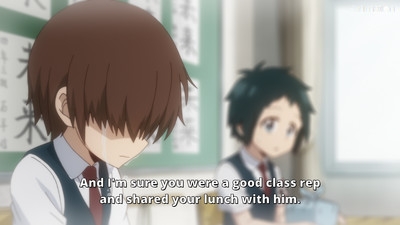
Then Michiru dies saving Nana. She uses her healing power until it burns her out and kills her, draining her own life force to fix Nana's injuries from a fight. Nana watches her only real friend die because of her lies and her mission. This is the turning point where the plot twists stop being about powers and start being about Nana's psychology falling apart. She realizes the government lied to her. The kill counts they gave her were fake numbers pulled out of nowhere. Nanao, the first boy she murdered, had a projected kill count of millions according to the files, but he was just a gentle kid who wanted friends and was scared of his own power.
The Government Is the Real Monster
The big reveal halfway through is that the Enemies of Humanity aren't some external threat like aliens or demons. They're the Talented themselves, mutated into monsters when they hit adulthood. The government isn't training these kids to be heroes, they're isolating them so they can be exterminated before they transform. The island is a concentration camp with better lighting and school uniforms.
This changes how you see everything that came before. Nana isn't a soldier protecting humanity, she's a child soldier being used by fascists. The students aren't cadets, they're prisoners marked for death from the day they were born with powers. When you learn that Tsuruoka, her handler and the closest thing she has to a father figure, is actually a Talent himself with mind-reading abilities, the hypocrisy becomes physical. He uses powers he claims are evil to control Nana into killing kids who have the same powers he does.
Apparently some fans compared this to X-Men style discrimination but the show makes it uglier than that. These kids didn't ask for powers. They were born with them through no fault of their own. And for that genetic accident, they get sent to an island to be murdered by their classmate while the government pretends it's for the greater good. It's eugenics with a school festival backdrop and that makes it more disturbing than straight-up monster fights.
Why Some Twists Land and Others Stumble
Not every surprise works perfectly. Some viewers point out that the side characters act stupid so Nana can win, ignoring obvious evidence and trusting her immediately after she arrives even though people keep dying around her. It's frustrating when you're supposed to believe these kids have dangerous genius-level powers but they fall for basic tricks like "I read your mind" when Nana is just guessing.
I saw some data that said fans were divided on whether this was brilliant writing showing how manipulation works on isolated teens, or just lazy writing to keep the plot moving. The repetitive structure, where Nana befriends someone, kills them, covers it up, gets questioned by Kyoya, then repeats, can feel like a formula after a few episodes. If you're looking for Death Note level cat-and-mouse games where every move is genius, you might be disappointed by the middle episodes.
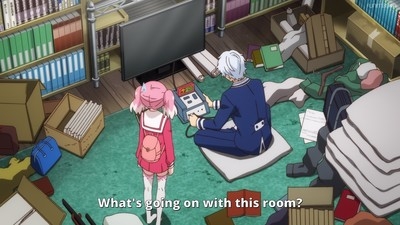
But the twists that matter, the ones about Nana's conscience and the government's lies, those hit hard because they're earned through character work. When Jin Tachibana reveals he's been shapeshifting into a cat to spy on everyone the whole time, it's creepy but it fits the paranoia. When you realize he's survived previous massacres on the island by hiding, he becomes this ghost of what happens to the students who actually make it to graduation, which is worse than dying.
The Unfinished Mess of an Ending
The anime ends on a cliffhanger because the manga wasn't finished when they animated it. Nana's started her redemption arc but hasn't finished it. She's turned against Tsuruoka and stopped killing, but she hasn't brought the system down or saved everyone. It's frustrating if you want closure and a neat ending where justice is served.
But thematically, the lack of resolution fits the show's style. Moral ambiguity doesn't get neat resolutions where everyone hugs and forgives the assassin. You don't get to kill a dozen people based on lies and then have a happy ending where it all works out. The show leaves you with Nana standing in the ruins of her own certainty, knowing she's been wrong, knowing the kids she's murdered deserved better, but unable to bring them back.
All she can do is try to save the ones still breathing, even if that means fighting the only family she has left. She goes from predator to protector, but the blood on her hands doesn't wash off. That's the real twist of Talentless Nana. Not the shapeshifters or the time travelers or the necromancers. The twist is that the assassin was the most human one there all along, and realizing that might be too late to matter.
Frequently Asked Questions
Does Nana actually have powers in Talentless Nana?
No, she's completely talentless. That's the whole hook. She fakes being a telepath by reading body language, microexpressions, and using cold reading tricks she learned from her handler. Every kill she pulls off is through manipulation, poison, or pushing people off cliffs. No magic required, just psychology.
Is Nanao really dead or does he come back?
He's dead in the anime and stays dead. The first episode ends with him dying and that's permanent for the anime storyline. In the manga there's more to his story later, but the anime treats his death as the definitive moment that establishes the show's tone. That's what makes the twist work so well.
Why does Nana start killing people?
She was raised by a government agent named Tsuruoka after a Talent murdered her parents in front of her. They brainwashed her into believing all Talented people are future mass murderers who will kill thousands of innocent people. She thinks she's saving humanity by killing them before they can hurt anyone, which is why she smiles while doing it at first.
Does Nana ever get caught?
Kyoya figures out she's the killer pretty early on, but he can't prove it to the other students because he's socially awkward and Nana is good at covering her tracks and framing others. By the end of season one, some students are suspicious and Kyoya confronts her directly, but she hasn't been exposed to the whole class yet.
Is Talentless Nana worth watching if I don't like gore?
It's not super gory compared to horror anime, but people do die in unpleasant ways like falling off cliffs or drowning. If you can't handle psychological manipulation, betrayal of trust, and characters getting murdered by someone they considered a friend, maybe skip it. The violence is more about the emotional betrayal than blood.