Tengen Toppa Gurren Lagann Is Still The King Of Hot Blooded Mecha
Tengen Toppa Gurren Lagann anime review and legacy talk usually misses the point by treating this like a standard robot show. This isn't just mecha punching mecha. It's a grenade thrown into the middle of an era obsessed with cute girls drinking tea, and it still hasn't stopped exploding. Released in 2007 by Studio Gainax when the industry was drowning in moe garbage, this show came out swinging with a philosophy that believing in yourself hard enough literally lets you break the laws of physics.
Most people remember the first eight episodes because that's when Kamina is alive and screaming about piercing the heavens. But the show doesn't end there. It keeps escalating until it's throwing literal galaxies at enemies like frisbees, and somehow that escalation feels earned instead of stupid. I've watched every mecha anime worth mentioning, from the depressing stuff like Evangelion to newer attempts that copy the style but miss the soul. Gurren Lagann sits in its own category because it understands that giant robots aren't about the engineering, they're about the people inside them believing hard enough to bend reality.
The animation holds up weirdly well for something from the analog era. The lines are rough, the colors are loud, and the characters spend half their time shouting at the top of their lungs. But that energy is exactly what makes it work. You don't watch this show, you get hit by it. Some folks will tell you the second half falls apart, or that the characters are too simple, or that the fanservice with Yoko is gross and distracting. They're not entirely wrong about all of that. But they're missing the forest for the trees. This anime isn't trying to be subtle or nuanced. It's trying to punch you in the heart, and it usually succeeds.
The Two Halves And Why The Time Skip Shocks People
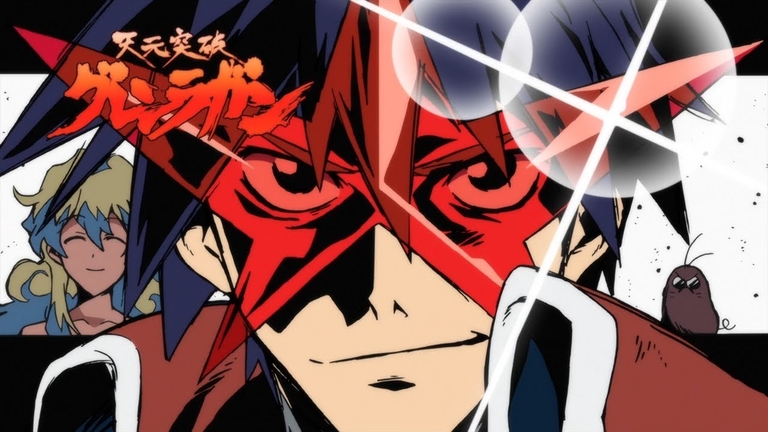
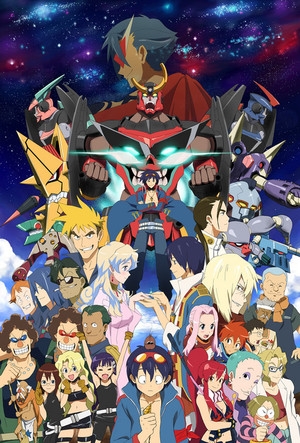
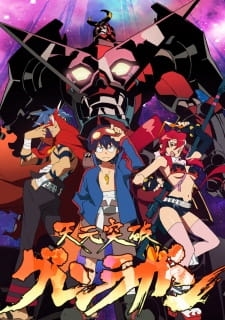
The first thirteen episodes move fast enough to give you whiplash. Simon and Kamina break out of their underground village, steal a mech called a Gunmen, meet Yoko the riflewoman, and start Team Gurren. They're fighting the Spiral King, Lordgenome, who keeps humans underground because he's terrified of overpopulation causing the Spiral Nemesis. That's the setup, and it works because it doesn't waste time explaining things that don't matter. The show assumes you're smart enough to keep up while it throws drills and explosions at you.
Then episode sixteen hits and everything changes. There's a seven-year gap that nobody expects. Simon is running a city called Kamina City. Rossiu has become a politician instead of a priest. The show suddenly wants to talk about government, responsibility, and the burden of leadership instead of just fighting spirit. Some people hate this shift and say it kills the momentum. I think it's necessary, even if it gets messy and confusing. You can't have a story about growing up without showing the boring adult parts. The first half is about breaking free. The second half is about what you do with that freedom when you actually have to govern, and it's uncomfortable because it shows that winning the war is easier than running the peace.
The problem is the show doesn't know if it wants to be a Saturday morning cartoon or a serious political drama during this section. One minute you've got goofy bureaucracy jokes, the next you've got forced population control and existential threats. It creates this annoying tonal clash that makes it hard to figure out who the show is really for. Kids won't get the politics, and adults will roll their eyes at some of the resolutions. But when it works, like when Simon has to grapple with being a leader instead of just a fighter, it works really well.
Kamina's Death And Why It Doesn't Ruin The Show
Kamina dies in episode eight, and if you're watching for the first time, it feels like the show just killed its only interesting character. He's loud, confident, wears ridiculous sunglasses, and is stupidly brave in a way that makes you believe anything is possible. Simon is a mess of anxiety and self-doubt without him. But that's exactly the point. Kamina's whole philosophy is about believing in the you that believes in yourself, and his death forces Simon to actually internalize that instead of just leaning on his big brother figure forever.
The scene where Simon digs up Kamina's core drill while crying in the rain is heavy stuff. It's not subtle, but grief isn't subtle. The show uses this death to transform from a fun adventure into something with actual stakes. Suddenly anyone can die, and the emotional weight of the first half comes from Simon learning to stand on his own two feet. Kamina stays dead, too. No cheap resurrections. His influence lingers in Simon's choices and in the way he leads Team Dai-Gurren, but he doesn't come back for a final battle cameo. That restraint is rare in anime, and it makes his death matter.
People who say the show goes downhill after Kamina dies are looking at it wrong. The first half was the setup. The second half is the payoff. Simon's arc from timid digger to the man who leads humanity against the Anti-Spiral only works because Kamina isn't there to do it for him. It's about inheritance and moving past your mentors, which is a way more interesting story than just having the loud guy win every fight.
The Visual Style And Studio Gainax DNA
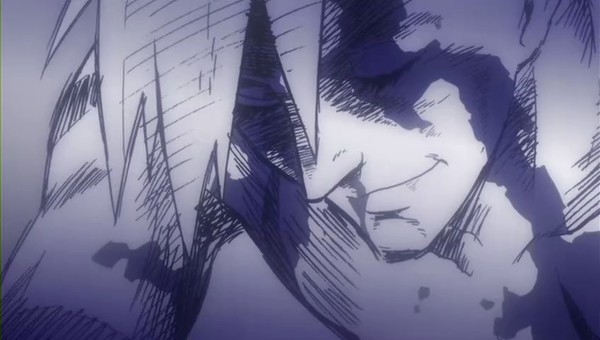
Hiroyuki Imaishi directed this, and you can tell because nothing stays still for more than two seconds. The camera spins constantly, the characters shout their attacks, and the mechs combine in ways that make zero engineering sense but look absolutely incredible. This style came from the 1988 OVA Gunbuster, and you can see prototypes of it in Diebuster. It's rough, sketchy, and deliberately imperfect in a way that makes the show feel alive.
The art uses thick black lines and colors that clash on purpose. When Simon combines Lagann with Gurren, the transformation sequences are chaotic and exaggerated. The final battle where Tengen Toppa Gurren Lagann stands on top of a galaxy wielding a drill made of pure energy shouldn't work visually. It should look stupid. But because the show established early that it's not following real world logic, the absurdity of the visuals matches the absurdity of the emotions. You buy into it because the characters buy into it.
This look became the signature of Studio Trigger when Imaishi left Gainax. Kill la Kill and Promare both use this frantic, rough style. But neither of those quite captures the same emotional weight as Gurren Lagann. There's something about the way this show animates determination, with characters literally glowing with spiral power, that makes you want to stand up and cheer. It's visceral in a way that clean, polished animation rarely achieves.
Spiral Power And The Philosophy Of Belief
Spiral Power is basically willpower made physical. The more a character believes in themselves and their friends, the stronger they get. This breaks every rule of hard sci-fi, but Gurren Lagann doesn't care about rules. It cares about emotion and heart. The show explicitly states that you should kick logic to the curb and do the impossible. That's not just a cool line Kamina says once, it's the operating system of the entire series.
When Simon fights the Anti-Spiral at the end, they're throwing galaxies like frisbees and punching through dimensions. Physics died around episode twelve. But because the show established early that belief equals power, and that spiral energy literally evolves life forms, you buy into every ridiculous escalation. The Anti-Spiral represents absolute despair and the suppression of emotion. Team Dai-Gurren represents hope and the refusal to stop evolving. That conflict works because the mechanics match the themes. The bigger their mechs get, the more it represents humanity's refusal to accept limits.
Some critics call this lazy writing because it's a deus ex machina where the good guys win by believing harder. They're missing that this is a feature, not a bug. The show is a celebration of super robot tropes, not a deconstruction of them. It's the antithesis of Evangelion's "you mustn't run away" anxiety. Gurren Lagann says you should run forward, screaming, with a drill in your hand.
The Problems Nobody Wants To Admit
Let's be real about the side characters. Most of them are cardboard cutouts with exactly one personality trait. Leeron is flamboyant and tech savvy. Dayakka is serious and protective. Kittan is reckless and brave. When they die later in the series, you're supposed to care deeply, but mostly you just remember them as "the guy with the glasses" or "the dude with the big eyebrows." The show tries to give them all heroic sacrifices, but without proper development, these deaths feel hollow.
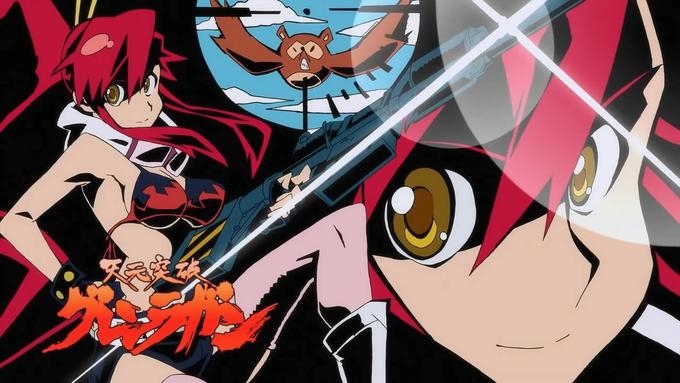
The tonal whiplash is annoying too. One episode has goofy bathhouse humor with Yoko's outfit barely covering anything, and the next has philosophical discussions about forced population control and the heat death of the universe. The fan service isn't just excessive, it's distracting and cringe. Yoko is supposed to be a skilled fighter and a foil to Kamina and Simon's impulsiveness, but the camera spends too much time on her chest. Apparently some of the production team thought this was necessary to sell the show, but it hasn't aged well and undermines her character.
And Rossiu's arc in the second half makes him into a jerk for no good reason other than to create conflict. He goes from being a sensible advisor to staging a coup and putting Simon on trial. It feels forced, like the writers needed drama and couldn't figure out how to generate it organically. The political intrigue isn't sharp enough to carry the middle episodes, and it slows down the pacing significantly.
Viral And The Anti Spiral As Villains
Viral starts as a beastman who can't die because he has immortal cells, and he keeps coming back to fight Kamina and Simon. He's stubborn, honorable in his own way, and way more interesting than Lordgenome. When he eventually joins Team Dai-Gurren in the second half, it feels earned because he's been there since the beginning. His character design is cool, all sharp teeth and cat eyes, and his rivalry with Simon gives the middle episodes some needed tension.
The Anti-Spiral is a different kind of villain. He's not a king or a warlord, he's a collective consciousness that decided emotions are too dangerous. He represents the suppression of spiral energy and the fear of the unknown. His design is abstract and creepy, all white geometric shapes and creepy smiles. He works because he's the polar opposite of everything Kamina stood for. Where Kamina shouted about breaking through limits, the Anti-Spiral wants to enforce them to prevent the destruction of the universe.
The final battle against the Anti-Spiral lasts for what feels like forever, with mechs growing from city size to planet size to galaxy size. It's ridiculous, but it's also cathartic. You want to see Simon punch this guy through the fabric of reality, and the show delivers exactly that. No twist endings, no "the real villain was friendship" nonsense. Just a straightforward fight between hope and despair, and hope wins by being louder.
The Legacy And Why Modern Mecha Can't Top It
Studio Trigger exists because of this show. Imaishi and writer Kazuki Nakashima left Gainax and took the style with them, making Kill la Kill, Space Patrol Luluco, and Promare. But none of those hits the same emotional notes as Gurren Lagann. Kill la Kill comes close with its energy, but it's more satirical. Gurren Lagann plays it straight, and that sincerity is rare.
Modern mecha anime keeps trying to be dark and gritty, or it tries to copy Evangelion's depression. Gurren Lagann is one of the few that says being optimistic isn't stupid, it's necessary. Seventeen years later, shows like Listeners and Darling in the Franxx tried to capture this energy and failed because they didn't understand that the heart of this show isn't the robots, it's the refusal to give up even when things look impossible. The mecha genre has been in decline because everyone forgot how to have fun with it.
The show also influenced Western animation. You can see its DNA in Transformers Animated and Wakfu. The idea that you can solve problems by being passionate and yelling really loud while transforming into something bigger has become a template. But the original is still the best. It's the perfect length at 27 episodes, no filler, no dragging middle arc, just constant escalation.
The Ending And Why It Divides Fans
The ending pisses people off, and I get why. Simon defeats the Anti-Spiral, saves the universe, marries Nia, and then she disappears because she was an Anti-Spiral construct the whole time. He becomes a wandering hermit instead of staying as leader of the new world. It feels like a gut punch after all that victory. You want the hero to get the girl and the kingdom and live happily ever after.
But it fits the theme of the show. Nothing lasts forever. Kamina died. The war ended. Nia was always temporary, and Simon accepts this with maturity. He passes the core drill to the next generation and walks away. It's sad, but it's honest about how life works. People die, love ends, and you have to keep moving forward. The show could have given us a fairy tale ending, but instead it gave us something more real. Bittersweet, but real.
Some say Simon should have used spiral power to bring her back, since they basically rewrote reality to win the fight. But that would have undermined the sacrifice. The Anti-Spiral warned them that using too much spiral power destroys the universe. Simon chooses to stop, to accept limits for once, which shows he's learned responsibility. It's growth, even if it hurts.
Why You Should Still Watch It
Tengen Toppa Gurren Lagann anime review and legacy discussions often focus on the big fights and the memes about piercing the heavens, but the real legacy is how it proved mecha could be fun again without being stupid. It respects the viewer enough to go absolutely insane with scale while keeping the characters grounded in simple, human emotions. You don't need to know anything about the history of super robot shows to enjoy it, but if you do, the references to Getter Robo and Mazinger Z make it even better.
It's not a perfect show. The side characters are weak, the fan service is embarrassing, and the second half politics drag in places. But it's a show that commits to its bit one hundred percent. When it wants you to cry, you cry. When it wants you to cheer, you cheer. The soundtrack mixing opera and rap still slaps, the animation is still gorgeous, and the final battle is still the most over-the-top thing ever committed to film.
If you haven't watched it, you're missing the best example of what happens when creators stop caring about being realistic and start caring about being awesome. Don't believe in yourself. Believe in the me who believes in this show being great. That's the legacy. It broke through the ceiling, and anime is better because it exists.
Frequently Asked Questions
How many episodes is Gurren Lagann?
It's 27 episodes long with no filler content. The story moves fast and tells a complete tale without dragging through unnecessary side quests or recap episodes.
Who is Hiroyuki Imaishi?
He's the director who brought the rough, kinetic animation style full of shouting and spinning cameras. He later founded Studio Trigger and made Kill la Kill and Promare, carrying over the visual DNA from Gurren Lagann.
When does Kamina die?
Episode eight. It happens early and permanently changes the direction of the series, forcing Simon to grow up and take leadership seriously.
What is Spiral Power?
It's basically willpower made physical. The more a character believes in themselves and refuses to give up, the more spiral energy they generate to power their mecha and break physical laws.
Do I need to watch other mecha anime first?
Yes, but it helps to know it's a celebration of 1970s super robot shows like Mazinger Z and Getter Robo. You don't need prior knowledge to enjoy the action and emotional beats though.