
The Secret World of Arrietty Anime Analysis Reveals Its Hollow Center
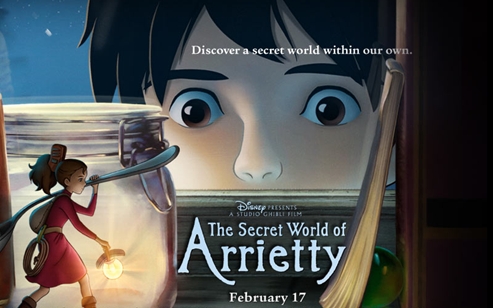
Most The Secret World of Arrietty anime movie analysis pieces spend too much time gushing over the pretty leaves and not enough time admitting the story falls flat after the first act. That's the problem with reviewing Studio Ghibli films, everyone gets hypnotized by the watercolor backgrounds and forgets to check if the characters actually do anything interesting. I keep seeing people call this movie a masterpiece and I need to set the record straight because it isn't. It is a beautiful looking film with a script that feels like it lost fifteen pages somewhere in production.
Look, I am not saying it is terrible. The Secret World of Arrietty has that specific Ghibli magic where the grass looks so real you can smell it and the sound of a teacup being moved sounds like an earthquake. But magic atmosphere only gets you so far when your protagonist's biggest problem gets solved by moving houses and your antagonist is a housekeeper who acts like she caught a raccoon in the pantry. The film banks everything on the novelty of tiny people and forgets to give them a compelling reason to exist beyond being cute.
The Secret World of Arrietty Anime Movie Analysis Nobody Asked For
People treat this movie like it is flawless because Hayao Miyazaki wrote the screenplay and his name carries weight. But here is the thing, Hiromasa Yonebayashi directed this and it was his first time running the show. He had worked as an animator on Miyazaki's stuff before but directing is different and it shows. The pacing is weirdly relaxed to the point where it feels like the movie is stalling for time. Scenes go on too long and characters repeat information we already know. I saw some data that said Yonebayashi felt pressured during production because Miyazaki refused to look at storyboards to avoid delaying the schedule. That creative freedom sounds nice in theory but it left the director without guardrails.
The adaptation changes from Mary Norton's original novel The Borrowers are another head scratcher. They moved the setting from 1950s England to modern day Tokyo specifically the Koganei neighborhood. Miyazaki allegedly made this change because he didn't want Yonebayashi messing up the English details which is funny because the house still looks vaguely European with its fixtures and furniture. So you get this weird hybrid aesthetic where delivery guys use cellphones but the kitchen looks like it is from 1940. It doesn't ruin the movie but it creates a dissonance that pulls you out of the experience when you notice it.
Then there is the core relationship between Arrietty and Shawn, or Sho if you are watching the Japanese track. Shawn has a heart condition and is waiting for surgery which should add tension but the movie treats it like background noise. He is boring. I mean really boring. He sits around looking pale and talking about how he might die but there is no urgency to it. Arrietty is supposed to be this brave adventurous borrower who wants to see the world but she spends half the movie scolding her parents or getting saved by her dad. The chemistry between her and Shawn feels forced like the script says they are friends now so just accept it.
Why The Visuals Carry Everything
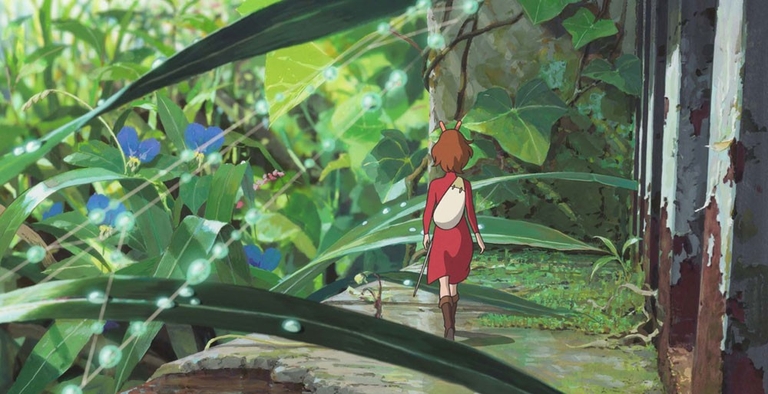
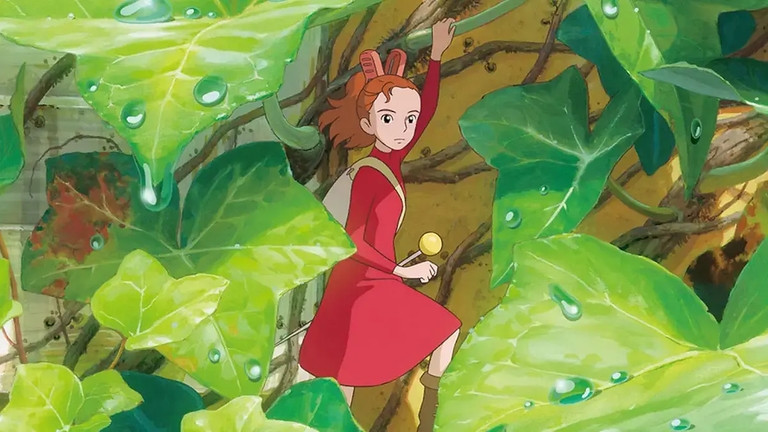
I will give credit where it is due. The way this movie handles scale is legitimately impressive. When Arrietty climbs up a curtain it looks like she is scaling a cliff face. A single sugar cube becomes a valuable resource and a pin is a sword. The animation of water droplets is incredible, they look like giant gel balls hanging off leaves. The sound design deserves praise too, with clocks ticking like drums and heartbeats sounding like bass lines. It creates this immersive sense of being small in a big world.
But here is where I get annoyed. The movie relies on this visual novelty to carry the entire runtime. Once you get over the fact that they are small and use tape rolls as grappling hooks, what is left? A story about hiding from a maid. That is it. The stakes never feel high enough because Haru, the housekeeper, is a cartoon villain with unclear motivations. She wants to catch the borrowers because she thinks they are pests but also because she wants to prove she is not crazy. That is weak. Real weak. Compare her to Lady Eboshi from Princess Mononoke or even the parents in Totoro who have real weight to them. Haru is just an obstacle that gets tied up and left in a closet.
The environmental themes are heavy handed but that is standard for Ghibli. The borrowers represent sustainable living because they only take what they need while the humans represent wasteful consumerism. We get it. Arrietty looks at a discarded dollhouse kitchen with wonder while Shawn's aunt wants to throw it out. The movie hammers this point home with the subtlety of a falling refrigerator. It is not bad exactly, just obvious. Like yeah, humans waste stuff, tell me something I don't know.
The Music And The Missing Third Act
Cecile Corbel did the soundtrack and she is French which is random but it works. The music has this folky whimsical quality that fits the small scale of the story. It is not Joe Hisaishi but it does the job. The English dub uses Bridgit Mendler from Disney Channel fame and she is fine, though David Henrie as Shawn sounds like he is reading a grocery list. Amy Poehler plays Homily and she is actually good, bringing some real panic and warmth to the mom character. Will Arnett as Pod is solid too, very stoic and practical.
The real killer for this film is the ending. It just stops. Spiller shows up, this wild borrower boy who lives outside, and he hints at a whole society of borrowers living in the woods. That is cool. That is interesting. And then the movie ends with Arrietty and her parents driving away in a tea kettle while Shawn watches from a window. We don't see if his surgery works. We don't see if the borrowers find the new colony. We don't see Haru get fired for being insane and kidnapping little people. It feels like they ran out of money or time and just slapped credits on.
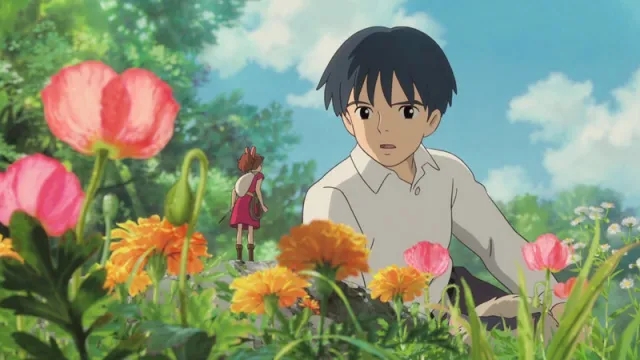
People compare this to My Neighbor Totoro because both are slow and focus on children dealing with illness. But Totoro earns its pace because the characters are fully realized and the magical elements feel earned. Arrietty feels like a TV episode stretched to feature length. The drama with the dollhouse kitchen where Shawn tries to give it to Arrietty's family but accidentally reveals them to Haru is contrived. Why would he think that is a good idea? He knows they are secretive and terrified of humans. It is like offering a deer a house made of loud noises.
What Works Despite The Problems
Okay so I have been harsh but there are things that work. The relationship between Arrietty and her parents feels real. Pod is this capable dad who builds grappling hooks and knows how to survive while Homily is a nervous wreck who worries about everything. That dynamic rings true. When they are packing up to leave and Homily is freaking out about what to bring, it is relatable. The fear of being seen and having to relocate is the best part of the movie because it treats the borrowers like refugees or endangered species rather than magical creatures.
The sequence where Arrietty and Pod go borrowing at night is the highlight. They navigate the kitchen like it is a heist movie, using double sided tape to climb cabinets and dodging the cat. It shows the mechanics of their existence without dialogue which is when the film is strongest. When it just lets the visuals breathe and shows how they use human objects for survival it is engaging. The problems start when characters open their mouths and explain things we can already see.
The theme of coexistence is interesting in theory. Can humans and borrowers live together or are they doomed to be separate? The movie suggests that friendship is impossible in the long term which is a downer but realistic. Shawn and Arrietty can only share a moment before going their separate ways because their scales are incompatible. That is a solid bittersweet message for kids. But the film doesn't commit to it fully. It wants to be sad but also hopeful and ends up being neither, just kind of vague.
The Final Word On This Film
The Secret World of Arrietty anime movie analysis usually gets bogged down in talking about how pretty the garden is. Sure, the garden looks amazing. Every leaf is hand painted and the light filtering through the trees is perfect. But that is table stakes for Ghibli. We expect beautiful animation from them. What we don't expect is a story that feels like a first draft. The characters are thin, the conflict is weak, and the ending is abrupt. It is a movie that is easy to watch because it is gentle and quiet but it is hard to remember because nothing really happens.
Kids seem to love it because the idea of being small is inherently cool to them. They see Arrietty using a pin as a sword and think that is awesome. And they are right, that part is awesome. But as an adult viewer you see the missed opportunities. The movie could have explored the borrower society more. It could have given Shawn a personality beyond being sick and nice. It could have made Haru a real threat instead of a joke. It chooses to play it safe and be cozy instead of challenging.
I still recommend watching it but keep your expectations in check. It is a comfort movie, something you put on when you want to relax and see pretty pictures. Just don't expect the emotional wallop of Grave of the Fireflies or even the whimsy of Kiki's Delivery Service. It sits in the middle of the Ghibli pack, looking fantastic but saying very little. The secret world looks great, I just wish there was more to do there.
Frequently Asked Questions
Who directed The Secret World of Arrietty?
Hiromasa Yonebayashi directed it, not Hayao Miyazaki. Miyazaki wrote the screenplay and produced it but Yonebayashi handled the directing duties.
Is The Secret World of Arrietty based on a book?
It is based on Mary Norton's novel The Borrowers but they moved the setting from 1950s England to modern day Tokyo and changed some character details.
Who did the music for Arrietty?
The soundtrack was composed by French musician Cecile Corbel, not Joe Hisaishi who usually does Ghibli films.
Why is Shawn sick in the movie?
Shawn has a serious heart condition and is staying at the house to rest before undergoing surgery, which influences his fatalistic but kind attitude.
How does The Secret World of Arrietty end?
It ends abruptly with Arrietty and her family leaving in a teapot while Shawn watches from a window. The film does not resolve whether his surgery succeeds or if the borrowers find a new home.