
The Terror in Resonance Sphinx Conspiracy Explained
Most people who watch Terror in Resonance think the terror in resonance sphinx conspiracy is just about two kids who want to blow stuff up. They see the Sphinx videos and the bombs and assume Nine and Twelve are just edgy teenage terrorists with a God complex. That's completely wrong. This isn't about causing chaos or killing people. It's about exposing a government program so messed up that the only way to get anyone to pay attention was to steal nuclear material and hold Tokyo hostage.
The whole show is built on a lie that everyone believes. The police think they're dealing with standard terrorists. The public sees monsters on TV. Even some viewers think Watanabe is glorifying violence. But look closer at what Sphinx actually does. They set off fire alarms before explosions. They give riddles with enough time to solve them. They steal plutonium but never build a bomb to kill civilians. These aren't the actions of people who want to destroy. These are the actions of people who want to be heard, specifically about the Athena Project.
If you pay attention to Shibazaki's investigation instead of just watching the pretty explosions, you'll see this isn't a cat and mouse game about stopping bad guys. It's about uncovering a cover-up that goes all the way to the top of the Japanese government and involves American intelligence agencies experimenting on orphans. The boys aren't the villains of this story. They're the whistleblowers who had to become terrorists because the system made it impossible to tell the truth any other way.
The Athena Project Is the Real Monster
The Sphinx conspiracy starts years before the anime begins with something called the Athena Project. This wasn't some anime cliché secret society with fancy robes and magic powers. It was a government-funded research program that took orphans off the street and tried to turn them into super-geniuses using experimental drugs and psychological conditioning. Think less "evil wizard tower" and more "CIA black site meets gifted and talented program from hell."
Nine and Twelve were just numbers when they were brought in, literally designated by their experiment numbers, and they weren't alone. There were dozens of other kids in that facility, all being pumped full of chemicals that were supposed to unlock the human brain's full potential. The problem is the drugs didn't just make them smart. They were toxic, deadly, and killed most of the children who took them. By the time Nine and Twelve decided to burn the place down and escape, almost everyone else was already dead from the side effects.
This is crucial to understanding why they act the way they do. They aren't lashing out at society because they got bullied or because they read too much philosophy. They're dying. The same drugs that let Nine calculate bomb trajectories in his head and let Twelve hack into any system are literally eating their brains from the inside out. They have a time limit, and they know it. That's why they don't care about getting caught or dying. They care about making sure the world knows what was done to them before the lights go out.
Five was there too. She was supposed to escape with them but got left behind in the fire, which is why she shows up later working for the Americans with a serious grudge and the same terminal condition. She's the third survivor, and her existence proves this isn't just two kids making up stories. The Athena Project was real, it was funded by both Japanese and US government money, and it killed a lot of children to create three broken weapons that were too dangerous to keep alive but too valuable to let die in the open.

Why Sphinx Isn't Really a Terrorist Group
Let's talk about the name. Sphinx. It's not random, and it isn't just a cool codename like something out of a video game. The Oedipus myth runs through everything Nine and Twelve do, and if you understand that, you understand why they keep giving the police riddles instead of just setting off bombs and disappearing.
In the myth, the Sphinx sits outside Thebes and asks travelers a riddle. If they get it wrong, they die. If they get it right, the Sphinx dies. Oedipus solves the riddle, the Sphinx kills herself, and Oedipus gets to enter the city and eventually kill his father and marry his mother, fulfilling a prophecy that said he would bring down the old order. Nine and Twelve are doing the exact same thing metaphorically. They are the Sphinx asking riddles to the city of Tokyo, which represents Thebes, and they're waiting for their Oedipus to show up and "kill" them by solving the mystery and exposing the truth.
That's why they don't kill people. It would break the metaphor. The Sphinx in the myth doesn't murder innocent travelers for fun. She executes them for failing the test. But Nine and Twelve don't really want to execute anyone. They want someone smart enough to solve the riddles, trace the clues back to the Athena Project, and expose the government corruption. Shibazaki is their Oedipus, the detective who finally has the brains and the stubbornness to follow the thread all the way back to the Diet member who authorized the experiments.
Every riddle they leave is a breadcrumb. The bomb at the nuclear facility, the thefts, the carefully timed explosions that only destroy property after evacuation warnings. It's all designed to force the police to investigate rather than just shoot them. They want the files opened. They want the 15-year-old suicide of that Diet secretary investigated again. They want Shibazaki specifically because they know he was digging into this before he got demoted to the archives for being too good at his job.
Five and the False Flag Mess
Just when you think you've got a handle on the Zankyou no Terror plot being about two boys exposing the truth, Five shows up and complicates everything. She works for US intelligence, and her entire job is to clean up the mess that Nine and Twelve are making by revealing American involvement in the Athena Project.
Five's strategy is different. She doesn't care about the metaphor or the riddles or minimizing casualties. She stages a bombing at Haneda Airport, frames Sphinx for it using their name and their style, and really tries to kill people to turn public opinion against Nine and Twelve. This is the real terrorism in the show, and it comes from the people trying to cover up the conspiracy, not the people trying to expose it.
She's also obsessed with beating Nine because they were rivals in the facility. The drugs didn't just make them smart. They made them competitive, detached, and kind of insane. Five sets up that chess game at the airport not because it helps her mission but because she wants to prove she's smarter than Nine before she dies. It's petty, it's stupid, and it gets a lot of people almost killed, including Lisa who gets strapped into a bomb vest because Five knows Twelve cares about her.
The Americans want the plutonium back because they don't want Japan having nuclear weapons, but more importantly, they don't want anyone knowing they funded experiments on Japanese orphans to create child soldiers. Five is their attack dog, and she's dying too, just like Nine, but she's chosen to spend her last days serving the system that destroyed her rather than burning it down like the boys are doing. Some details about Five's psychology) show just how broken she really was by the project.
Shibazaki's Cold Case Is the Key
Detective Kenjirou Shibazaki isn't just some random cop who gets assigned to the terrorism case because he's brilliant. He's connected to the Sphinx conspiracy from 15 years before the show starts, and that's why Nine and Twelve chose Tokyo in the first place. They knew he was the only one who could solve this because he'd already tried once and got shut down.
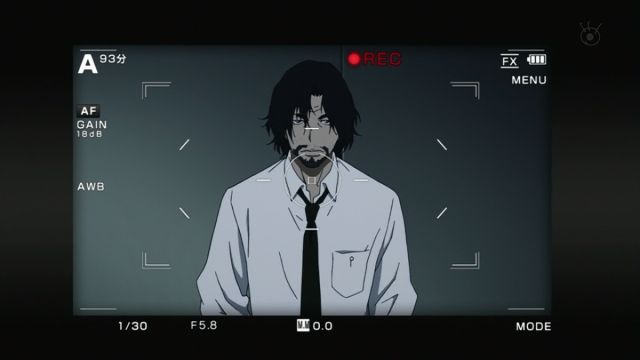
Years ago, Shibazaki was investigating the death of a Diet secretary who supposedly committed suicide by jumping off a building. Shibazaki found evidence it was murder, traced it to a powerful politician who was involved in approving the Athena Project funding, and got kicked down to the archives for his trouble. His career died so the conspiracy could live. When Sphinx starts leaving riddles about Oedipus and Greek mythology, Shibazaki is the only detective who gets the references because he's the only one who knows the old case files connect to a secret government program.
The riddles aren't for the general public. They're for him specifically. Nine and Twelve are forcing the police to bring Shibazaki back from obscurity because they need him to connect the dots between the bombings, the plutonium theft, and the cover-up that almost got him killed 15 years ago. When he finally solves the riddle about the airport and confronts Five in the control tower, he's not just stopping a bombing. He's finally getting the chance to finish the investigation that ruined his life.
That's why the Sphinx conspiracy works as a thriller. It isn't just about outsmarting the cops. It's about forcing a specific cop to remember what he used to fight for and giving him the evidence he needs to take down the people who buried him in the records department. Analysis of Shibazaki's role shows how his past and present collide in episode three when he connects the plutonium theft to his old case.
Lisa and the Role of the Witness
People sleep on Lisa Mishima's importance to the story because she starts out as a bullied schoolgirl who just gets in the way. But she's the most important piece of the Sphinx conspiracy because she's the one who survives when the boys don't. She's the Jocasta figure in the Oedipus metaphor, the one who remains after the tragedy to tell the story, but she's also the proof that Nine and Twelve weren't monsters.
Twelve saves Lisa from the bombing in the first episode not because he needs a hostage, but because he sees himself in her. She's abused at home, neglected, treated like she doesn't exist. Just like the orphans in the facility. When he pulls her away from the explosion, he's not recruiting an accomplice. He's saving someone from the same system that destroyed him, even if that system looks like a neglectful mother instead of a government lab.
Lisa's arc is about learning to exist without being a victim. She goes from being too scared to stand up to her mother to helping disarm bombs and deliver messages. She becomes the translator between Sphinx and the world, literally telling Shibazaki what Von means in the final episode. Without her, the message dies with Nine and Twelve. With her, the hope survives.
The EMP and Why They Had to Die
The ending of Terror in Resonance makes people angry because Nine and Twelve die. Twelve gets shot by American snipers while unarmed, and Nine dies from the Athena Project's medical effects shortly after. People want to know why they couldn't just ride off into the sunset with Lisa and live happily ever after. The answer is that the Sphinx conspiracy was never going to end with them alive because they were the proof.
If Nine and Twelve had survived and stood trial, they would have been silenced or disappeared. The government couldn't let them talk. They knew too much, and they were living evidence of crimes against humanity. By dying, they become martyrs instead of prisoners. Shibazaki lives to tell their story, but Nine and Twelve have to die to make sure the story gets told without them being discredited or locked away in a black site somewhere.
The EMP bomb they detonate in the stratosphere is the final piece of the plan. It causes a massive blackout across Japan, but because it's high in the atmosphere, it doesn't kill anyone directly. It just shuts everything down long enough to force the media to pay attention to what Shibazaki is about to reveal. The aurora borealis effect in the sky is beautiful and terrifying, a "Von" (hope) signal that says "we were here and you can't ignore us anymore."
The word Von comes up constantly. It's Icelandic for hope, taken from the Sigur Rós album and their made-up language Vonlenska. Nine and Twelve aren't hopeless nihilists. They're the opposite. They believe that by exposing the Athena Project, they can prevent it from happening again to other kids. That's why Lisa matters so much. She's the witness who survives, the one who carries the hope forward after the boys are gone. The finale review breaks down how the Icelandic connections and the aurora create the emotional weight of that final detonation.
What This Says About Power and Secrecy
People always talk about how Terror in Resonance is a 9/11 allegory because of the plane imagery and the date references (Nine and Twelve, 9/12), but that's missing the point. The Sphinx conspiracy isn't saying terrorism is justified because the terrorists had a rough childhood. It's saying that when governments operate in total secrecy and experiment on their own citizens, they create monsters that can't be controlled.
Nine and Twelve aren't radicalized by religion or politics in the usual sense. They're radicalized by abuse. The state created them, tried to kill them when they became inconvenient, and forced them to become terrorists just to get a hearing. The show is a warning about what happens when intelligence agencies get unlimited budgets and zero oversight. You don't get safety. You get Sphinx.
The conspiracy isn't just the Athena Project itself. It's the network of politicians, police officials, and foreign agencies that keep it hidden. Every time Shibazaki gets close to the truth, he hits a wall of classified information and "national security" excuses. The system protects the abusers and punishes the victims. That's the real terror in resonance. The vibration of violence moving from the government down to the children it destroys, then back up again as those children force the system to acknowledge what it did.
The Sphinx riddle meaning becomes clear when you realize they were never asking questions to be mysterious. They were testing the police to see if anyone was smart enough and honest enough to solve the crime of their creation. When Shibazaki finally does, he doesn't arrest them. He helps them finish the job. Because he understands that some crimes are so big, you have to break the law to expose them.
The terror in resonance sphinx conspiracy gets dismissed as pretentious or confusing because viewers expect a simple terrorist thriller. They want to know if the bombs are real or fake, if the boys are good or evil, and they miss that the answer is "it's complicated because the real bad guys are the ones wearing suits and signing budgets."
Nine and Twelve never wanted to hurt anyone. They wanted to make sure the names of the dead kids in the Athena Project were remembered. They used terror because it was the only language the state understood. When you watch the show again, skip the explosions and watch Shibazaki's face when he realizes the riddles are about his old case. That's the moment the conspiracy clicks into place. That's when you see that Sphinx wasn't attacking Tokyo. They were trying to save it from becoming a place that eats its children and calls it national security.
Lisa visits their graves a year later, and the world knows the truth. That's the only victory they needed. Not survival. Not escape. Just proof that they existed and that what was done to them was real. In a story full of shadows and lies, that's the one solid thing that remains.
Frequently Asked Questions
Are Nine and Twelve actually terrorists?
No, they aren't terrorists in the traditional sense. Nine and Twelve use the name Sphinx and conduct bombings to expose the Athena Project, a secret government program that experimented on orphans. They deliberately avoid killing civilians, using riddles and warnings to force police investigations rather than cause mass casualties. They're essentially whistleblowers using terrorist tactics because legal channels were blocked by the conspiracy they were trying to reveal.
What was the Athena Project in Terror in Resonance?
The Athena Project was a joint US-Japan covert operation that kidnapped orphans and administered experimental drugs to create hyper-intelligent child soldiers. Most subjects died from the drugs' side effects. Only three survived: Nine, Twelve, and Five, all suffering from terminal brain damage caused by the experiments. The project was covered up after a fire destroyed the facility, allowing Nine and Twelve to escape.
Why are they called Sphinx?
Sphinx refers to the Oedipus myth where a sphinx terrorizes Thebes with riddles until Oedipus solves them. Nine and Twelve mirror this by posing riddles to Tokyo (Thebes), waiting for Shibazaki (Oedipus) to solve them and "kill" the sphinx by exposing the truth. It reflects their goal of bringing down the father figures who created them while maintaining a code that prevents innocent deaths.
Why did Nine and Twelve have to die at the end?
They had to die because they were living evidence of the Athena Project's crimes. If captured alive, the government would have silenced or disappeared them. By dying as martyrs with Shibazaki left alive to expose the truth, they ensured the story couldn't be buried. Twelve is assassinated by US forces, and Nine succumbs to his terminal illness shortly after the EMP detonation.
What does Von mean in Terror in Resonance?
Von is Icelandic for "hope." It references Sigur Rós's album and constructed language Vonlenska (Hopelandic). The word represents Nine and Twelve's motivation: they aren't nihilists seeking destruction, but hope that exposing the Athena Project will prevent future abuse. The final EMP creates an aurora borealis effect, a visual representation of "Von" spreading over Tokyo.