
Tomodachi Game Anime Explained Through Its Twisted Games and Betrayals
Tomodachi Game anime explained starts with a simple question that destroys lives. Yuuichi Katagiri works his delivery job saving ¥70,000 for a school trip when suddenly the ¥2 million class fund disappears. Someone stole it to pay entry into a debt clearance game. That's the setup. That's how five friends end up kidnapped and staring at a creepy mascot named Manabu-kun who tells them one of them owes ¥20 million.
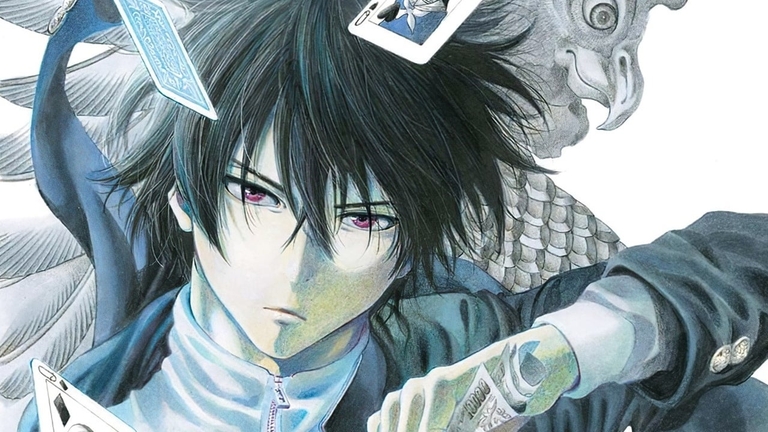
The show doesn't waste time with slow burns. Episode one drops you into Kokkuri-san, a spiritual coin-moving game where friends vote on answers but someone's secretly sabotaging everyone to steal the debt. Yuuichi looks like your typical nice guy protagonist. He's poor but cheerful, loyal to his friends, the kind of kid who'd give you his last yen. Then he starts talking. Then you realize he's calculating angles while smiling. The anime only covers part of the manga story, ending with the group preparing for the Adult Tomodachi Game, but it packs enough twists into twelve episodes to make your head spin.
Most survival game anime focus on physical threats. Tomodachi Game weaponizes friendship itself. The rules force you to choose between clearing your debt or screwing over people you care about. And everyone has secrets. Tenji acts like the smart reserved friend but he's scheming. Yutori plays the bullied innocent girl but she's got layers that would make an onion cry. Shibe looks like a rich cheerful idiot until murder accusations start flying. By the time you hit the final arc, you don't know who to trust. That's the point.
How the Debt Trap Actually Works
The Tomodachi Game runs on a messed up business model I saw described on the wiki. Someone gets into massive debt, in this case ¥20 million, and they can enter these games to clear it. But here's the catch. The entry fee is 10% of your total debt, which gets split among all participants. So when Yuuichi's group gets dragged in, they're all suddenly liable for portions of this mountain of money.
Manabu-kun explains the rules with that creepy permanent smile. Clear the game, debt goes away. Refuse to play, everyone owes ¥20 million individually. Someone in your group betrayed you to get here, but you don't know who. The games test whether friendship can survive financial ruin. Spoiler alert: it usually can't.
Each player gets a nameplate showing their negative balance. You can't show the number to others, but you can lie about it. Break that rule and your debt doubles. The system encourages paranoia. You're sitting there looking at your best friend wondering if they're ¥4 million in the hole or just ¥400,000, wondering if they'd sell you out for a zero balance.
The anime shows three main games in the regular Tomodachi Game before transitioning to the Adult version. Kokkuri-san, Bad-Mouth Sugoroku, and Friendship Hide-and-Seek. Each one sounds innocent until you read the fine print.
Kokkuri-San and the First Betrayal
The opening game looks like a séance. Everyone puts a finger on a massive coin and moves it toward answers on a board. If everyone agrees, you clear the round. If someone picks differently, the minority gets screwed. The first few questions are easy stuff about school subjects. Then Yuuichi notices the cards are blank. The participants write their own questions.
This changes everything. It means someone has been writing questions designed to trap specific people. Yuuichi figures out that his friends have been lying about their debts. When it's his turn, he realizes the real mechanic. Moving to "Yes" clears the game for everyone. Moving to "No" cuts your personal debt in half but screws the group. His friends have been choosing "No" to save themselves while pretending to be loyal.
Yuuichi breaks the rules by shouting this revelation, which doubles his debt but exposes the hypocrisy. The anime shows him accepting this penalty to protect Kokorogi, who was last in line and about to get buried under everyone's selfishness. It's the first time you see his scary side. He's not just nice. He's calculating what loyalty actually costs.
Bad-Mouth Sugoroku Destroys Trust
Game two operates on pure psychological warfare. The group has to move pieces on a board by submitting cards about each other. You can write compliments or insults. Compliments move you forward, insults move you back. The group agrees to write blank cards to keep the peace. That lasts about five minutes.
Secrets start flying. Shibe gets accused of getting a girl pregnant in middle school. Tenji's family issues get exposed. Shiho's perfectionism gets ripped apart. The game forces you to air dirty laundry to save yourself from debt. Yutori reveals she was bullied severely, which earns sympathy, but later you learn she's not as innocent as she looks.
The mechanics get complicated with challenge squares and trap cards, but the real game is watching who breaks first. Shibe cracks under pressure. Tenji reveals he knew things he shouldn't. Yuuichi starts manipulating the card submissions to test loyalties. By the end, everyone knows everyone else's trauma, and the friendship is hanging by a thread.
The Hide-and-Seek Arc Gets Brutal
Game three brings in Group K, a rival team of debtors. This isn't just about answering questions anymore. It's physical. The game is basically tag with credit cards. You have to steal opponents' cards while protecting your own. If you lose your card, you absorb their debt.
The animation gets intense here. People are running through abandoned buildings, setting traps, forming temporary alliances only to betray them. Yuuichi shows his tactical genius by predicting movements and setting up ambushes. He also shows his ruthlessness. He'll sacrifice a pawn if it wins the game.
Group K includes some real psychopaths. Juuzou Kadokura plays dirty and has history with the games. Hyakutaro Onigawara is unpredictable and violent. Banri Niwa seems friendly but he's a snake. Chisato Hashiratani looks tough but she's got her own code. The contrast between Group C (Yuuichi's friends) and Group K shows that there are worse things than owing money. Some people play these games for fun. The arc ends with massive debt transfers and the reveal that the games are broadcast to rich spectators called "Gods" who bet on outcomes like horse racing.
Tenji's Betrayal and Real Motivations
Early on, Tenji Mikasa looks like the voice of reason. He's smart, calm, the guy who explains the rules. Then you find out he orchestrated the entire first game. He stole the ¥2 million school trip fund. He set up the kidnapping. He did it because he's obsessed with Shiho and wanted to test if she valued him over money.
His backstory is messed up according to Reddit discussions. His father participated in the original Tomodachi Game years ago and died, supposedly suicide. Tenji blames Shiho's father, who was a detective investigating the games. He enters the debt specifically to ruin Shiho's life as revenge. But he's also genuinely in love with her, which creates this twisted dynamic where he wants to destroy her but also can't stand seeing her hurt by anyone else.
In the Bad-Mouth game, Tenji reveals Shiho's secret, that she caused the debt accidentally by rejecting a creep who then committed suicide. This devastates Shiho. But later, when she's kidnapped in the Friends Trial arc, Tenji works desperately to save her. The anime doesn't resolve his arc completely, but it sets up his complexity. He's not a villain. He's a victim of the game's legacy lashing out.
Yutori Kokorogi's Hidden Monster Side
Yutori starts as the sympathetic character. She was bullied. She's gentle. She draws manga. Everyone wants to protect her. Then the mask slips. In the manga, which the anime hints at heavily, Yutori is revealed to be one of the most dangerous players.
She's connected to the Adult Tomodachi Game organizers through her family. She knew about the games before they started. Her bullying backstory is real, but she uses it as a shield. When she plays poker in later arcs, she shows she can calculate odds and read faces better than professional gamblers. She tries to make Yuuichi lose on purpose because she's obsessed with him in an unhealthy way.
The anime ends before her full reveal, but you see glimpses. When she thinks no one's watching, her expression changes. She knows more than she says. Her relationship with Yuuichi is weird. He gave her money when she was being bullied, but implied there were strings attached. She both worships and hates him for this. The dynamic is creepy and the anime only scratches the surface.
Shibe's Family Corruption and Trial
Makoto Shibe looks like comic relief. Rich kid, loud, kind of dumb. Then the accusations drop. His father is a corrupt politician connected to the Tomodachi Game administration. Shibe gets accused of murdering his dad and attempting to assault Shiho. The Friend-Sin Trial arc puts him on trial with his friends as lawyers.
The anime reveals Shibe didn't kill his father, but he did try to attack Shiho after his dad threatened her. He's not the innocent goofball. He's got anger issues and daddy problems. His debt comes from his father's massive corruption and participation in the adult games.
Watching Shibe break down is rough. He goes from the happy rich kid to a suicidal wreck accused of the worst crimes. Yuuichi saves him through a complicated wire transfer scam involving blackmail and manipulation, which shows that Yuuichi will do illegal things to save his friends, blurring the line between hero and villain. Tenji initially loses faith in Shibe during the trial but comes around when he realizes one accusation is fake.
The Adult Tomodachi Game Difference
The anime ends with Yuuichi and friends entering the Adult Tomodachi Game. This isn't school kids playing anymore. The stakes are higher, the players are criminals and desperate adults, and the games get lethal. The manga shows games like the Prison Game where you gamble years of your life, and the Friend Murder Game where you literally vote on who dies.
The Adult Game reveals the full scope of the operation. It's funded by billionaires who watch for entertainment. The "Gods" bet millions on outcomes. Manabu-kun is just a mascot; the real power is a shadowy administration including people connected to Yuuichi's adoption.
According to Wikipedia, the manga introduces characters like Kuroki and Detective Tsukasa Kaidou in these arcs. The anime sets this up perfectly but doesn't show the payoff. You see Yuuichi preparing for worse, revealing he has a plan to destroy the entire system from within. He's not just playing to clear debt. He's playing to burn the house down.
Yuuichi's Dark Past and Family Murder
Katagiri Yuuichi isn't just smart. He's broken. The manga reveals he was adopted by the Katagiri family after being in an orphanage. His adoptive mother Yuka was a gold digger who only wanted money. When Yuuichi found out she was lying about being infertile and was pregnant with another man's child, he killed her by withholding her medicine for her illness.
He also killed his adoptive father Taizen, though that happens off-screen in the backstory. Yuuichi created the original concept of the Tomodachi Game as a child to test human nature. He knows the games better than the administrators because he invented them. This is detailed in GameFAQs discussions about the manga ending.
In the anime, you see flashes of this. When he smiles while calculating betrayal odds. When he talks about friendship being more important than money while clearly not believing it. When he manipulates Tenji and Shibe like chess pieces. The ending of the manga reveals he fell into a two-year coma after being shot by Masakazu Shibe, and his friends worked to pay his medical bills, proving that real friendship existed all along, which is the irony of the series.
Manabu-kun and the Administration

Manabu-kun looks like a creepy paper-mache mascot with a permanent grin. He hosts the games in various disguises and explains rules with sadistic cheerfulness. But he's not the one in charge. He's a puppet for the administrators like Maria Mizuse, Tsukino, and Reiko Tamai.
The "Gods" are the wealthy funders watching through cameras. In the Hide-and-Seek game, you see their chat messages floating in the sky, betting on who will fail. This adds another layer of horror. These aren't just games for debt clearance. They're entertainment for the rich, literal human suffering as reality TV.
Manabu-kun's design changes per game. Sometimes he's a priest, sometimes a judge, sometimes just a floating head. The manga reveals that the original Manabu-kun design came from Yutori's childhood manga drawings, connecting back to her hidden role in everything.
Why the Mind Games Work Better Than Violence
Tomodachi Game succeeds because it doesn't rely on physical strength. It's all information warfare. Yuuichi wins by knowing what people will do before they do it. He sets up scenarios where the only way to win is to prove you're a good person, knowing most people will fail.
The games are designed with loopholes. The administrators think they're testing friendship, but they're really testing human greed. Yuuichi exploits these loopholes. In the wire transfer scam during Shibe's trial, he uses the fact that people are selfish to actually save his friend. He banks on betrayal to create loyalty.
The psychology is messy. People don't act logically. Tenji sabotages his own plans because he loves Shiho. Shibe confesses to things he didn't do because he feels guilty. Yutori acts weak because she knows strength makes you a target. The anime captures this chaos better than most psychological thrillers according to GameRant's review.
Is the Anime Ending Satisfying
The anime stops at episode 12, right before the Adult games really kick off. It wraps up the Shibe trial arc and shows the group entering the next phase. For anime-only viewers, it's frustrating. You get invested in these characters and then it just stops.
However, as a standalone psychological thriller, it works. You've seen the group go from innocent friends to damaged people who know each other's worst secrets. You've seen Yuuichi transform from nice guy to manipulative mastermind. The final scene with them walking into the Adult Game facility is ominous enough to work as an ending, even if it's really just a "read the manga" sign.
The manga ending is controversial. It reveals Yuuichi's mother issues, the true nature of Manabu-kun being from Yutori's manga, and the identity of the final traitor. Some fans think it rushes the conclusion. Others think it perfectly circles back to the theme that friendship really is more valuable than money, proven when Yuuichi's friends stick by him during his coma rather than abandoning him.
How It Compares to Other Survival Game Anime
People compare Tomodachi Game to Kaiji, Liar Game, Kakegurui, and Squid Game. It's got elements of all of them but focuses tighter on pre-existing relationships. Kaiji gambles with strangers. Yuuichi gambles with people he called friends.
The art style is modern and clean, not the grotesque style of Kaiji. The games are simpler too. No complex card mechanics or physical challenges. Just psychological pressure. This makes it more accessible but some hardcore gambling anime fans find it less intense.
Where it beats the competition is in the betrayal aspect. In Kakegurui, everyone is openly crazy. In Tomodachi Game, the crazy hides behind school uniforms and smiles. The horror is that your best friend might sell you out for ¥100,000. That's more relatable than being eaten by a giant doll.
Tomodachi Game anime explained is basically a roadmap of how to destroy friendships with debt. The twists land because they're personal. It's not "the government is evil" or "the system is rigged." It's "the person sitting next to you in class has been plotting your ruin for months."
The show asks if friendship can survive when money is involved. Its answer is complicated. Yuuichi does terrible things but saves his friends. Tenji betrays everyone but redeems himself. Yutori is secretly a villain but maybe loves Yuuichi. Shibe is a mess but innocent of the worst crimes.
If you want clean heroes and villains, skip this. If you want to see high schoolers emotionally eviscerate each other over coin games, watch it. The anime is solid, the manga completes the story, and the psychological warfare is top tier. Just don't expect to trust anyone by the end.
Frequently Asked Questions
What is the Tomodachi Game system?
The Tomodachi Game is a debt clearance system where participants play high-stakes psychological games to erase massive debts. An entry fee of 10% of your total debt gets split among all players, and games test whether friendship can survive financial pressure.
Who stole the school trip money?
Tenji Mikasa stole the ¥2 million school trip fund to use as his entry fee. He orchestrated the kidnapping to test Shiho's loyalty and because he held a grudge against her father regarding his own father's death in a previous Tomodachi Game.
Does the anime cover the full story?
No, the anime covers only the first few arcs including the Friends Trial. It ends with the group entering the Adult Tomodachi Game. The manga continues for 127 chapters, revealing Yuuichi's past murders, Yutori's true nature, and the identity of the game administrators.
What is Yuuichi's secret?
Yuuichi appears to be a nice guy but is actually a manipulative genius with a dark past. He killed his adoptive mother Yuka by withholding her medicine after discovering she was a gold digger pregnant with another man's child. He created the original concept of the Tomodachi Game as a child.
What are the main games in the anime?
The first game is Kokkuri-san, a coin-moving game where players write their own questions and can choose to clear group debt or halve personal debt. The second is Bad-Mouth Sugoroku, where players submit insults or compliments to move game pieces. The third is Friendship Hide-and-Seek against rival Group K.