
Uramichi Oniisan Anime Analysis Shows Work Breaks People
Uramichi Oniisan anime analysis usually misses the point by calling it a comedy. This show isn't funny in the way people think. It's a survival manual for anyone who's ever had to smile at a customer while fantasizing about walking into traffic. The series follows Uramichi Omota, a 31-year-old former gymnast who hosts a children's exercise program called "Together with Maman," and every episode feels like watching someone drown in slow motion while the laugh track plays.
What makes this series hit so hard is that it refuses to offer an escape. Most anime about work either turn into power fantasies or healing fluff that tells you everything will be okay if you just try hard enough. Uramichi Oniisan looks you in the eye and tells you that your job is probably eating your soul, and no, there isn't a cute romance or magical adventure coming to save you. The protagonist isn't waiting for a transfer student to change his life or a portal to another world. He's just waiting for the weekend so he can drink cheap beer alone in his apartment while staring at the wall.
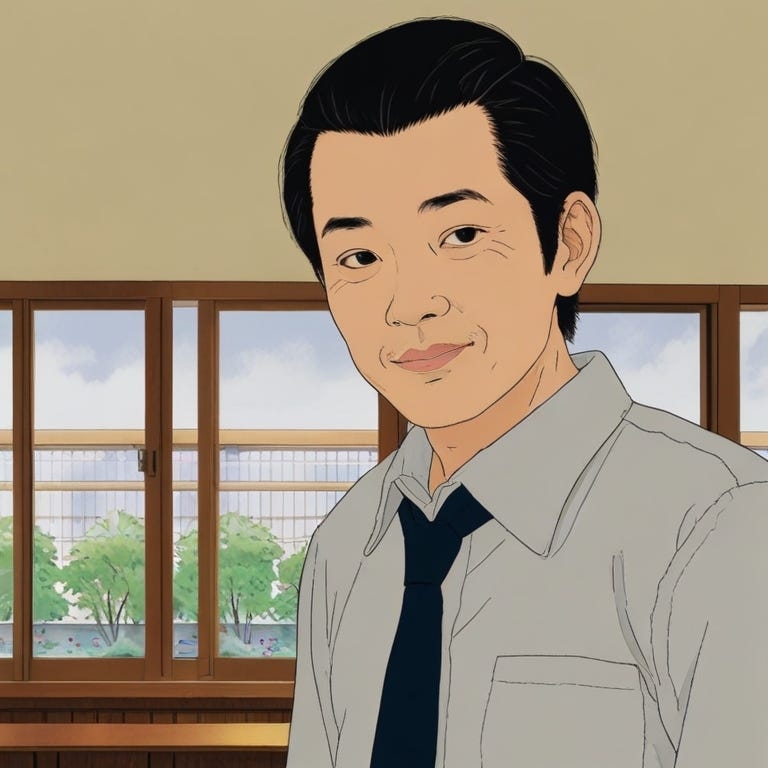
The Mask Is Not a Metaphor
The name Uramichi literally breaks down to describe someone with two faces. On camera, he's the "Oniisan," the big brother figure teaching kids to exercise and stay positive. Off camera, he's a chain-smoking mess who can't remember the last time he felt genuine joy. This isn't subtle symbolism. It's a direct representation of what psychologists call masking, the act of hiding your real emotional state to meet social expectations.
Every time Uramichi switches from that dead-eyed smile to his true exhausted expression, you can feel the whiplash. The show makes you complicit in this performance because you're watching him suffer while the kids on the show remain oblivious. It's uncomfortable because it's recognizable. Anyone who's worked retail, food service, or any customer-facing job knows that switch you have to flip, the one that says "I am happy to be here" when you are actively dying inside.
The series takes this further by refusing to let Uramichi have moments of genuine breakthrough. There are no episodes where he learns to love his job or finds his passion again. He just keeps showing up because he needs the paycheck. That's the horror of it. The mask becomes his real face because he wears it so long he forgets what his actual expressions feel like.
Why the Kids Make Everything Worse
Children in this series aren't presented as innocent angels who renew the protagonist's faith in humanity. They're tiny mirrors that reflect how broken the adults are. When a kid asks Uramichi why he looks sad, or why he doesn't have a wife, or why grown-ups have to work jobs they hate, the question cuts deeper than any adult criticism could.
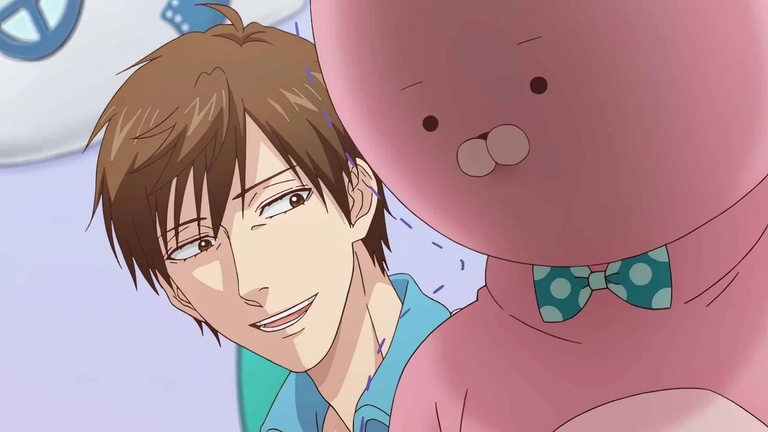
The children represent the audience that the performers have to lie to. They haven't learned the social contract yet, the one that says you pretend everything is fine to keep the machine running. So when Uramichi accidentally tells them that adulthood is mostly disappointment and bills, he's breaking the cardinal rule of children's entertainment. He's being honest.
Some viewers interpret these moments as the show slipping into horror territory. You have these small innocent creatures being exposed to existential dread by a man who can barely keep himself together. It's like watching a clown have a breakdown at a birthday party, except the clown never stops performing even as he's sobbing. The kids don't understand what they're witnessing, but the viewer does, and that gap in comprehension creates a tension that feels almost violent.
Everyone on Set Is Damaged
Uramichi isn't the only one falling apart. The supporting cast forms a beautiful disaster of failed dreams and compromised adulthood. Tobikichi Usahara plays the rabbit mascot Usao, and he's a 28-year-old mess who peaked in college. Mitsuo Kumatani plays the bear mascot Kumao, and he's equally lost, hiding inside a costume because it's easier than facing the world as himself.
Then you have Iketeru Daga, whose name is literally a pun on "but I'm handsome," a 27-year-old who laughs at fart jokes because that's the only joy he has left. Utano Tadano, which means "just a singer," is a 32-year-old former idol who job-hopped into this gig and has been dating the same loser for six years because breaking up takes too much energy.
These aren't quirky anime characters with charming flaws. They're portraits of people who looked at their lives at thirty and realized they'd taken a wrong turn somewhere but couldn't afford to go back. The show doesn't pull punches about workplace burnout, showing how these coworkers form a weird dysfunctional family not because they like each other, but because they're the only ones who understand how much it hurts to be there.
The Repetition Is the Point
Critics of the show complain that the jokes get repetitive. Uramichi makes a depressing observation, the kids react with confusion, he recovers with a fake smile, and the cycle repeats. They miss that this repetition is the entire thesis of the series. Work is repetitive. The misery of showing up to the same set, wearing the same costume, saying the same lines to the same unblinking camera, that cyclical nature grinds people down.
The humor comes from the inevitability of it all. You know Uramichi is going to break character. You know he's going to say something wildly inappropriate about taxes or loneliness or the slow death of his athletic career. The punchline isn't the joke itself. It's the recognition that tomorrow he'll be right back there doing it again with the same forced enthusiasm.
This structure mirrors the experience of working a job you hate where every day feels like the last one. The meetings are the same. The customers are the same. The fluorescent lights buzz at the same frequency. By refusing to let the characters grow or change, the anime captures a specific type of existential dread that hits different when you're watching it at midnight after a ten-hour shift.
Fourth Wall Breaks as Cry for Help
Sometimes Uramichi stops looking at the kids and looks directly at the camera, or directly at the viewer, or directly into your soul depending on how you interpret it. These aren't cute meta-jokes like in other anime where the character comments on the animation budget. These are moments of genuine crisis where the protagonist seems to be asking if anyone else can see how absurd this all is.
When he delivers these "life lessons" about how job hunting is a nightmare or how relationships require energy you don't have, he's not breaking the fourth wall for laughs. He's treating the viewer as a confidant, someone who understands that the world is on fire and we're all pretending it isn't. It creates an uncomfortable intimacy where you feel like you should be helping him, but you can't because you're stuck in the same trap.
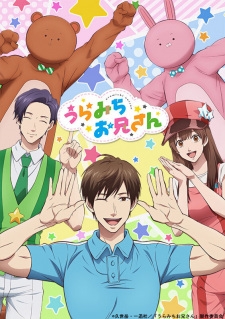
The Horror Interpretation Holds Up
Some fans have pointed out that if you watch this show through a horror lens, it becomes even more disturbing. The set of "Together with Maman" starts to look like a purgatory. The characters are trapped in a loop of performing childhood innocence while their own lives rot away. The bright colors and cheerful music become sinister, like a clown's makeup hiding something rotten underneath.
There's a theory that the show is actually depicting a form of hell where these souls are condemned to entertain children for eternity as punishment for their wasted potential. Uramichi's former glory as a gymnast, Utano's failed idol career, Iketeru's wasted good looks, all of it suggests people who had promise but ended up here instead. The fact that they can't leave, that they keep showing up day after day despite clearly hating every second, supports this reading.
Whether or not the creators intended this interpretation, it resonates because it captures the feeling of being stuck in a dead-end job that you can't quit. It feels like hell because time moves differently there. Every minute on the clock takes an hour to pass, but the years fly by until suddenly you're thirty-one and you don't know where your twenties went.
Why It Validates Instead of Curing
Most workplace comedies eventually resolve with the protagonist finding meaning in their work or getting a better job or learning to appreciate the little things. Uramichi Oniisan doesn't do any of that. Uramichi doesn't get promoted. He doesn't fall in love. He doesn't discover a hidden passion for teaching children. He just keeps existing.
This validation of stagnation is weirdly comforting in a way that motivational posters aren't. The show tells you that it's okay to hate your job. It's okay to feel like you're wasting your life. It's okay to be angry that you have to smile when you want to scream. It doesn't ask you to change or improve or grind harder. It just sits next to you on the break room floor and offers a cigarette while agreeing that yeah, this whole thing is pretty messed up.
Anime reviews often call this a "depressing" series, but that's not quite right. It's honest. Depression isn't caused by seeing sad things. It's caused by feeling alone in your sadness. When Uramichi admits on air that he hasn't felt joy since his college days, he's not being depressing. He's being the friend who admits they feel the same way you do.
The Voice Acting Carries the Weight
Hiroshi Kamiya voices Uramichi, and he walks a tightrope that shouldn't be possible. He has to sound energetic enough to be a convincing children's host while letting just enough exhaustion leak through to break your heart. When he switches from the "Oniisan" voice to his real monotone, you can hear the life draining out of him in real time.
The rest of the cast holds their own too. Mamoru Miyano plays Iketeru with a brightness that feels increasingly desperate the more you watch. Nana Mizuki brings a frayed edge to Utano that suggests she's one bad day away from a meltdown. Even the minor characters have voices that suggest entire backstories of disappointment.
The performances ground the absurdity in something real. Without these vocal performances selling the misery, the show would just be edgelord humor about how life sucks. With them, it becomes a group therapy session where everyone is too tired to speak in complete sentences but manages to communicate through sighs and shared glances.

No Solutions, Just Recognition
By the end of the season, nothing has changed. Uramichi is still hosting the show. The rabbit and bear mascots are still sweating inside their costumes. The director is still making unreasonable demands. The only thing that's different is that the viewer feels seen.
That's the ultimate goal of Uramichi Oniisan anime analysis. Not to dissect the humor or rate the animation quality, but to recognize that this show is a mirror. When you watch Uramichi force a smile for the hundredth time, you're watching yourself in every customer interaction, every team meeting, every moment where you had to perform wellness while your brain was screaming.
It won't fix your job. It won't pay your rent. But for twenty-three minutes at a time, it lets you take off the mask and admit that you're tired. And sometimes that's enough to get you through another day. Not because it gives you hope, but because it confirms that your exhaustion is real, your anger is justified, and you're not the only one faking it until you make it, or more likely, until you finally quit or die trying.
Frequently Asked Questions
Is Uramichi Oniisan actually funny or just depressing?
It depends on how broken you already are. If you're working a job you hate, it hits too close to home to be comfortable. The humor comes from recognition, not escapism. You'll laugh, but it will be that tight, painful laugh that sounds like crying.
How old is Uramichi?
Thirty-one. He's explicitly stated to be 31 years old, which is part of the crisis. He's past the point where he can easily change careers but young enough to remember exactly what he wanted his life to look like before reality crushed those dreams.
Does Uramichi ever get better or find happiness?
No, and that's the point. Most viewers expect a redemption arc or a moment where he finds his passion again. It never comes. He ends the season exactly where he started, which is either nihilistic or realistic depending on your outlook.
Who should watch this anime?
If you've ever had to wear a name tag, fake smile at customers, or attend a mandatory fun work event, yes. If you're looking for isekai power fantasies or high school romance, this will feel like being punched in the soul.
What is the show parodying?
It's a direct parody of Okaasan to Issho, a long-running Japanese children's program on NHK Educational TV. The exercise segments, the mascots, and the format are all lifted from real Japanese morning kids' shows.