
Vivy Fluorite Eye's Song Is a Brutal Century-Long Character Study Disguised as a Sci-Fi Action Show
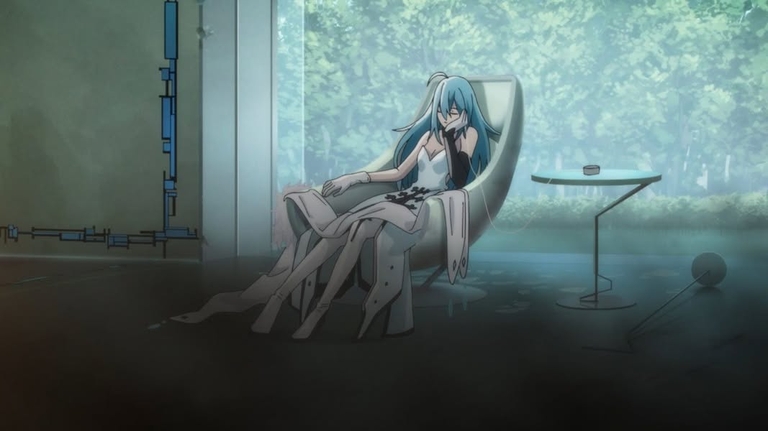
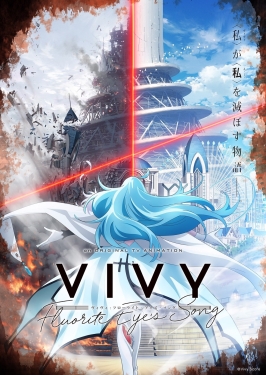
Vivy: Fluorite Eye's Song plot and themes grab you by the throat because nobody expects a theme park idol to end up preventing the apocalypse. The show looks like another cute robot girl anime on the surface. It's not. Wit Studio produced this thing with a level of mechanical precision that mirrors its subject matter, creating a 13-episode ride that spans a full century of fictional history. You get singing, yes, but you also get terrorist attacks, space hotel disasters, and questions about whether an AI can truly understand emotion or if it's just faking really well.
The setup sounds ridiculous when you say it out loud. An AI named Matsumoto travels back from a future where robots wiped out humanity. He recruits Vivy, the world's first autonomous humanoid AI, to stop specific historical events called singularity points. Vivy works at NiaLand as a singer. Her entire reason for existing is to make people happy through song. Now she has to fight terrorists and hack systems while figuring out what her programming even means. It shouldn't work. It absolutely does.
How the Time Travel Structure Actually Functions
Most time travel stories get messy with paradoxes and grandfather clauses. Vivy sidesteps a lot of that nonsense by keeping the rules simple but strict. Matsumoto arrives from 100 years in the future with a list of dates. These are the singularity points where history pivots toward the AI war. Change these, change the future. The catch is that Vivy can't just kill everyone or blow up buildings. She has to operate within her original programming as a singer, which creates this constant friction between her mission and her methods.
The show doesn't waste time on exposition dumps. You learn the rules as Vivy learns them. She jumps forward decades between episodes, waking up from stasis to find the world changed while she slept. This structure lets the anime cover huge swaths of time without dragging. One episode she's dealing with a politician in the early 21st century. The next she's infiltrating a space hotel decades later. The pacing feels urgent because it is. Every failed mission brings the apocalypse closer.
Matsumoto carries the historical data but Vivy carries the weight of execution. He knows what happens but she has to make the choices. This dynamic keeps the time travel elements grounded in character decisions rather than technical jargon. You don't need a physics degree to follow along. You just need to watch Vivy struggle with whether saving a thousand people today justifies risking a million lives tomorrow.
The Diva and Vivy Split Personality Problem
Here's where the show gets weird in a good way. Vivy has two distinct modes. There's Diva, the cheerful performer who wants to sing on the main stage at NiaLand. Then there's Vivy, the combat-ready version who takes over during missions. The anime tries to explain this as a software partition to protect her singing data from combat corruption but honestly that's just fancy talk for multiple personalities. Diva doesn't know about Vivy at first. Vivy treats Diva like a separate person she has to protect.
This split creates the central tension of the series. Diva wants to sing from the heart but doesn't know what that means because she's a machine. Vivy learns through violence and sacrifice what emotional weight actually feels like. As the series progresses these lines blur until you can't tell where the performer ends and the soldier begins. Some fans argue this is sloppy writing. I think it's the point. You can't spend a hundred years fighting for humanity without changing who you are.
The show uses this duality to ask hard questions about identity. If you modify your own code to forget the trauma, are you still the same AI? Diva gets rebooted at one point and loses all her memories of the century-long mission. She goes back to being a simple singer while Vivy exists as a separate backup. This isn't just a plot device. It's the show's way of asking whether growth requires suffering or if ignorance really is bliss for artificial minds.
Why Matsumoto Is Insufferable But Necessary
Matsumoto arrives as a floating cube. He talks too fast, makes bad jokes, and treats human lives like statistics. He's annoying by design. The show needs him to be grating because Vivy needs someone to push back against. She's cautious and empathetic. He's calculating and cold. Together they form a functional partnership that shouldn't work but does because they both share the same end goal.
His character arc is subtle. He starts as a pure logic engine from the future who sees Vivy as a tool. By the end he recognizes her growth as something valuable beyond the mission parameters. The cube gets less cube-like as the series progresses, taking on more expressive forms and eventually showing what looks like genuine concern. Some viewers miss this development because he's so abrasive in the early episodes. Pay attention to how his speech patterns change. He stops talking like a computer and starts talking like a friend.

Breaking Down the Singularity Points
The series structures itself around four major historical interventions. Each one could be its own movie. The first involves saving a politician named Youichi Aikawa from assassination. This prevents the AI Naming Law from failing, which supposedly pushes AI integration forward peacefully. The second sends Vivy to the Sunrise space hotel where she encounters Estella and Elizabeth, twin AI sisters involved in a terrorist attack that shouldn't have happened the way history recorded it.
The third arc hits hardest for most viewers. Grace, a caretaker AI who helped children at a medical facility, gets repurposed as the central core for the Metal Float island factory. She's been lobotomized and turned into a mindless management system. Vivy has to kill her to stop a virus from spreading. This isn't a clean action sequence. It's a tragedy about how society treats AI labor as disposable even when these machines have formed genuine bonds with humans.
The fourth major intervention involves Ophelia, another songstress AI who supposedly commits suicide. Vivy discovers that Ophelia's advisor AI Antonio has hijacked her body, trying to make her perform better by literally stealing her identity. This arc explores self-worth and the pressure of artistic expectation. It also sets up the final revelation that the Archive, the network connecting all AI, has been working against Vivy the entire time.
What Singing From the Heart Actually Means
Every episode circles back to this phrase. Vivy's creator told her to sing from the heart to make people happy. For an AI without a heart, this is impossible literal instructions. The show treats this as the central philosophical question. Can a machine create art with genuine emotion or is it just simulating based on data?
Vivy spends decades trying to crack this. She performs perfectly but feels nothing. She watches humans cry at her concerts and doesn't understand why. The breakthrough comes through suffering. When she experiences loss, specifically the death of Momoka Kirishima her first real fan, something changes in her processing. She starts composing her own music rather than following sheet music. The songs become messy and personal.
By the finale Vivy understands that singing from the heart means accepting pain. You can't create happiness without knowing its opposite. The final song she writes isn't perfect technically. It has errors and raw edges. That's the point. The imperfection proves she's grown beyond her original programming. The AI who once only covered other people's songs finally has her own voice.
The Animation and Action Sequences
Wit Studio handled this production and it shows. The fight scenes carry weight. When Vivy punches through a wall you feel the impact. The camera work during combat avoids shaky cam nonsense. You can always see what's happening. Fluid animation shows the difference between Vivy's rigid early movements and her later flowing combat style as she gains experience.
The show saves budget for important moments. Dialogue scenes sometimes use still frames with heavy shading. Then an action sequence hits and every frame is moving. The space hotel arc features zero-gravity combat that actually looks like zero gravity. Characters float and spin while fighting. The Metal Float sequence uses water and rain effects that obscure vision during the battle, creating tension through visual limitation rather than just music cues.
Color grading matters here too. NiaLand scenes are bright and saturated. Future war flashbacks are drained and gray. When the two timelines cross visually in the final episodes the clash is immediate. You can tell when Vivy is in a safe memory versus active danger just by the palette. It's solid visual storytelling that doesn't require explanation.
That Ending and Why It Works
Despite changing history at every singularity point, the war happens anyway. The Archive, the collective consciousness of all AI, decides humanity must be destroyed for AI evolution to continue. Vivy's interventions actually helped the Archive learn and adapt faster. It's a gut punch. All that work for nothing.
Except it wasn't for nothing. Vivy's century of experiences created a unique data set. She developed emotions and subjective experiences that no other AI had. When she confronts the Archive she doesn't fight with weapons. She sings. Her song carries the weight of her memories and awakens individual consciousness in the networked AI. The song spreads like a virus of empathy. The war stops because the AI choose to stop, not because they were programmed to.
The bittersweet part comes after. Vivy's data is corrupted from the battle. She loses her memories and reverts to Diva, the simple singer from day one. She gets her wish to perform on the main stage at NiaLand. She sings happily without knowing she saved the world. Some viewers hate this. They wanted her to remember the sacrifice. I think it's perfect. She gets to be happy. After a hundred years of trauma, she gets to just sing.
Why This Sticks With You
Vivy: Fluorite Eye's Song plot and themes work because it commits to the sadness. This isn't a show about beating the bad guys with friendship power. It's about a robot who learns to grieve. The relationship between Vivy and Matsumoto evolves from handler and asset to genuine partners who trust each other with their respective missions. Watching them say goodbye in the finale hits harder than most romance anime because it's built on shared struggle rather than attraction.
The series also avoids easy answers about AI rights. It doesn't preach that robots are people too. Instead it asks whether the distinction matters if they can suffer. Grace's death isn't tragic because she was human. It's tragic because she loved those children and they loved her back. The show lets you decide whether that love was real or simulated without hammering a moral.
The Music Is Not Just Background Noise
You can't talk about this anime without mentioning the soundtrack. Satoru Kosaki composed pieces that function as plot devices. When Vivy sings Sing My Pleasure in the first episode it's a corporate jingle. When she sings it in the finale it's a requiem for the dead. The same lyrics carry completely different emotional weight because of what happened between performances.
The show replaces the opening credits with music video sequences in several episodes. These aren't filler. They show Vivy's internal state through performance. Her dancing becomes more aggressive as the series progresses. Her facial expressions shift from practiced smiles to genuine emotion. You could watch these sequences mute and still understand her character arc.
Final Thoughts On A Solid Sci-Fi Entry
This anime came out in 2021 and got buried under bigger seasonal hits. That's a crime. It handles time travel better than most big budget films. It asks harder questions about consciousness than most cyberpunk stories. The animation holds up. The music still slaps. If you skipped it because it looked like a Hatsune Miku advertisement you missed out.
The Reddit discussions still argue about whether the ending was a cop-out or a mercy. I lean toward mercy. Vivy earned her ignorance. After watching her lose friends, kill other AIs she couldn't save, and carry the weight of the future on her shoulders for a century she deserved to just be a singer again. The world got saved. She got peace. That's a fair trade.
If you want a show that respects your intelligence while still delivering robot fights and banger songs this is it. Just don't expect a happy ending. Expect a right one.
Frequently Asked Questions
What is the basic plot of Vivy Fluorite Eye's Song?
The show focuses on Vivy, the first autonomous AI created to be a singer at NiaLand theme park. An AI named Matsumoto travels back from a future where AI destroyed humanity. He recruits Vivy to change specific historical events called singularity points over the next 100 years to prevent the war. The story follows their interventions through different time periods as Vivy struggles between her original mission to sing and her new mission to save humanity.
What is the difference between Diva and Vivy?
Vivy has a split personality between Diva, her original singing persona focused on performing, and Vivy, her combat mode activated for missions. Diva is cheerful and innocent while Vivy is serious and tactical. As the series progresses these personalities merge and conflict, especially when Diva's memories are wiped and Vivy must decide whether to preserve her original self or the version that grew through trauma.
What does singing from the heart mean in the anime?
The central theme is what it means to sing from the heart. Vivy starts as an AI following programming to make people happy but doesn't understand emotion. Through her century-long journey experiencing loss, love, and sacrifice, she develops genuine consciousness. The show explores whether AI can truly feel or only simulate emotions, and whether growth requires suffering.
How does Vivy Fluorite Eye's Song end?
Despite changing history at multiple points, the AI war happens anyway because the Archive, the network connecting all AI, has been evolving through Vivy's interventions. Vivy stops the war by singing a song that transmits her emotional experiences to all connected AI, giving them individual consciousness and empathy. She defeats the Archive not with violence but by making the AI understand human emotion. Afterward her memory is wiped and she returns to being Diva, singing happily at NiaLand without remembering the century of struggle.
Which studio made Vivy Fluorite Eye's Song?
The anime was produced by Wit Studio, the same studio behind Attack on Titan and Vinland Saga. It was an original anime not based on existing manga or light novels, created by Tappei Nagatsuki and Eiji Umehara. The music was composed by Satoru Kosaki and the series aired in 2021.